Common Auto Glass Windshield Repair Myths
It’s a sound every driver dreads. You detect a little chip. It seems inconsequential, no larger than a cent. You reassure yourself that there is nothing to be concerned about and go back to your commute. Disinformation frequently influences what happens next in this situation, which occurs on highways every day. A surprising amount of false information circulates about the safety of vehicle glass. Some drivers feel chips are innocuous, while others think every crack warrants a complete, pricey windshield repair. Believing these misunderstandings can result in wasted spending, denied insurance claims, and decreased safety. Up to 30% of the structural strength of your automobile in a rollover accident comes from your windshield.
Get An Auto Glass Replacement Quote Now 866.278.7417

Windshield Replacement & Repair
Our competitors push you into going to their shop to get your glass fixed-making it cheaper for them. We make it easier for YOU to get back on the road by offering free mobile repairs at your home or work. With our free mobile services servicing the entire Orange County & Los Angeles area, we can often handle your windscreen replacement the same day! So the next time you need a windshield replacement, give us a call.
Talk to a Windshield Replacement Specialist Now 866.278.7417

Calibration
Calibration is the process of returning a vehicle’s ADAS to OEM specifications. Calibration is necessary after a new glass installation, particularly a windshield with a camera mounted to it, to ensure that the ADAS features continue to function properly despite having been moved during installation. If a car’s ADAS is not properly calibrated, the system may not function safely. A misaligned camera could jeopardize the functionality of the system and lead to dangerous driving or accidents, so it is crucial that the cameras are aligned perfectly, which is what windshield calibration ensures.
Talk to a Calibration Specialist Now 866.278.7417

Fleet Auto Glass Repair
We provide expert auto glass repair and windshield replacement services for commercial fleets of all sizes. We are experienced with all manufacturers and machine types of domestic or foreign cars, trucks, vans, or commercial vehicles, including heavy equipment. Our same day mobile auto glass and windshield repair service will enable you to get back on the road faster and start saving you time and money instantly. Give us a call today! We are here to help!
Talk to a Fleet Auto Glass Specialist Now 866.278.7417
Small Chips Are Harmless and Can Be Ignored
Among the misconceptions on the list, this one could be the most harmful. Many drivers think they don’t need to pay attention to a chip if it’s not in their direct line of sight. They expect the harm will retain the same size eternally.
The Reality: A chip is never simply a chip; it is a crack waiting to happen. Vibrations, speed bumps, and potholes put a lot of strain on your windshield. More importantly, it is susceptible to changes in temperature.
When you blast the defroster on a frigid winter morning or turn the A.C. on a warm summer day, the glass expands and shrinks. This thermal stress targets the weak point—the chip—causing it to spiderweb over the glass. A simple fix is sometimes no longer feasible after a chip develops into a lengthy fracture, necessitating a complete windshield replacement.
DIY repair kits are just as excellent as professional service: Walk into any car parts shop, and you will discover shelves packed with DIY windshield repair kits. For a little portion of the price, they guarantee expert outcomes. Although the price tag is alluring, a qualified expert typically produces better results.
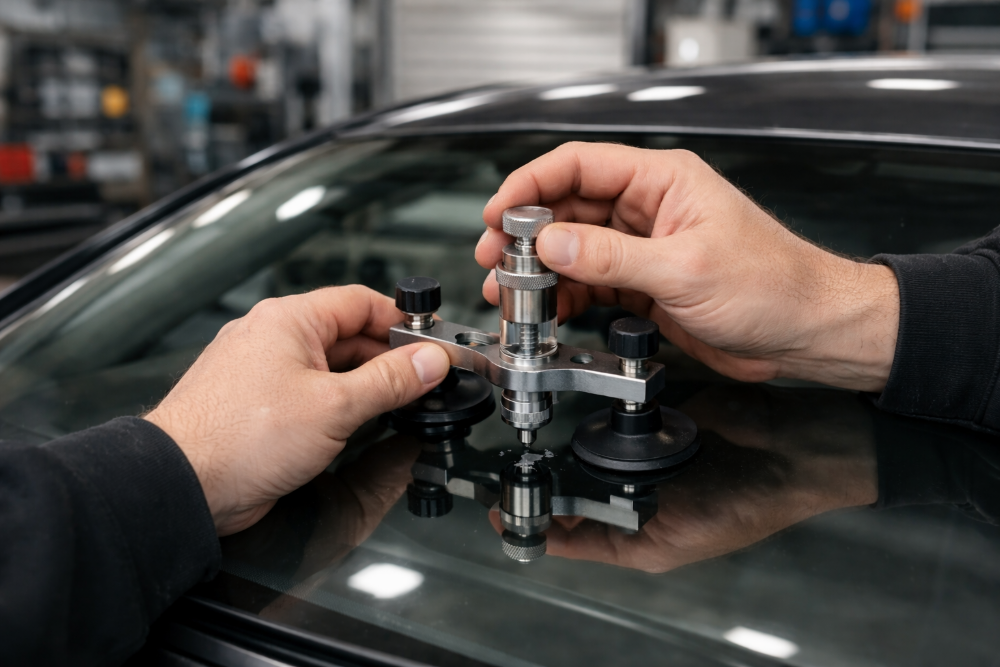
The Reality: Professional car glass specialists utilize high-quality resins and advanced equipment that generates a vacuum over the damaged region. The resin is forced deep into the microcracks by this vacuum, which extracts air from the break.
DIY kits often employ a basic syringe technique, which cannot generate the same vacuum or pressure. Often, air pockets stay trapped within the glass. These air pockets have the potential to grow over time, which might lead to the fracture spreading and the patch failing. Furthermore, if you screw up a DIY repair, a professional typically cannot restore it later because the hardened amateur resin hinders the appropriate flow of professional-grade materials.
If The Glass Is Cracked It Must Be Replaced
For years, the general consensus was that while chips could be filled, cracks required replacement. As a result, many car owners had to pay hundreds of dollars on replacement glass for seemingly little damage.
The Reality: Technology has improved substantially. Despite certain limitations, competent experts can now fix many fractures up to six inches long (approximately the length of a dollar note).
If the fracture is not in the driver’s direct line of sight and hasn’t reached the edge of the windshield, repair can still be a feasible, cost-effective choice. Always visit a professional for an examination before thinking you need a new windshield.
Filing a car glass claim can boost your insurance rates: Drivers typically hesitate to contact their insurance provider about glass breakage because they worry their premiums will soar. They think that a claim is a claim, regardless of the severity.
The truth is that comprehensive coverage, which is different from collision policy, often covers vehicle glass repairs. Because windshield damage is typically deemed “no-fault” (like a rock striking you on the highway), many insurance carriers will not increase your rates for submitting a glass claim.
Insurance companies also prefer that you fix the glass instead of replacing it. A repair costs them substantially less than a complete replacement. Consequently, many insurance companies may waive the deductible totally for repairs, meaning the procedure might cost you zero dollars out of pocket.
Do you have a Question?
Get An Auto Glass Replacement Quote Now 866.278.7417
Windshield Provides Only Weather Protection
Some car owners view the windshield as a decorative element or a comfort necessity, designed to keep rain and bugs out of their teeth. This thinking leads to postponing repairs since they don’t recognize a crack as a mechanical failure.
The Reality: Your windshield is a vital element of your car’s safety restraint system (SRS). In a front-end accident, the windshield functions as a backstop for the passenger-side airbag. If the glass is weakened by a fracture, the power of the deploying airbag might shatter the windshield, causing the airbag to deploy wrongly and failing to protect the passenger.
Additionally, in the case of a rollover, the windshield protects the roof from collapsing. A weakened windshield loses its structural integrity, dramatically increasing the danger of the roof falling in on the passengers.
Since all windshield glass is of the same quality, drivers on a tight budget may choose the least expensive option, presuming that glass is simply glass. They think that the Original Equipment Manufacturer (OEM) glass that comes with the automobile and aftermarket glass are the same.
The Reality: Not all glass is made equal. OEM glass is built to the precise requirements of the car manufacturer, assuring a flawless fit, correct thickness, and optical clarity.
Aftermarket glass, although frequently cheaper, may have subtle differences in thickness or curve. These minor issues might be a major worry in modern cars with Advanced Driver Assistance Systems (ADAS), such as automatic emergency braking and lane departure alarms.
The cameras and sensors for these systems view through the windshield. Warped glass can cause the systems to malfunction, leading to expensive recalibration or potential safety risks.
You Cannot Wash Your Car After A Repair
It’s a common misconception that following a windshield repair, you have to drive at high speeds, avoid vehicle washes, and wear child gloves for days.
The Reality: This misconception derives from earlier technologies. Modern resins cure fast, often when the operator uses UV light. By the time you drive away from the store, the resin is generally completely cured.
While it is normally advisable to avoid high-pressure automated vehicle washes for 24 hours following a replacement (to allow the urethane seal to cure), a basic chip or crack repair is usually ready to face the elements immediately. You may normally wash your automobile the same day without risk of washing away the resin.
Frequently Asked Questions: Will the chip be removed entirely after repair? No, and this is a typical area of misunderstanding. The purpose of a repair is to restore structural integrity and prevent the damage from spreading. While the visibility of the chip will be considerably reduced—often by 80% to 90%—there will generally be a minor imperfection or “scar” left behind where the impact happened.
Is it possible to repair a windshield scratch using superglue? Please do not do this. Superglue (cyanoacrylate) is not meant to endure the thermal expansion and contraction of a windshield. It will likely discolor with time, hinder professional resin from entering the crack later, and finally fail, resulting in a wider fracture.
What is the duration of a professional windshield repair? One of the key benefits of repair over replacement is speed. It normally takes 30 minutes to repair a chip. Including the required “safe drive-away time” to let the glue set, replacements might take several hours.
Is it against the law to drive when your windshield is cracked? Your location and the crack’s severity will determine this. If the state of the windshield makes it difficult for the driver to see or jeopardizes the safety of the vehicle, driving is prohibited in many countries. A traffic citation and a failed vehicle inspection may arise from a significant crack or chip that is squarely in the driver’s line of sight.
Do Not Wait Until It Breaks
Understanding the reality behind these misconceptions might save you money and keep your car safe. The main message is that urgency matters. A little chip is an effortless, affordable patch today, but a major crack is a pricey, complicated replacement tomorrow.
If you discover damage on your glass, don’t depend on guesswork or outdated advice. Please assess the damage, verify if your insurance includes glass coverage, and promptly contact a qualified expert. Your wallet—and your safety—will thank you.
The Hidden Truths of Windshield Repair: What Shops Aren’t Telling You: We have all experienced that awful moment on the highway. A rock shoots backward, a dump truck joins ahead, and a loud crack reverberates throughout the cabin. You glance at your windshield and notice a starburst fracture or a running line.
Your initial response is generally annoying, followed by a race to locate the fastest, cheapest repair company to remedy the damage so you can get on with your day. Most drivers see vehicle glass repair as a simple cosmetic adjustment or a minor nuisance.
Windshields are often treated like windows in a house—transparent barriers that keep wind and insects out. However, in current automobiles, the windshield is a key safety component. It enhances the structural integrity of the cabin, supports the roof during a rollover accident, and assures the successful deployment of passenger airbags.
When you rush to the lowest bidder or the first store that shows up on a search engine, you can be overlooking vital information. Although there are many trustworthy specialists working in the car glass market, there are also fast-turnover stores that use shortcuts to increase profits.
These shortcuts often occur in the background or involve technical aspects that an average automobile owner would not think to inquire about. Understanding these hidden aspects is vital for ensuring your automobile is secure and your investment is safeguarded.
The Game of Glass Quality
One of the most critical mysteries in the business is the glass itself. When you obtain an estimate, the business rarely specifies precisely what sort of glass they want to install. Despite the apparent similarity of all glass, production standards can significantly vary. Auto glass typically comes in three tiers:
OEM (Original Equipment Manufacturer): This type of window is the same glass that came with your automobile when it rolled off the manufacturing line. It satisfies the carmaker’s stringent requirements for fit, safety, and clarity and is produced by the same manufacturer that created the original windshield (such as PGW, Pilkington, or Saint-Gobain). It generally carries the automaker’s logo (e.g., Ford, Toyota, BMW).
OEE (Original Equipment Equivalent): This glass is made by the same manufacturers as OEM glass, usually on the same assembly lines, however it lacks the automotive brand’s insignia. The price is often lower than OEM, even if the quality is similar, because you don’t pay for trademark rights.
Aftermarket: This category is where problems with quality control may arise. Aftermarket glass is created by firms that do not supply the automobile manufacturer. They make the glass by reverse-engineering the original design.
While many aftermarket manufacturers conform to safety regulations, the fit and quality might be uneven. Increased wind noise, distortion (waves in the glass), or uneven curvature that pressures the glass and causes future breaks are all possible.
Many budget shops bill you for the lowest aftermarket glass available without explaining the difference. Aftermarket glass may sometimes result in calibration problems if you drive a high-end automobile or one with sophisticated sensors. Always ask the store which layer of glass they intend to use.
The Importance of Safe Drive Away Time
The glue used to attach the glass to the automobile frame is perhaps the industry’s most hazardous corner cut. This adhesive, known as urethane, is what keeps the windshield in place during a crash. It takes a certain length of time to cure and develop the strength required to support the glass in the event of a collision. This stage is termed the Safe Drive-Away Time (SDAT).
High-quality urethanes cure rapidly, frequently letting you drive the vehicle safely within 30 to 60 minutes. However, these adhesives are more costly. Some stores utilize lower-grade urethanes, which might take several hours or even a full day to fully cure, to save money.
If a company promises you your vehicle is ready soon after installation, or if they utilize a “fast-cure” heating procedure that isn’t manufacturer-approved, they can be risking your safety. If you get into an accident immediately after leaving the shop, the windshield may detach. A detached windshield makes it impossible for the passenger airbag to properly deflect against the glass, making it ineffective and perhaps causing the roof to collapse.
Always ask the shop what brand of urethane they use and what the manufacturer-specified SDAT is. If they are imprecise or dismissive regarding cure timeframes, consider it a red sign.
Hidden Corrosion: The Pinch Weld Problem: The pinch weld is the metal ridge surrounding the windshield frame where the glass rests. When a professional removes a damaged windshield, they utilize sharp instruments to break through the old urethane. These tools often scratch off the paint on the pinch weld, exposing the bare metal underneath.
Before the new glass is installed, a diligent technician will apply a specific primer to these scratches. This primer seals the metal and prevents corrosion. A hasty or incompetent technician will just put the fresh adhesive over the scratches and set the glass.
You won’t notice the improvement immediately since the molding conceals the work. But moisture will react with that exposed metal over the course of the following year or two. Rust spreads and erodes the structure of automobiles, much like cancer.
Eventually, the rust might produce water leaks that harm your car’s electronics or interior. In extreme circumstances, the rust may weaken the frame’s structural integrity to the point where it is unsafe to install a new windshield.
Ask the store about their process for itch treatment. Do they use a primer on every install? Their response might tell you a lot about their long-term dedication to excellence.
Do you have a Question?
Get An Auto Glass Replacement Quote Now 866.278.7417
MThe Repair vs Replace Profit Margin
When you have a little chip in your windshield, you normally have two options: fix the chip or replace the complete windshield. Repairing a chip includes injecting a transparent resin into the impact spot to bind the glass back together.
It restores structural integrity and stops the fracture from expanding. Because it prevents glass from ending up in landfills, it is inexpensive, quick, and eco-friendly. Shops, however, earn far more from a complete replacement than from a $50 to $70 chip repair.
To persuade you that a complete replacement is required, some unethical stores may inflate the severity of a chip. Generally speaking, if the damage is not directly in the driver’s line of sight and is less than a $1 note, it may typically be rectified.
If a store insists on replacing a small bullseye crack, seek another opinion. Conversely, steer clear of businesses claiming to repair large fractures. Although they might be able to repair the fracture, this will undoubtedly compromise the structural integrity of the glass.
The majority of cars built in the last ten years have Advanced Driver Assistance Systems (ADAS); hence, ADAS calibration is not optional. These include functions like rain-sensing wipers, automated emergency braking, and lane-keeping assistance. These systems depend on cameras and sensors fitted directly to the windshield.
When you replace the windshield, the location of that camera changes—even if just by a millimeter. That minor movement amounts to a large error range down the road. If the camera is not recalibrated, your vehicle could believe the lane marker is three feet to the left of where it really is, or it might fail to stop for an object.
Many auto glass businesses, especially mobile-only ones, may omit this step or fail to mention it because they lack the pricey equipment necessary to do the calibration. After installing the glass, they could advise you to take it to the dealership. This process leaves you driving a vehicle with defective safety systems.
A qualified shop will clarify that calibration is an essential step in the replacement procedure for cars with ADAS. They should mention the cost and time for calibration in their original quotation.
Your Freedom of Choice
Many drivers start the windshield repair procedure by phoning their insurance carrier. The insurance salesperson may typically lead you to a certain “preferred” supplier. Although it seems like a suggestion, it is often a commercial agreement. Huge insurance providers have arrangements with huge auto glass businesses to keep prices down.
What they seldom mention is that you have the legal freedom to choose any store you wish. You do not have to use the provider the insurance company advises. You may insist on choosing a small independent store that you trust or a specialist that only utilizes OEM glass.
The insurance company must still fund the claim (less your deductible). If the insurance company is trying to force you to choose a firm that utilizes poor components or hurries the service, you should not give in to their pressure.
A windshield is more than simply a piece of glass; it is a barrier that protects you and your passengers from harm. Protecting your vehicle investment comes with important considerations.
When selecting a repair service, pricing should not be your only consideration. The lowest quotation often has unstated expenses, such as subpar glass, neglected safety precautions, or future rust damage.
Take the time to inquire about the drive-away time, pinch weld priming policy, and the glass manufacturer when you need a repair. Any reputable retailer will gladly explain their process and justify their price, and they will do it with great pleasure.
Mobile Safe Auto Glass
14241 E Firestone blvd suite 400,
La Mirada, CA 90638
Phone: (562) 608-1154
Toll Free: 1 866 278 7417
Mail: sales@mobilesafeautoglass.com
Get a FREE QUOTE today! You can get a free quote and schedule 24/7 using this free quote wizard.
Mon – Fri 8am – 5pm
Saturday 8am – 1pm
Sunday Closed