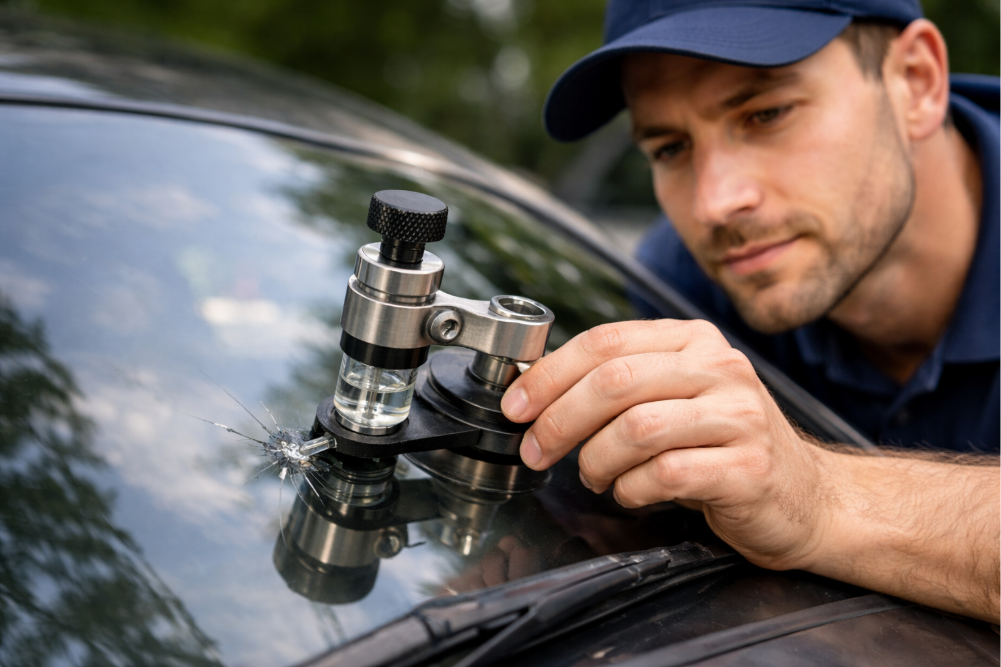
Trusted Auto Glass Repair Windshield Results
That abrupt, piercing crack of a rock striking your windshield is a sound every motorist dreads. Your eyes quickly rush to the glass, seeking the damage. Is it a small chip? A spiderweb crack? Is it a small chip or a long crack that is sneaking up on you? Dealing with vehicle glass damage is difficult, but the repair procedure shouldn’t be. While many drivers emphasize speed or the lowest price, the quality of the repair is crucial. A windshield repair is more than just a bug shield; it’s a structural part of your car that helps with airbag deployment and roof stability. Finding a service provider that gives reputable vehicle glass repair outcomes is about more than simply appearances.
Get An Auto Glass Replacement Quote Now 866.278.7417

Windshield Replacement & Repair
Our competitors push you into going to their shop to get your glass fixed-making it cheaper for them. We make it easier for YOU to get back on the road by offering free mobile repairs at your home or work. With our free mobile services servicing the entire Orange County & Los Angeles area, we can often handle your windscreen replacement the same day! So the next time you need a windshield replacement, give us a call.
Talk to a Windshield Replacement Specialist Now 866.278.7417

Calibration
Calibration is the process of returning a vehicle’s ADAS to OEM specifications. Calibration is necessary after a new glass installation, particularly a windshield with a camera mounted to it, to ensure that the ADAS features continue to function properly despite having been moved during installation. If a car’s ADAS is not properly calibrated, the system may not function safely. A misaligned camera could jeopardize the functionality of the system and lead to dangerous driving or accidents, so it is crucial that the cameras are aligned perfectly, which is what windshield calibration ensures.
Talk to a Calibration Specialist Now 866.278.7417

Fleet Auto Glass Repair
We provide expert auto glass repair and windshield replacement services for commercial fleets of all sizes. We are experienced with all manufacturers and machine types of domestic or foreign cars, trucks, vans, or commercial vehicles, including heavy equipment. Our same day mobile auto glass and windshield repair service will enable you to get back on the road faster and start saving you time and money instantly. Give us a call today! We are here to help!
Talk to a Fleet Auto Glass Specialist Now 866.278.7417
Why Your Windshield Integrity Matters
Before analyzing the outcomes of a repair, it is important to understand the function your windshield performs. High-strength urethane adhesives are used in contemporary automobile engineering to attach the glass to the vehicle’s structure. This bonding procedure effectively makes the glass and the body one entity.
In a rollover accident, the windshield may contribute up to 60% to the structural integrity of the cabin roof. A poor repair or a cheap replacement weakens the glass, increasing the likelihood of the roof collapsing. In addition, the windshield acts as a backstop for the airbag that is located on the passenger side of the vehicle.
When it deploys, it bounces against the glass to cushion the passenger. If the glue fails, the windshield might come out, making the airbag worthless. When it comes to the glass of a car, “good enough” is never acceptable because of the enormous hazards involved.
Finding High-Quality Repair Outcomes: After you brought your automobile to the shop, they injected resin into a rock chip. How can you tell whether they performed a good job? Here are the indications of a competent, reputable repair.
Visual Clarity: The main purpose of a repair is to restore structural integrity, but cosmetic enhancement is a close second.
A successful repair should clean up the damage dramatically. The fracture’s reflection should be gone, but the impact site may still be faintly visible, often looking like a small wet spot or a piece of dust. The epoxy used by experts has a refractive index that matches the glass, enabling light to travel through rather than reflecting off the crack.
Smooth Surface to the Touch
Run your finger over the repair location (once it has totally healed). It should feel smooth and flush with the rest of the glass. If you feel a pit, a lump, or sharp edges, it indicates that the technician may not have properly polished the pit resin or filled the hole completely. A rough surface might harm your wiper blades over time.
Halt in Damage Spread: The most crucial statistic of success is durability. The fix must stop the fracture from expanding. Reputable car glass stores will provide a guarantee for their repairs. If the chip extends from the repaired location, they should credit the cost of the repair toward a complete windshield replacement.
Repair vs. Replacement: Making the Right Call: Honest professionals will inform you when a repair is possible and when it is risky. There are limitations to what resin can mend. Generally, you should plan for a thorough replacement if:
Size: The chip is bigger than a quarter, or a fracture is longer than a dollar bill.
Depth: The damage has pierced both layers of glass (windshields are laminated, meaning there is a plastic layer between two sheets of glass).
Location: The damage is directly in the driver’s line of sight (even a professional repair leaves a minor distortion), or the crack meets the edge of the glass, putting the structural connection in jeopardy for the driver.
Do you have a Question?
Get An Auto Glass Replacement Quote Now 866.278.7417
The Role of ADAS Calibration
If you drive a vehicle constructed in the previous several years, your windshield likely does more than stop the wind. It acts as a lens for the Advanced Driver Assistance Systems (ADAS). These cams and sensors handle adaptive speed control, automatic emergency stopping, and alerts when the car leaves its lane.
When the glass is changed, these cameras need to be carefully set up again. Even a 1-degree change in the camera angle might lead the system to miscalculate distances, possibly causing the vehicle to stop too late or drift out of a lane.
Trusted vehicle glass repair outcomes now contain this technology feature. A trustworthy shop will not only change the glass; they will undertake a static or dynamic calibration to verify your safety systems operate precisely as the manufacturer intended. A retailer should raise suspicions if it provides a low-cost replacement without mentioning calibration.
How to Vet an Auto Glass Shop: It takes some research to choose a service provider you can rely on. Look for these precise credentials to guarantee you obtain the greatest outcomes.
Certification and Training: Look for technicians qualified by the Auto Glass Safety Council (AGSC). This accreditation guarantees that the technicians have received training on how to utilize primers, adhesives, and installation methods in accordance with federal safety regulations.
Coverage of Warranties: A warranty embodies a shop’s assurance. Top-tier suppliers provide a lifetime guarantee against leakage, air noise, and manufacturing faults for the duration of your car ownership. Be aware of establishments that only give limited-time assurances on their craftsmanship.
Quality of Materials: Ask about the glass and adhesives they use. Original Equipment Manufacturer (OEM) glass is the same as the glass that comes with your car. Original Equipment Equivalent (OEE) is aftermarket glass built to the same requirements.
Both are okay, but you should know what you are paying for. Additionally, the adhesive needs a certain “safe drive-away time.” To make sure the glue has set, a reliable technician will specifically advise you on how long the vehicle must rest before it is safe to drive.
Commonly Asked Questions
Will a rock chip repair make the harm vanish completely? Rarely. Bonding the glass together and stopping it from spreading are the two main objectives of restoration. While the visual look will improve by 70% to 95%, there is generally a minor, noticeable imperfection left behind.
Could you please let me know how long I should wait to wash my vehicle after a replacement? Waiting at least 24 hours before giving your automobile a high-pressure car wash is usually advised. The water pressure may harm the seal before the glue completely cures. Hand cleaning is typically safe sooner, assuming you are careful around the molding.
If I file a claim for windshield repair, would my insurance cost more? In many circumstances, no. Insurance companies want you to fix a chip rather than replace a windshield since it is cheaper for them. Many insurances include chip repair with no deductible and no increase in rates. However, you should always check this with your individual supplier.
Can mobile glass repair accomplish the same outcomes as a shop? Yes, assuming the weather conditions are favorable. Temperature and moisture have an impact on adhesives and resins. A qualified mobile technician will not execute a replacement in the rain or severe weather unless they have proper cover.
Don’t Compromise on Clarity and Safety: Your windshield is the lens through which you navigate the world. Ignoring a little scratch or accepting shoddy repair work might result in increased expenses down the road or, worse, decreased safety in the event of an accident.
You may make well-informed judgments regarding the upkeep of your car based on what great outcomes look like, such as optical clarity, structural integrity, and appropriate calibration.
Whether you need a simple resin fill or a total glass replacement, select a certified facility that stresses safety requirements above speed. The assurance that your car is safe makes the purchase worthwhile.
The Ultimate Guide to Windshield Final Clarity
You know the feeling. Your windshield suddenly becomes a wall of glare when you drive straight into the setting sun or, at night, along a roadway covered in rain. The smeary, foggy mess in front of you isn’t just irritating; it’s a big safety threat.
The majority of drivers neglect their windshields, giving them a brief cleaning at the gas station and continuing on. But genuine sight takes more than simply clearing the top layer of dust. It needs to obtain “final clarity.”
When optical distortion, chemical pollutants, physical pitting, and surface haze are completely removed or reduced, a windshield is said to be in final clarity. It is the difference between looking at a piece of glass and gazing through it. This article discusses what ultimate clarity truly means, why it is crucial for your safety, and the step-by-step approach to attain that invisible finish.
The Science of Sight and Safety: Driving is an activity that depends nearly exclusively on visual information. Studies estimate that 90% of a driver’s response time hinges on good eyesight. When your windshield is impaired, your brain has to work harder to comprehend the road ahead, resulting in greater eye strain and weariness.
Cracks aren’t usually the problem. Often, the issue is “micro-pitting” or “road rash”—thousands of small holes formed by sand and debris impacting the glass at highway speeds. During the day, they could be unnoticeable. However, each little crater refracts light at night when it is struck by incoming traffic’s headlights. This process causes the “starburst” effect that may briefly blind a motorist.
The goal of final clarity is to lessen this refraction. It guarantees that light is not dispersed as it travels through the glass and reaches your retina. This split-second gap in visibility may be the determining factor in averting an accident.
Typical Obstacles to Crystal Clear Glass
Before you can attain a faultless finish, you have to understand what stands in your way. The weather constantly challenges a windshield, and various factors contribute to the erosion of its clarity.
Mineral Deposits and Water Spots: If you park near sprinklers or wash your vehicle with hard water, you are likely acquainted with water spots. These are the calcium and magnesium mineral deposits that remain after water evaporates. They adhere to the glass surface and generate a roughness that snags wiper blades and refracts light.
Chemical Etching and Traffic Film: “Traffic film” is a greasy buildup of diesel exhaust, tire rubber particles, bitumen, and oil that is kicked up from the road. Standard blue glass cleaners typically fail to cut through this greasy film, just distributing it about. Over time, acidic rain and abrasive chemicals may also damage the glass, causing a persistent haze.
Wiper Haze: Wiper blades are vital, yet they may be damaging. If run over a dry or dusty windshield, the rubber drags grit across the glass, cutting small, arc-shaped scratches into the surface. These scrapes are a significant source of glare.
Off-Gassing: Interestingly, not all haze originates from the outside. The “new car smell” everyone adores is really the consequence of plastics and glue on the inside off-gassing. This emits chemical vapors that harden on the inside of the windshield, generating a persistent, greasy fog that is famously difficult to remove.
How to Achieve Final Clarity
Getting your windshield to a state of ultimate clarity needs more than a paper towel and a spray bottle. It involves a cleaning and polishing procedure comparable to paint repair.
The Deep Clean: Start with a high-quality car glass cleaner. Avoid home cleaners containing ammonia, since they may harm window tint and dry up rubber seals. Use a waffle-weave microfiber towel, which is meant to retain dirt rather than push it about.
Mechanical Decontamination: Use a plastic bag to run your hand over the glass after cleaning. You have bonded pollutants if it feels harsh. Use a detailed clay bar and a lubricant spray to slide over the wet glass. The clay takes embedded dirt, tree sap, and industrial waste out of the pores of the glass. This step alone significantly increases smoothness.
Glass Polishing: This method is the most crucial step for restoring clarity. You will need a specialist glass polish (which typically includes cerium oxide) and a polishing pad.
Hand Polishing: Good for eliminating persistent watermarks and mild traffic film.
Machine polishing: To get rid of small wiper scratches and shallow pits, it’s important to use a dual-action (DA) polisher. The abrasive process levels the surface of the glass, reducing the peaks and valleys that produce glare.
Do you have a Question?
Get An Auto Glass Replacement Quote Now 866.278.7417
The Alcohol Wipe
The glass will be transparent after polishing, but it will probably be coated with polishing oils. Wipe the glass off with an isopropyl alcohol (IPA) solution (a 50/50 combination of rubbing alcohol and water). This removes any last traces of residue, leaving the glass “naked” and spotless.
Sealing the Surface: Now that you have attained complete clarity, you must safeguard it. Apply a hydrophobic glass sealant or ceramic coating. These compounds fill the tiny pores of the glass, producing a surface so slippery that water beads up and rolls off. The result not only increases rain vision but also keeps dirt and bugs from clinging, making future cleaning simpler.
Optical Distortion in production: Sometimes, a lack of clarity isn’t a maintenance issue—it’s a production flaw. If you just had your windshield replaced, this is crucial.
Not all glass is made equal. Original Equipment Manufacturer (OEM) glass is produced according to the exacting fit and optical clarity requirements set by the carmaker. Aftermarket glass (OEE), although legally authorized for safety, may have wider limitations.
The “Cross-Eye” Effect: Low-quality glass might exhibit waves or ripples. This distortion operates like a weak prescription lens. If you stare through a new windshield and feel dizzy, or if straight lines (like telephone poles) seem to bend as you move your head, the glass has poor optical clarity. In this scenario, “final clarity” is impossible to obtain via washing; the glass itself is defective and should be replaced under warranty.
When Repair Is Insufficient
A prevalent fallacy is that fixing a rock chip returns the glass to its original condition. This is untrue.
Repairing a windshield is a structural procedure rather than a cosmetic one. To fuse the glass together and stop the crack from expanding, a specialist injects resin into the fracture. Although the resin and glass have comparable refractive indices, they are not the same.
A correctly mended chip may typically seem like a little dried water spot or an insect splat. It will be solid and secure, but it will not be unseen.
If the damage is immediately in the driver’s “critical vision area” (the region directly in front of the steering wheel, around the size of a sheet of paper), most competent shops will suggest replacement rather than repair. The resin’s tiny distortion could potentially confuse the driver and reduce ultimate clarity.
Sustaining Your View: Achieving perfect clarity is an achievement; sustaining it is a habit. After you’ve deep-cleaned and coated your glass, it’s easy to take care of.
Clean your wiper blades. Use a damp towel to clean the rubber blades every time you wash your car. This eliminates the grit that produces scratches.
Replace wipers regularly: Don’t wait for them to rattle. Replace them every 6 to 12 months.
Top up washer fluid: Use a high-quality fluid that helps break down insect protein and road filth.
Clean the interior: Pay attention to the haze within. To get rid of the majority of the film, first wipe the interior of the glass with a dry microfiber cloth, and then use a glass cleaner.
Seeing the Big Picture
Your window is what you see when you’re moving. Taking a perspective that is hazed, pitted, or twisted is taking an unnecessary risk. By knowing what defines “final clarity”—a surface devoid of impurities, scratches, and distortion—you take an active part in your safety.
Today, take time to examine your glass carefully. If the view is anything less than high-definition, it’s time to bring out the clay bar and polish. The way you see the road ahead shouldn’t be as unclear as the road itself.
Mobile Safe Auto Glass
14241 E Firestone blvd suite 400,
La Mirada, CA 90638
Phone: (562) 608-1154
Toll Free: 1 866 278 7417
Mail: sales@mobilesafeautoglass.com
Get a FREE QUOTE today! You can get a free quote and schedule 24/7 using this free quote wizard.
Mon – Fri 8am – 5pm
Saturday 8am – 1pm
Sunday Closed