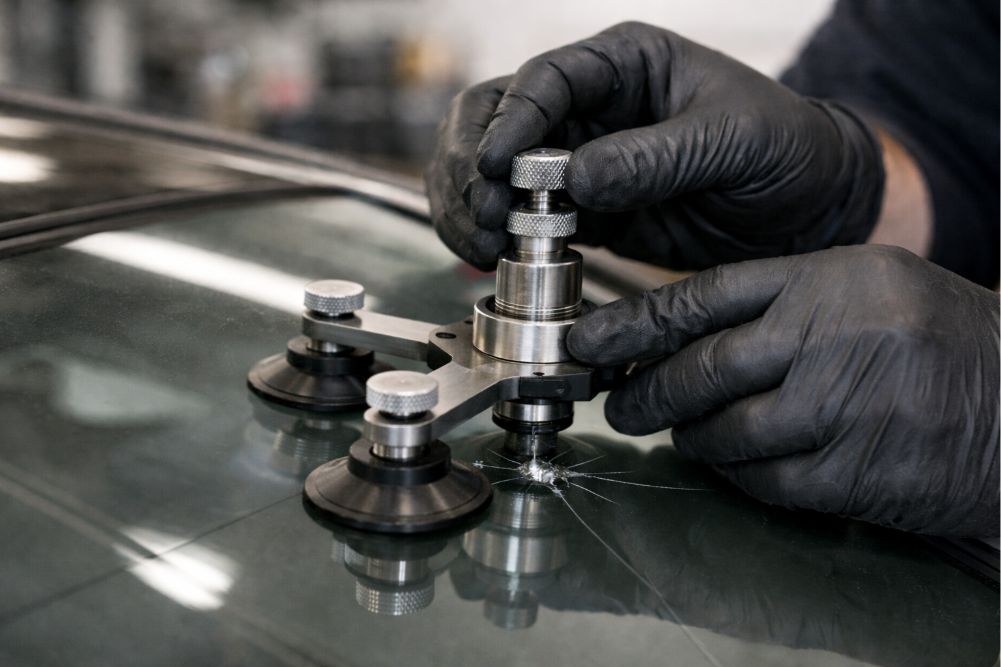
Repairing Auto Glass Windshields for Extended Travel
The music is queued, the munchies are packed, and the GPS is set. Road vacations signify freedom and adventure, a chance to escape the daily routine and discover new vistas. While you may have checked your oil, tire pressure, and fluid levels, there is one important component typically ignored during pre-trip inspections: the windshield. The glass in your car does much more than just block wind and insects. It is a major safety element that preserves structural integrity and assures visibility. When pushed to the demands of highway travel, a little, undetectable chip may rapidly grow into a large fracture, perhaps leaving you stranded miles from home. Understanding the necessity of vehicle glass repair before you hit the highway may save you time, money, and worry.
Get An Auto Glass Replacement Quote Now 866.278.7417

Windshield Replacement & Repair
Our competitors push you into going to their shop to get your glass fixed-making it cheaper for them. We make it easier for YOU to get back on the road by offering free mobile repairs at your home or work. With our free mobile services servicing the entire Orange County & Los Angeles area, we can often handle your windscreen replacement the same day! So the next time you need a windshield replacement, give us a call.
Talk to a Windshield Replacement Specialist Now 866.278.7417

Calibration
Calibration is the process of returning a vehicle’s ADAS to OEM specifications. Calibration is necessary after a new glass installation, particularly a windshield with a camera mounted to it, to ensure that the ADAS features continue to function properly despite having been moved during installation. If a car’s ADAS is not properly calibrated, the system may not function safely. A misaligned camera could jeopardize the functionality of the system and lead to dangerous driving or accidents, so it is crucial that the cameras are aligned perfectly, which is what windshield calibration ensures.
Talk to a Calibration Specialist Now 866.278.7417

Fleet Auto Glass Repair
We provide expert auto glass repair and windshield replacement services for commercial fleets of all sizes. We are experienced with all manufacturers and machine types of domestic or foreign cars, trucks, vans, or commercial vehicles, including heavy equipment. Our same day mobile auto glass and windshield repair service will enable you to get back on the road faster and start saving you time and money instantly. Give us a call today! We are here to help!
Talk to a Fleet Auto Glass Specialist Now 866.278.7417
The Hidden Dangers of Highway Driving
Short city commutes don’t usually put your car under the same pressures as long-distance travel. These variables may convert tiny glass flaws into serious safety problems.
Vibration and Speed: Your car shakes continuously while you travel at highway speeds for long stretches of time. While current suspension systems soften this for passengers, the chassis—and the glass linked to it—still absorbs substantial energy.
If your windshield has a pre-existing chip or a small crack, this persistent vibration works like a hammer, progressively forcing the fracture deeper and broader. What starts as a speck may “run” across your line of sight in seconds.
Glass expands when heated and compresses when cooled due to temperature fluctuations. On a road journey, your windshield endures tremendous temperature warfare.
The summer sun could heat the glass to high temperatures while you blast the air conditioning on the inside. This heat shock causes tension inside the glass layers. If a chip has already damaged the glass’s integrity, it won’t be able to withstand this stress, which can cause abrupt breaking.
Road Debris: Loose gravel, boulders thrown up by semi-trucks, and other debris are common on highways and interstates. Following huge cars at high speeds increases the probability of collision. If your glass is already compromised, a fresh impact that may ordinarily bounce off harmlessly might shatter the outer layer.
Inspecting Your Auto Glass Before Departure
A complete check takes less than five minutes but delivers tremendous peace of mind. Here is what you should check for before driving out of the driveway.
Check for Chips and Pits: Clean the glass completely inside and out. Gently stroke the surface with your hand, being mindful of any sharp edges. Look for:
Bullseyes: Damage that is circular and has a clear point of impact.
Stars: Small fractures extending outward from a focal point.
Chips: Small fragments of glass missing from the surface.
Conduct a thorough inspection of the edges. Cracks that begin close to the edge of the windshield are particularly dangerous. The perimeter of the glass is where the biggest tension is stored. Any damage here affects the structural link between the glass and the automobile structure.
Assess Wiper Blades: Worn wiper blades may damage the glass over time, generating haze that impairs sight, particularly in intense sunshine or rain. If your blades are skipping or leaving streaks, replace them.
When to fix vs. replace: If you detect damage during your inspection, you must determine whether to fix it immediately or arrange a complete replacement.
The “Dollar Bill” Rule: A widespread industry norm states that if a crack is less than a dollar bill, it may frequently be fixed. Modern resin injections are particularly successful in bonding the glass back together and preventing the spread of deterioration.
Do you have a Question?
Get An Auto Glass Replacement Quote Now 866.278.7417
Line of Sight
Even a small, repairable chip could pose a risk if it is directly in the driver’s field of vision. Although durable, the glue utilized for repairs isn’t entirely undetectable. It may leave a tiny distortion that might distract you or generate glare from headlights at night. In these instances, replacement is typically the safest alternative.
Depth of Damage: Laminated glass, which consists of two layers of glass separated by a layer of plastic (PVB), is used to make windshields. A straightforward repair is not feasible if the damage reaches the glass’s inner and outer layers. You will require a complete replacement to restore safety.
Advanced driver assistance systems (ADAS) are a feature that is standard in modern vehicles. Calibration of these systems is an extremely important process. Adaptive cruise control, automatic emergency braking, and lane departure alarms are some of the capabilities that are included in this category. The majority of the time, the cameras and sensors that are used for these systems are situated just behind the windshield.
You can’t just repair the glass and travel if you require a complete windshield replacement before your vacation. To make sure the cameras “see” the road properly through the new glass, they must be recalibrated.
A misalignment of only a few millimeters might cause these safety mechanisms to malfunction or trigger at the incorrect moment. When scheduling your servicing, verify that the car glass shop offers ADAS calibration.
What to Do If Damage Occurs During Your Trip
Despite your greatest efforts, a pebble may impact your windshield midway through your voyage. Here’s how to deal with it.
Evaluate right away: Pull over safely. Is your view blocked by the damage? Is there a crack in the glass? If your vision is limited, please contact us to arrange for a tow.
The car glass business has accommodated travelers’ requirements by offering mobile repair services. Numerous reputable companies offer mobile repair services that come to you at your hotel, a rest stop, or a parking lot. Because of this technique, you will be able to restart your vacation without having to wait for a significant amount of time.
Avoid DIY Hacks: You may read online advice advising you use superglue or clear nail paint over a fissure. Avoid this. These compounds may contaminate the fracture, making a professional resin repair difficult later on. Although it won’t stop a fracture from expanding, clear packing tape may temporarily keep moisture and dirt out of a chip until it is mended.
Questions that are often asked: Is it against the law to drive a car that has a windshield that has been damaged? Yes, in a big number of jurisdictions. Laws often specify that if the windshield effectively blocks the driver’s vision, the vehicle cannot be driven. A police officer might pull you over and issue a penalty if they consider the damage is harmful.
How long do I have to wait after a repair to drive? For a basic chip repair, you may generally drive immediately. For a complete windshield replacement, you normally need to wait one hour for the glue (urethane) to set enough for safe driving. This “safe drive-away time” is crucial for airbag operation.
Will my insurance cover the repair? In order to encourage drivers to remedy chips before they become cracks, many comprehensive insurance plans include windshield repair with no deductible. Replacements may need a deductible based on your unique insurance.
Hitting the Road with Confidence: Your windshield is the lens through which you observe the world as you drive. Ensuring it is clean, undamaged, and physically sound is as crucial as filling up the gas tank. By repairing tiny chips before they expand and learning how to manage unforeseen damage on the road, you safeguard yourself and your passengers.
Don’t allow an avoidable glass problem to disrupt your journey. Take time to assess your car, schedule that repair if required, and enjoy the drive with a clear vision of the road ahead.
An Overview of Windshield Safety on Highways
Every motorist is familiar with a certain depressing mood. You are speeding down the highway when all of a sudden—SNAP. A rock shoots up from the semi-truck ahead of you and hits your windshield with a shockingly loud crack.
Your gaze flickers to the window. It’s modest right now—maybe just a tiny star or a bullseye—but you know the clock is ticking. At highway speeds, the strain on your car is considerable, and what began as a small irritation may suddenly spread into a spiderweb of cracks that covers your whole field of view.
Ignoring windshield damage is usually a losing bet. It can damage your car’s structure and lead to costly replacements that could have been easy fixes. This book explains why roadway fractures spread so rapidly, what you can do right away to lessen the damage, and how to avoid these situations in the first place.
Why Highway Driving Accelerates Windshield Damage: It may seem like bad luck that cracks always appear when you are farthest from home, but physics is usually the cause. Highway surroundings offer the ideal combination of variables that cause glass damage to worsen.
The Role of Air Pressure and Speed: The wind exerts a strong force on your windshield while you travel at 65 mph or more. The outer layer of the glass is stressed by this aerodynamic pressure. If a chip has already weakened the structural integrity, the pressure targets this weak spot, causing the fracture to spread.
Vibration and Road Surface
Highways aren’t always as smooth as we’d want them to be. Even on smooth roads, your automobile is continuously vibrating. These micro-vibrations pass through the chassis and into the glass. This is readily handled by a solid glass pane, but not by a fractured one. The vibrations agitate the edges of the chip, causing it to “run” or extend unexpectedly.
Temperature Fluctuations: Highways can expose your automobile to abrupt temperature swings. If you are driving on a hot summer day with the air conditioning blasting inside, you are creating a thermal battlefield on your window.
The outer expands from the heat, while the interior shrinks from the cold. Frequently, this tension is what causes a chip that can be fixed to become an unfixable fracture.
What to Do Right Away When a Rock Hits: Your first response is crucial if you hear that distinctive crack while driving. While you can’t do a complete repair at 70 mph, you may take efforts to reduce the damage until you reach a safe stopping location.
Reduce Stress on the Glass: Slow down if it’s safe to do so. Reducing your speed lessens the wind pressure blowing on the windshield. Additionally, try to avoid potholes or uneven parts of the road to reduce vibration.
Adjust Your Climate Control: Steer clear of blasting the AC or defroster straight into the windshield. The defroster, in particular, produces rapid heating of the glass, which is one of the most prevalent reasons for fracture growth during colder months. Aim your vents toward the cabin or the floor instead.
The Trick of the Tape
Once you have stopped safely, evaluate the damage. If it is dry and clean, you may apply a piece of transparent packing tape over the chip. This isn’t a structural fix. On the other hand, it keeps washer fluid, water, and debris out of the crack. Contaminants within the fracture make it more difficult for a repair resin to connect later; thus, keeping it clean boosts the odds of a successful expert repair.
Strategies for Long-Term Prevention: You can drastically reduce your risk of windshield damage by changing your driving habits, even though you have no control over the state of the road or the debris that other drivers kick up.
The Following Distance and the Third Rule: The most efficient technique to preserve your windshield is distance. Gravel and debris follow a ballistic trajectory when tires kick them up. You can let the debris return to the road surface before your car does by extending your following distance, particularly behind big trucks or construction vehicles.
Utilize the rule of three seconds: choose a stationary item that is located on the side of the road. You should count to three as soon as the automobile in front of you passes it. A situation in which you pass the object before you have finished counting is an example of following too closely.
Do you have a Question?
Get An Auto Glass Replacement Quote Now 866.278.7417
Mud Flaps and Fender Awareness
Pay attention to the automobiles that are in close proximity to you. Although mud flaps are legally required for large commercial trucks, they are frequently missing or damaged.
You should immediately drop back or change lanes if you see a truck with exposed rear tires. Those tires are debris cannons waiting to fire.
When choosing a route, steer clear of those that are currently under construction if at all possible. The roads are probably littered with loose gravel and rocks, even in the absence of workers. Navigating around these zones, even if it adds five minutes to your commute, can save you hundreds of dollars in glass replacement.
Repair vs. Replacement: Knowing When to Act: Many drivers hesitate to fix a chip because they worry about the cost or the time commitment. However, acting fast is usually the most economical choice.
The Dollar Bill Test: A general rule of thumb used by auto glass technicians is the size of the damage relative to a dollar bill.
Repairable: Resin injection can typically be used to fix a chip or crack that is completely covered by a dollar bill. This procedure keeps the windshield’s original factory seal intact and is frequently covered by insurance with no deductible.
In the event that the fracture is longer than a dollar bill or if it reaches the edge of the windshield, it is necessary to replace the crack since the structural integrity has been compromised. It is necessary to replace the complete windshield at this stage in order to guarantee the safety of the people who are inside the car.
Cutting Edge Driver Assistance Systems
Cameras and sensors installed behind the windshield now manage lane departure warnings and automated braking. If you require a full windshield replacement, these systems often need to be recalibrated, adding to the cost and complexity.
This is another reason why it’s so important for modern car owners to find a chip early on, before it needs to be completely replaced. In the event of a rollover accident, your windshield may contribute up to thirty percent of the structural strength of your vehicle.
It is imperative that you maintain a clear view and drive safely. In addition to being a window, it also serves as a kind of safety device.
By maintaining a safe following distance, avoiding extreme temperature changes on the glass, and addressing chips the moment they happen, you can keep your windshield intact and your highway journeys safe.
Don’t wait for that tiny star to turn into a massive line across your view. Please inspect your glass today, and if you notice any damage, kindly schedule a repair promptly. The most crucial tool you have as a driver is a clear view.
Mobile Safe Auto Glass
14241 E Firestone blvd suite 400,
La Mirada, CA 90638
Phone: (562) 608-1154
Toll Free: 1 866 278 7417
Mail: sales@mobilesafeautoglass.com
Get a FREE QUOTE today! You can get a free quote and schedule 24/7 using this free quote wizard.
Mon – Fri 8am – 5pm
Saturday 8am – 1pm
Sunday Closed