Windshield Crack Repair for ADAS-Equipped Vehicles
During your drive on the highway, a rock hits your windshield. It is a terrible time for any motorist, but for owners of contemporary automobiles, that little chip may end up being more than just a visual inconvenience. In the event that your automobile was manufactured in the past few years, there is a significant possibility that it is already fitted with Advanced Driver Assistance Systems (ADAS). The majority of these advanced safety measures are installed just behind your windshield, and they rely primarily on sensors and cameras to maintain their functionality. A crack on an ADAS-equipped car cannot be repaired by simply filling it with epoxy and driving away.
Get An Auto Glass Replacement Quote Now 866.278.7417

Windshield Replacement & Repair
Our competitors push you into going to their shop to get your glass fixed-making it cheaper for them. We make it easier for YOU to get back on the road by offering free mobile repairs at your home or work. With our free mobile services servicing the entire Orange County & Los Angeles area, we can often handle your windscreen replacement the same day! So the next time you need a windshield replacement, give us a call.
Talk to a Windshield Replacement Specialist Now 866.278.7417

Calibration
Calibration is the process of returning a vehicle’s ADAS to OEM specifications. Calibration is necessary after a new glass installation, particularly a windshield with a camera mounted to it, to ensure that the ADAS features continue to function properly despite having been moved during installation. If a car’s ADAS is not properly calibrated, the system may not function safely. A misaligned camera could jeopardize the functionality of the system and lead to dangerous driving or accidents, so it is crucial that the cameras are aligned perfectly, which is what windshield calibration ensures.
Talk to a Calibration Specialist Now 866.278.7417
Fleet Auto Glass Repair
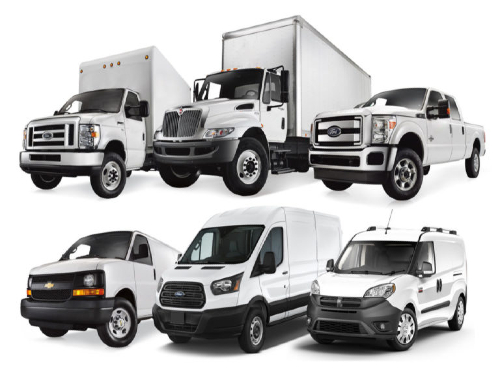
We provide expert auto glass repair and windshield replacement services for commercial fleets of all sizes. We are experienced with all manufacturers and machine types of domestic or foreign cars, trucks, vans, or commercial vehicles, including heavy equipment. Our same day mobile auto glass and windshield repair service will enable you to get back on the road faster and start saving you time and money instantly. Give us a call today! We are here to help!
Talk to a Fleet Auto Glass Specialist Now 866.278.7417
An Understanding of the Connection Between ADAS and the Windshield
The term “Advanced Driver Assistance Systems” refers to a set of electronic technologies that provide assistance to drivers in the areas of driving and parking. The Advanced Driver Assistance System (ADAS) improves the safety of automobiles and roads by providing a secure interface between humans and machines.
Some of the most common ADAS characteristics are: In the event that you stray from your lane, the Lane Departure Warning (LDW) system will notify you. Using the Lane Keep Assist (LKA) feature, the vehicle is gently guided back into the lane. Adaptive Cruise Control (ACC) works by automatically adjusting the speed of the vehicle in order to keep a safe distance from the cars in front of it. The Automatic Emergency Braking (AEB) system applies the brakes in the event that a collision is not far off. The Traffic Sign Recognition system is able to identify and show various road signs, including speed restrictions.
While radar sensors are often located in the bumper or grille, the camera that is facing forward is nearly always fixed on the inside of the glass, typically behind the rearview mirror. This is because the windshield is the most important part of the vehicle. Systems like Lane Keep Assist and Traffic Sign Recognition rely on this camera as their “eye” to monitor the road.
Because the camera is seeing through the glass, the windshield must be of the highest quality in terms of both its clarity and its structural integrity. Even a minor break might cause the vision that the camera captures to be distorted. In addition to this, the glass itself must be able to fulfill particular optical requirements. In the event that the glass is changed or relocated while the camera is being repaired, the angle of the camera may vary by a fraction of a degree. A misalignment of one degree might cause the system to calculate distances incorrectly by many feet while the vehicle is traveling at high speeds.
Concerning the ADAS Factor, Repair versus Replacement
As soon as something is damaged, the first issue that arises is always whether or not it can be fixed or whether it must be replaced. In situations where it is possible to fix, chips and cracks that are quite little (often smaller than a dollar note) may frequently be mended. In order to restore the break’s strength and clarity, the technician injects a specialized resin into the crack and then cures it using ultraviolet radiation.
In the case of ADAS cars, location is important. If the damage is located immediately in front of the lens of the ADAS camera, it is often not advised that the camera be repaired. Even though the resin is transparent, it may nevertheless induce a tiny optical distortion, which might cause the camera to become confused. It is safer to replace the system in these circumstances since it will ensure that it functions as it was designed to.
When Replacement Is Required: The windshield has to be replaced if the crack is too broad, too deep, or if it is in the line of sight of the camera. It is at this point that the procedure is notably different from that of previous automobiles. You are unable to easily switch out the glass. A recalibration of the ADAS camera is something that has to be done here.
What Is The Significance Of Recalibrating?
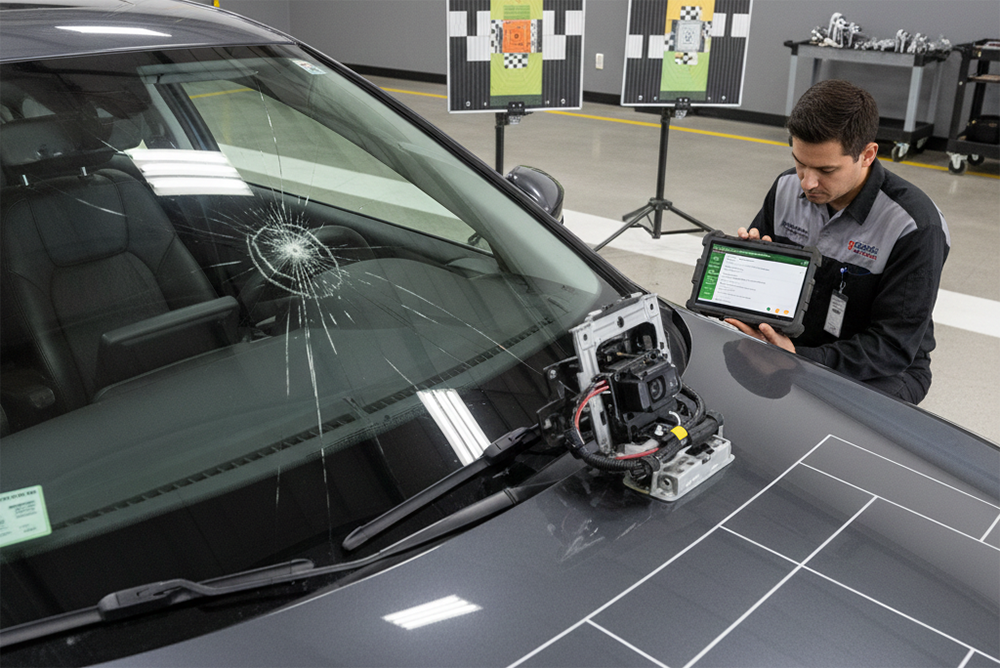
To guarantee that the camera sensor is aimed accurately, the procedure of recalibration involves electronically targeting the sensor. Static and dynamic procedures are the two primary approaches utilized. Static Recalibration: This process is carried out in a shop setting that is under strict control. The automobile is positioned on a level surface, and certain targets are positioned at specified distances and heights from the vehicle.
Through the utilization of a diagnostic tool, the technician is able to instruct the camera to locate these targets and adapt itself accordingly. Accuracy and a backdrop that is devoid of clutter are both necessary for this procedure. Dynamic recalibration is a process that requires the vehicle to be driven on the road at a certain speed for a predetermined percentage of time.
A portable gadget that is hooked into the diagnostic port of the vehicle provides the technician with direction. The camera adjusts its settings by studying the road lines and the vehicles on the road. The conditions of the road and the weather must be ideal for this to be successful. There are some cars that need to be calibrated both statically and dynamically.
Do you have a Question?
Get An Auto Glass Replacement Quote Now 866.278.7417
The Dangers Of Overlooking The Calibration
In the event that a business repairs your windshield but fails to calibrate the camera, the potentially severe effects might be expected. Delay in Warnings: There is a possibility that the system will notify you of a lane departure too late. False negatives: It is possible that the vehicle will not apply the brakes in response to an impediment because it inaccurately evaluates the distance. In the event of a system failure, the system may completely shut itself, which may cause warning lights to illuminate on your dashboard.
Questions You Should Ask Your Auto Glass Shop
Some auto glass shops do not have the necessary equipment to work with ADAS automobiles. Before you schedule an appointment, make sure to ask these particular questions to confirm that the people handling your vehicle are qualified. Within your own company, do you undertake ADAS calibration? This stage is outsourced by some firms, which might add additional time to the repair process. It would be great to know whether or not they have the necessary equipment and skilled personnel on-site.
It is your intention to carry out a pre- and post-scan. A competent repair shop should do a computer scan on your car before beginning any work on it in order to check for any existing fault codes. After the calibration is complete, they should perform another scan on it to ensure that all of the systems are communicating appropriately and that there have been no new faults discovered.
When it comes to glass, do you utilize OEM or OEE? Glass that is manufactured by the same firm that manufactured your original windshield is referred to as Original Equipment Manufacturer (OEM) glass. The term “Original Equipment Equivalent” (OEE) refers to aftermarket glass that is manufactured to comparable specifications. OEM glass is strongly recommended by many car manufacturers for use in ADAS vehicles.
This is done to ensure that the optical quality of the glass is in perfect alignment with the specifications of the camera. Would you be able to give a certificate of calibration? Immediately after the calibration is finished, you should request evidence demonstrating that it was successful. It is essential that you keep this information for your records and possibly for your insurance company.
Are ADAS Calibrations Covered By Insurance Policies?
In many instances, the answer is yes. A windshield that has been damaged is normally covered by comprehensive vehicle insurance. Due to the fact that calibration is a mandatory safety step that is imposed by manufacturers throughout the process of replacement, the majority of major insurers will pay the cost of both the glass and the calibration service.
Nevertheless, you should always check with your supplier as a precaution. It is important to clarify coverage in advance in order to avoid receiving unexpected bills because calibration adds a major cost to the repair, which may range anywhere from $250 to over $600 depending on the vehicle.
Positioning Safety on the Road as a Priority
Over time, windshield repair has progressed from a straightforward mechanical fix to a more involved and intricate technological process. When it comes to maintenance, a higher degree of competence is required as cars grow more intelligent. If your car is equipped with ADAS and the glass is cracked, you should handle the situation with the urgency that it warrants.
Do not search for the fastest and least expensive solution. You should look for a certified business that also has an understanding of the complex interaction that exists between your safety systems and your glass. Your capacity to be protected by your vehicle is contingent on the camera’s ability to observe the road in its entirety.
Do you have a Question?
Get An Auto Glass Replacement Quote Now 866.278.7417
Explanation of Why Camera Calibration Is Necessary Following Auto Glass Repair
Vehicles of today are technical marvels in their own right. A windshield was nothing more than a layer of protection from the elements, including wind, rain, and debris, ten years ago. In the event that it broke, you would replace it, wait for the glue to cure, and then drive yourself away. Nevertheless, there has been a significant shift in the automobile scene.
You should now consider your windshield to be an essential part of the safety ecology that your car possesses. It functions as a lens for the complex cameras and sensors that are designed to keep you safe while you are driving. When you repair or replace a windshield, you are, in effect, messing with the prescription of the lens that is being used.
The fact that straightforward glass repair work needs a complicated follow-up technique known as calibration is something that a lot of drivers are unaware of. Not only can skipping this step result in a warning light appearing on your dashboard, but it also has the potential to significantly impair how your vehicle responds in the event of an emergency. One of the first things you should do to ensure that your vehicle continues to be safe to drive is to have an understanding of the connection that exists between your car’s computer and the auto glass.
The Technology That Is Tucked Away Behind Your Rearview Mirror
In order to comprehend the necessity of calibration, it is first vital to comprehend the processes that are taking place behind the glass. ADAS, which stands for “Advanced Driver Assistance Systems,” is standard equipment in the majority of automobiles produced after the year 2016. A network of sensors, radar, and cameras are utilized by these systems in order to keep track of the road and the environment that the car is in.
The primary camera that faces forward is nearly always fixed directly to the windshield, often behind the rearview mirror. Radar sensors, on the other hand, are frequently found in the bumper or grille of the vehicle. As the “eye” of the system, this camera is being used. The following are some of the essential safety elements that it is responsible for:
You will receive a Lane Departure Warning (LDW) if you violate the lane markers without expressing your intention to do so. If you drift out of your lane, the Lane Keep Assist (LKA) system will automatically steer the car back into the lane. Warning you of an approaching collision with a vehicle or object in front of you is what the Forward Collision Alert (FCA) system does. Automatic emergency braking, often known as AEB, is a system that applies the brakes automatically in the event that an accident is about to occur and the driver does not respond.
This feature reads speed limit signs and shows them on your dashboard. It is known as traffic sign recognition. These characteristics are dependent on accurate visual data. It is the computer’s expectation that the road, the horizon, and other vehicles will be located in very particular locations inside the field of view of the camera.
What Causes the System to Be Disrupted by Glass Restoration
When a technician replaces the windshield or does extensive restoration work, they are required to remove the camera from its bracket and then reconnect it to the new glass. Despite the fact that the camera appears to be at the same location, there are still minute differences that may be observed.
A difference of merely one degree in the angle at which the camera is positioned might have enormous repercussions, according to the geometry of safety. It is possible that the camera is looking at a location that is several feet away from where the computer believes it is looking by the time the one-degree angle reaches fifty or one hundred yards down the roadway.
As a result of this geometric disparity, the vehicle may experience the perception that it is centered within the lane when, in reality, it is drifting into the shoulder. Alternatively, it may incorrectly compute the distance to the vehicle in front of it, causing it to apply the emergency brakes either too late or too early.
There are variations in the optical clarity and distortion of different types of glass. Although the curvature and clarity of vehicle glass must comply with federal safety regulations, there are some modest variances in the curvature and clarity of glass produced by various manufacturers. The refractive index is the name given to this number.
The picture captured by the camera will be distorted if the replacement windshield bends light in a different way from the glass that was placed by the manufacturer. Calibration of the ADAS computer is performed in accordance with the optical characteristics of the glass used by the original equipment manufacturer (OEM). When a new variable is introduced without the program being updated, it is analogous to asking someone to read an eye chart while they are wearing the prescription glasses provided by another individual.
The Dangers Involved in Overlooking Calibration
Some automobile owners choose to bypass the calibration process in the hope of reducing expenses or saving time. They do this on the assumption that the vehicle “feels fine” to drive. This is an extremely critical misunderstanding. Misalignment of the ADAS is not something that is often noticeable in the steering wheel or brake pedal while the vehicle is being driven normally.
Typically, the dangers do not become apparent until the moment when you require the safety measures the most: System Failure: In the best-case scenario, the computer in the car recognizes the misalignment and completely disables the ADAS functions, therefore lighting a warning light on the dashboard. Incorrect activation of the system can result in false positives, such as the application of the brakes inappropriately in response to a “ghost” impediment or the steering away from a lane marker that is not actually present.
In the event that deployment is unsuccessful, the most perilous result is a false negative. The camera may fail to detect a stopped vehicle or a pedestrian in time to engage the Automatic Emergency Braking system, which might lead to an accident that could have been avoided. This can happen if the camera is aimed too high or too low.
What to Anticipate in Different Types of Calibration
In the event that you bring your car in for auto glass restoration, the technician ought to provide you with information regarding the kind of calibration that is necessary for your particular vehicle. Although various manufacturers adhere to a variety of standards, the procedures may typically be divided into two groups. The method known as “static calibration” is carried out in a shop setting that is under strict control.
A level surface is used to park the car, and the tires are pumped to the appropriate pressures before the vehicle is stored. Using fixtures that are precisely positioned at the appropriate distances and heights from the vehicle, the technician positions very accurate targets or patterns. Next, the ADAS computer is activated to perform a scan of these targets and to orient the camera in accordance with the results. It is necessary to have a spacious, clear room as well as specific lighting for this operation.
Calibration Dynamic Calibration: In order to perform dynamic calibration, the vehicle must be driven on the road. An onboard computer is connected to the OBD-II port of the car by the technician, who then connects a portable device to the port. After that, they drive the car for a predetermined length of time on routes that have been designated, at a predetermined speed. The real-time calibration of the system is accomplished by the utilization of the visible lane markers and several other road elements.
Dual Calibration: In order to fulfill the requirements for total accuracy, certain more advanced and modern vehicles need to undergo both static and dynamic calibration. The most time-consuming procedure, but the one that provides the highest level of precision that is available.
Calibration: Is It Necessary Yet
In a nutshell, the answer is no. In the event that a windshield camera is removed or if the glass is replaced, calibration is required, as stated by every major automobile manufacturer. Additionally, insurance firms are becoming more and more conscious of the necessity of this regulation. In the event that you are involved in an accident and it is discovered that your ADAS systems were not correctly calibrated after a repair, it may make it more difficult to file a claim for culpability or insurance.
Positioning Safety Above Convenience as a Priority
It is already an inconvenience to your week that you are going to have to get your windshield fixed. The addition of calibration to the process results in an increase in both efficiency and expense. On the other hand, considering something to be an “add-on” that is not required goes against the realities of modern transportation.
The automobile you drive is a robot that assists you in driving. When you replace the sensors that are used to direct that robot, you will need to instruct it once more on how to look. Insist on having a certified calibration performed following any glass work, regardless of whether you are paying for it out of your own budget or via insurance. At this point, there is no other way to guarantee that the clever safety measures that you have paid for are prepared to defend you when it really matters.
Mobile Safe Auto Glass
14241 E Firestone blvd suite 400,
La Mirada, CA 90638
Phone: (562) 608-1154
Toll Free: 1 866 278 7417
Mail: sales@mobilesafeautoglass.com
Get a FREE QUOTE today! You can get a free quote and schedule 24/7 using this free quote wizard.
Mon – Fri 8am – 5pm
Saturday 8am – 1pm
Sunday Closed