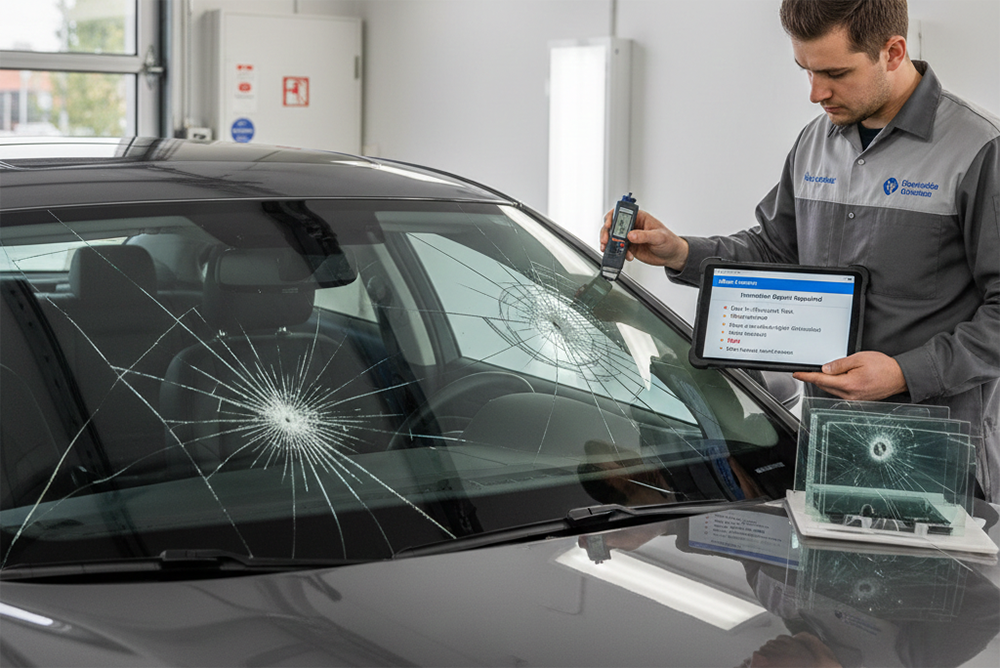
Windshield Crack Placement That Demands Immediate Action
It is the worst dread of any motorist to hear that abrupt, piercing snap sound. You watch as a pebble hits your hood, leaving behind a chip in the shape of a star or a tiny line of silvery material on your windshield. There is a possibility that your initial reaction is to sigh, crank up the volume of the radio, and make a promise to yourself that you will deal with it “later.” After all, if the glass is still intact, how dangerous could it possibly be? Even while it is easy to put off repairs, particularly when life gets hectic, it is important to remember that not all damage is created equal.
Get An Auto Glass Replacement Quote Now 866.278.7417

Windshield Replacement & Repair
Our competitors push you into going to their shop to get your glass fixed-making it cheaper for them. We make it easier for YOU to get back on the road by offering free mobile repairs at your home or work. With our free mobile services servicing the entire Orange County & Los Angeles area, we can often handle your windscreen replacement the same day! So the next time you need a windshield replacement, give us a call.
Talk to a Windshield Replacement Specialist Now 866.278.7417

Calibration
Calibration is the process of returning a vehicle’s ADAS to OEM specifications. Calibration is necessary after a new glass installation, particularly a windshield with a camera mounted to it, to ensure that the ADAS features continue to function properly despite having been moved during installation. If a car’s ADAS is not properly calibrated, the system may not function safely. A misaligned camera could jeopardize the functionality of the system and lead to dangerous driving or accidents, so it is crucial that the cameras are aligned perfectly, which is what windshield calibration ensures.
Talk to a Calibration Specialist Now 866.278.7417

Fleet Auto Glass Repair
We provide expert auto glass repair and windshield replacement services for commercial fleets of all sizes. We are experienced with all manufacturers and machine types of domestic or foreign cars, trucks, vans, or commercial vehicles, including heavy equipment. Our same day mobile auto glass and windshield repair service will enable you to get back on the road faster and start saving you time and money instantly. Give us a call today! We are here to help!
Talk to a Fleet Auto Glass Specialist Now 866.278.7417
This Is The Primary Line Of Sight For The Driver
A crack in the area that is directly in front of your face is the most obvious spot where you cannot afford to have one. It is essential for the safe functioning of the vehicle that this region, which is typically described as a box the size of a piece of paper but located right above the steering wheel, be there.
Refraction of light poses a risk since even a little chip or spiderweb break can cause light to be refracted in ways that are difficult to predict. A crack that is exposed to sunlight during the day might produce a dazzling glare that obscures the road or the vehicles that are approaching from behind. It is possible for the headlights of other vehicles to scatter through the shattered glass throughout the night, resulting in a “halo” effect or unexpected flashes of light that can briefly dazzle you.
The presence of any damage that is within the driver’s direct line of sight is considered an automatic failure during a safety inspection in many jurisdictions. This is a legal and inspection issue. In addition, law enforcement authorities have the authority to issue tickets to drivers who are operating their vehicles with their vision obscured. If you have to glance around a crack in order to see a pedestrian or a brake light, your response time will be impaired. This is something that many drivers fail to pay attention to, but the law acknowledges.
Fix Restrictions: Even if the fracture is tiny enough to be filled, the majority of car glass experts will not fix it if it is in the driver’s line of sight. It is common for the resin that is used to fill chips to cure in a slightly different manner than the glass that surrounds it. Even while it restores the structural integrity of the object, it may leave behind a slight blurring or distortion. A nuisance of a cosmetic nature, this is located in the passenger’s corner. Within your line of sight, it poses a threat to your safety. Because of this, nearly all instances of damage in this area necessitate the replacement of the whole windshield.
Both the Periphery and the Edges
It is possible that you believe that the most secure location for damage is a fracture that is tucked away near the metal frame of the vehicle. In addition to being out of the way, it does not obstruct your vision. On the other hand, individuals who specialize in vehicle glass are in agreement that the edges are the most susceptible to damage to the windshield.
Points of High Stress: The area around the edge of your windshield is the one that is under the highest structural stress. Glass is tempered and treated throughout the production process, which results in the creation of surface tension that gives the glass its durability. On the other hand, this tension is greatest closest to the edges. In the event that a fracture is situated within two inches of the edge of the windshield, it has the potential to spread rapidly and effectively.
In the event of a front-end collision, your windshield may contribute up to forty-five percent of the structural integrity of the cabin of your car, and in the event of a rollover accident, it can contribute up to sixty percent of the structural integrity. In order to keep this strength intact, the adhesive bond that exists between the glass and the metal frame of the automobile is very necessary.
This relationship can be weakened if the split in the glass reaches all the way to the edge of the glass. A damaged windshield has the potential to fly out of the vehicle or shatter prematurely in the case of a rollover, which would cause the roof to collapse. For more information, the correct deployment of the passenger-side airbag is dependent on the windshield serving as a backstop. In the event that the glass breaks close to the edge, the airbag may discharge in the other direction, away from the passenger, rendering it ineffective.
In most cases, fractures that contact the edge of the windshield cannot be repaired because they pose a threat to the structural integrity of the vehicle. In virtually all cases, a complete replacement is required in order to guarantee that the safety cage of the vehicle is completely preserved.
The Area for the ADAS Camera and Sensors
If you drive a vehicle that was produced during the past ten years, there is a good probability that it is fitted with Advanced Driver Assistance Systems (ADAS). Lane departure alerts, automatic emergency braking, adaptive cruise control, and rain-sensing wipers are some of the functions that are included in these systems.
These systems rely on cameras and sensors that are often installed behind the windshield, frequently in close proximity to the rearview mirror. Cracks have the ability to confuse technology. When it comes to optics, this glass must be flawless. These sensors are susceptible to having their data received disrupted if they are in front of a fracture, chip, or even a scratch.
The term “phantom braking” refers to the phenomenon in which a vehicle’s camera lens becomes obstructed, leading the vehicle to believe that it is trying to detect an obstruction that is not actually present. On the other hand, it could not recognize a genuine threat, such as a car that is creeping into your lane of traffic.
Repairing a crack in this zone is a difficult task due to the complications associated with calibration. The little distortion that is left behind by clear resin might cause the sensors to get confused, just like the driver’s line of sight. In the event that there is any damage in the field of vision of the camera, it is frequently mandated by the manufacturer that the windshield be replaced with glass that is manufactured by the original equipment manufacturer (OEM).
In addition, the ADAS system has to be recalibrated when the glass has been replaced. A sophisticated procedure is being carried out in order to guarantee that the cameras are focusing their attention on the precise location on the road. It is not only about the glass if you choose to ignore a crack in this area; it is also about the operation of the brain in your vehicle.
Do you have a Question?
Get An Auto Glass Replacement Quote Now 866.278.7417
What Makes the “Wait and See” Strategy Such a Risky Bet?
Putting off a repair is almost never a prudent choice from a financial or safety standpoint, regardless of where it is located. Within seconds of the glass being chipped, a number of variables begin to work against you. The expansion of glass occurs when it is hot, while the contraction of glass occurs when it is cold. The quick temperature shift that occurs when you blast the defroster on a morning while there is frost causes tension to be distributed over the glass.
A chip that is quite little and easy to control might suddenly “run,” resulting in a crack that is the length of a foot across your dashboard. When you blast the air conditioning in a hot automobile during the summer, the same thing happens. Windshield repair is a process that involves injecting a transparent resin into the fracture in order to bind the glass back together. This process is used to repair dirt and moisture contamination.
This procedure calls for a spotless environment. In the event that you wait many weeks to repair a crack, dirt from the road, windshield washer fluid, and rain will leak into the crack. Because of this filth, it may be hard for the resin to adhere correctly, which would result in a chip that might have been repaired becoming one that must be replaced.
Regarding the size threshold, it is often possible to fix cracks and chips that are less than three inches in length and less than a quarter. In the event that a fracture expands beyond that point, which typically occurs overnight as a result of temperature or vibrations from the road, repair is no longer a possibility. The $100 repair, which is often covered by insurance, is replaced with a replacement that costs more than $400.
Questions That Are Frequently Asked
Does having a broken windshield make it unlawful to operate a vehicle? The crack’s location and the regulations of your community both have a role in this. It is against the law to operate a motor vehicle in the majority of states if the condition of the windshield makes it difficult for the driver to see. A driver may receive a traffic citation if there is a crack in the driver’s direct line of sight or if the crack interferes with the operation of the windshield wipers to remove the rain.
If I file a claim for fixing my windshield, would my insurance premiums go up? Yes, in most cases. The repair of windshields is considered by many insurance companies to be a preventative step, and some of them may even waive the deductible for repairs. Having said that, it is imperative that you examine your particular policy. It is possible that premiums will be affected by repeated claims for replacements, although in most cases, a single repair will not.
Am I able to use superglue to prevent a fracture from developing further? This DIY fallacy is rather widespread. It is possible that superglue or clear nail paint can temporarily prevent dirt from entering the glass; however, these products do not restore the structural integrity of the glass and may even make it more difficult to have a professional fix it in the future. In order to maintain the cleanliness of the region, it is recommended to wrap it with transparent packaging tape and then go directly to a store.
Make Sure That A Little Chip Does Not Turn Into A Major Issue
It is your windshield that acts as a barrier, protecting you from the elements, the road, and everything that may come your way. In spite of the fact that a little chip could appear to be a cosmetic annoyance, the proximity of the chip might transform it into a significant safety failure. Immediately take action if you see any damage in your line of sight, around the edges of the glass, or in close proximity to your safety sensors.
These are the areas that are considered to be damaged vehicle glass. Should you take prompt action, you will be able to save money, maintain the safety features of your vehicle, and make certain that your roof, as well as your luck, will not collapse when it means the most.
When It Comes to Safety Compliance, Visibility, and Auto Glass, Location Is Everything
When you think of driving safety, the first things that probably come to mind are the brakes, the tires, and possibly even the engine. Where does your windshield stand, though? Despite the fact that it is the lens through which you perceive the road, it is frequently ignored until a crack makes its appearance. There are a lot of drivers who are unaware of the fact that the location of their residence and the place where they drive plays a huge role in the longevity of their vehicle glass, the visibility they have, and the safety rules they are required to adhere to.
There are a variety of environmental elements that are continuously assaulting the glass of your vehicle, ranging from the sun-drenched freeways of Arizona to the frigid roads of Minnesota. Not only can these stresses cause your windshield to get filthy, but they also have the potential to impair the structural integrity of the glass itself, which can result in problems with visibility and safety dangers. In order to keep a clear vision and make certain that your vehicle satisfies safety regulations, it is essential to have a solid understanding of these surrounding effects.
When it comes to the law, location is more important than the physical impacts. There is a substantial amount of variation across the various jurisdictions in terms of safety compliance in relation to windshield tinting, damage obstructive effectiveness, and needed repairs. The failure to comply with these local rules might result in costly penalties or, even worse, a vehicle that is declared unfit for the driver to operate.
This article will discuss the ways in which your geographic location can have an effect on the health of your vehicle glass, the unique environmental problems that you may encounter, and the significance of maintaining compliance with the safety rules that are in place in your geographic area. Whether you are a person who commutes to work every day or someone who is planning a road trip across the nation, being aware of these variables can help you stay safe and legal while you are driving.
Do you have a Question?
Get An Auto Glass Replacement Quote Now 866.278.7417
The Impact of the Environment on Automobile Glass
The windshield on your vehicle is durable, but it is not invincible. Constant stresses that might lead to a decline in visibility over time include the climate and surroundings of your particular location. Extreme Heat and UV Exposure: If you reside in an area that experiences constant high temperatures and harsh sunshine, the auto glass in your vehicle will be subjected to a distinct set of problems.
In the presence of excessive heat, glass will expand. In spite of the fact that auto glass is meant to withstand thermal stress, sudden temperature changes, such as blasting the air conditioning after your vehicle has been roasting in the sun, can cause chips or stress cracks that have already been there to expand out fast.
Moreover, the laminate layer that is located between the two panes of glass in your windshield might be damaged if it is exposed to ultraviolet radiation for an extended period of time. In the long run, this might result in delamination or discoloration, which will slightly diminish the clarity and visibility of the object. High UV indices can hasten the deterioration of windshield wiper blades, which in turn can scrape and damage the surface of the glass while it is being used.
Temperatures below freezing and the process of de-icing: On the other hand, cold climes are notoriously difficult on automobile glass. Most of the time, the driver’s attempt to clear the view is the principal offender in this situation. The forceful removal of ice from a windshield can result in the formation of small scratches that cause light to diffract and generate glare, particularly during the nighttime hours.
In frigid locations, thermal shock is another significant risk that might occur. If you pour hot water on a windshield that is frozen, it will produce fast expansion that the brittle, icy glass will not be able to sustain, which will typically end in the windshield breaking immediately. In addition, road salts and grit that are intended to improve grip can be thrown up by other cars, which can act as sandpaper on your windshield and cause the surface to get pitted over time.
Coastal Conditions: Living in close proximity to the coast provides breathtaking sights, but it also exposes your car to exposure to salt air. Salt residue accumulates on the windshield of an automobile, resulting in the formation of a hazy film that is difficult to remove and severely impairs sight, particularly when the vehicle is driven directly into the sun. Additionally, this salt is corrosive, and it has the potential to cause damage to the seals that surround your windshield, which might eventually result in leaks or structural degradation.
Observance Of Local Laws And Safety Provisions
The law is the only thing that matters when it comes to safety; it is not only about what you can see. The restrictions governing auto glass are not identical across the board at the federal level; rather, they frequently come within the jurisdiction of the state or the province. This means that what is lawful in one location may result in you being pulled over in another.
Regulations Regarding Window Tinting Window tinting is the most prevalent area in which compliance is determined by location. There are a wide variety of laws that govern Visual Light Transmission (VLT), which refers to the proportion of light that must be allowed to flow through the window. The majority of locations disallow tinting on the whole front windshield, allowing just a strip (often referred to as an “eyebrow”) to be applied at the top four to six inches of the glass.
In certain states, lighter tints are permitted on the front side windows, while in others, the tint is completely prohibited. In most cases, rear windows are subject to less stringent requirements; nonetheless, there are still restrictions that may be imposed. The act of driving a car that has an unlawful tint increases the visibility of the vehicle, particularly at night, and serves as a warning sign for law enforcement. It is absolutely necessary to examine the VLT restrictions that are applicable to your particular state or province.
Regulations about Windshield Damage Safety inspections frequently contain stringent standards about the amount of damage to the windshield. Any crack or chip that is located within the driver’s direct line of sight—which is often defined as the region that is completely covered by the windshield wipers—is considered to be a breach of safety regulations.
On the other hand, the particular size of the damage that is permitted varies. There are certain areas that have a zero-tolerance policy for any damage that might threaten the structural integrity of the glass in the event of a rollover accident, while other jurisdictions may allow a crack that is smaller than a dollar bill if it is not in the essential viewing area. The failure to pass the inspection and the inability to renew your registration until repairs are performed are the consequences of having a windshield that does not comply with the requirements in states that require yearly safety inspections.
There are a number of advanced driver assistance systems (ADAS) that are installed in modern automobiles. These systems include automated emergency braking and lane departure alerts, among other features. In many cases, these systems are dependent on cameras that are installed behind the windshield.
Calibration: If you reside in a region that has bad road conditions (potholes, gravel), which results in frequent windshield repairs, you need to make sure that your ADAS is recalibrated each and every time. The failure to recalibrate the safety systems results in the physical glass being restored, but it also renders the safety systems incorrect. In spite of the fact that driving with uncalibrated safety systems is not necessarily considered a traffic offense, it is a significant danger to one’s safety and a responsibility.
Keeping Visibility Consistent Across Different Terrains
When it comes to maintaining your view, different places call for different maintenance measures to guarantee that it is not impeded. When compared to driving in rural areas, driving in the city frequently exposes your windshield to exhaust films and industrial fallout, which results in the formation of a greasy coating that becomes smeared when it rains. It is essential to clean the glass of your automobile on a regular basis with professional-grade cleansers.
On the other hand, traveling in rural areas causes your car to be exposed to gravel, mud, and insects. Because it is acidic, bug spatter has the potential to etch into the glass if it is left for an extended period of time. When driving in these regions, it is essential to use a bug-repellent windshield washer fluid and to do frequent inspections for stone chips in order to avoid small damage from developing into large fractures.
When it comes to visibility, your windshield wipers are the unsung heroes of the whole operation. If the temperature is high, the rubber will deteriorate and fracture, but if the temperature is low, it will freeze and rip. It is a common rule that windshield wiper blades should be replaced every six months, or as soon as they begin skipping or streaking. However, the type of windshield wiper you use may vary depending on where you live. In general, beam blades are superior for snowy regions since they do not have metal frames that become clogged with ice. Standard blades, on the other hand, may be sufficient for temperatures that are less severe.
Preserving the Peace and Safety
It is more likely than you would think that your location has an effect on the health of your vehicle glass. A variety of external conditions, ranging from the abrasive salt of coastal roads to the thermal shocks of the icy north, are continually putting the endurance of your windshield to the test. Taking into consideration the haphazard nature of local rules concerning tinting and damage, it is abundantly evident that the task of preserving your automobile’s glass is a continual and active one.
When it comes to taking action, you shouldn’t wait for a spiderweb crack to interfere with your perspective. Conduct an assessment of the local environment, gain an understanding of the unique dangers that your vehicle faces, and become familiar with the safety rules that are in place in your region. Regular inspections, fast repairs, and maintenance that is suited for the climate will ensure that you will be able to see clearly and travel securely during the whole journey, regardless of where the road may take you.
Mobile Safe Auto Glass
14241 E Firestone blvd suite 400,
La Mirada, CA 90638
Phone: (562) 608-1154
Toll Free: 1 866 278 7417
Mail: sales@mobilesafeautoglass.com
Get a FREE QUOTE today! You can get a free quote and schedule 24/7 using this free quote wizard.
Mon – Fri 8am – 5pm
Saturday 8am – 1pm
Sunday Closed