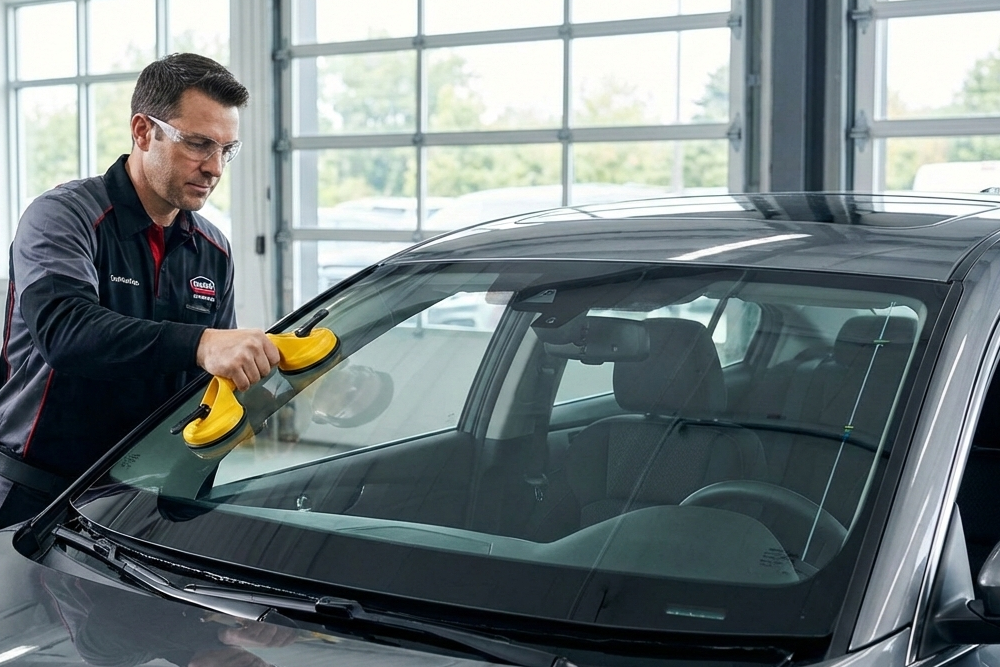
How Proper Installation Protects Premium Glass Performance
You look for the ideal windows for months. You weigh the advantages of triple-pane over double-pane, compare U-factors, and ultimately choose a high-end glass product that offers better insulation, reduced noise, and pristine views. You confidently pay the check, knowing that you have made an investment in your property’s long-term comfort and worth. However, in the excitement of selecting the product itself, a crucial factor that is frequently forgotten is the installation. If installed improperly, even the best architectural glass in the world will perform no better than a cheap single-pane sheet. Performance is not just a product in the glazing and construction industries; it is a system. The frame, the sealant, the flashing, and the skill with which the hands assemble it are all components of that system.
Get An Auto Glass Replacement Quote Now 866.278.7417

Windshield Replacement & Repair
Our competitors push you into going to their shop to get your glass fixed-making it cheaper for them. We make it easier for YOU to get back on the road by offering free mobile repairs at your home or work. With our free mobile services servicing the entire Orange County & Los Angeles area, we can often handle your windscreen replacement the same day! So the next time you need a windshield replacement, give us a call.
Talk to a Windshield Replacement Specialist Now 866.278.7417

Calibration
Calibration is the process of returning a vehicle’s ADAS to OEM specifications. Calibration is necessary after a new glass installation, particularly a windshield with a camera mounted to it, to ensure that the ADAS features continue to function properly despite having been moved during installation. If a car’s ADAS is not properly calibrated, the system may not function safely. A misaligned camera could jeopardize the functionality of the system and lead to dangerous driving or accidents, so it is crucial that the cameras are aligned perfectly, which is what windshield calibration ensures.
Talk to a Calibration Specialist Now 866.278.7417

Fleet Auto Glass Repair
We provide expert auto glass repair and windshield replacement services for commercial fleets of all sizes. We are experienced with all manufacturers and machine types of domestic or foreign cars, trucks, vans, or commercial vehicles, including heavy equipment. Our same day mobile auto glass and windshield repair service will enable you to get back on the road faster and start saving you time and money instantly. Give us a call today! We are here to help!
Talk to a Fleet Auto Glass Specialist Now 866.278.7417
Knowing What You Got
To truly understand why proper installation matters, you must first recognize the complexity of today’s premium automotive glass. Modern high-performance windows are engineering marvels, designed to do far more than simply block wind and rain.
They are not just sheets of glass set into a frame—they are carefully engineered thermal systems that manage sound, heat, and light simultaneously to improve comfort, efficiency, and safety.
Premium glass commonly incorporates Low-E (low-emissivity) coatings, which are microscopic layers of silver or other reflective metals applied to the glass surface. These coatings reflect infrared heat while allowing visible light to pass through, helping keep the cabin cooler in the summer and warmer in the winter.
Many high-performance units also use inert gas fills—such as argon or krypton—between laminated layers or panes to further slow heat transfer and reduce energy loss. Along the edges, “warm-edge” spacer bars are used to maintain consistent separation between layers while minimizing thermal bridging and condensation.
Together, these components form a delicate, high-efficiency system that rejects heat when temperatures rise and retains warmth when they fall. However, this system only works if the glass remains fully sealed, precisely aligned, and free from physical stress.
A careless or rushed installation can compromise seals, introduce distortion, or disturb the internal structure, turning a sophisticated energy-management solution into a long-term liability. Proper installation preserves the balance of this fragile ecosystem, ensuring that premium glass performs exactly as it was engineered to do.
Thermal Bridging Mechanisms
Energy efficiency is one of premium glass’s main selling advantages. You purchase these items to maintain a steady indoor environment and reduce your utility costs. Because it produces thermal bridges, poor installation is the enemy of efficiency.
Heat can enter or exit a building through a thermal bridge, which gets around the insulation. Air will freely circulate around your pricey glass if the installer does not adequately insulate the rough opening, which is the space between the window frame and the wall studs. Even if your center-of-glass R-value is comparable to that of a solid wall, your furnace will still have to work harder if there is air leakage around the periphery.
To close these gaps, expert installers use premium backer rods and low-expansion spray foams. They are aware that the barrier needs to remain in place. The pressure difference between the indoor and outside environments will force air through any crack in the sealant, negating the glass’s efficiency improvements.
Preventing Seal Failure: Seal failure is perhaps the most prevalent and devastating problem with high-performance glass. When the airtight connection between the glass panes is broken, moisture-laden air is drawn in.
Moisture-laden air is sucked in once that seal is broken, allowing the insulating gas to leave. As a result, “fogging”—condensation that builds up between the panes and is impossible to remove—occurs.
Although manufacturing flaws can cause seals to fail, installation errors are the main culprit. The glass unit is subjected to continual torque if a window is fitted “out of square” or “racked” (twisted within the frame). Glass is inflexible and dislikes being bent. This mechanical strain eventually causes the glass to separate from the spacer bar, shattering the seal.
A skilled installation guarantees that the frame is precisely square, level, and plumb. To hold the weight of the auto glass without creating tension, they strategically employ shims. They preserve the integrity of the seal for many years by counteracting the physical forces operating on the window.
Do you have a Question?
Get An Auto Glass Replacement Quote Now 866.278.7417
Stopping Rot and Water Infiltration
Any structure’s worst enemy is water. Although high-end glass units are made to effectively shed water, they rely on a sophisticated caulking and flashing system to divert the water away from the building envelope.
To keep water out, amateur installers frequently only use a bead of caulk. This will only end badly. Eventually, the caulk peels and splits. Water seeps behind the frame when it does. Water leaks into the wall cavity if there is inadequate flashing, which is waterproof material placed beneath and around the window.
The repercussions are dire. Wood rot and mold can grow unchecked under the drywall, even though you might not notice the problem for years. This poses health risks and jeopardizes the wall’s structural integrity. A “belt and suspenders” method is used in proper installation, which integrates the window into the building’s drainage plane so that water is securely routed out rather than in even if it passes the initial barrier.
Maintaining Acoustic Quality: Premium glass is a popular choice among homeowners due to its ability to reduce noise, particularly in metropolitan settings. Distinct glass thicknesses and laminated glass can greatly lessen noise pollution that enters a house.
But sound moves like air. It takes the path of least resistance. A window that has a tiny gap in the installation yet blocks 95% of noise via the glass will not be able to offer tranquility. The sound will travel through the unsealed spaces surrounding the frame and border the glass.
The airtightness of the installation has a significant impact on acoustics. Proper insulation and shimming block the flanking pathways and reduce vibration. The only way to truly hear the difference—or rather, not hear it—if you pay more for STC (Sound Transmission Class) graded glass is to have it professionally installed.
The Loophole in the Warranty
The financial danger should persuade you if the physical concerns aren’t. Examine any premium window or glass warranty’s fine print. There will very probably be a statement that if the product is not installed in accordance with the manufacturer’s instructions, the guarantee is nullified.
Manufacturers are unwilling to pay for mistakes they did not make since they are aware that a poor install destroys their product. The manufacturer will probably deny your claim if your pricey triple-pane window leaks because the flashing was omitted or cracks from tension from a twisted frame. A replacement will have to be paid for out of pocket.
In addition to protecting your product warranty, hiring a professional installation frequently entitles you to its labor warranty. It safeguards your pocketbook by establishing a chain of accountability.
How to Examine Your Installer of Glass: Given how important installation is, how can you be sure you are selecting the best team? Here are some signs of a top-notch glazing specialist:
Manufacturer Certification: A lot of high-end glass companies provide installers with certification and training. Find out if they are authorized to install the particular brand you have selected.
Detailed Quotes: Materials for sealing, flashing, and insulation should be included in a quote. If it simply states “labor,” inquire about their waterproofing practices.
References and Portfolio: Look for prior work that is comparable to your own. Installing high-end glass frequently calls for particular handling skills that average handymen might not have.
Understanding of Local Code: Each location has different building codes pertaining to energy efficiency, wind load, and impact resistance. A pro is well-versed in local regulations.
Common Questions
Can I install Windows Premium on my own to save money? Although it is technically feasible, it is rarely advised. With high-performance glass, there is very little room for error. A do-it-yourself error might result in structural water damage, void the warranty, and reduce energy efficiency. Future repairs or energy expenses frequently offset labor savings.
How much time should it take to install glass correctly? Modern windows and glass units should endure at least 20 years without seal failure or noticeable performance loss if fitted properly. The structural construction should be durable, but the installation materials (flashing, caulk) might require maintenance sooner.
What is the most typical indication that an installation is flawed? The most noticeable indicators are water leaks and drafts. However, the first sign that the unit was fitted incorrectly or is under stress is frequent difficulties opening or closing the window.
When I upgrade my glass, do I also need to repair the frame? Yes, for the best performance. Although “insert” replacements—which include replacing the glass in an existing frame—are less expensive, they preserve the previous, uninsulated wall-frame contact. The installer can correctly flash and insulate the whole opening with a full-frame replacement.
Safeguarding Your Opinion: Purchasing high-quality glass is an investment in a higher quality of life behind the wheel rather than merely a replacement component. Superior materials provide better, more accurate views of the road ahead, enhanced coatings improve comfort in shifting weather and lighting circumstances, and increased optical clarity lets more useful light reach your eyes.
Every time you drive, these advantages become apparent. But glass is a material that needs to be treated with care. It needs accuracy, knowledge of the mechanics and construction of the vehicle, and careful attention to detail during installation to function at its best.
Poor installation can jeopardize even the most sophisticated, high-performance glass. Incorrect installation can lead to problems like distortion, wind noise, water leaks, and reduced effectiveness of safety systems that rely on the windshield for support, caused by issues like poor bonding, uneven pressure, improper curing, or misalignment.
Because of this, it’s crucial to prevent the installation, which makes up the last 5% of the project, from undermining the 95% of the premium materials and engineering that you paid for.
The installation fee should be considered a necessary part of the product itself rather than an additional cost. Premium glass can only fulfill its promises of durability, comfort, and safety when installed properly.
You can be sure that your investment will function as planned not just today but also tomorrow and for decades to come by giving priority to qualified professionals, appropriate protocols, and high-quality materials.
Why Professional Windshield Replacement Is Essential
You’re enjoying the open road while traveling down the interstate when your music is abruptly cut off. Three lanes over, a semi-truck kicked up a rock that struck its target. A tiny, star-shaped chip at first glance could appear to be a minor cosmetic annoyance that you can ignore or fix with a do-it-yourself kit at a later time.
But the benefits of that pane of glass extend far beyond simply keeping insects out of your teeth. The windshield is an essential part of the vehicle’s safety restraint system (SRS) in contemporary automobile engineering. It keeps passengers safe in an accident by working in concert with airbags and seatbelts.
The structural integrity of the entire vehicle is at risk when that glass is compromised, or worse, when an inexperienced technician replaces it wrongly. The stakes are much higher than saving a few bucks, even though it could be alluring to compare quotes for the best deal or the fastest turnaround time. Knowing how windshields are installed explains why hiring a professional is the only safe choice.
The Vehicle’s Structural Foundation: Automotive experts see the windshield as a wall, but most drivers see it as a window. When cars were first being made, glass was only secured in place with rubber gaskets. High-strength urethane adhesives are now used to directly attach windshields to the car’s structure. The glass becomes a structural unit as a result of this process.
Protection Against Rollover: Rollovers are among the scariest types of accidents. The car’s roof takes the brunt of the impact during such an incident. The windshield provides a significant amount of structural support, preventing the roof from collapsing and crushing the cabin.
According to industry safety data, the windshield in many contemporary cars can support up to 60% of the cabin’s structural integrity in a rollover and up to 45% in a head-on collision. The windshield may fly out upon impact if it was put incorrectly, as with the incorrect adhesive, without adequate priming, or on a rusty frame. The roof is far more likely to collapse without the glass to support it, significantly lowering the amount of room that the occupants have for survival.
Keeping Travelers Inside
Additionally, the windshield serves as a backstop. The windshield is the last line of defense against ejection from the car in a serious collision, especially if the occupants are not buckled up. In order to keep passengers secure within the car, a professionally built windshield is made to break but stay attached to the frame. Inadequate installation may cause the glass to entirely separate, eliminating that vital barrier.
The Relationship with Airbags: Domino effects are the foundation of safety systems; if one component fails, the others cannot work. For the passenger-side front airbag to function properly, the windshield is crucial.
The passenger airbag deploys upward at about 200 miles per hour in the event of a collision. In order to lessen the impact, it is intended to hit the inside of the windshield before deflecting outward toward the passenger. The windscreen needs to be robust enough to endure that tremendous, explosive energy without breaking.
The power of the airbag activation alone might blow the windshield out of the frame if the technician used inferior glue or neglected to thoroughly clean the bonding area. The airbag will explode onto the car’s hood instead of the passenger if the glass loses way. As a result, the passenger has little defense against the dashboard and could sustain serious or even fatal injuries.
The role of cameras and calibration in Advanced Driver Assistance Systems (ADAS) is crucial. Safety is about preventing crashes rather than just surviving them. The majority of cars made in the past ten years have Advanced Driver Assistance Systems (ADAS) installed. Among these characteristics are:
Warnings about lane deviation. Emergency braking that operates automatically. Cruise control that adapts. Rain-detecting wipers
These systems often employ sensors and cameras situated directly behind the windshield. They “look” through the glass to monitor the road. This approach adds a level of complexity to windshield replacement that is only suitable for professionals.
The Requirement for Adjustment: These cameras can move just millimeters when a windshield is changed. Even while it may seem insignificant, a one-degree shift in the camera’s angle can cause the system to miscalculate distances by many feet in the future. This could result in the vehicle abruptly veering out of its lane or braking too late.
Skilled professionals undertake recalibration in addition to glass replacement. To guarantee that the ADAS cameras are precisely aligned with the new glass, this procedure uses advanced electrical equipment. You end up with a “smart” car that is essentially blindfolded since a cheap “parking lot” repair firm seldom has the tools or expertise to carry out this crucial phase.
Do you have a Question?
Get An Auto Glass Replacement Quote Now 866.278.7417
Glass Quality and Clarity
Additionally, for ADAS, the glass’s quality is important. A camera sensor may identify minor distortions or waves in lower-quality aftermarket glass as obstacles or lane markers, but the human eye may miss them.
To ensure that the car’s safety computers receive reliable data, professional installers use OEM (Original Equipment Manufacturer) or OEE (Original Equipment Equivalent) glass that satisfies stringent optical criteria.
Adhesives: The Hidden Science. Your car isn’t held together by ordinary superglue. It is a chemically complex urethane that needs particular circumstances in order to properly attach. The distinction between a competent installation and a hasty job becomes clear at this point.
The Method of “Cut-Out”: The old glass needs to be taken out in order to replace a windshield. This entails slicing through the outdated urethane bead. The precise amount of old glue that should be left behind—typically 1/16th of an inch—to act as a foundation for the new bond is known by an expert. Eventually, rust will develop if they cut too closely and scrape the paint on the “pinch weld” (the metal frame) without priming it.
For a windshield installation, rust is cancer. The adhesive loses its hold as it erodes away at the metal. The bond is quietly eroding, even though you may not notice it for months or years. The rusting frame provides a weak spot where the glass rapidly separates in the event of an accident.
Drive-Away Safe Time (SDAT): It takes time for urethane to cure. Temperature and humidity greatly influence the rate at which this chemical reaction occurs. You can find out exactly how long you have to wait until you can drive the car from a professional shop. The Safe Drive-Away Time is the term for this.
Even simply shutting a door might cause pressure within the cabin when driving too quickly, which can push the uncured glue outside and rupture the seal. To protect you, skilled technicians will strictly enforce a waiting period even when they utilize high-modulus, non-conductive urethanes that cure more quickly and strongly.
Knowing When to Replace vs. Repair: Not every rock chip needs to be completely replaced. You can save money without sacrificing safety by being aware of the difference, but a professional should make this determination.
Typically, repair is an option if:
The fracture or chip is around 6 inches in size, less than a dollar bill.
The driver cannot see the damage right in front of them.
Less than three chips are present.
The windshield’s edge is not damaged; cracks there grow rapidly and weaken the structure.
A replacement is required if:
Unlike laminated glass, which holds together, tempered glass breaks easily.
The damage is extensive enough to pierce both glass layers.
ADAS sensors are hampered by the damage.
The crack is either intricate or lengthy.
Putting Road Safety First
A modern car is an extremely complicated machine, designed as a networked system in which each part depends on the others to operate as intended. This ecology revolves around the windshield, which is significantly more important than most drivers realize.
In addition to protecting passengers from wind and debris, it also plays a major role in maintaining the structural integrity of the car, assisting with roof strength in the event of a rollover, facilitating the proper deployment of airbags, and providing a mounting platform for cutting-edge driver-assistance technologies that aim to stop collisions before they happen.
As a result, replacing a windshield is a safety-critical process rather than a decorative one. Selecting a skilled, seasoned expert is an investment in the health of every passenger in your car.
When installed appropriately, the glass is properly connected to the frame, enabling it to function as a structural element in the event of a collision. Additionally, it guarantees that cameras, sensors, and heads-up displays stay precisely aligned and operational, and that airbags deploy at the proper angle and time.
The risks of taking shortcuts are just too great, despite the temptation to save time or money by choosing the quickest or least expensive repair alternative. Weakened structural support, poor airbag function, more wind and water leaks, and sensor “blindness” that compromises crash-avoidance technology are all consequences of improper installation. When the stone hits your windshield, get a qualified expert who knows the science behind the glass and handles each installation with the care and accuracy that your life and safety depend on.
Mobile Safe Auto Glass
14241 E Firestone blvd suite 400,
La Mirada, CA 90638
Phone: (562) 608-1154
Toll Free: 1 866 278 7417
Mail: sales@mobilesafeautoglass.com
Get a FREE QUOTE today! You can get a free quote and schedule 24/7 using this free quote wizard.
Mon – Fri 8am – 5pm
Saturday 8am – 1pm
Sunday Closed