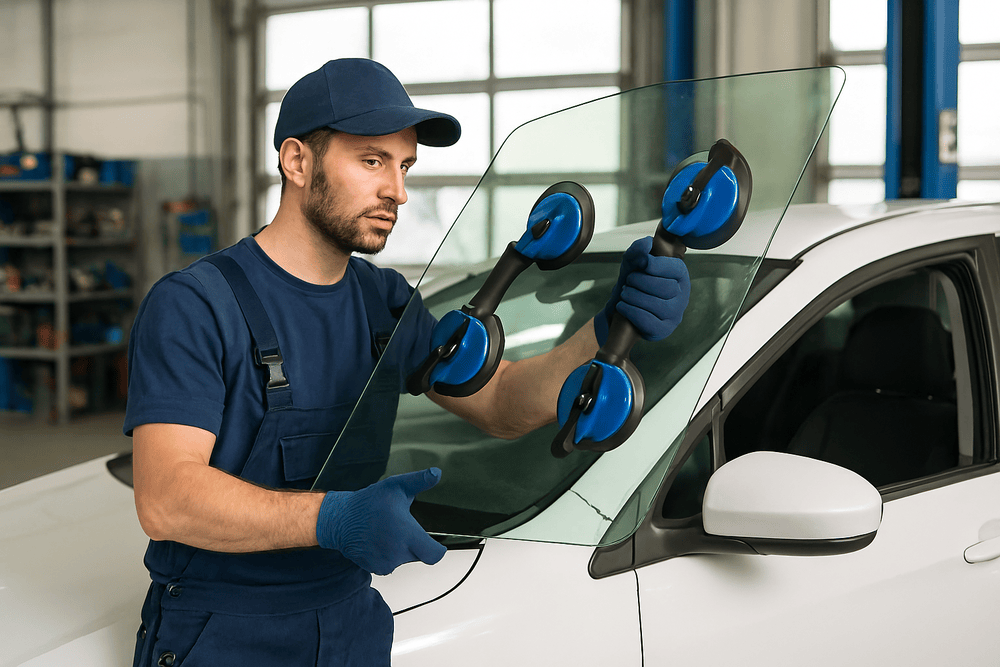
Driver Side Window Replacement Impact on Resale
Selling a car often necessitates finding a balance between maximizing profits and minimizing work before handing over the keys to the buyer. You could vacuum the inside, replace the oil, and even give it a wash. But what about the crack you’ve been ignoring for months in the driver-side window? Or the drive-thru regulator that grinds every time you go through it? For many car owners, glass damage is a murky area when it comes to auto maintenance. Instead of feeling like a mechanical failure, it seems like a cosmetic problem. However, the glass on the driver’s side of the car receives the most use. Prospective purchasers evaluate a car via a risk assessment lens.
Get An Auto Glass Replacement Quote Now 866.278.7417

Windshield Replacement & Repair
Our competitors push you into going to their shop to get your glass fixed-making it cheaper for them. We make it easier for YOU to get back on the road by offering free mobile repairs at your home or work. With our free mobile services servicing the entire Orange County & Los Angeles area, we can often handle your windscreen replacement the same day! So the next time you need a windshield replacement, give us a call.
Talk to a Windshield Replacement Specialist Now 866.278.7417

Calibration
Calibration is the process of returning a vehicle’s ADAS to OEM specifications. Calibration is necessary after a new glass installation, particularly a windshield with a camera mounted to it, to ensure that the ADAS features continue to function properly despite having been moved during installation. If a car’s ADAS is not properly calibrated, the system may not function safely. A misaligned camera could jeopardize the functionality of the system and lead to dangerous driving or accidents, so it is crucial that the cameras are aligned perfectly, which is what windshield calibration ensures.
Talk to a Calibration Specialist Now 866.278.7417

Fleet Auto Glass Repair
We provide expert auto glass repair and windshield replacement services for commercial fleets of all sizes. We are experienced with all manufacturers and machine types of domestic or foreign cars, trucks, vans, or commercial vehicles, including heavy equipment. Our same day mobile auto glass and windshield repair service will enable you to get back on the road faster and start saving you time and money instantly. Give us a call today! We are here to help!
Talk to a Fleet Auto Glass Specialist Now 866.278.7417
The Theory of Broken Windows in Automobile Sales
According to the “broken window theory” in criminology, outward manifestations of chaos and neglect create an atmosphere that invites further criminal activity. The market for secondhand cars experiences a similar psychological impact.
A potential buyer is searching for reasons to believe the automobile’s history when they approach your car. A chipped, cracked, or broken driver-side window immediately sends a negative signal.
It implies the owner likely neglected basic maintenance like oil changes, tire rotations, or transmission flushes if they neglected a window they see every drive.
It’s hard to get rid of this impression of neglect. The cracked glass raises questions about the whole car, even if the engine is in perfect condition. This psychological barrier is removed when the window is replaced, letting the buyer concentrate on the car’s excellent features rather than worrying about what other maintenance was neglected.
The Functional Importance of the Driver Side Window
The driver-side window is high-utility, in contrast to the rear passenger window, which may remain closed for months at a time. It is necessary for:
Visibility: The sun or approaching headlights may provide blinding glares due to light refraction caused by cracks. This poses a serious risk to public safety.
Utility: A working window is necessary to order meals, pay tolls, and access ATMs.
Climate Control: Improperly sealed windows allow moisture to enter the cabin, where it may grow mold and mildew and produce odors that are notoriously difficult to get rid of.
The buyer quickly estimates the trouble of repairing the window if it grinds, sticks, or falls off the track during testing. They consider more than just the part’s price; they also consider the time spent at the repair shop. A reduced offer is the immediate result of this annoyance.
Negotiation Leverage: Repair Cost vs. Discount: Assuming the buyer would subtract the precise cost of the repair from the asking price is one of the most common errors made by sellers.
Consider the $300 cost of a professional driver-side window replacement. Negotiation isn’t as simple as you may believe. “I’ll just lower my asking price by $300. ” For a buyer, a $300 fix can turn into a $1,000 ordeal.
They see it as an undertaking. Utilizing that obvious defect, they will aggressively bargain for a lower price, often demanding a reduction that is far more than the real cost of the repair.
You remove that negotiating chip from the table by replacing the glass up front. Selling a car that is ready to drive puts you in a better position to justify your asking price.
Does Resale Affect OEM vs. Aftermarket Glass? You will have to choose between Original Equipment Manufacturer (OEM) glass and aftermarket (OEE or comparable) glass if you want to replace the window.
For the typical commuter vehicle, such as a Honda Civic or Toyota Corolla, premium aftermarket glass is often enough. Most customers won’t notice the change, and it fits nicely and complies with safety regulations. The kind of glass, however, is quite important, whether you are selling a premium automobile or a more recent model with cutting-edge technology.
Do you have a Question?
Get An Auto Glass Replacement Quote Now 866.278.7417
Alert Displays
Many contemporary cars display navigation and speed information straight onto the windshield or the driver’s field of vision. Although this mostly impacts windshields, some side glass now has tinting or sound dampening layers that work with the car’s sensors.
Using inexpensive aftermarket glass without these characteristics may cause more cabin noise or ghosting pictures. When inspecting a Mercedes or BMW, an astute buyer will look for glass branding. A mismatch that impairs performance negatively impacts the resale value.
Acoustic Glass: To lessen road noise, higher-end trim levels often use “acoustic glass” on the front windows of the driver and passenger.
The cabin will become noisier if this is replaced with regular tempered glass. A buyer may become even more skeptical of the car’s condition if they test drive it and hear a lot of wind noise, which might lead them to believe the door seals are damaged.
Safety Systems and Calibration Advanced Driver Assistance Systems (ADAS) are a part of our modern world. The driver-side window is a component of the vehicle’s structural integrity safety cell, even though sensors are usually installed in the bumper or behind the windshield.
The windows help keep passengers inside the car and support the roof in the case of a rollover collision. In a collision, a side window that has been replaced incorrectly or is composed of subpar materials could not function effectively.
Additionally, blind-spot monitoring lights are increasingly a common feature on side mirrors. Although they are not in the glass, changing the glass on a door requires removing the door panels and working with the wiring for these systems.
All of the electronic parts in the door will continue to operate properly with a professional replacement. Resale value will suffer from a do-it-yourself project that leaves the speaker wire unconnected or the door panel rattling.
When Is It Okay Not to Replace the Window
There are several situations in which changing the glass could not be financially advantageous.
Selling “As-Is” or for Parts: It is not cost-effective to spend $300 on a window if the car is not operational or is being sold for scrap value ($500–1,000). The engine or gearbox is probably the reason the consumer is buying it, not the looks.
Trading in to a Dealer: Dealerships deal with glass repair firms wholesale or have their own in-house service divisions. For a fraction of the price you would spend at retail, they can repair a window.
Even with a trade-in value deduction, it may be cheaper than fixing it yourself. This is risky, however, since a brand-new automobile usually fetches a higher initial trade-in price.
Declaring the Repair: Save the receipt if you replace the window prior to selling. This accomplishes two goals. First, it shows the buyer that you care for the car and fix issues as they arise.
Secondly, a lot of glass replacement businesses provide guarantees against flaws or leaks. Offering this peace of mind to the future owner is a key selling point.
Openness fosters trust. “The driver window had a crack from a rock on the highway, so I had it professionally replaced last week” seems like a reasonable way to greet a potential buyer. Instead of framing the repair as damage management, it frames it as maintenance.
Conclusion: The driver-side window greatly influences the safety, security, and curb appeal of your car. If left broken, it conveys a lack of attention, encourages aggressive price haggling, and poses safety risks that may turn off prospective purchasers.
Replacing the window almost always yields a positive return on investment (ROI) in a private-party, drivable sale. Even though the repair could cost a few hundred dollars, you’ll probably save a lot more money since the buyer won’t devalue the automobile by thousands.
How Car Sales Are Killed by Window Damage
You approach a secondhand automobile that you found online. Through the glass, the inside seems clean, the tires have good wear, and the paint gleams in the afternoon light. However, you see it when you go around to the passenger side. The rear side glass has a sharp fracture that runs diagonally across it.
All of a sudden, the glossy paint is less important. The spotless inside seems less striking. Your mind instantly shifts from enthusiasm to doubt. You begin to wonder whether there are any other issues with the car.
Selling an automobile with cosmetic damage, especially glass damage, is a reality. A damaged side window carries a greater psychological burden for prospective purchasers than a scratched bumper, which might be written off as normal parking wear and use in the city. It conveys cost, carelessness, and weakness. To get the greatest price for a car, sellers must comprehend this perception difference.
The “Tip of the Iceberg” Phenomenon: A prospective buyer is unlikely to consider a damaged side window to be a singular incidence. Rather, they see it as a sign of a more serious issue. This phenomenon is often called the “halo effect” in psychology, although it really has the opposite effect here. One unfavorable characteristic affects how the whole thing is seen.
The buyer will naturally think that the seller neglected other upkeep if they failed to repair a window, which is an essential component for security and weatherproofing. It is an instantaneous mental jump. A broken window indicates that the vehicle was either mistreated or left unattended.
That piece of shattered glass raises questions about the vehicle’s whole mechanical history, even if the engine is flawless and the gearbox is brand new. The automobile you’re selling not only has a shattered window, but it also conveys a message of “neglect.”
The Disconnection in Finance
The amount a buyer wishes to subtract from the selling price and the actual cost of replacing a side window can differ significantly. Depending on the make and model, replacing a typical side window might cost anywhere between $200 and $500. But to a buyer, such damage is a risk, a project, and a headache.
The $300 for the repair is not simply subtracted. They include in the “risk premium” of purchasing a damaged automobile the inconvenience of not being able to drive it right away and the time it takes to locate a repair.
For a $300 repair, a buyer may attempt to haggle for $1,000 or more off the price. They see the damage as an effective negotiating tool.
The seller gives the buyer power by leaving the window cracked. In essence, you pay the buyer more than the repair cost to fix the issue for you.
Anxieties About Safety And Security
A broken window jeopardizes the vehicle’s ability to operate, unlike a ding on a door panel. This arouses innate fears of security and safety.
The Security Aspect: An automobile is a safe place. It locks. It safeguards private property. A vulnerable side window destroys that feeling of security. It seems to be inviting burglars, whether it is just broken or sealed up with plastic.
Buyers seeking a daily driver, particularly those who park on the street, will perceive a security responsibility. They imagine waking up to see the window completely broken and their stereo gone, or they imagine water seeping in during a downpour.
The safety factor: In the event of a hit, modern automobile glass is designed to either keep together (laminated glass) or shatter into safe, dull cubes (tempered glass). In an accident, a compromised window may not function properly.
Families are not going to be able to afford this. Regardless of the cost, a parent searching for a secure automobile for their kid is likely to pass on a car with glass damage. Its reputation as “reliable transport” gives way to that of “unsafe hazard.”
Do you have a Question?
Get An Auto Glass Replacement Quote Now 866.278.7417
The Expectation of the Turnkey
Most used automobile purchasers are searching for a turnkey solution. The next morning, they want to take the keys, turn over the money, and go to work. A weekend project is not what they’re searching for.
You instantly reduce the number of possible customers when you list a vehicle with a shattered side window. You alienate the commuter who urgently needs a vehicle. You lose the first-time customer who is inexperienced with vehicle repairs. Who’s left?
Flippers: Individuals who purchase inexpensive vehicles, make repairs, and then flip them for a profit. They’ll give you the best deal they can.
Mechanics: Individuals who are capable of fixing things on their own and anticipate a “fixer-upper” discount. Desperate buyers are those with very tight budgets who are willing to disregard safety concerns.
If you neglect to fix the window, you may exclude premium buyers—those willing to pay market value for a dependable, spotless car. The only people remaining are bargain seekers who will vigorously haggle over every cent.
Digital Curb Appeal: Your automobile is sold in the digital era before the customer even enters your driveway. Photos are the currency of trust, and online postings serve as the first point of contact.
A red flag that halts the scroll is a picture with a window taped up or a visible crack. In a matter of seconds, customers navigate through hundreds of thumbnails on websites such as Craigslist, Autotrader, and Facebook Marketplace. A visual flaw is a simple excuse to ignore your advertisement.
You may claim in the description that the window only requires a quick fix, but the picture has already caused damage. Many purchasers subconsciously filter their searches to choose vehicles that seem to have been well-maintained.
When compared to other vehicles in the same price range, a shattered window detracts from the car’s visual appeal and gives it a junky or abandoned appearance. Additionally, a consumer is already primed to anticipate a deal if they click on your advertisement. They clicked through despite seeing the mistake only because they expected the price to accurately reflect the damage.
The Various Forms of Damage and How They Are Seen
Although window problems vary, they still undermine consumer trust. The worst-case scenario is having broken or missing glass.
Usually, tape and plastic sheets are used. It implies the vehicle was weathered, which may have caused mildew or water damage to the upholstery. This sign shouts “emergency” and “desperation.”
Fractures: Although the window is undamaged, fractures indicate a stress or impact fracture. Customers are concerned that the window would break suddenly, which is understandable given tempered glass.
Regulator Failure (Window won’t move up/down): A window that is taped shut or slides into the door is a functional failure, even when the glass seems to be in excellent condition. It alludes to mechanical wear or electrical devils. Every time the motorist has to pay a toll or wants some fresh air, it is a nuisance that reminds them of the age of the vehicle.
Fix the Glass to Seal the Deal: Selling a vehicle with a shattered side window is usually an unprofitable transaction for the seller. The harm to your resale value is almost always greater than the expense of repair.
You eliminate a significant complaint by repairing the window prior to listing the vehicle. You show the customer that the vehicle was well-maintained and cared for by restoring its “curb appeal.” Most significantly, you enable the customer to concentrate on the good features of the car and prevent them from worrying, “What else is wrong?”
Please consider contacting a mobile glass repair business if you are preparing to sell. Get the window fixed and any shards removed from the inside by vacuuming.
In addition to the speed at which you will be able to sell the car, that little investment will probably double or triple the ultimate selling price. Avoid letting a piece of clear glass act as an opaque obstacle to your sale.
Mobile Safe Auto Glass
14241 E Firestone blvd suite 400,
La Mirada, CA 90638
Phone: (562) 608-1154
Toll Free: 1 866 278 7417
Mail: sales@mobilesafeautoglass.com
Get a FREE QUOTE today! You can get a free quote and schedule 24/7 using this free quote wizard.
Mon – Fri 8am – 5pm
Saturday 8am – 1pm
Sunday Closed