Checklist for Passenger Side Window Glass Technicians
It takes accuracy, perseverance, and the proper technique to replace or repair a passenger side window. A single omitted step might jeopardize the seal, pose a safety risk, or result in unhappy customers. Having a trustworthy checklist guarantees consistency and quality in every task, regardless of your level of experience as a glass technician or your level of inexperience with vehicle glass repair. The necessary procedures for effectively replacing or repairing passenger side window glass are outlined in this handbook. Everything you need to confidently finish the task will be provided, from the first evaluation to the last quality checks.
Get An Auto Glass Replacement Quote Now 866.278.7417

Windshield Replacement & Repair
Our competitors push you into going to their shop to get your glass fixed-making it cheaper for them. We make it easier for YOU to get back on the road by offering free mobile repairs at your home or work. With our free mobile services servicing the entire Orange County & Los Angeles area, we can often handle your windscreen replacement the same day! So the next time you need a windshield replacement, give us a call.
Talk to a Windshield Replacement Specialist Now 866.278.7417

Calibration
Calibration is the process of returning a vehicle’s ADAS to OEM specifications. Calibration is necessary after a new glass installation, particularly a windshield with a camera mounted to it, to ensure that the ADAS features continue to function properly despite having been moved during installation. If a car’s ADAS is not properly calibrated, the system may not function safely. A misaligned camera could jeopardize the functionality of the system and lead to dangerous driving or accidents, so it is crucial that the cameras are aligned perfectly, which is what windshield calibration ensures.
Talk to a Calibration Specialist Now 866.278.7417

Fleet Auto Glass Repair
We provide expert auto glass repair and windshield replacement services for commercial fleets of all sizes. We are experienced with all manufacturers and machine types of domestic or foreign cars, trucks, vans, or commercial vehicles, including heavy equipment. Our same day mobile auto glass and windshield repair service will enable you to get back on the road faster and start saving you time and money instantly. Give us a call today! We are here to help!
Talk to a Fleet Auto Glass Specialist Now 866.278.7417
Examine the Damage
Determine the degree of the damage first. Is the glass chipped, broken, or cracked? Knowing the extent of the damage helps in deciding whether replacement or repair is required. While substantial damage necessitates complete replacement, little chips and fractures under six inches may sometimes be fixed.
Verify the Make and Model of the car: Verify the year, make, and model of the car. Ordering the incorrect glass costs time and money since passenger side windows vary greatly across automobiles. Before placing an order, always double-check part numbers and, if in doubt, verify the VIN.
Removing the Damaged Glass: The car’s interior and surrounding parts are protected when the glass is carefully removed.
Protect the Interior: Use drop cloths or plastic sheets to cover the dashboard, seats, and door panel. During removal, glass pieces may disperse, and you don’t want to cause harm or create a mess.
Remove Interior Trim Panels: Carefully remove any interior door panels or other parts obstructing window access using trim removal tools. Keep an eye out for screws and clips since misplacing them might cause a delay in finishing.
Cut Through the Adhesive: If the window has an adhesive bond, cut through the sealant with a utility knife or other specialized removal tool. Work steadily and gently around the perimeter. To prevent harming the paint around the door or the frame itself, apply pressure steadily.
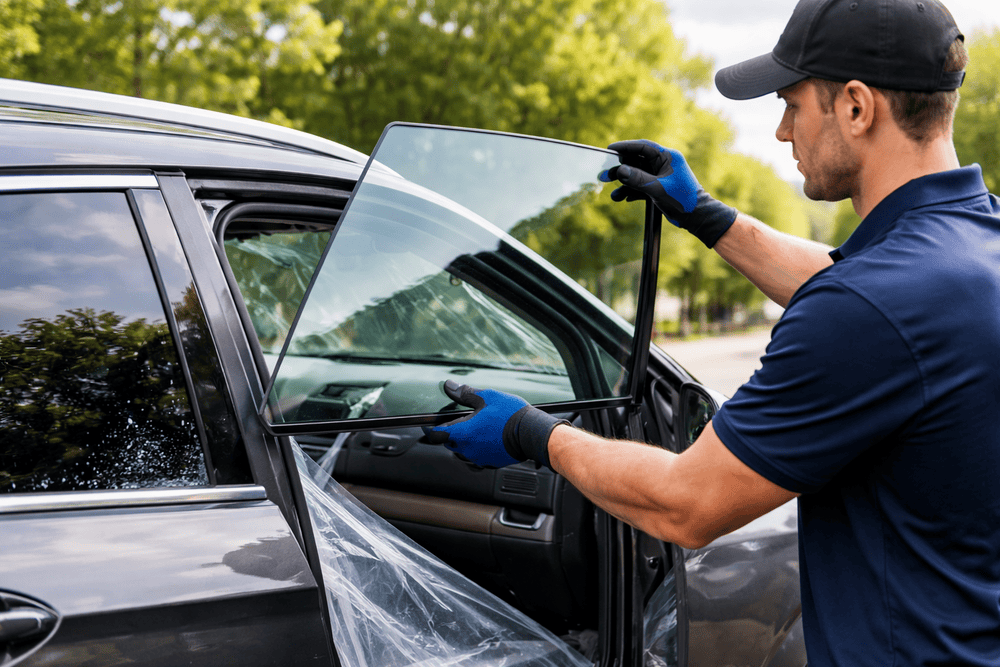
Lift Out the Glass: After cutting the glue, remove the glass from the frame using suction cups. If the glass is too big or difficult to hold, have someone help. The removed glass should be placed in a secure area where it won’t pose a risk.
Clean the Frame: Clear the window frame of any last bits of glue, grime, or debris. A clean surface guarantees the new glass will adhere properly. After using an adhesive remover or scraper, use a lint-free cloth to clean the frame.
Setting Up the New Glass
A tight fit and the avoidance of leaks or rattling are guaranteed by proper installation.
Use Primer to the Frame: After cleaning the frame, use an automotive glass primer. Primer enhances adhesion and facilitates a strong sealant bond. For drying time, adhere to the manufacturer’s directions; hurrying this step might jeopardize the seal.
Apply glue to the Glass: Cover the new glass’s edges with a continuous bead of glue or sealant. Avoid gaps and maintain a constant bead width. Consult the package instructions since most automotive adhesives call for certain application methods.
Carefully Place the Glass: Gently place the replacement glass into the frame using suction cups. Make sure there is an equal space around all borders by properly aligning it with the door opening. To make excellent contact with the glue, press hard.
Secure the Glass: While the glue sets, use tape to keep the glass in place. Verify that the glass does not protrude or sit too deeply and that it is flat with the door frame. Before the glue starts to cure, make any required corrections.
Give Adhesives Enough Time to Cure: Adhesives for cars need time to completely cure. Most products need to cure for at least one to two hours before they can be transferred, however this varies per product. The consumer should be made aware of this timeframe and advised not to drive or roll down the window during that time.
Reassembly and Final Inspections: Until everything is back in place and operating as intended, the task is not over.
Do you have a Question?
Get An Auto Glass Replacement Quote Now 866.278.7417
Reinstall Interior Trim Panels
Any trim panels or parts you previously removed should be reattached. Make sure the screws are tightened correctly and that all of the clips snap into place. Verify the proper operation of any switches or controls by testing them.
Clean the Glass: Use a high-quality glass cleaner and a lint-free cloth to get rid of any fingerprints, smudges, or adhesive residue from the glass. A neat finish conveys expertise and meticulousness.
Test Window Operation: Give the up and down feature a few tries if the passenger window is powered on. Keep your ear out for resistance or strange sounds. Verify that the glass glides easily through the channels and doesn’t adhere or bind.
Check the Seal: Look for any cracks or inconsistencies in the seal around the glass. Feel for air leaks by running your fingers around the edges. A good seal reduces wind noise and water penetration.
To check for leaks, do a water test by misting the window’s surround with water. Keep a careful eye on the corners and bottom edge, since these are often where leaks happen. Take care of any problems right away before returning the car to the buyer.
Safety and Quality Considerations: You and your clients are both protected by high-quality work.
Put Safety First: When working with glass, always use safety glasses and protective gloves. Serious wounds may be caused by even little pieces. To prevent injury, dispose of shattered glass appropriately in the appropriate containers.
Follow Manufacturer Guidelines
Manufacturer-specific differences exist in adhesive materials, glass specs, and installation techniques. Always abide by the suggested procedures for the particular vehicle and materials you’re using.
Record Your Work: Note the glue used, the date of installation, and the glass part numbers. This paperwork serves as a reference for future services and aids in warranty claims.
Interact with the client: Inform the client of the curing period and any maintenance requirements. Inform them when it’s okay to wash the vehicle and use the window. Building trust and avoiding misunderstandings are two benefits of clear communication.
Common Errors to Avoid: These mistakes may be made by even seasoned experts.
Hurrying the Adhesive Cure: Poor outcomes are caused by impatience. The glass may move or the seal may fail if the curing period is shortened. Always provide enough time, even if it means making the consumer wait longer.
Using the Wrong Glass or Parts: Verify that you are using the proper glass for the particular car. Fitment problems and safety hazards arise when the wrong parts are used.
Ignoring Frame Preparation: Adhesion is compromised when appropriate cleaning and priming are skipped. For long-lasting effects, take your time properly preparing the surface.
Ignoring Alignment: Inadequate glass alignment results in gaps, leaks, and problems with functioning. Before the glue hardens, take your time situating the glass and making any necessary modifications.
Improve Your Ability to Install Glass
Replacing the passenger side window becomes an expert demonstration when a comprehensive checklist is followed. From the first evaluation to the last water test, every step counts. Prioritizing planning, accuracy, and quality assurance can help you provide dependable outcomes that attract repeat business.
Always have this checklist available, and feel free to modify it to suit particular vehicle needs or special circumstances. Regularly producing excellent work guarantees client delight and enhances your reputation.
What to Expect: Side Window Glass Replacement Inspection Standards Getting your car’s side window fixed as soon as possible becomes a top priority, regardless of whether the damage is caused by an accident, break-in, or a stray baseball.
However, how can you be sure the work was done properly after the new glass is installed? You can be sure you’re receiving high-quality service that keeps you safe while driving by being aware of the inspection standards used for side window glass repair.
When replacing side windows, professional auto glass technicians adhere to industry regulations. Everything from the kind of glass used to the installation and sealing procedures is covered by these rules.
You can ask the correct questions and identify any problems before they become problems if you are aware of what these standards imply. This article explains the main requirements for side window glass replacement inspections, what the experts look for while doing the work, and what you should check when the job is finished.
Why Inspection Standards Are Important: Side windows do more than simply allow you to view outside your car. They aid in airbag deployment, shield you from the weather, and support the structural integrity of your vehicle. All of these features may be jeopardized by a badly placed side window.
Industry standards guarantee that replacement windows function as intended and satisfy safety regulations. Additionally, these requirements shield customers from poor craftsmanship that may result in wind noise, water leaks, or even window failure while driving.
Reputable vehicle glass businesses adhere to rules set out by manufacturers, insurance companies, and independent safety groups. You can rely on your new window to operate correctly and last for many years if a technician follows these guidelines.
Standards for Installation Inspection
Technicians thoroughly evaluate the affected area before installing any glass. Any underlying problems that can influence the replacement procedure are found at this stage.
Evaluation of the Window Frame and Door: It is necessary to check for damage to the window frame and door construction. Proper glass installation may be impeded by structural defects, corrosion, or bent frames. The frame’s squareness and lack of severe corrosion that might jeopardize the seal are examined by technicians.
Before replacing the glass, more repairs could be required if the door was harmed in the same event that shattered the window. This guarantees a proper fit and seamless operation of the new window.
Testing of the Regulator and Motor: The window regulator, which is the device that raises and lowers the glass, must be in excellent operating order. Both power window and manual window systems are tested by technicians to ensure they run properly and don’t make any strange noises or binding.
New glass may experience stress from a malfunctioning regulator, which might lead to an early failure. Time is saved and future repairs are avoided by identifying these problems before installation.
Evaluation of Weatherstripping: Weatherstripping around window openings prevents air and water intrusion. Technicians look for weatherstripping that has to be replaced if it is ripped, crushed, or damaged during the examination. Your replacement window will seal correctly with fresh weatherstripping, avoiding leaks and lowering road noise. New weatherstripping is often included in the replacement service.
Do you have a Question?
Get An Auto Glass Replacement Quote Now 866.278.7417
Standards for Glass Quality
Replacement glass comes in several varieties. The kinds of glass that may be used for side windows and the requirements for quality are outlined in industry standards.
Requirements for Tempered Safety Glass: Side windows must be constructed with tempered safety glass, which is intended to break into tiny, comparatively innocuous fragments rather than big, hazardous ones. This glass’s strength is increased using a unique heating and chilling procedure.
Original Equipment Manufacturer (OEM) requirements should be met or surpassed by replacement glass. The Federal Motor Vehicle Safety Standard (FMVSS) 205, which regulates glazing materials, is complied with by certain aftermarket glass, as shown by certification numbers.
Optical Quality Checks: There should be no distortions, waves, or bubbles in the glass itself that might make it difficult to see. Before being installed, technicians check new glass to make sure it satisfies requirements for optical clarity.
If your car has tinting, it should be consistent and adhere to the factory’s requirements. In many regions, improper shade levels or uneven tinting could not pass state inspection criteria.
Standards for the Installation Process: Compliance with standards is especially important during the installation stage. Using the right methods guarantees that the window will operate properly and stay safe.
Correct Glass Positioning: The new glass has to be placed with uniform gaps around all corners, just like the original. To guarantee accurate installation, technicians utilize measurements and alignment markings.
If the window is positioned incorrectly, it may not roll up and down smoothly or may have gaps that let air and water in. For long-term performance, it is crucial to take the time to properly align the glass.
Verification of the Attachment Method
Adhesive channels, bolts, or clips are usually used to secure side windows to the regulator. For your car model, the installation technique must adhere to the manufacturer’s recommendations.
Technicians check that the glass can move freely and without binding over its entire range of motion and that all attachment points are secure. While driving, loose attachments may cause the window to rattle or separate.
Seal and Weatherproofing: Making a good seal stops water from getting in and lowers wind noise. Technicians make sure weatherstripping consistently makes contact around the whole window surround and apply the proper sealants.
While looking for leaks inside the car, run water over the window area to test the seal. Before you go, this easy test finds installation problems.
Checklist for Post-Installation Inspection: Following installation, a final examination verifies that all requirements have been fulfilled. This multi-point assessment guarantees that the work you get is of high quality.
Operational testing involves having technicians run power windows through many full cycles to ensure smooth functioning, appropriate speed, and appropriate stopping points. When the switch is pressed, the window should fully descend and seal when it is lifted.
If auto-up and auto-down options are available, they must work correctly. Verify the safety mechanisms that stop the window from shutting if it detects resistance.
Visual Inspection: A careful visual examination checks for clean glass, regular gaps, and correct alignment. The exterior and interior surfaces shouldn’t have any obvious smudges, scratches, or adhesive residue.
When completely elevated, the window should be flush with the body panels around it. Any misalignment is a sign of incorrect installation that has to be fixed.
Testing for Air and Water Leaks
More thorough leak inspections may be carried out by technicians after the first water test. In order to find air leaks that can be a sign of seal issues, some companies use specialist equipment.
As soon as feasible after installation, take your automobile through a car wash or a period of intense rain. Any leaks that could go undetected during shop testing are exposed by this real-world test.
Warranty and Documentation: Reputable stores provide records attesting to the repair done, including the kind of glass used and any extra components that were changed. If warranty service is subsequently required, this documentation becomes crucial.
The majority of high-quality installations are covered by labor and material warranties. Know what is covered and for how long so that you are aware of your rights in the event that anything goes wrong.
Typical Installation Problems to Look Out for: Not all shops adhere to standards uniformly, even when they do exist. You can spot poor work by being aware of frequent issues.
Inadequate weatherstripping or poor alignment are often indicated by rattling or wind noise. Water leaks indicate damaged seals or incorrect drainage channel installation. Inability to raise or lower the window indicates binding from misaligned glass or issues with the regulator.
Get in touch with the store right once if you see any of these problems soon after installation. Most issues can be resolved most easily if they are addressed immediately.
Ensuring Quality and Safety: Although replacing a side window may appear simple, correct installation calls for close attention to detail and adherence to set standards. These rules are in place to keep you safe and guarantee that your car operates as intended.
You may hold car glass businesses responsible for high-quality work by being aware of the inspection criteria that apply to side window replacement. Never be afraid to seek documentation, ask questions, and personally check the completed installation. It is essential to your safety.
Mobile Safe Auto Glass
14241 E Firestone blvd suite 400,
La Mirada, CA 90638
Phone: (562) 608-1154
Toll Free: 1 866 278 7417
Mail: sales@mobilesafeautoglass.com
Get a FREE QUOTE today! You can get a free quote and schedule 24/7 using this free quote wizard.
Mon – Fri 8am – 5pm
Saturday 8am – 1pm
Sunday Closed