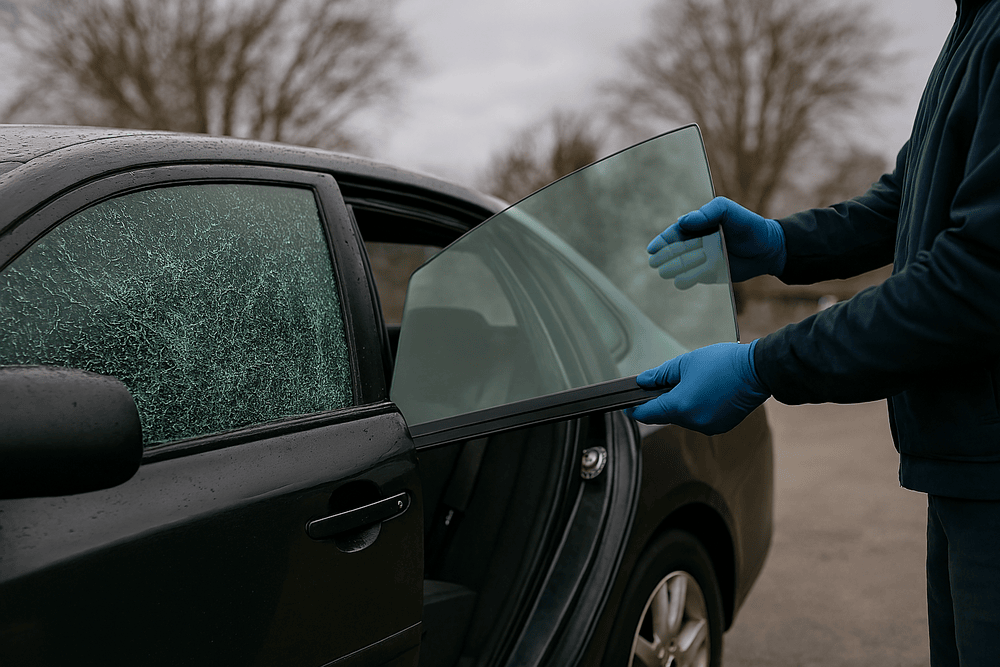
Weather Damage Driver Side Window Replacement
Overnight, a powerful storm moves through. You hope your automobile is secure as you hear hail pinging off the roof and the wind roaring. However, upon waking up the next morning, you find your driver-side glass either broken or severely damaged. It is a hectic, disorganized, and annoying way to begin the day. One of the main factors for vehicle glass damage is the weather. Mother Nature may do serious damage to your car, from the harsh impact of hailstones to the quiet tension of sharp temperature changes. Although windshield damage is frequent, a shattered driver-side glass poses an urgent safety and security issue that requires rapid treatment.
Get An Auto Glass Replacement Quote Now 866.278.7417

Windshield Replacement & Repair
Our competitors push you into going to their shop to get your glass fixed-making it cheaper for them. We make it easier for YOU to get back on the road by offering free mobile repairs at your home or work. With our free mobile services servicing the entire Orange County & Los Angeles area, we can often handle your windscreen replacement the same day! So the next time you need a windshield replacement, give us a call.
Talk to a Windshield Replacement Specialist Now 866.278.7417

Calibration
Calibration is the process of returning a vehicle’s ADAS to OEM specifications. Calibration is necessary after a new glass installation, particularly a windshield with a camera mounted to it, to ensure that the ADAS features continue to function properly despite having been moved during installation. If a car’s ADAS is not properly calibrated, the system may not function safely. A misaligned camera could jeopardize the functionality of the system and lead to dangerous driving or accidents, so it is crucial that the cameras are aligned perfectly, which is what windshield calibration ensures.
Talk to a Calibration Specialist Now 866.278.7417

Fleet Auto Glass Repair
We provide expert auto glass repair and windshield replacement services for commercial fleets of all sizes. We are experienced with all manufacturers and machine types of domestic or foreign cars, trucks, vans, or commercial vehicles, including heavy equipment. Our same day mobile auto glass and windshield repair service will enable you to get back on the road faster and start saving you time and money instantly. Give us a call today! We are here to help!
Talk to a Fleet Auto Glass Specialist Now 866.278.7417
How Weather Breaks Auto Glass
Most drivers believe that windows only shatter when a rock flies from a vehicle. But weather-related factors may be quite harmful. Knowing the reason may help you avoid such events in the future and assist you in communicating the matter to your insurance carrier.
The Effect of Hail: Hailstones may be as little as a pea or as large as a baseball. Side windows are often composed of tempered glass, but windshields, with their laminated composition, are engineered to resist substantial impact.
Instead of breaking into sharp shards, tempered glass is made to break into thousands of tiny, dull pebbles. The driver-side glass can often instantaneously shatter when struck directly by a huge hailstone, leaving your cabin vulnerable.
Debris from High Winds: Ordinary things may become projectiles due to wind speeds during strong storms. Strong storms can hurl trash cans, loose roof tiles, and tree branches at your car. Parking on the roadway or behind trees puts your side windows at risk from flying debris or falling branches that hit the glass quickly.
Temperature Variations and Thermal Stress
Changes in temperature cause glass to expand and compress. When the glass’s temperature fluctuates too quickly or unevenly, thermal stress results.
For instance, the glass may fracture if you instantly blast the defroster or splash hot water on it after your vehicle has been in frigid conditions all night—a typical error.
On the other hand, slamming cold air conditioning into a heated window on a sweltering summer day may do the same thing. While windshields often suffer the most, side windows, especially those with tiny chips or other defects, are also vulnerable.
Tempered vs. Laminated Glass: Why It Matters You need to determine the kind of glass in your driver-side door to know your alternatives for repair.
Tempered Glass: Tempered glass has historically been used for the majority of side windows. When it hits its breaking point, it entirely disintegrates, despite being heat-treated to make it very robust.
Should I replace or repair? It is seldom possible to restore tempered glass. It’s gone as soon as it breaks. A complete replacement is required.
Laminated Glass: To cut down on road noise and avoid ejection in the case of an accident, many contemporary luxury cars, especially the more recent models, are adopting laminated side windows. This glass is made up of two glass layers joined by a plastic layer.
Should I replace or repair? Laminated glass may break or create a “spiderweb” pattern without falling out if it is struck by hail. Although it is theoretically possible to fix certain minor chips, a driver-side fracture often requires replacement. A safety hazard and often a violation of the law is any obstacle in the driver’s line of sight.
What to Do Right Away After Damage: Secure your car right away if you find out your window is shattered.
Record the Damage: Take pictures of the window and its surroundings before cleaning anything up. Take pictures of the damage-causing hail or debris. For insurance claims, this proof is essential.
Cover the gap: Cover the glass to protect the inside if you can’t get to a repair facility right away. Instead of using duct tape, which leaves a sticky residue that is difficult to remove, use automotive masking tape to fasten heavy-duty plastic sheeting or a trash bag.
The glass is vacuumed: If the window broke, use gloves to carefully remove the big pieces. Vacuum the inside of the door pockets, the floor mats, and the seats. Tempered glass goes everywhere, so be thorough.
Service Scheduling: Don’t wait. Using a plastic bag on your windshield while driving decreases visibility and is not a sustainable option.
Do you have a Question?
Get An Auto Glass Replacement Quote Now 866.278.7417
The Replacement Process Explained
Because of the mechanical parts within the door, repairing a driver-side window is more complicated than replacing a windshield. The technician will first remove the internal door panel.
This diagram displays the window regulator, which is the track and motor system that raises and lowers the glass. Glass often falls into the door frame after weather-related breakdowns.
The technician must carefully vacuum out the dirt within the door. This glass may damage the new window, grind against it, or rattle constantly while you’re driving if it isn’t removed.
The replacement glass is put into the regulator after the region has been cleaned. The technician then tests the power window controls to ensure the glass slides smoothly and the top seals securely. The door panel is then put back in place. Usually, the complete procedure takes between an hour and 90 minutes.
The most frequent query among automobile owners is whether insurance covers weather damage. The sort of coverage you have usually determines the response.
Comprehensive Coverage: This feature often includes coverage for non-collision-related damage. This includes coverage for fire, robbery, vandalism, and “Acts of God,” an insurance term for natural disasters such as hail, floods, and windstorms. If you have comprehensive coverage, your insurance should cover the replacement, but you may have to pay your deductible.
Liability Only: If you only have liability insurance, which covers harm you cause to others, you will likely have to cover the window replacement yourself. Although weather damage is regarded as a “no-fault” occurrence, repairs for your car are not covered by liability plans.
Complete Glass Coverage: A certain glass rider or waiver that reduces or does away with the deductible for glass repair is included in certain policies. To confirm, check the specifics of your insurance or give your agent a call.
Defending Your Vehicle Against Upcoming Storms
You can lessen the chance of harm even if you have no influence over the weather.
Garage Parking: A covered garage offers the best protection. During hail season, if you don’t already have one, think about hiring a covered location.
Vehicle coverings: There are premium, cushioned vehicle coverings that are said to be resistant to hail damage. They may save you hundreds of dollars on glass and bodywork repairs, but they take time to install.
Avoid Parking Under Trees: Trees lose limbs during ice storms and strong winds. It’s usually better to park in an open space rather than under a big, ancient tree.
Watch the Forecast: If a strong storm is expected, attempt to relocate your vehicle to a safer area or, in the absence of specialist coverings, cover it with thick blankets.
Commonly Asked Questions: If my car’s driver-side window is broken, can I still drive? Practically speaking, it is risky, but legally it depends on your local regulations. Debris may enter the cabin and hit you in the face, the side view is lost, and wind noise can be annoying. Until it is rectified, it is better to drive as little as possible.
What is the price of replacing a driver-side window? Vehicle manufacture and model affect costs. The average cost of replacing a conventional piece of tempered glass is between $200 and $450. The cost may be much greater if your vehicle needs specially laminated glass or has sensors built into the window.
Will my other windows match the new glass? Indeed. Qualified vehicle glass technicians use OEM (Original Equipment Manufacturer) or OEE (Original Equipment Equivalent) glass. Their hue and curvature will be identical to those of your original window.
Does the window motor suffer from weather damage? Yes, it can. The electric motor or window switches may sustain harm if a window breaks and rainwater enters the door panel before you can cover it. When replacing the electrical components, it is essential to have an expert check them.
Avoid Waiting Until It Breaks: Your safety and security depend on your driver-side window. A tiny hole from a hailstone or a stress fracture from a freeze-thaw cycle might be the beginning of weather damage, but it seldom remains that way.
Weakened glass operates like a timer. By taking care of the damage as soon as possible, you can keep your car safe from the weather and preserve complete visibility. Make an appointment for a glass repair right now if a storm has damaged yours so you can drive securely again.
How Your Side Windows Are Silently Damaged by Storms
When a tree limb crashes through a roof, hail dents a hood, or a cellar floods, we often imagine storm damage to be instantaneous and disastrous. But some of the most subtle harm occurs covertly, gradually eroding your home’s structural soundness.
Unaided eyes often overlook the susceptibility of your windows, particularly the side windows that bear the brunt of directed winds. During a violent storm, you may do a brief visual inspection. Everything is assumed to be OK if the glass isn’t broken.
However, damage to your home’s intricate system of windows, frames, and seals may exist beyond the surface. Preventing long-term problems like water leaks, drafts, and energy inefficiency begins with understanding the mechanics of how wind, pressure, and debris influence your windows.
The Physics of Wind Load: The wind interacts with your home during a storm, not merely blowing against it. The wind creates negative pressure, or suction, on the leeward side and corners of a structure when it strikes, while the windward side, or side facing the wind, experiences positive pressure.
Positive and Negative Pressure: These two kinds of pressure often fluctuate sharply around side windows.
Positive pressure causes the glass to be forced inward, putting stress on the window’s sash and mounting points. Negative pressure pulls the window outward by acting as a vacuum.
Stress cracks in wood and vinyl or “metal fatigue” in window frames may result from repeatedly pushing and tugging during a windstorm. The airtight seal of the unit may be compromised if the movement breaks the adhesive bonds that hold the glass and frame together, even if the frame doesn’t shatter.
Vibration and Buffeting
During a gale, have you ever heard your windows shaking in their frames? That vibration indicates structural stress. Constant buffeting loosens the hinges, latches, and screws that hold the window square and secure. This mismatch eventually makes it difficult for the window to close completely, leaving spaces for air and water to enter.
The Effect of Debris: Although it is evident when a huge branch breaks a window, tiny debris may result in “micro-damage” that gradually erodes the glass. Your side windows are essentially sandblasted by strong winds that carry sand, debris, and tiny stones.
Micro-Pitting and Scratches: The glass surface develops tiny pits and scratches as a result of this abrasive action. These may not seem like much, but they weaken the glass’s tensile strength.
Surface tension is necessary for the strength of tempered glass, which is often used within windows for safety. This tension is broken by deep scratches, which greatly increases the likelihood that the glass will break in the next storm or even from a little impact.
Compromising Low-E Coatings: To increase energy efficiency, many contemporary windows feature Low-E (low-emissivity) coatings. These coatings may be scratched by flying debris, which lessens their efficiency.
Additionally, the gas fill (often argon or krypton) between double-paned windows may escape if the seal is damaged by impact, fogging the window and reducing its insulating qualities.
Do you have a Question?
Get An Auto Glass Replacement Quote Now 866.278.7417
Frame Rot and Water Infiltration
During a storm, rain seldom falls directly; instead, it is driven sideways by the wind. This horizontal downpour forces water into every nook and crevice of your window construction.
Weephole Overload: To divert water away from the track, most windows include weep holes. The wind pressure, however, may be high enough during a severe storm to stop water from draining away or, worse, force water back up through the weep holes and into the house.
Seal Failure: As was established before, seals may get loosened by wind pressure. Water may flow into the wall cavity around the window after a seal is broken. This causes decay in windows with wood frames.
For other materials, it may result in the formation of mold and harm to the insulation and drywall. This kind of damage is very hazardous because it occurs within the wall and often goes undetected until serious structural rot has developed.
Examining for Hidden Damage: Don’t just check for shattered glass after a significant storm. Examine your side windows carefully to identify any structural deterioration early.
Verify the Operation
The window may be opened and closed. Does it adhere? Is it loose? When the sash is difficult to operate, it typically means that the frame has moved or distorted.
Look at the Seal: Check for moisture or fogging between the glass panes. This is the clearest indication when a seal is broken.
Examine the outside for any gaps between the siding and the window frame. Examine the caulking; if it is peeling or damaged, the frame could have moved due to the storm.
Seek water trails: Look for any indications of moisture or discoloration on the wall under the window and on the internal sill.
Guard the envelope of your house: The “envelope” of your house, which acts as a barrier between you and the weather, includes your windows. Compromising this barrier compromises the overall structure’s effectiveness and security.
Don’t wait for a leak to show up if you think your side windows have seen too much abuse. Speak with an expert to evaluate the structural integrity of your windows. You may avoid future expensive water damage repairs by replacing or repairing them early.
Mobile Safe Auto Glass
14241 E Firestone blvd suite 400,
La Mirada, CA 90638
Phone: (562) 608-1154
Toll Free: 1 866 278 7417
Mail: sales@mobilesafeautoglass.com
Get a FREE QUOTE today! You can get a free quote and schedule 24/7 using this free quote wizard.
Mon – Fri 8am – 5pm
Saturday 8am – 1pm
Sunday Closed