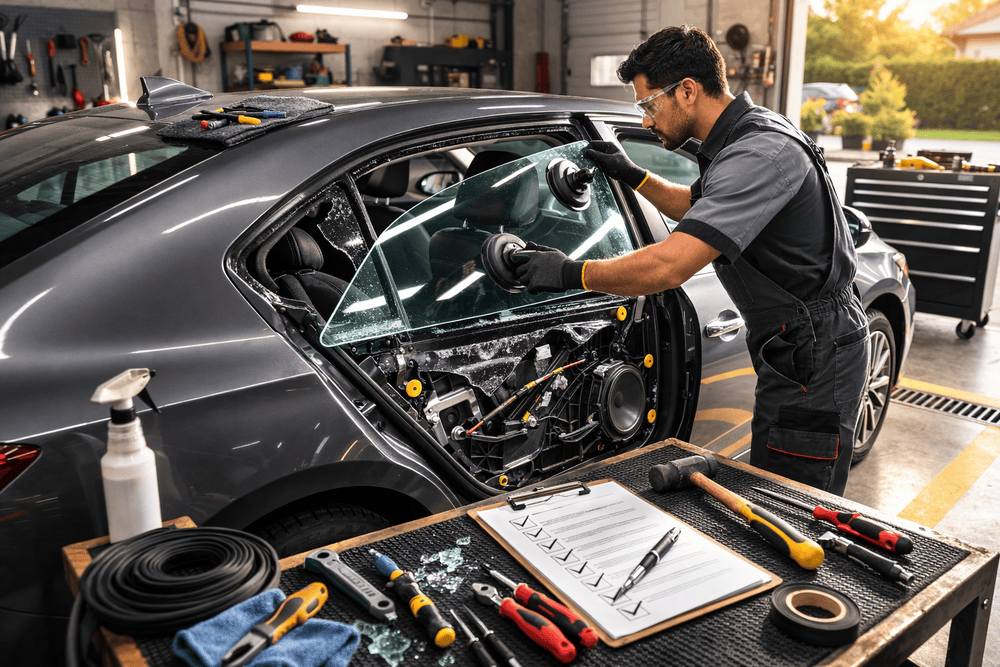
Rear Side Window Replacement Tips Checklist
Broken or cracked rear-side windows are more than just an eyesore. It exposes you to the weather, jeopardizes the security of your car, and may even fail a safety check. It takes careful planning and execution to replace your rear side glass, regardless of whether the damage was caused by a wayward rock, a break-in attempt, or normal wear and tear. This article covers all the necessary information for replacing the rear side window. You’ll discover helpful advice to guarantee the task is done correctly, from evaluating the damage to deciding between do-it-yourself and professional installation. Utilize this checklist to steer clear of typical blunders and restore your car to its best state.
Get An Auto Glass Replacement Quote Now 866.278.7417

Windshield Replacement & Repair
Our competitors push you into going to their shop to get your glass fixed-making it cheaper for them. We make it easier for YOU to get back on the road by offering free mobile repairs at your home or work. With our free mobile services servicing the entire Orange County & Los Angeles area, we can often handle your windscreen replacement the same day! So the next time you need a windshield replacement, give us a call.
Talk to a Windshield Replacement Specialist Now 866.278.7417

Calibration
Calibration is the process of returning a vehicle’s ADAS to OEM specifications. Calibration is necessary after a new glass installation, particularly a windshield with a camera mounted to it, to ensure that the ADAS features continue to function properly despite having been moved during installation. If a car’s ADAS is not properly calibrated, the system may not function safely. A misaligned camera could jeopardize the functionality of the system and lead to dangerous driving or accidents, so it is crucial that the cameras are aligned perfectly, which is what windshield calibration ensures.
Talk to a Calibration Specialist Now 866.278.7417

Fleet Auto Glass Repair
We provide expert auto glass repair and windshield replacement services for commercial fleets of all sizes. We are experienced with all manufacturers and machine types of domestic or foreign cars, trucks, vans, or commercial vehicles, including heavy equipment. Our same day mobile auto glass and windshield repair service will enable you to get back on the road faster and start saving you time and money instantly. Give us a call today! We are here to help!
Talk to a Fleet Auto Glass Specialist Now 866.278.7417
Assess the Damage First
Consider the extent of the damage before making a hasty replacement decision. Not every window problem calls for a complete replacement. You may be able to save time and money by using specialist glue to fix minor chips or cracks.
Verify if the damage compromises the window’s structural integrity or your ability to see. Replacement is your only choice if the crack is becoming worse, the glass is broken, or there are big pieces missing. Take pictures of the damage from various perspectives; they will be useful for requesting quotations or submitting an insurance claim.
Think about the type and position of the window as well. The size and form of the rear side windows vary based on the brand and model of your car. Some glide or pop out, while others are fastened in place. Knowing the kind of window you have can help you choose the right replacement part.
Get Your Supplies and Tools: The replacement procedure goes more smoothly and safely if you have the appropriate tools on hand.
Verify again that the new glass fits the requirements of your car. Ordering the incorrect part can be an expensive error that delays the project. Before making a purchase, confirm the year, make, model, and trim level.
Choose Between DIY and Professional Installation: Although replacing a rear-side window on your own might save money, it does need the proper tools and mechanical confidence. For many vehicles, DIY replacement is possible if you have a few hours to spare and are familiar with working on automobiles.
Professional assistance is necessary in certain circumstances, however. Specialized expertise is necessary for modern cars with integrated electronics, sensors, or tinting.
Professional installation guarantees proper operation if your window has defrosting components or is connected to the car’s security system. Before making a choice, get several estimates from trustworthy car glass companies.
Many provide location-based mobile services. Examine costs, guarantees, and user feedback. In the event that anything goes wrong, a professional installation usually comes with a guarantee on both parts and labor.
Remove Interior Trim Panels Carefully
Before you can reach the mounting hardware, you must remove the interior trim panels that cover the majority of the rear side windows. These panels are fastened using a mix of plastic clips and screws, which are readily broken if pushed.
First, find every screw that is visible, which is often concealed by tiny plastic coverings. Gently remove these covers with a flathead screwdriver. The clips holding the panel in place may be released using trim removal tools once the screws have been removed.
To prevent the plastic from splitting, work carefully along the panel’s edge while maintaining a constant pressure. Place all of the trim pieces, screws, and clips in a container that will keep them from being misplaced.
If you’re concerned about remembering how everything goes back together, take pictures when disassembling. If you need to label pieces, do so; your future self will appreciate it when it comes time to reassemble.
Safely Remove the Shattered Window: When working with shattered glass, safety is crucial. Throughout this phase, put on protective glasses and thick work gloves. Before removing a severely broken window, wrap it with packing tape to keep the pieces together.
Generally, windows are fastened using bolts, glue, or a mix of the two. For windows that are adhered, gently cut through the old sealant using a utility knife. Until the window loosens, work all the way around. While holding the glass to prevent it from dropping, remove any bolts that are securing your window to the frame.
For improved grip and control, gently use suction cups to pull the window out once it is free. Please enlist the assistance of a colleague for the larger windows. To safeguard sanitation workers, properly dispose of shattered glass by wrapping it in cardboard or newspaper before putting it in a garbage bag.
Do you have a Question?
Get An Auto Glass Replacement Quote Now 866.278.7417
Clean and Prepare the Window Frame
Before the new glass is installed, the window frame has to be thoroughly cleaned. Debris, dirt, or outdated adhesive can weaken the seal and could result in leaks.
Scrape off weatherstripping and old glue with a razor blade. Take care not to harm painted surfaces while being thorough. To get rid of any last bits of grease and debris, wipe the frame with isopropyl alcohol or glass cleaner.
Before continuing, allow the surface to thoroughly dry. While the frame is exposed, check it for damage or corrosion. Touch-up paint and a rust converter are recommended for minor rust patches. Don’t put a replacement window on a frame that has been damaged; structural damage has to be evaluated by an expert.
Apply the adhesive and install the new window. Urethane adhesive is often used for the installation of modern vehicle glass. The glass is bonded to the frame by this robust, flexible sealant, which permits slight vehicle bending when driving normally.
Following the directions provided by the adhesive manufacturer, prime the cleaned frame. Please allow it the recommended amount of time to dry. Using constant thickness and coverage, apply a continuous bead of urethane glue around the window aperture.
For improved control, use suction cups to properly position the new window. Make sure it makes complete contact with the adhesive bead by pressing it firmly into place. Before driving or replacing trim, check the product directions for precise wait durations, as most adhesives take several hours to completely dry.
Reinstall the Trim and Test the Seal
Interior trim panels may be reinstalled when the glue has dried. Carefully line up the clips with their mounting holes, then apply pressure until you hear them snap into position. To finish the internal reassembly, replace the plastic covers and screws.
Use a hose to run water over the window seal to test it. Look for leaks in the car’s exterior and interior. Water tends to seep through faulty seals, so pay close attention to corners and edges. You could need more sealant if you find any leaks.
If necessary, roll the windows up and down to guarantee seamless functioning. Verify the proper operation of electronic parts such as defrosters. Any problems should be resolved right away to prevent them from becoming worse.
If applicable, submit an insurance claim. Comprehensive insurance coverage often covers auto glass damage, sometimes with no deductible. Before making an out-of-pocket payment, review your insurance to understand your coverage.
Inquire about glass coverage and report the damage to your insurance provider. Many insurance companies can set up installation for you since they have direct relationships with vehicle glass businesses. Present the pictures you took previously to record the harm.
Save all of the replacement-related paperwork and receipts. Keeping documents is helpful in case there are concerns later, even if insurance covers the expense. To be eligible for coverage under some plans, you may need to utilize certain repair shops or aftermarket parts.
Return to the Road in a Safe Manner
Replacing a rear-side window preserves the structural integrity and safety of your car. Whether you choose to do it yourself or hire a professional, following this checklist ensures proper completion of the work.
Keep in mind that the right curing time is crucial. For at least 24 hours after installation, refrain from washing your automobile, speeding, or slamming doors. By taking these steps, the adhesive has more time to attain its maximum strength.
Regular maintenance can prevent future window damage. If at all possible, park in covered spaces, clean your windows often, and take care of minor chips before they need expensive repairs. Maintaining the glass in your automobile now can save you money and trouble later.
Professional Advice for Safeguarding Your Investment
Replacing a side window is expensive. Getting a window replaced may cost anywhere from $200 to $500 or more, depending on your car and whether you’ve had an accident, a break-in, or just normal wear and tear. The problem is that appropriate maintenance may prolong the life of your newly purchased side window and keep it looking like new for many years to come.
The majority of folks believe that the difficult portion is finished after the replacement is completed. Not exactly. The initial days following installation are critical, and the window’s long-term maintenance significantly impacts its performance.
From identifying which cleaning agents won’t harm the glass to avoiding frequent mistakes that could jeopardize the seal, a little information can make a significant difference. This article explains all you need to know about maintaining your recently replaced window, and it comes directly from the professionals who install side windows daily.
Allow It to Cure: The glue used to fix the glass must have time to fully set after replacing your side window. Leaks, wind noise, or even the window breaking loose might result from rushing this operation.
The majority of car glass adhesives take 24 to 48 hours to completely cure. Avoid washing your vehicle, slamming the doors, or aggressively moving the window up and down during this period. Indeed, slamming doors may exert enough pressure to move a partially bonded glass.
Depending on the glue they used, your expert should provide you with detailed instructions; heed their recommendations. Wait the whole 24 hours if they advise against using a vehicle wash. Taking shortcuts here could undo the meticulous effort that went into the installation.
Keep the Window Rolled Up
Avoid testing your new window immediately if it has a roll-up/roll-down feature. Both the new adhesive and the regulator mechanism need time to settle.
Keep the window facing up for the first 24 to 48 hours. This prevents any movement that would break the seal and enables the glass to adhere firmly to the door frame. Although you may use the window as usual after the healing time, it’s still a beneficial idea to use caution during the first week.
Clean It Correctly: After your window has healed, routine cleaning will maintain its clear, buildup-free appearance. However, not every cleaning technique is made equal.
Use the proper products: If your window has any tinting or protective film, use glass cleaners that are ammonia-free. Over time, ammonia may cause pigment to peel, bubble, or discolor. For daily cleaning, a simple solution of water and a few drops of dish soap is as effective.
Select the appropriate cloth: your closest buddy is a microfiber towel. They absorb moisture without leaving stains and won’t harm the glass. Steer clear of paper towels, which may be rough and produce lint.
Wipe in a single direction: Use vertical or horizontal straight-line movements to clean the glass rather than circular ones. This method lessens streaking and makes it simpler to identify any regions you may have overlooked.
Do you have a Question?
Get An Auto Glass Replacement Quote Now 866.278.7417
Examine the Seal Frequently
Your side window’s urethane or rubber seal does more than merely keep the glass in place. It prevents wind, dust, and water from entering your car. Over time, exposure to UV radiation or extreme temperatures can cause seals to deteriorate.
Carefully examine the seal around your replaced window every few months. Look for any peeling, cracks, or openings where water can leak in. Take immediate action to resolve any problems you find. A minor seal issue might develop into a more serious one, such as water damage to the inside or door panel.
Consider using a rubber conditioner on the seal once or twice a year if you reside in a region that has severe winters or high sunlight. By doing this, the material maintains its flexibility and avoids drying out and breaking.
Protect It From Extreme Temperatures: Glass, including your side window, expands and shrinks in response to temperature fluctuations. Even though contemporary vehicle glass is designed to withstand these changes, harsh circumstances may nevertheless strain the adhesive and seal.
When it’s hot outside, try to park in the shade. The glue may degrade with prolonged exposure to sunshine, which might eventually erode the bond. Additionally, using a windshield sunshade might assist in lowering your car’s interior temperature.
In freezing weather, don’t try to defrost a frozen window with hot water. The glass may break as a result of the abrupt temperature shift. Instead, carefully clear ice using a plastic scraper or the defroster on your automobile. Another option is to use a de-icing product made specifically for vehicle glass.
Address Chips and Cracks Immediately
Damage may still occur to a side window that has just been replaced. Road debris, a stray rock, or a negligent door ding in a parking lot can cause chips or cracks.
Please have it inspected promptly if you notice any damage, regardless of how minor. If you subject the glass to further stress or temperature changes, a small chip can rapidly grow into a bigger break. If detected early, many chips may be fixed, which is significantly less expensive than having to replace the whole glass.
Steer clear of harsh chemicals: Some chemicals might harm your side window’s glass and seal. Exercise caution when using any products near your windows, including:
Bug repellents and sprays: These often include strong solvents that may erode tint film or rubber seals.
Harsh cleaning agents: Industrial cleaners such as acetone and bleach may discolor or deteriorate surfaces.
Harsh chemical-based automatic vehicle washes: Some car washes employ cleaning solutions that are too abrasive for windows with tint or new seals. Choose a vehicle wash that employs mild, auto-safe solutions, or stick to hand cleaning.
Check for Leaks After Heavy Rain: Water leaks are one of the most frequent issues after side window replacement. This often occurs when the seal hasn’t completely cured or been placed incorrectly.
Look for any indications of water damage inside your automobile during the first significant downpour after your replacement. Examine the floor mat, the door panel, and the vicinity of the window. Get in touch with your installer right away if you see any dampness. If the problem is with the installation, the majority of trustworthy stores will correct leaks for free.
Recognize When to Get Expert Assistance
Issues might occur even with the finest treatment. It’s time to seek expert advice if you see any of the following: These problems won’t go away on their own, and putting off repairs might result in more serious (and costly) damage.
Preserve Long-Term Worth: Maintaining the functionality of your side window replacement is important, but so is preserving the worth of your car. A clean, undamaged seal on a well-maintained window tells prospective buyers that the vehicle has received the right kind of maintenance.
Your side window will remain in great shape for many years with careful usage, timely repairs, and routine cleaning. Additionally, even little adjustments might have a significant impact on how purchasers see your car’s overall quality if you ever need to sell it.
Preserve Your Investment: Replacing a side window is an investment that requires careful maintenance, just like any other. You may prolong the life of your new window and prevent future expensive repairs by allowing the glue to dry, properly washing the glass, checking the seal often, and taking rapid care of any damage.
Although the procedures described here are simple, they do call for some focus and regularity. If you take care of your side window, it will take care of you, keeping your car safe, cozy, and in good condition for many miles to come.
Mobile Safe Auto Glass
14241 E Firestone blvd suite 400,
La Mirada, CA 90638
Phone: (562) 608-1154
Toll Free: 1 866 278 7417
Mail: sales@mobilesafeautoglass.com
Get a FREE QUOTE today! You can get a free quote and schedule 24/7 using this free quote wizard.
Mon – Fri 8am – 5pm
Saturday 8am – 1pm
Sunday Closed