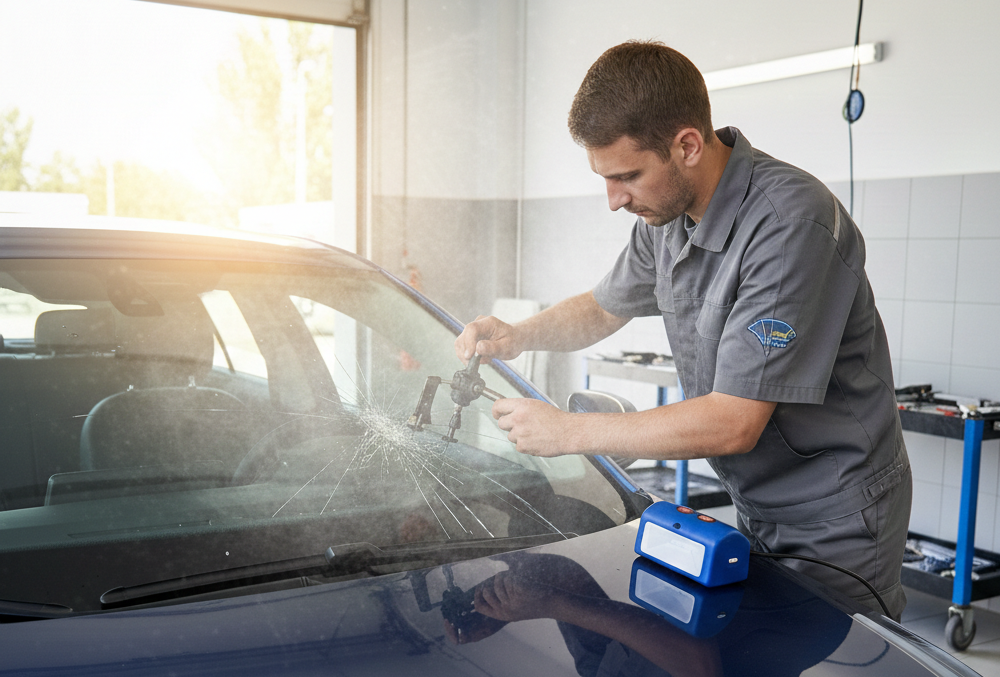
Auto Glass Repair Near Me and Weather-Related Damage
The majority of drivers believe that a broken windshield is caused only by a rock that has kicked up from the road. You gasp as you see the chip and hear that terrible snap. However, occasionally you discover a crack that wasn’t there the night before when you go outside to your car in the morning. Or perhaps your entire range of vision is suddenly covered in small, inconsequential chips. The weather is frequently the culprit. Extreme temperatures can seriously damage the structural integrity of your car’s glass, which is constantly stressed by the weather. The weather has a big impact on your car’s health, whether it’s the scorching July heat or the icy January winds. By being aware of how weather affects your car’s glass, you may stop damage before it begins.
Get An Auto Glass Replacement Quote Now 866.278.7417

Windshield Replacement & Repair
Our competitors push you into going to their shop to get your glass fixed-making it cheaper for them. We make it easier for YOU to get back on the road by offering free mobile repairs at your home or work. With our free mobile services servicing the entire Orange County & Los Angeles area, we can often handle your windscreen replacement the same day! So the next time you need a windshield replacement, give us a call.
Talk to a Windshield Replacement Specialist Now 866.278.7417

Calibration
Calibration is the process of returning a vehicle’s ADAS to OEM specifications. Calibration is necessary after a new glass installation, particularly a windshield with a camera mounted to it, to ensure that the ADAS features continue to function properly despite having been moved during installation. If a car’s ADAS is not properly calibrated, the system may not function safely. A misaligned camera could jeopardize the functionality of the system and lead to dangerous driving or accidents, so it is crucial that the cameras are aligned perfectly, which is what windshield calibration ensures.
Talk to a Calibration Specialist Now 866.278.7417

Fleet Auto Glass Repair
We provide expert auto glass repair and windshield replacement services for commercial fleets of all sizes. We are experienced with all manufacturers and machine types of domestic or foreign cars, trucks, vans, or commercial vehicles, including heavy equipment. Our same day mobile auto glass and windshield repair service will enable you to get back on the road faster and start saving you time and money instantly. Give us a call today! We are here to help!
Talk to a Fleet Auto Glass Specialist Now 866.278.7417
The Study of Heat Stress
The most effective way to combat the elements is speed. The longer a chip sits exposed to the environment, the lower the chances of achieving a clean, nearly invisible repair.
As days pass, dirt and road debris settle into the break, moisture seeps beneath the surface, and repeated heating and cooling cycles slowly weaken the surrounding glass. Each temperature swing—warm afternoons, cold nights, defrosters, and air conditioning—adds stress that can cause a small chip to suddenly spider out into a long crack.
If you notice damage, act immediately. Cover the area with clear packing tape as soon as it’s safe to do so. This simple step helps keep dirt, dust, and moisture out of the break and preserves the integrity of the chip until it can be properly repaired.
While tape won’t stop thermal stress or prevent the crack from spreading indefinitely, it can significantly improve the odds of a successful professional repair. Quick action can make all the difference.
Addressing a chip early often transforms what could have been a full windshield replacement—costing hundreds of dollars and requiring recalibration—into a fast, affordable repair. More importantly, it helps maintain your vehicle’s structural strength, factory seal, and overall safety. When it comes to windshield damage, every day you wait works against you.
How Auto Glass Is Affected by Winter
The hardest season for the exterior of your car is probably winter. The glass contracts in the cold air, increasing its brittleness and vulnerability to injury. The true threat, though, frequently stems from our responses to cold.
The Risk of the Defroster: Everybody has been there. You put the defroster on the highest setting since you are rushing late for work and the windshield is covered in frost. This is among the most frequent methods for transforming a chip that can be fixed into an irreparable break.
Heat is blasted against ice-cold glass to produce a drastic temperature differential. While the outside layer of the glass stays contracted, the interior layer rapidly expands. Any flaws in the glass are pulled at by this stress. In a matter of seconds, a little chip that you hardly noticed can race across the windshield.
The Error of the Ice Scraper: Another wintertime concern is the aggressive use of ice scrapers. You risk accidentally gouging the glass if you chip away at the ice too forcefully.
Additionally, you run the danger of damaging the surface if you use a metal instrument or a homemade scraper because you can’t find your plastic one. Because of these scratches, the glass becomes weaker and more likely to break in the future.
Damage from Hail: Hail is a common feature of winter storms. Significant impact damage can result from even tiny hailstones traveling at high speeds. Hail frequently leaves several impact points, affecting the structural integrity of the entire windshield, in contrast to a single rock chip.
Do you have a Question?
Get An Auto Glass Replacement Quote Now 866.278.7417
Heat & Sun Stress in the Summer
Summer can be just as harmful to your windshield as winter, even though cold weather often gets most of the blame. High ambient temperatures, prolonged sun exposure, and seasonal driving conditions create a unique set of challenges that can quietly weaken your auto glass over time.
The Greenhouse Effect: When you leave your vehicle parked in direct sunlight, the interior temperature can climb dramatically—often far higher than the outside air. Your windshield absorbs much of that heat, especially along the edges. The frit, or black ceramic paint around the perimeter of the glass, is designed to protect adhesives from UV damage, but it also retains heat more efficiently than the clear center of the windshield. This uneven heating creates thermal stress along the edges of the glass, which is why many heat-related cracks begin near the border and slowly creep inward.
The Shock of Air Conditioning:Just as a hot defroster can crack a cold windshield in winter, blasting icy air conditioning onto superheated glass can be damaging in summer. After sitting in the sun for hours, a windshield can easily exceed 120 degrees Fahrenheit.
Turning the A/C to full blast and directing cold air straight at the glass causes rapid contraction. If there is an existing chip or micro-fracture, that sudden temperature change can cause it to spread instantly, turning minor damage into a full-length crack in seconds.
Increased Road Construction: Summer is peak construction season, and with it comes an increase in dump trucks, heavy equipment, loose gravel, and road debris. While not directly related to temperature, this seasonal reality significantly raises the risk of impact damage. More flying stones and debris mean more chips—many of which may go unnoticed until heat stress causes them to worsen.
Together, these factors make summer a surprisingly dangerous season for your windshield. Staying mindful of temperature extremes, easing into air conditioning use, and addressing chips promptly can help protect your glass and prevent small problems from becoming costly replacements.
The Importance of Paying Attention to Weather-Related Damage
It may be simple to spot little fractures, especially if they are out of your direct line of sight. But your windshield isn’t only there to keep the wind out. It is a crucial component of the safety system in your vehicle.
Integrity of Structure: Your windshield provides up to 60% of your car’s structural integrity in a rollover crash and up to 45% in a front-end collision. The glass is weakened by a crack, increasing the likelihood that the roof may fall in the event of a rollover.
Airbag Deployment: The passenger-side airbag deploys by using the windshield as a backstop. As it deploys, it flies forward and bounces off the glass toward the traveler. The airbag may deploy incorrectly and leave the passenger defenseless if the glass is compromised since the force of the airbag may break it completely.
Legality and Visibility: Damage from weather rarely remains minor. That crack will widen as the temperature changes daily. Eventually, it will be visible, which is dangerous and illegal in many areas. A fine that exceeds the cost of the repair could be imposed upon you.
Comparing Repair and Replacement
How do you tell if you need a complete replacement or if you can just fix the damage? The optimum course of action is usually determined by certain principles.
The glass can probably be fixed if:
It’s not as big as a quarter.
The crack is less than three inches long.
The damage is not visible to the driver directly in front of them.
The damage is not at the very edge of the windshield.
A replacement is probably required if:
A dollar bill is shorter than the crack.
The chip has pierced the glass on both sides.
Side or back windows made with tempered glass shatter rather than crack.
Driver assistance sensors (rain sensors, cameras) are hampered by the damage.
Getting the Correct Assistance: Time is of the essence when you observe damage caused by weather. Before the next temperature change exacerbates the issue, you must take action. To make sure you receive a high-quality repair when searching for “auto glass repair near me,” check for service providers who provide certain advantages.
Options for Mobile Services: Driving can become dangerous due to a crack. Seek out businesses that provide mobile services. They will come to your home or place of business to finish the repair or replacement so that you are not put in danger of driving a compromised car.
Accreditation and Guarantee
Installing auto glass demands accuracy. Leaks, wind noise, or even the glass breaking out in a crash might result from improper installation. Make sure that the business provides a warranty on the experts’ work and that they are certified (for example, by the Auto Glass Safety Council).
Help with Insurance: Many comprehensive insurance plans include windshield repair with no deductible. Seek out a store that handles the claim procedure for you by working directly with insurance carriers.
Avoid Waiting for Weather Changes: The glass in your car is fighting the weather all the time, often without you noticing. Temperature fluctuations put constant strain on your windshield, from the abrupt thermal shock of running the defroster on a chilly winter morning to the summer sun’s unrelenting, searing heat. When you combine potholes, road vibrations, and regular driving, even the slightest flaw in the glass might turn into a potential weak spot that could expand.
Do not wait for the seasons to change or for the damage to “see what happens” if you have spotted a little chip or hairline crack. The best course of action to safeguard both your safety and your finances is to take prompt action. Early, expert repair can stabilize the glass, give it strength again, and stop the damage from developing into a full-length crack that needs to be replaced.
Even after accounting for calibration and downtime, a minor repair now is much less expensive, quicker, and less disruptive than a complete windshield replacement tomorrow. Before the weather turns against you, find a trustworthy local store, have the damage evaluated, and have that glass fixed. The best defense when it comes to auto glass is always to act quickly.
Why the Weather Is the Biggest Threat to Your Windshield
Driving when your windshield is cracked is never a good idea. However, did you know that before you even go to the repair shop, bad weather can turn small damage into a big problem? When damage occurs, timing is crucial because the glass in your car swells and contracts in response to temperature and atmospheric pressure.
Many drivers believe that minor dings are only cosmetic and will be remedied “eventually.” Glass, however, is a material that is stiff and under constant stress.
When external elements like intense heat, unexpected downpours, or fluctuating barometric pressure are introduced, the windshield’s structural integrity is jeopardized. Understanding how these elements impact auto glass can help you save the cost of a full replacement.
The Science of Temperature and Glass: Despite its apparent stability and solidity, glass is extremely sensitive to heat dynamics. It expands when heated and compresses when cooled, just like the majority of materials. This technique is uniformly distributed throughout the surface of a perfect windshield. A chip or crack, however, breaks this homogeneity.
The Factor of Heat: In the summer, damaged auto glass is particularly susceptible. The temperature of your car’s windshield can rise sharply when it is exposed to the sun, frequently surpassing the ambient temperature by a considerable margin. The margins of the windshield expand at a different rate than the center because the metal frame of the car heats up more quickly than the glass.
Heat causes the glass in a rock chip to expand, pressing the crack’s sides toward one another. A “stress riser,” produced by this stress, may cause the fracture to run abruptly and dramatically.
Park in a shaded area: Thermal stress is decreased by keeping the glass colder.
Break the windows: As a result, the car’s internal temperature drops, which lessens internal pressure on the glass.
Avoid abrupt cooling: One of the main causes of crack development is thermal shock, which is produced when air conditioning is turned on while the windshield is heated.
Do you have a Question?
Get An Auto Glass Replacement Quote Now 866.278.7417
The Biting Cold
The problem in winter is the reverse. Glass contracts when the temperature drops. The windshield pulls at any damage that already exists as it grows more concave. A chip’s inside moisture may freeze and expand, creating a wedge-like effect that widens and deepens the crack.
It’s a typical mistake to use a defroster on high heat on a frozen windshield. This sudden swing in temperature from cold to hot shocks the glass. A repairable star break can frequently become a lengthy crack that cannot be repaired because of this thermal stress.
Moisture and Rain: For a windshield repair to be successful, water is the enemy. The mending process involves injecting a specialized glue into the fracture. For this resin to properly adhere to the glass, it requires a dry, clean surface.
Water fills the crack if it rains before you obtain a fix. This wetness hinders the resin’s ability to adhere correctly in addition to carrying dirt and debris deep into the crack. Although technicians can use heat or specialized vacuums to dry out the damage, trapped moisture frequently results in a patch that is hazy or, worse, fails over time.
The bonding process can also be made more difficult by the chemical alteration of the surface inside the crack caused by acid rain or road salt combined with water.
Variations in Atmospheric Pressure: Although it is less evident than temperature or precipitation, atmospheric pressure has a minor impact on the stability of glass. The car’s frame is always putting stress on it.
The pressure applied to the glass is changed by large variations in barometric pressure, such as those that occur during a strong storm front or abrupt elevation changes (driving up a mountain). The glass cannot disperse this pressure uniformly if a chip has already damaged the structural integrity. This disparity may be the last straw that leads to a fracture spreading.
The Impact of Weather on the Repair Process: The weather affects not just the damage but also the repair procedure. When applied, auto glass resin is susceptible to environmental factors.
Curing Time: UV light is usually used to cure resin. The sun’s natural UV rays accelerate the process on a sunny day. To guarantee a proper cure on overcast or wet days, technicians are forced to use only artificial UV lamps.
Resin Viscosity: The flow of the resin is influenced by temperature. Resin thickens in cold weather and might not be able to get through even the smallest cracks. It may become excessively thin or cure too quickly in extremely hot conditions before fully filling the hole. To guarantee a flawless repair, skilled professionals will modify their supplies and techniques according to the present temperature.
Avoid Waiting for a Change in the Forecast
Speed is the best defense against the weather. The likelihood of a clean, practically undetectable repair decreases with the amount of time a chip is left exposed to the environment.
The surrounding glass gradually deteriorates over the course of days as dirt and debris from the road settle into the crack, moisture seeps beneath the surface, and the surface is repeatedly heated and cooled. Every temperature change—cold nights, warm afternoons, air conditioners, and defrosters—adds tension that can make a tiny chip suddenly spread into a lengthy crack.
Take quick action if damage is observed. When it’s safe to do so, cover the area with clear packing tape. This easy procedure protects the chip’s integrity until it can be properly repaired by keeping moisture, dust, and debris out of the break. Tape can greatly increase the likelihood of a successful professional repair, even though it won’t eliminate heat stress or stop the fracture from growing eternally.
It can make all the difference to act quickly. Early chip repair frequently turns what may have been a complete windshield replacement—which would have required recalibration and cost hundreds of dollars—into a quick, inexpensive fix. More significantly, it contributes to the preservation of your car’s general safety, factory seal, and structural integrity. Waiting a day is detrimental when it comes to windshield damage.
Mobile Safe Auto Glass
14241 E Firestone blvd suite 400,
La Mirada, CA 90638
Phone: (562) 608-1154
Toll Free: 1 866 278 7417
Mail: sales@mobilesafeautoglass.com
Get a FREE QUOTE today! You can get a free quote and schedule 24/7 using this free quote wizard.
Mon – Fri 8am – 5pm
Saturday 8am – 1pm
Sunday Closed