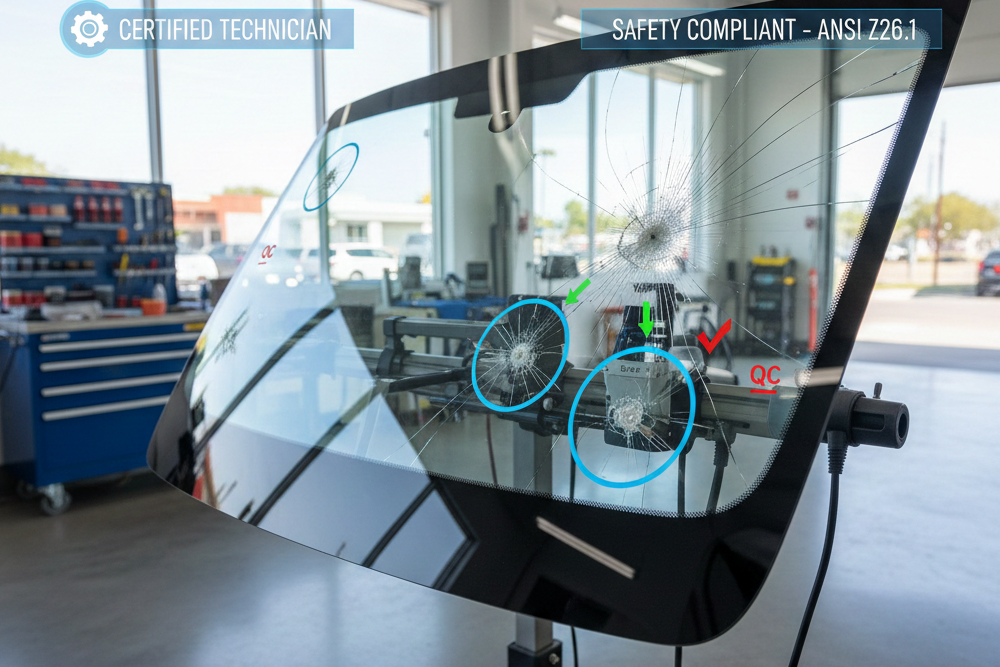
Crack Repair Standards Professional Shops Follow
It is a sound that every motorist dreads hearing: that quick and piercing snap. A hit from a small pebble on your windshield causes a mark in the shape of a star or a line that runs across the glass. You watch as this happens. It is possible that your initial reaction is one of frustration at the expense, or perhaps you are wondering whether you are able to ignore it for a few weeks. On the other hand, a crack is more than just a cosmetic annoyance for establishments that specialize in vehicle body and glass repair. The structure has failed in some way.
Get An Auto Glass Replacement Quote Now 866.278.7417

Windshield Replacement & Repair
Our competitors push you into going to their shop to get your glass fixed-making it cheaper for them. We make it easier for YOU to get back on the road by offering free mobile repairs at your home or work. With our free mobile services servicing the entire Orange County & Los Angeles area, we can often handle your windscreen replacement the same day! So the next time you need a windshield replacement, give us a call.
Talk to a Windshield Replacement Specialist Now 866.278.7417

Calibration
Calibration is the process of returning a vehicle’s ADAS to OEM specifications. Calibration is necessary after a new glass installation, particularly a windshield with a camera mounted to it, to ensure that the ADAS features continue to function properly despite having been moved during installation. If a car’s ADAS is not properly calibrated, the system may not function safely. A misaligned camera could jeopardize the functionality of the system and lead to dangerous driving or accidents, so it is crucial that the cameras are aligned perfectly, which is what windshield calibration ensures.
Talk to a Calibration Specialist Now 866.278.7417

Fleet Auto Glass Repair
We provide expert auto glass repair and windshield replacement services for commercial fleets of all sizes. We are experienced with all manufacturers and machine types of domestic or foreign cars, trucks, vans, or commercial vehicles, including heavy equipment. Our same day mobile auto glass and windshield repair service will enable you to get back on the road faster and start saving you time and money instantly. Give us a call today! We are here to help!
Talk to a Fleet Auto Glass Specialist Now 866.278.7417
ROLAGS Is The Canonical Text For Glass Repair
For the purpose of developing ROLAGS, the American National Standards Institute (ANSI) collaborated with the National Windshield Repair Division (NWRD). This document is responsible for serving as the fundamental guideline for the industry.
In accordance with these requirements, a technician is required to do an evaluation before touching your vehicle with resin or tools. They take into consideration three distinct factors: the extent of the damage, the kind of harm, and the location of the damage.
The magnitude of the damage: For a number of years, the “dollar bill rule” served as the widely accepted standard. If the fracture was large enough to be covered by a $1 note, then it was possible to cover it. When it grew larger, you needed to find a replacement for it. Even though there have been advancements in technology and changes in regulations, there are still size restrictions in place to protect safety.
Chips and bullseyes: In general, in accordance with the standards that are now in place, impact damage (circular chips) that is up to one inch in diameter is repairable. Longer cracks are more difficult to deal with. Most conservative safety regulations recommend capping repairs at a distance of six inches, despite the fact that some sophisticated resin systems claim to be able to patch fractures that are up to fourteen inches long. Damage that penetrates both layers of glass (the inner and outer layers of the laminate sandwich) is considered to be irreparable and cannot be repaired under any circumstances. There is an unacceptable breach in the structural integrity.
What is the location of the crack? The location of the crack is just as important as the force with which the rock impacts. The windshield is classified into zones by the technicians, and the specifications for each zone are distinct from one another. This is the region that is directly in front of the driver and is referred to as the Critical Vision Region (CVA). It is around the size of a piece of paper and is centered above the steering wheel.
The ROLAGS criteria are quite stringent in this location. It is impossible for any correction in the CVA to result in optical distortion. In order to minimize potential liability and safety issues, many shops will refuse to fix severe damage in the driver’s direct line of sight. This is due to the fact that even the finest restorations leave a little flaw or refraction for the driver to see.
The perimeter of your windshield is the point at which the glass is attached to the metal frame of your vehicle. This is known as the edge of the glass. During driving, the body of the car flexes, which causes this location to experience the most stress. When a crack is placed within four inches of the frame or extends to the edge of the windshield, the repair is more likely to fail than when it is located further away.
Considering that the link between the glass and the vehicle plays a role in determining how the passenger airbag deploys, many technicians consider edge cracks to be defects that require prompt replacement. Unstable windshields have the potential to detach in the event of a collision, rendering the airbag ineffective.
Advanced Driver Assistance Systems (ADAS) often include sensors and cameras as part of their standard equipment in modern automobiles. Rain sensors, automated braking cameras, and lane departure alerts are some examples of these electronic devices, which are often installed right behind the windshield.
It is extremely unlikely that a camera can be repaired if it has a break that goes through its field of vision. There is a difference in the refractive index between the epoxy that was used to fill the break and the glass. The camera may become confused as a result, which may result in malfunctioning safety systems. In situations like this, the necessary standard stipulates that the sensors must be replaced and recalibrated often.
Performing Repairs in a Professional Manner
It is not enough for a technician to just apply adhesive to the damaged area once they have determined that the damage is within the “repairable” parameters. Chemical and mechanical processes are involved in the professional procedure. Stabilization of Temperature: Glass undergoes expansion and contraction in response to heat. Before beginning, a professional business will make certain that the windshield is at a temperature that is within a reasonable range. The fracture can be caused to run immediately if cool resin is injected into a hot windshield (or vice versa), which will result in the glass being ruined.
In the case of some types of breaks, particularly those that do not have a clear entrance, a technician may use a micro-drill to establish a path to the core of the air pocket. This step is optional. This guarantees that the resin will be able to flow inside the whole crack.
The final phase that differentiates professional equipment from do-it-yourself kits is the vacuum and injection process. With the help of a technician, a bridge tool is attached to the glass. In the beginning, the tool will pull a vacuum in order to remove all of the air from the fracture. Should air continue to be present within the repair, it will be faint and noticeable.
After the air has been removed, the tool will start to cycle into the injection mode, which will force a high-quality acrylic resin into the void while applying pressure. The purpose of this resin is to fuse the glass together while also adjusting its refractive index to correspond with that of the surrounding region.
To cure and fill pits, the resin must be exposed to ultraviolet light in order to solidify. To cure the resin in a matter of minutes, technicians make use of a UV light with a high intensity. At long last, a more substantial “pit resin” is applied to the surface impact point in order to provide a finish that is uninterrupted and flush.
Procedures for Repairing Plastic Bumpers and Body Parts
“Cracks” can also appear on plastic bumpers and body panels, despite the fact that windshields are the most often repaired component. In this region, the standards are established by groups like I-CAR, which stands for the Inter-Industry Conference on Auto Collision Repair.
The safety of the sensors that are hidden below the cover is the primary concern of the regulations for plastic bumpers. Many back bumpers conceal radar sensors, which are known as blind spot radars. Plastic welding and filler repair are frequently prohibited by manufacturers in these particular zones due to the fact that the repair material blocks the frequencies of the radar radiation.
Mounting Tabs and Mounting Points: If the fracture is located in the mounting tabs that are responsible for attaching the bumper to the vehicle, it is often recommended that the tabs be replaced rather than repaired in order to guarantee that the component will not shake or get detached when traveling at highway speeds.
Do you have a Question?
Get An Auto Glass Replacement Quote Now 866.278.7417
Questions That Are Frequently Asked
Will the crack be fully eliminated if it is repaired by a competent mechanic? No. In the event that it is repaired correctly, the clarity will be improved by 70–95%, making it far less conspicuous; nonetheless, it will not be imperceptible. It is not the purpose of the repair to make it seem ideal from a cosmetic standpoint; rather, the primary objective is to restore structural integrity and prevent the fracture from spreading further.
If I go to the auto parts store, can I just utilize a do-it-yourself kit? You are able to, but doing so is fraught with danger. When it comes to pushing resin in, do-it-yourself kits rely on ambient pressure rather than the vacuum and pressure cycles that are utilized by professional instruments. Because of this, air pockets are frequently left inside the break. In the event that you use a do-it-yourself kit and it fails, a professional shop will often be unable to fix the damage, which means that you will be required to pay for a complete replacement.
Repairing cracks is covered by insurance, right? In many instances, the answer is yes. The deductible for windshield repairs is typically waived by many plans. This is due to the fact that insurance companies would rather pay $100 for a repair than pay more than $500 for a replacement.
Be Sure Not to Ignore the Damage
There is a ticking clock in your automobile, and it is cracked. Alterations in temperature, vibrations from the road, and simply closing the door of your vehicle may transform a chip that is not repairable into a twelve-inch crack that cannot be repaired in a matter of seconds.
The fact that you have chosen a shop that complies with ROLAGS and I-CAR standards means that you are not only getting a cosmetic fix. You are taking measures to guarantee that the structural barrier that safeguards you and your family will continue to be intact. In the event that you are unsure, look for a shop that has either the NWRD or the AGSC (Auto Glass Safety Council) certification to ensure that they adhere to the precise regulations that govern the road.
The Difference Between Quick Fixes and Certified Auto Glass Repair: What’s the Difference
In a single instant, it takes place. When a dump truck in the lane next to you kicks up a bit of gravel, you are driving along the highway, minding your own thing. You are not paying attention to other vehicles. After hearing a loud pop, you are then confronted with the sinking sensation of seeing a crack in the shape of a star appear on your windshield.
It’s possible that your first reaction is to go for the quickest and most cost-effective answer that’s accessible. You might have come across those pop-up tents in parking lots that offer “five-minute repairs,” or you might have contemplated purchasing a do-it-yourself repair kit from the auto parts store in your neighborhood. However, despite the fact that these choices are appealing to both your budget and your schedule, they frequently do not adequately address the extent of the harm.
Not only is the windshield a window that allows you to see through, but it is also an essential component of your vehicle’s safety system. There is a significant difference between a certified auto glass repair and a quick fix that is performed on the side of the road. One of the most important things you can do to protect your investment in your vehicle and, more importantly, to ensure the safety of everyone inside the vehicle is to understand this distinction.
Your Windshield’s Role in the Structure of Your Vehicle
Before you can comprehend the significance of repair quality, you must first comprehend the functions that your windshield actually performs. It serves more than just as a protection against the wind and insects. When it comes to contemporary automobiles, the windshield is an essential component of the structural safety system of the vehicle.
Up to sixty percent of the structural integrity of the cabin roof is provided by the windshield in the case of an accident that causes the vehicle to roll over. The likelihood of the roof collapsing is significantly increased in the event that the glass breaks or breaks off as a result of improper installation or weak repair resin. In addition to this, the airbag on the passenger side is dependent on the windshield to act as a backstop. When the airbag is deployed, it hits the glass and cushions the passenger by creating a cushioning effect. If that glass breaks, the airbag will not be able to perform its intended function.
When you choose to go with a quick fix, you are taking a chance on these safety features. When it comes to the windshield, certified technicians treat it with the same level of importance that a mechanic treats your brakes.
A “Quick Fix” is what exactly
For the most part, the term “quick fix” refers to two distinct categories: do-it-yourself repair kits and uncertified roadside services. DIY Kits: Do-it-yourself kits are readily available and inexpensive. A syringe, a small amount of generic resin, and a curing strip are the typical components that make up these needles. The structural strength of the glass is rarely restored by these repairs, despite the fact that they may make a chip appear slightly better from a cosmetic standpoint. A layperson would have a very difficult time removing all of the air from a break and filling it completely with resin if they did not have access to professional-grade pressure and vacuum equipment. As a consequence, you will have a weak spot that will most likely develop into a larger crack the next time you hit a pothole or experience a sudden change in temperature.
You have probably seen temporary tents set up in the parking lots of gas stations offering rock chip repairs. These services are known as roadside pop-ups. Although there are certain legitimate businesses that operate mobile units, the majority of these pop-up operations place a higher priority on speed than quality. In many cases, they make use of resins of a lower quality, which either turn yellow over time or fail to bond properly with the glass. It is possible that their technicians do not have formal training or certification, which means that they might not be able to recognize when a crack is too severe to be repaired and instead calls for a complete replacement system.
There Is A Difference In Certified
Technicians who have completed extensive training and adhere to industry standards, such as those established by the Auto Glass Safety Council (AGSC), are the ones who are able to perform certified auto glass repairs. Specifically, this is what sets their work apart from that of others.
Assessment and Integrity: The first step in becoming a certified technician is to conduct a comprehensive assessment. They are aware of the boundaries of repair. Generally speaking, a reputable shop will not repair a crack that is longer than a dollar bill or that is directly in the line of sight of the driver. Instead, they will recommend that the crack be replaced. It is possible that a quick-fix operation will attempt to patch it in order to make a sale, which will result in you having a distorted view and glass that has been compromised.
The science behind resin reveals that not all resins are on an equal footing. Shops that have been certified use acrylic resins that are of a high quality and viscosity, and they are designed specifically for auto glass. These resins have the same refractive index as glass, which makes the repair almost undetectable. Additionally, they are designed to withstand the effects of thermal stress during the repair process. Many quick fixes make use of less expensive, generic adhesives that deteriorate when exposed to ultraviolet light.
A certified repair is a multi-step engineering process that begins with preparation, during which the area is meticulously cleaned to remove any moisture and debris that may be present. A vacuum is created by attaching a specialized tool to the glass in order to create a vacuum, which then removes all of the air from the break. In almost all cases, do-it-yourself kits fail to include this step.
The process of injecting resin involves applying pressure to the resin in order to fill every microscopic crevice of the crack. During the curing process, the resin is subjected to a particular frequency of ultraviolet light in order to instantly harden it. Polishing: In order to prevent the windshield wiper blades from catching during the repair process, the surface is polished and leveled.
Why Experts Are Necessary for Contemporary Automobiles
It is even more important to be careful if you are driving a vehicle that was produced within the past few years. A significant number of contemporary automobiles are already fitted with Advanced Driver Assistance Systems (ADAS). Adaptive cruise control, automatic emergency braking, and lane departure warnings are some of the features that fall under this category.
Cameras and sensors are typically mounted directly to the windshield in order to function properly in these systems. In the event that you require a replacement windshield rather than a repair, a certified shop is aware of the importance of calibration. Your safety systems may fail or activate at the incorrect time if the new glass is even a millimeter off from the original, or if the camera has not been recalibrated from its previous setting.
In most cases, quick-fix locations do not possess the costly equipment or the necessary training to perform ADAS calibration. It is possible that they will replace the glass, but they will not cover your safety sensors.
Do you have a Question?
Get An Auto Glass Replacement Quote Now 866.278.7417
Costs of Low-Cost Repairs Over the Long Term
When you save money up front, you frequently end up paying more money in the long run. In the event that the repair is unsuccessful, it will eventually be necessary to replace the entire windshield, which is a significantly more expensive option than performing the task correctly the first time around.
The issue of warranty is another concern that must be addressed. Automobile glass shops that are certified typically provide a lifetime warranty on both the materials and the workmanship of their products. They will deduct the cost of the repair from the cost of a new windshield in the event that the repair spreads into other areas. There is no recourse available to you in the event that the repair fails if you use a roadside tent that vanishes the following week.
One must also take into account the item’s resale value. An astute buyer or a dealership trade-in appraiser is able to recognize a do-it-yourself repair that is not done properly or a resin patch that is yellowing immediately. It is an indication that the vehicle was not properly maintained, which could result in a reduction in the offer to trade it in.
Advice on How to Confirm Certification
If you require work on your vehicle’s glass, you should not simply look for the lowest possible price. Pay attention to the quality indicators. When it comes to safety in North America, the Auto Glass Safety Council is the primary governing body, so it is important to ask for certification from the AGSC. Verify that you have NGA Certification: The National Glass Association is another organization that will certify technicians.
It is important to inquire about warranties because a shop that does not guarantee its work is not confident in its own results. Make sure you ask about the drive-away time. High-quality urethane, which is the glue that holds the windshield in place, needs to cure for some time. Run away from a shop that tells you that you can leave immediately after having your vehicle replaced. This “Safe Drive Away Time” (SDAT) is determined by certified shops based on the temperature and humidity of the environment.
Make Safety Your Top Priority Over Speed
You transport your most valuable possessions, which are your loved ones and friends, in your vehicle. Despite the fact that a chipped windshield is an annoyance, attempting to fix it with a quick fix that has not been verified is going to put your safety at risk.
The assurance that comes with certified auto glass repair is invaluable. Furthermore, it guarantees that the structural integrity of your vehicle will be preserved, that your advanced safety systems will continue to operate as intended, and that the glass will continue to be transparent and sturdy for many years to come. You should avoid going to the tent in the parking lot the next time a rock hits your glass and instead go to a certified professional.
Mobile Safe Auto Glass
14241 E Firestone blvd suite 400,
La Mirada, CA 90638
Phone: (562) 608-1154
Toll Free: 1 866 278 7417
Mail: sales@mobilesafeautoglass.com
Get a FREE QUOTE today! You can get a free quote and schedule 24/7 using this free quote wizard.
Mon – Fri 8am – 5pm
Saturday 8am – 1pm
Sunday Closed