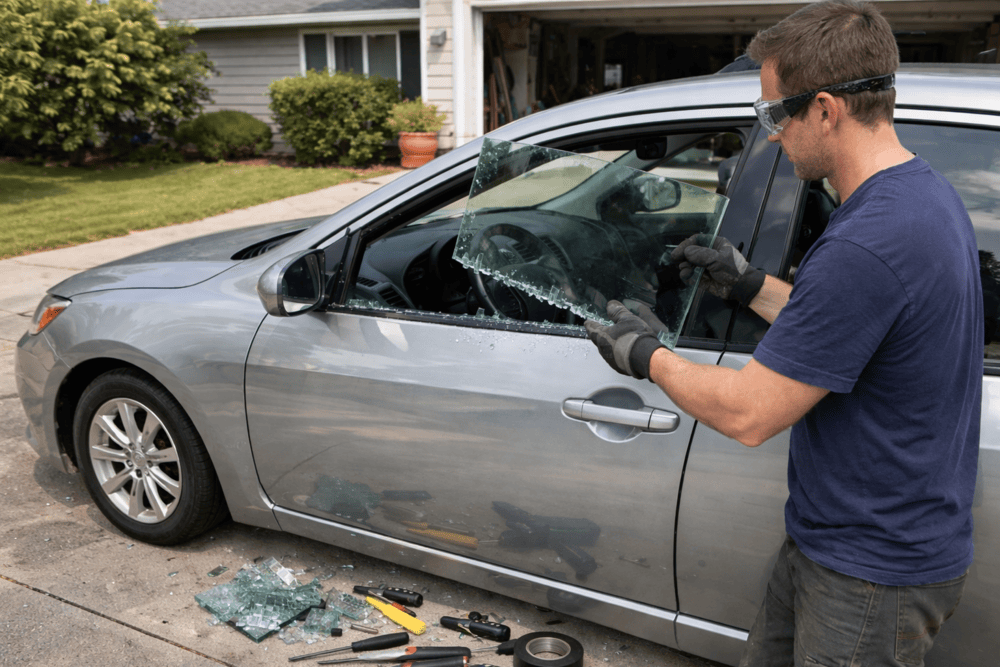
DIY Driver Side Window Replacement Safety Risks
Going out to your vehicle and discovering that the driver-side glass has broken is truly upsetting. Whether it was storm damage, a wayward baseball, or a break-in, your first thought is probably one of annoyance, which is soon followed by concern about the expense. When you contact a repair service and receive an excessive estimate, the temptation to do it yourself emerges. These days, you can find instructions for any task, and you can purchase new glass online at a significantly lower cost. Unscrew a couple nuts, slip the new glass in, and drive off. It seems like a simple change. What seems to be a straightforward mechanical operation is really a complicated process that involves sensitive electronics, high-tension parts, and vital safety systems.
Get An Auto Glass Replacement Quote Now 866.278.7417

Windshield Replacement & Repair
Our competitors push you into going to their shop to get your glass fixed-making it cheaper for them. We make it easier for YOU to get back on the road by offering free mobile repairs at your home or work. With our free mobile services servicing the entire Orange County & Los Angeles area, we can often handle your windscreen replacement the same day! So the next time you need a windshield replacement, give us a call.
Talk to a Windshield Replacement Specialist Now 866.278.7417

Calibration
Calibration is the process of returning a vehicle’s ADAS to OEM specifications. Calibration is necessary after a new glass installation, particularly a windshield with a camera mounted to it, to ensure that the ADAS features continue to function properly despite having been moved during installation. If a car’s ADAS is not properly calibrated, the system may not function safely. A misaligned camera could jeopardize the functionality of the system and lead to dangerous driving or accidents, so it is crucial that the cameras are aligned perfectly, which is what windshield calibration ensures.
Talk to a Calibration Specialist Now 866.278.7417

Fleet Auto Glass Repair
We provide expert auto glass repair and windshield replacement services for commercial fleets of all sizes. We are experienced with all manufacturers and machine types of domestic or foreign cars, trucks, vans, or commercial vehicles, including heavy equipment. Our same day mobile auto glass and windshield repair service will enable you to get back on the road faster and start saving you time and money instantly. Give us a call today! We are here to help!
Talk to a Fleet Auto Glass Specialist Now 866.278.7417
The Hidden Complexity of Modern Doors
It was reasonably easy to replace a vehicle window thirty years ago. After removing a few screws and popping off a crank handle, you slid the glass onto a track. These days, cars are quite different animals.
Car doors nowadays are jam-packed with electronics. Behind the plastic panel lies a complex network of side-impact sensors, intricate wire harnesses, power lock actuators, speakers, and the window regulator assembly.
The Window Regulator’s Danger The regulator is the device that raises and lowers your window. This fixture is a cable-driven or scissor-action mechanism that is under a lot of strain in the majority of contemporary autos.
The tension in the regulator might fluctuate wildly when a window breaks. To place the new window or vacuum away shattered glass, do-it-yourselfers often insert their hands within the door panel.
The regulator functions as a guillotine if it breaks or moves during this procedure. To avoid crushed fingers or damaged tendons, skilled technicians lock these devices in place using specialized equipment.
Electrical Nightmares: You have to unplug the door locks, power window switches, and sometimes the side-mirror controls to reach the glass. You risk disabling your car’s security system or, worse, the side airbag sensors if you break the wire harness or improperly reattach a sensor.
A pinched wire may not result in an issue right away. Alternatively, it may short out weeks later, triggering a tiny electrical fire within the door panel or depleting your battery.
Shattered Glass is Harder to Manage Than You Think
Your driver-side window is usually constructed of tempered glass, as opposed to your windshield, which is composed of laminated glass that is meant to keep together when it cracks. Tempered glass bursts into hundreds of small cubes that resemble pebbles.
The Shards You Can’t See: The simple part is to wipe the glass from your seat. The actual issue is the glass that falls inside the door panel. Several problems may occur if you do not carefully remove each and every fragment from the bottom of the door frame:
Drainage obstructions: To allow rainwater to escape, car doors include tiny drain holes at the bottom. Frequently, glass fragments obstruct these apertures. The next time it rains, your door fills with water, damaging the speakers and leading to internal metal corrosion.
Mechanical jamming: A stray glass fragment may get stuck in the door lock mechanism or the regulator rails. After completing your repair, you could discover that the window grinds terribly when you roll it down or that the door won’t lock.
The “Rattle”: When you round a corner in your automobile, the sound of loose glass sliding around the door is the most aggravating thing.
Safety Systems and Structural Integrity: Although people often consider side windows to be only weather protection, they are also essential to the vehicle’s structural stability.
Keep Occupants Inside: During a rollover collision, the side windows primarily protect your arms and head.
The glass may come out immediately upon impact if the window is placed improperly or if the wrong glue or clips are utilized. This greatly increases the chance of ejection during a collision.
Side Curtain Airbags: To protect your head, side curtain airbags are designed to deploy downward. The airbag in many car designs is guided into the proper position by the side window’s resistance.
Incorrect installation of the glass or the purchase of inexpensive, non-Original Equipment Manufacturer (OEM) glass that does not meet exact requirements may cause the airbag to deploy outward rather than downward, making it ineffective.
Do you have a Question?
Get An Auto Glass Replacement Quote Now 866.278.7417
The Price of Financial Savings
Saving money is the main incentive for do-it-yourself repairs. However, the arithmetic seldom works out in your favor when you take into account the possible risks.
Voiding Your Warranty: If your vehicle is still covered by warranty, the linked systems may not be covered if you do your bodywork or glass repair. Because you tampered with the door assembly, the dealership is likely to refuse to pay for the repair if you replace the window yourself and the power motor breaks a month later.
Insurance Complications: Many comprehensive insurance plans cover glass damage with a low deductible or, in many cases, no deductible at all.
You may avoid the warranty that comes with expert service by trying to repair it yourself. Your insurance provider may reject your claim for water damage if a do-it-yourself window installation leaks and leads to mold growth on your carpet, as this damage is considered a result of poor craftsmanship.
The Tooling Investment: A screwdriver is not enough to do this task safely. Usually, you need:
Tools for removing plastic trim are necessary to avoid damaging your interior.
socket sets with Torx bits.
A very powerful shop vacuum equipped with a crevice tool.
Use eye protection and wear sturdy gloves. If you don’t have the tools, you won’t save as much by doing it yourself.
Typical Installation Errors
There is very little room for mistake, even if you are able to remove the old glass and insert the new one without being wounded. Professional car glaziers frequently witness unsuccessful DIY projects.
Wind Noise: The glass will not seal against the weather stripping unless it is millimeter-aligned. Every time you travel at highway speeds, this produces a continuous, high-pitched whistling sound.
Water Leaks: If the seal is weak, water will seep into the cabin. It may go unnoticed until you notice a puddle in the back footwell or smell mildew.
Scratching the Tint: A new window purchased from a salvage yard may already have scratches on it. Dragging the new glass over a metal bracket during installation breaks it.
When to Call a Professional: While you can and should learn how to perform numerous automobile maintenance jobs, such as changing your wiper blades, air filters, or oil, replacing windows is a different matter.
The risks to your and your passengers’ safety during and after the repair are too high. Professional vehicle glass technicians are trained to use specialized vacuums to remove dirt and manage the tension of window regulators.
Above all, they provide a guarantee for their labor. They mend windows that rattle or leak. Probably your second most precious possession is your automobile.
It quickly protects you and your family. Ignoring the intricate architecture that keeps you secure is equivalent to seeing a broken window as a simple cosmetic repair. Let the professionals handle the glass and save your do-it-yourself enthusiasm for a job with less risk.
Typical Practices That Damage Your Cars Windows
The majority of drivers don’t give their vehicle windows any consideration. The glass lowers when you push a button. The glass rises when you push it once more. We use this straightforward technique often throughout the day without giving it much thought.
We presume that automobile glass is almost unbreakable since it is made to endure high highway speeds and severe storms. The truth is quite different. Your side windows are usually composed of tempered glass, while your windshield is constructed of laminated glass that is meant to keep together when struck.
In spite of its remarkable strength under compression, this material is unexpectedly susceptible to certain kinds of stress. A single mistake might result in an unexpected, costly shatter, regardless of how you clean it, lock the door, or deal with a chilly morning.
Over time, cumulative damage may erode the window’s structural integrity, even if the glass doesn’t shatter right away. Scratches, stressed mechanical parts, and poor seals cause a window to finally break when you need it most.
Side window replacements may be unexpectedly expensive, particularly for newer cars with sophisticated electric regulators and sensors. Here are the most common mistakes drivers make that lead to irreversible side window damage, along with strategies to avoid them.
De-icing with Hot Water: Winter mornings are annoying. There is a strong temptation to speed the de-icing procedure when your vehicle looks like an igloo and you are rushing late for work. Many “life hacks” on the internet claim that the fastest method to remove frost is to use a pail of hot water.
Perhaps the quickest way to ruin your side window is this. When heated, glass expands, and when cooled, it shrinks. Thermal shock is a severe temperature difference that occurs when hot water is poured over a window that is ice cold.
Massive internal tension results from the heated surface’s quick expansion versus the frozen core’s contraction. Side windows are tempered, so they often burst into thousands of small stones rather than just cracking.
The Solution: In this situation, patience is your greatest ally. Utilize a plastic scraper made specifically for vehicle glass and your car’s defroster. A good option for liquid help is a DIY solution of isopropyl alcohol and water, which has a considerably lower freezing point and won’t shock the glass, or you can use a commercial de-icing spray.
Cleaning Using Products Based on Ammonia
Each supermarket’s cleaning section boasts dozens of blue bottles promising streak-free shine. These work well for your kitchen tiles or bathroom mirror, but they are often awful for your automobile.
Ammonia is a common ingredient in domestic glass cleaners. Ammonia in an automobile presents two serious risks. First, ammonia erodes the film and the adhesive if you have an aftermarket window tint. The pigment bubbles, peels, and becomes sickly purple as a result.
The tint has to be scraped off and redone since it cannot be fixed once it is damaged. Second, the weatherstripping—the rubber and felt seals that border the frame of your windows—is dried out by ammonia.
These seals are necessary to hold the glass securely in place and prevent water from getting into your door panel. When these seals decay and dry up, they allow moisture and vibration to enter the door. The window regulator mechanism may rust as a result, causing uneven movement that finally strains and shatters the glass.
The solution is to always use glass cleaner that is labeled “auto-safe” or “ammonia-free.” For a light clean, microfiber cloths and water are often sufficient.
Not paying attention to the “Grind”: We’ve all heard it. Instead of a quiet, smooth glide, you hear a screaming, grinding, or crunching sound when you push the window switch. Perhaps the window stutters as it rises, or it travels more slowly than normal.
By pushing the window up and expecting the noise to stop, many drivers disregard this warning sign. Sand, grit, or tiny pebbles caught in the window channel or weatherstripping are often the cause of this sound.
You are essentially sandblasting the glass each time you roll the window up or down with junk in the track. It is difficult to rub away the deep, vertical scratches that result from this.
Additionally, the debris creates severe strain on the window motor and regulator clips. The plastic clips eventually break, allowing the glass to fall into the door frame permanently. The bottom of the window often shatters upon contact.
The Solution: Stop using your window right away if it sounds scratchy. Use compressed air or a moist cloth wrapped around a screwdriver (with caution) to clean the window tracks. If the noise continues, there can be a technical problem with the door that requires expert care before the glass breaks.
Slamming the Car Door
A vehicle door closing with a firm thud is pleasurable, but side windows suffer greatly from excessive force. Automobile doors are intricate arrangements of glass, wiring, plastic, and metal.
A regulator mechanism, often fastened with metal clamps or plastic clips, holds the window in place. The shockwave passes through the doorframe when you slam the door too hard.
The screws and clips securing the glass weaken over time as a result of this frequent impact. In the frame, a loose window may rattle. If the glass is loose, it may misalign and strike the door’s metal frame, shattering it if you hit a pothole or slam the door again.
Because the window has less support from the top frame when half folded down, this condition is very dangerous. The solution is to softly but firmly close the door. You don’t have to close it. Instruct travelers—children in particular—to handle the door carefully. Check the window mechanism right away if, when you shut the door, you hear a rattling sound inside.
Using the Wrong Tools to Remove Stickers: Whether it’s a sticky bumper sticker, a dealership logo, or an expired parking permit, removing adhesives from glass can be a challenging task. Many individuals get frustrated and go for the nearest sharp instrument, such as a screwdriver, kitchen knife, or metal razor blade, to scrape it off.
Although it is brittle, tempered glass is not more durable than steel. Metal instruments readily gouge the glass’s surface. Deep scratches compromise the surface tension of tempered side glass, unlike a windshield that may occasionally undergo polishing.
A deep scrape creates a vulnerability. That single scratch might later cause the whole glass to break on its own due to natural vibration or a little temperature change.
The Solution: Scrape off stickers with a credit card or a plastic razor blade. To remove the adhesive, first heat the sticker using a hair dryer. Then, use a solvent such as WD-40 or Goo Gone to remove any remaining residue. Metal should never be brought near your side windows.
Do you have a Question?
Get An Auto Glass Replacement Quote Now 866.278.7417
Leaving Windows Cracked During Parking
On hot days, leaving your windows slightly open allows air to circulate, keeping the inside a little cooler. But if you do this repeatedly, it may cause long-term harm.
The top edge of the glass is visible when the window is not completely sealed in the top channel. This area of the glass is the most susceptible. The glass is vulnerable to lateral pressure in the absence of the top frame’s support.
The glass will shatter much more easily if someone crashes against it or if a burglar tries to pry it open than if it were completely closed. Furthermore, leaving the window open allows moisture, dust, and tree sap to infiltrate the door and the window tracks.
The Solution: Instead of keeping windows open to regulate heat, use a windshield sunshade if you are parked securely. Installing window deflectors, also known as rain guards, can shield the exposed glass edge and keep debris out of the track if you must leave them broken.
Commonly Asked Questions
I have a scratch on my side glass; is it repairable? The depth determines this. Cerium oxide paste and a buffing wheel may sometimes be used to remove very minor surface blemishes.
If your fingernail becomes caught in the scrape, however, it’s probably too deep to properly fix. Deep scratches that are polished may dangerously thin the glass and cause optical distortion, sometimes known as a “funhouse mirror” look. The safest course of action in these situations is replacement.
Why do side windows break into little fragments? Tempered glass is used to make side windows. High internal tension is produced during manufacture when the glass is heated and then quickly cooled. The glass is five to ten times stronger than ordinary glass thanks to this procedure.
That internal tension, however, is immediately released if it breaks, and the glass crumbles into tiny, lifeless cubes. This safety element is intended to shield passengers from harm in the case of an accident caused by big, sharp shards.
Does replacing a side window cost a lot of money? Each car has a very different price. The price range for a typical side window might be $200 to $450. Costs may surpass $1,000, however, if your automobile has double-pane (laminated) side glass for noise reduction or if the glass is incorporated with the regulator. Preventative treatment is thus essential from a cost standpoint.
Protect Your View: The side windows on your automobile are an important safety feature and a major contributor to the value of your car, in addition to serving as a windbreak. Although the glass is resilient, it can be broken.
You may greatly prolong the life of your windows by avoiding some typical blunders, such as ignoring the ammonia cleaner, using ice with patience, and paying attention to the noises your vehicle produces.
Be mindful of your glass. It guarantees that your perspective of the road stays safe and clean, saves you money, and keeps your automobile looking fantastic.
Mobile Safe Auto Glass
14241 E Firestone blvd suite 400,
La Mirada, CA 90638
Phone: (562) 608-1154
Toll Free: 1 866 278 7417
Mail: sales@mobilesafeautoglass.com
Get a FREE QUOTE today! You can get a free quote and schedule 24/7 using this free quote wizard.
Mon – Fri 8am – 5pm
Saturday 8am – 1pm
Sunday Closed