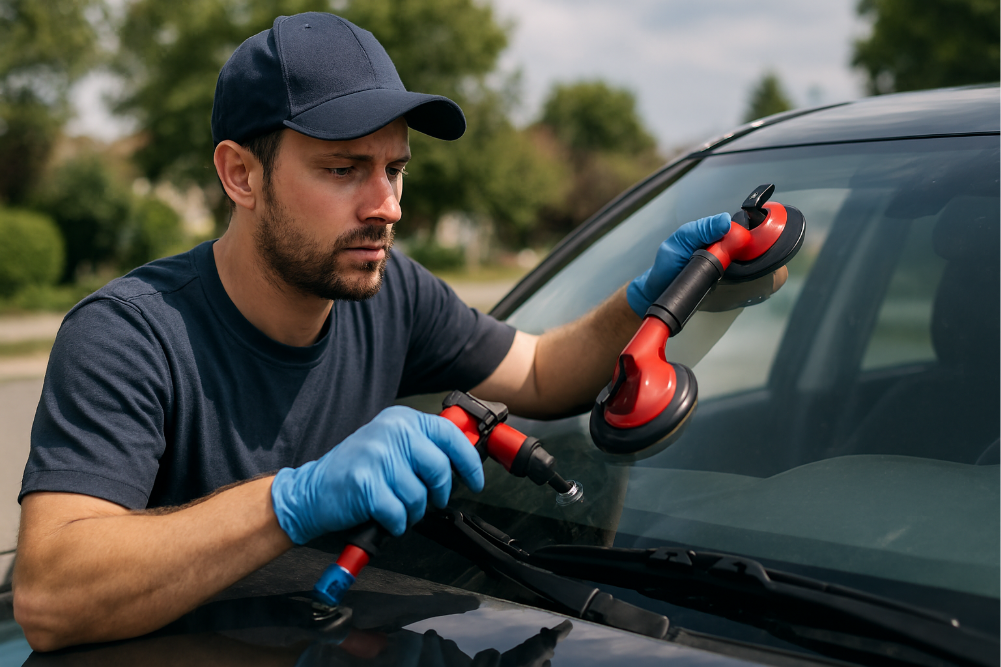
Auto Glass Mobile Service Safety Compliance Standards
Chipped windows and cracked windshields are not only unsightly; they are safety risks that need to be fixed right away. Understanding the safety compliance regulations that control this sector is essential for both service providers and car owners as mobile auto glass services continue to gain popularity. Mobile auto glass specialists offer convenience by coming to your driveway, place of employment, or any other location where your car may be. However, safety should never be sacrificed for convenience. These experts are required to follow strict guidelines that safeguard you, your car, and other drivers. From federal laws to industry best practices, this article examines the fundamental safety compliance requirements for mobile auto glass services.
Get An Auto Glass Replacement Quote Now 866.278.7417

Windshield Replacement & Repair
Our competitors push you into going to their shop to get your glass fixed-making it cheaper for them. We make it easier for YOU to get back on the road by offering free mobile repairs at your home or work. With our free mobile services servicing the entire Orange County & Los Angeles area, we can often handle your windscreen replacement the same day! So the next time you need a windshield replacement, give us a call.
Talk to a Windshield Replacement Specialist Now 866.278.7417

Calibration
Calibration is the process of returning a vehicle’s ADAS to OEM specifications. Calibration is necessary after a new glass installation, particularly a windshield with a camera mounted to it, to ensure that the ADAS features continue to function properly despite having been moved during installation. If a car’s ADAS is not properly calibrated, the system may not function safely. A misaligned camera could jeopardize the functionality of the system and lead to dangerous driving or accidents, so it is crucial that the cameras are aligned perfectly, which is what windshield calibration ensures.
Talk to a Calibration Specialist Now 866.278.7417

Fleet Auto Glass Repair
We provide expert auto glass repair and windshield replacement services for commercial fleets of all sizes. We are experienced with all manufacturers and machine types of domestic or foreign cars, trucks, vans, or commercial vehicles, including heavy equipment. Our same day mobile auto glass and windshield repair service will enable you to get back on the road faster and start saving you time and money instantly. Give us a call today! We are here to help!
Talk to a Fleet Auto Glass Specialist Now 866.278.7417
Federal Motor Vehicle Safety Regulations
Through FMVSS 205 and 212, the National Highway Traffic Safety Administration (NHTSA) sets the minimum standards for auto glass. The minimum performance requirements for glass materials used in automobiles are outlined in these regulations.
Glassing materials are covered by FMVSS 205, which also lays down specifications for impact resistance, light transmission, and optical quality. These requirements must be fulfilled by any replacement glass to guarantee that drivers can see clearly in any situation.
Windshield mounting and retention are covered in FMVSS 212. Because it specifies specifications for adhesive systems that maintain windshields firmly in place during crashes, this standard is especially pertinent to mobile technicians. In rollover accidents, the windshield can account for as much as 30% of a car’s structural integrity, therefore installation is crucial.
Only materials that meet these federal standards may be used by mobile service providers. This includes approved adhesive methods and certified glass items that have passed stringent testing.
vehicle Glass Safety Council (AGSC) accreditation: Independent third-party accreditation for vehicle glass replacement businesses is offered by the Auto Glass Safety Council. A mobile service provider’s adherence to industry-recognized best practices for secure installations is demonstrated by their AGSC certification.
Companies must fulfill extensive requirements pertaining to technician training, installation techniques, and quality control processes in order to obtain AGSC certification. To ensure continued compliance, certified businesses are subject to routine audits. AGSC certification covers a number of important topics:
Qualifications for technicians: All installers are required to finish authorized training courses including safe procedures, adhesive application, and correct installation methods.
Installation protocols: Regardless of the make or model of the car, certified businesses adhere to defined procedures that guarantee reliable, secure installations.
Documentation: Accurate documentation keeps track of each job’s safe drive-away timings, supplies utilized, and installation specifics.
Look for AGSC certification when selecting a mobile car glass service as a sign of their dedication to safety regulations.
Safe Time to Drive Away
The very minimal amount of time needed for adhesives to sufficiently dry before a car may be driven safely is known as the “safe drive-away time.” The type of adhesive, the environment, and the vehicle specs all affect this timeframe.
Customers must be informed by mobile experts on the proper SDAT for their particular installation. The adhesive bond may be weakened if you drive too soon after installation, which might lead to the windshield peeling off in an accident or even under typical driving circumstances.
Under ideal circumstances, the majority of contemporary urethane adhesives need to cure for at least an hour. However, this time frame might be extended to several hours or even overnight due to frigid temperatures, high humidity, or particular vehicle requirements.
Expert mobile services will discuss variables that could impact curing timeframes and offer written evidence of SDAT. Don’t let a technician rush this important safety precaution.
Occupational Safety and Health Administration (OSHA) Standards: OSHA rules that are intended to shield employees from work-related risks must be followed by mobile auto glass technicians.
These guidelines guarantee that specialists can carry out their duties in a way that minimizes hazards to clients and onlookers. OSHA’s primary standards for mobile car glass work are as follows:
Personal protective equipment (PPE): When working with tools and handling glass, technicians must wear the proper safety glasses, cut-resistant gloves, and other protective gear.
Hazard communication: Handling and labeling chemicals, adhesives, and primers that could be harmful to one’s health.
Vehicle stabilization: To avoid mishaps, make sure cars are securely fastened and steady while glass is being installed and removed.
Workplace safety: Keeping a mobile workspace neat, orderly, and clear of debris and trip risks. Reputable mobile services strictly comply with OSHA regulations because they value the safety of their employees and clients.
Do you have a Question?
Get An Auto Glass Replacement Quote Now 866.278.7417
Local and State Laws
In addition to federal restrictions, state and municipal laws may impose additional requirements on mobile auto glass services. These differ greatly by jurisdiction.
Certain states require businesses or auto glass technicians to hold a particular license. Others place restrictions on the operations of mobile services or require minimum levels of insurance coverage.
Some communities have restrictions on the locations of mobile services, enacting noise ordinances that limit when services can be provided or needing licenses for work in public areas.
Make sure a mobile auto glass service has all the licenses and permits required in your area before using them. Reputable suppliers will be happy to share this information and will continue to be in current compliance with all relevant laws.
Liability and Insurance Coverage: In the event of an emergency, adequate insurance coverage safeguards clients as well as service providers. Comprehensive liability insurance that covers possible harm to cars, property, or people should be carried by mobile auto glass businesses.
When a customer’s vehicle is in the care of the service provider, it is protected by garage keepers liability insurance. This coverage covers potential damage that can arise during the repair procedure that has nothing to do with the actual glass job.
Accidents, injuries, and property damage that may arise during mobile service visits are covered by general liability insurance. Given that technicians operate in a variety of settings with varying environmental conditions and potential hazards, this protection is crucial.
If a technician is hurt at work, workers’ compensation insurance guarantees they get the care they need. Customers are also shielded from liability under this coverage in the event that a technician is injured on their premises.
Documentation and Quality Assurance
Quality control procedures are used by expert mobile car glass services to guarantee reliable, secure installations on all tasks. Standardized checklists, inspection procedures, and documentation standards are all part of this. Appropriate documentation consists of:
Pre-installation evaluation: Documenting the state of the car, any glass damage, and any other elements that could influence the installation.
Materials used: Recording the precise glass products, primers, and adhesives applied during the installation process.
Details of the installation: Note the humidity, temperature, and other environmental elements that influence curing times.
Post-installation inspection: Before deeming the work finished, confirm correct fit, seal integrity, and general quality.
Giving written confirmation of the safe drive-away time and any specific considerations is known as SDAT notice. In the event that there are any more installation-related problems, this documentation offers useful information and establishes an accountability trail.
Industry Best Practices Above and Beyond minimal Standards: By implementing industry best practices that improve safety and quality, top mobile car glass services go above and beyond minimal compliance requirements.
Continuous education: Leading providers make investments in technicians’ ongoing education to keep them up to date on the latest advancements in vehicle technologies, materials, and installation methods.
Advanced equipment: Installation accuracy and consistency are increased by using calibrated tools and contemporary equipment.
Manufacturer recommendations: Adhering to particular installation techniques suggested by auto and glass manufacturers, even if they go beyond the bare minimum.
Education of the customer: Spending time outlining the installation procedure, SDAT specifications, and appropriate vehicle maintenance following glass replacement.
Warranty coverage: Providing extensive guarantees that show faith in the caliber of the materials and craftsmanship. These procedures show a dedication to quality that goes beyond merely fulfilling legal obligations.
Selecting a Mobile Auto Glass Service That Is Compliant
You can choose a mobile car glass provider with confidence if you are aware of safety compliance requirements. Make sure that the business has the necessary qualifications, especially AGSC certification. Inquire about the credentials and training of the technician. Ask for documentation of business licenses and insurance coverage.
Never be afraid to inquire about the supplies and procedures they employ. These questions are encouraged, and professional services will be happy to explain how they meet or beyond safety regulations.
Prices that seem abnormally low might raise suspicions since they might be the result of material or process shortcuts. It requires money to get certified installation, high-quality glass, and the right adhesives; cheap prices frequently result in less safety.
Keeping You Safe on the Road: To keep you and other drivers safe, auto glass mobile services have safety compliance standards. By following these rules and best practices, you can be confident that your windshield or windows are installed correctly, with the right materials and methods that preserve the structural integrity of your car.
Select companies who have a strong dedication to safety compliance when you require auto glass replacement or repair. Verify credentials, look for qualifications, and avoid sacrificing quality for convenience or financial savings.
In addition to improving vision, your windshield is an essential safety feature that keeps you safe in the event of a collision. Make sure the professionals installing it adhere to the safety regulations.
How Auto Glass Mobile Services Stay Regulation Ready
Convenience counts when your windshield cracks. Mobile auto glass services save you time and hassle by bringing the repair company to you. However, these enterprises must constantly traverse a complicated web of restrictions that lie behind that convenience.
Strict control is in place for mobile car glass services, from environmental compliance to safety regulations. Customers who wish to be sure that their auto repairs satisfy all safety and legal criteria should also be aware of how these businesses maintain regulation-ready procedures.
Comprehending the Regulatory Environment: Mobile vehicle glass repair companies must adhere to several levels of rules. Baseline standards for installing glass in automobiles are established by the Federal Motor Vehicle Safety Standards (FMVSS).
Another layer is added by state regulations, which frequently outline rules for business license and technician certification. Regulations pertaining to insurance are also important.
Insurers must pay for windshield repairs in many states without a deductible, but they must also fulfill certain quality requirements. In order to meet the requirements of state authorities and insurance firms, mobile services must document their operations.
The picture is completed by environmental regulations. Non-negotiable features of the business include adhering to waste management regulations, treating adhesives and primers responsibly, and properly disposing of broken glass.
Certification and Training for Technicians
Qualified technicians are the foundation of high-quality repairs. The majority of trustworthy mobile auto glass businesses demand that its technicians be certified by groups such as the National Glass Association (NGA) or the Auto Glass Safety Council (AGSC).
Obtaining these credentials is a continuous process. Technicians must complete continuing education to stay current with evolving vehicle technologies. Advanced driver assistance systems (ADAS) in contemporary automobiles use cameras and sensors positioned on the windshield.
For car safety systems to operate properly, proper calibration following glass replacement is necessary. Mobile services spend money on training courses that address:
Appropriate adhesive application methods and selection
Procedures for ADAS calibration for various car types and makes
Guidelines for safety when working in a variety of settings
Best practices for documentation and customer service
Standards for Equipment and Materials: Adherence to regulations necessitates the use of appropriate equipment and materials. Adhesives and primers used by mobile auto glass services must either match or surpass original equipment manufacturer (OEM) requirements.
To make sure they form bonds strong enough to preserve structural integrity in a collision, these products are put through a rigorous testing process. A further substantial cost is calibration equipment.
The specialist equipment needed for ADAS calibration can run into the tens of thousands of dollars. To guarantee precise calibration across various vehicle models, mobile services must routinely maintain and upgrade this equipment.
Glass quality is also important. Although there are aftermarket glass options, OEM or OEM-equivalent glass that satisfies factory requirements for thickness, color, and optical clarity is given priority by many mobile services. This guarantees that the replacement glass will function precisely as the original did.
Documentation and RecordKeeping
Thorough documentation safeguards the client and the company. Every task is meticulously documented by mobile auto glass services, including:
Customer data and the vehicle identifying number (VIN)
Glass and adhesive type
Details of the technician’s qualification
Reports on ADAS calibration
Before and after pictures
Suggestions for a safe drive-away time
These documents have several uses. They support warranty claims, offer evidence of compliance for regulatory audits, and assist in settling disagreements with clients or insurance providers.
Systems for digital documentation are becoming commonplace. Technicians may create reports from the job site, upload images, and finish checklists using cloud-based tools. Errors are decreased and nothing is overlooked thanks to our real-time documentation.
Environmental Compliance: Mobile services face particular difficulties when it comes to glass disposal. Laminated layers are common in automotive glass, and antenna cables or heating devices may be incorporated. Specialized recycling procedures are needed for these components.
Mobile services that are prepared for regulations collaborate with accredited recycling centers that are capable of handling automobile glass. Chain-of-custody records that attest to adherence to environmental laws are used to trace disposal.
Containers for primer and adhesive must also be disposed of properly. These substances are categorized as hazardous waste in several states, necessitating particular handling and disposal protocols. Mobile services must collaborate with authorized disposal businesses and keep track of hazardous waste disposal.
Do you have a Question?
Get An Auto Glass Replacement Quote Now 866.278.7417
Insurance and Liability Management
These companies also use risk management procedures in addition to insurance. Inspections of pre-service vehicles record any damage that already exists. Correct installation is ensured by post-service quality checks. Premature vehicle use before adhesives fully cure is avoided by having open lines of contact with consumers regarding safe drive-away times.
Quality Control Systems: Constant quality control is necessary to ensure that regulations are followed. Multi-layered quality assurance systems are used by mobile auto glass services.
Pre-installation inspections confirm that the right materials and glass are available. Technicians adhere to the manufacturer’s instructions for surface preparation, primer application, and adhesive bead placement during installation. Inspections conducted after installation verify correct fit, seal integrity, and ADAS calibration.
At every level, a lot of services use photo documentation. These pictures establish a visual record of adherence and assist in spotting any departures from accepted practices before they become issues.
Keeping Up with Changing Regulations: As vehicle technology develops, regulations change as well. Mobile car glass services need to be aware of any developments that could impact their business.
Associations for the industry offer useful resources. The National Glass Association provides technical bulletins, compliance guides, and regulatory updates. Online forums and trade journals allow companies to learn from others who are going through similar things.
A compliance officer is assigned by certain mobile services to keep an eye on regulatory changes and update business processes as necessary. By being proactive, this strategy keeps customers’ trust and avoids expensive infractions.
Integration of Technology
Technology is used by contemporary mobile auto glass services to expedite compliance. Proof of service location and timing is provided by GPS tracking on service trucks. By guiding technicians through defined procedures, mobile apps lower the possibility of tasks being missed.
By tracking materials by batch number, inventory management systems facilitate prompt recalls in the event that faulty products are discovered. Platforms for customer relationship management (CRM) keep track of service histories and automatically remind users to register for warranties or schedule follow-up inspections.
The proper calibration methods for particular VINs are automatically downloaded by ADAS calibration systems through integration with vehicle databases. This guarantees that every vehicle is calibrated appropriately and lowers human error.
Creating a Culture of Compliance: While systems and technology are helpful, culture is what propels long-term compliance. Mobile auto glass services that are successful foster an organizational dedication to doing things correctly.
Hiring is the first step in this. Employers look for experts who value excellent work and are aware that safety is compromised by taking short corners. The value of adhering to protocols, even when no one is looking, is reinforced by ongoing training.
Programs for recognition honor compliance accomplishments. Some programs reward professionals who continuously meet high standards by tracking important indicators like documentation completion percentages or calibration accuracy rates.
Using Regulation to Promote Business Success
Investment is necessary to remain regulatory-ready, but the benefits are substantial. Businesses who comply stay out of trouble with the law and avoid fines. They establish a reputation for excellence that draws clients prepared to pay reasonable costs for dependable assistance.
Working with mobile services that exhibit constant compliance is preferred by insurance companies. Preferred provider status and consistent referral streams may result from this. When looking for partners for warranty work, auto dealerships give preference to providers who have a track record of fulfilling manufacturer requirements.
Above all, clients are protected by systems that are ready for regulations. When car glass is placed correctly, the vehicle’s structural integrity is preserved, airbags are guaranteed to deploy correctly, and safety systems continue to operate as intended. It’s the moral thing to do, in addition to being smart business.
Long-term success is the goal for mobile auto glass services that view compliance as a benefit rather than a liability. They meet quality and safety standards while providing the convenience that clients desire.
Mobile Safe Auto Glass
14241 E Firestone blvd suite 400,
La Mirada, CA 90638
Phone: (562) 608-1154
Toll Free: 1 866 278 7417
Mail: sales@mobilesafeautoglass.com
Get a FREE QUOTE today! You can get a free quote and schedule 24/7 using this free quote wizard.
Mon – Fri 8am – 5pm
Saturday 8am – 1pm
Sunday Closed