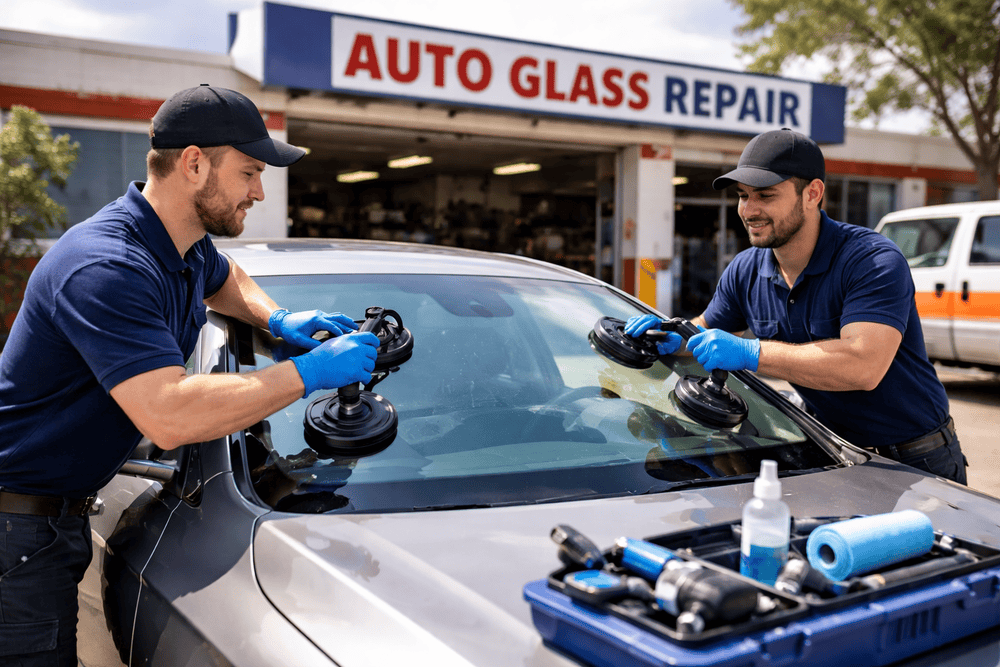
Urban Driving Hazards Car Auto Glass Repair
Driving in the city has its own set of difficulties. Urban drivers confront particular hazards that might harm their cars, particularly the windshields and glass, due to negotiating crowded streets, avoiding potholes, and coping with erratic traffic patterns. Not only does the glass in your car allow you to see, but it also serves other purposes. It is a crucial safety element that protects you from flying debris, ensures that the structural integrity of your vehicle is preserved, and is responsible for ensuring that the airbags deploy correctly in the event of an accident. However, driving in an urban setting exposes your car’s glass to ongoing dangers that might deteriorate it.
Get An Auto Glass Replacement Quote Now 866.278.7417

Windshield Replacement & Repair
Our competitors push you into going to their shop to get your glass fixed-making it cheaper for them. We make it easier for YOU to get back on the road by offering free mobile repairs at your home or work. With our free mobile services servicing the entire Orange County & Los Angeles area, we can often handle your windscreen replacement the same day! So the next time you need a windshield replacement, give us a call.
Talk to a Windshield Replacement Specialist Now 866.278.7417

Calibration
Calibration is the process of returning a vehicle’s ADAS to OEM specifications. Calibration is necessary after a new glass installation, particularly a windshield with a camera mounted to it, to ensure that the ADAS features continue to function properly despite having been moved during installation. If a car’s ADAS is not properly calibrated, the system may not function safely. A misaligned camera could jeopardize the functionality of the system and lead to dangerous driving or accidents, so it is crucial that the cameras are aligned perfectly, which is what windshield calibration ensures.
Talk to a Calibration Specialist Now 866.278.7417

Fleet Auto Glass Repair
We provide expert auto glass repair and windshield replacement services for commercial fleets of all sizes. We are experienced with all manufacturers and machine types of domestic or foreign cars, trucks, vans, or commercial vehicles, including heavy equipment. Our same day mobile auto glass and windshield repair service will enable you to get back on the road faster and start saving you time and money instantly. Give us a call today! We are here to help!
Talk to a Fleet Auto Glass Specialist Now 866.278.7417
Common Urban Hazards That Damage Auto Glass
Road Debris and Construction Zones: In most cities, construction seems to be a constant. Although these improvements enhance infrastructure, they put vehicles in dangerous situations. Construction site debris, tiny boulders, and loose gravel often fly into the air and hit windshields at high speeds.
When a little pebble strikes your windshield at the proper angle, it may seriously damage it. When paired with temperature fluctuations or extra road vibrations, the impact causes stress spots in the glass that may quickly expand into bigger fractures.
Additionally, construction zones compel cars to use narrower lanes and approach material-carrying trucks up close. This shortens your response time to escape dangers and exposes you to more flying debris.
Potholes and uneven road surfaces: Weather patterns, deteriorating infrastructure, and continuous traffic all negatively impact urban roadways. Potholes are more than just a nuisance; they induce abrupt shocks that strain the chassis of your car and may lead to the expansion of preexisting chips in the glass into complete fractures.
Shock waves go through the whole vehicle structure when your automobile strikes a pothole. A portion of this force is absorbed by your windshield, which is fixed to the frame. This quick tension might result in instant failure if the glass already has a weak spot.
Similar issues are caused by railroad crossings, uneven road surfaces, and speed bumps. Frequent exposure to these circumstances degrades vehicle glass over time, increasing its vulnerability to external damage.
Heavy Traffic and Flying Objects
In stop-and-go traffic, you spend a lot of time in close proximity to other cars. This close proximity makes it more likely that tires in front of you may kick up pebbles, gravel, or other material.
Delivery trucks and commercial trucks are especially troublesome. They often transport loose cargo or potentially loosened goods. Small particles that harm windshields might be shed by even securely fastened goods.
Bicycles, motorbikes, and pedestrians all contribute to the complexity of urban traffic. Side windows and mirrors may sustain damage from collisions with curbs, poles, or other objects when quick moves are made to escape these road users.
Parking hazards: It’s hard enough to find a spot in an urban location without having to worry about your car being damaged. High traffic lots, crowded garages, and narrow street parking all raise the possibility of vehicle glass damage.
In city parking lots, you often see shopping carts, vehicle doors opening, tree branches falling, and vandalism. In these situations, side windows and rear windshields are especially susceptible.
Parking under trees may provide some shade, but it also exposes your car to garbage, sap, and falling limbs. During the winter, you may also come across hail or falling ice from buildings in certain cities.
Weather-Related Stress: Temperature fluctuations that put stress on vehicle glass are exacerbated by urban heat islands. Glass expands and contracts as a result of the quick temperature changes caused by dark pavement and buildings that collect heat during the day and release it at night.
When paired with pre-existing chips or fractures, these temperature variations become very troublesome. Extreme heat or cold may cause a little chip that seems stable in normal circumstances to expand out of control.
Winter weather presents further difficulties. Auto glass degradation is caused by a number of factors, including scraping ice off windshields, thermal shock from using a defroster, and freezing moisture in preexisting fractures.
Do you have a Question?
Get An Auto Glass Replacement Quote Now 866.278.7417
How to Determine Auto Glass Damage
Vehicle glass damage comes in a variety of forms. Knowing the various kinds enables you to assess repair approaches and urgency.
Chips are tiny, usually circular points of impact where shards of glass have broken off. If a chip smaller than a quarter is out of the driver’s field of sight, it may typically be fixed.
From tiny fractures to splits that cover the whole windshield, cracks are linear breaks in the glass. Windshield replacement is usually necessary instead of repair for cracks greater than three inches.
From a focal point of impact, star breaks radiate outward in a star-like pattern. Usually, they begin as chips that have spread.
Multiple forms of injury resulting from a single hit are referred to as combination breaks. Usually, these intricate patterns signal the need for replacement.
Size is an important consideration when deciding whether to replace or repair. In general, cracks less than three inches and chips smaller than a quarter may be fixed. In order to guarantee structural integrity and adequate sight, anything bigger often has to be replaced.
The location is important. Even minor damage in the driver’s direct line of sight may need to be replaced since repairs may result in distortions that make it harder to see. Damage close to windshield edges weakens the structure and usually necessitates replacement.
Repairability is determined by depth. Replacement is required if the damage extends through both laminated glass layers. It is often possible to restore surface damage to the outer layer alone.
Another factor is the quantity of impact points. Even while each chip or crack is little, enough of them might cause the windshield to deteriorate to the point where it has to be replaced.
The Dangers of Postponing Auto Glass Replacement
Safety Compromises: Up to 30% of the structural strength of your car comes from your windshield. This support system is weakened by damaged vehicle glass, which raises the possibility of injuries in crashes or rollovers.
Additionally, windshields guarantee that airbags deploy correctly. The passenger-side airbag utilizes the windshield as a backstop to properly inflate during frontal collisions. Under airbag pressure, a damaged windshield may collapse, enabling the bag to push through instead of protecting passengers.
Visibility is hampered by even little chips and fissures. They produce blind spots, distort light, and become especially hazardous at night while driving in the direction of the sun or in the glare of approaching headlights.
Progressive Damage: In urban driving circumstances, little chips seldom ever remain small. Crack growth is influenced by a variety of factors, including changes in temperature, humidity, traffic vibrations, and other influences.
In a matter of days or weeks, what begins as a chip that can be fixed might become into a crack that has to be completely replaced. This development is erratic; even in the absence of further impact, a fracture may widen abruptly.
Deterioration is accelerated by moisture intrusion. Water may freeze, expand, and cause further damage if it penetrates into chips and fractures. Additionally, it may obscure the affected region, making visibility more challenging.
Implications for Law and Insurance: Most states have laws governing driver visibility and windshield quality. Traffic tickets and failed vehicle inspections may follow damage that impairs structural integrity or blocks the driver’s vision.
Auto glass repair insurance coverage often has time limits. Chip repairs are often covered by comprehensive coverage with no deductible; but, if you wait until the damage has progressed to a crack, you may have to pay the entire replacement cost.
After many claims, some insurance companies increase prices. It is more economical to file a single claim for quick repair of minor damage rather than many as the damage becomes worse.
Selecting the Best Auto Glass Repair Company
What to Look for in a Provider: Experience and qualifications are important. Seek for technicians that have received training from the National Glass Association or who are certified by the Auto Glass Safety Council (AGSC). These credentials guarantee that specialists are aware of safety regulations and appropriate installation techniques.
Warranty coverage is a sign of trust in quality. Reputable stores may give guarantees on materials in addition to lifetime warranties on labor.
For busy city people, mobile services are more convenient. To save you time traveling across the city to go to a store, a lot of reputable providers will come to your house or place of business to do repairs.
Insurance Considerations: Glass repair is often covered by comprehensive vehicle insurance coverage with no deductible. Before making an out-of-pocket payment, review the specifics of your coverage.
Select stores that deal directly with insurance providers. They can check coverage, manage claims paperwork, and often finish the whole process without asking you for payment up advance.
Note that some insurance companies have networks of recommended providers. Choosing your own repair facility is usually your prerogative, although using an in-network business may speed up the claims process.
Urban Driver Preventive Measures: Keep a safe following distance, particularly when a truck or construction vehicle is behind you. You have more time to see and steer clear of debris because of the additional space.
If at all possible, steer clear of construction zones and newly paved roads where cars are right behind you. Reduce your speed if you have to go through these places to lessen the power of flying debris.
When possible, choose alternate routes during the busiest building seasons. Your trip may take a few more minutes as a result, but you will be less exposed to the most dangerous situations.
Parking Options
Avoid parking near trees, building sites, and busy places, and try to park in covered garages. End areas lessen the possibility of harm from nearby cars.
During the summer, use windshield sun blinds. These lessen inner heat that causes glass tension and protect against UV damage.
Think about adding a dash cam. In addition to providing protection, video may be used to record the cause of damage, which might be helpful when filing an insurance claim.
Frequent Maintenance: Check the glass of your car on a frequent basis, particularly after you’ve driven through construction zones or inclement weather. Chips may be quickly repaired before they spread if they are detected early.
Maintain a clean windshield. Debris and dirt may conceal tiny chips and make it more difficult to see damage that already exists.
Before the wipers deteriorate to metal, replace them. Glass may be scratched by worn wipers, making weak spots more vulnerable to harm.
Taking Action to Protect Your Auto Glass: Driving in an urban area will always pose threats to the glass of your car, but being aware of these risks and taking the right precautions may make all the difference. Although little chips and cracks may not seem like much, most drivers are unaware of how much they jeopardize your safety and the integrity of your car.
Need for Auto Glass Repairs and Protect Your Car
The windows and windshield of your automobile do more than merely block out the wind. They are essential safety measures that shield you from flying objects, maintain the structural soundness of your car, and provide excellent road visibility.
However, a lot of drivers neglect to take care of their windshields until a chip becomes a fracture or a minor problem necessitates a costly repair. The good news? The majority of vehicle glass damage is avoidable.
You may prolong the life of your windshield and windows and reduce the cost of repairs by being aware of the factors that lead to chips, cracks, and scratches and by adopting a few preventative measures. This article will teach you how to maintain the best possible condition for your car glass, regardless of the weather, traffic dangers, or normal wear and tear.
Recognizing Typical Causes of Auto Glass Damage It’s useful to know what you’re up against before taking steps to safeguard the glass in your car. Usually, auto glass damage may be divided into many categories:
Road debris is the most frequent offender. Rocks, gravel, and other debris that passing cars have kicked up may cause chips or fractures in your windshield when they hit it quickly. This is particularly prevalent in construction areas and on roads.
Variations in temperature may seriously damage your car’s glass. Stress from abrupt changes in temperature, such as applying defroster to a frozen windshield or parking in the sun after a cold shower, may lead to the spread of pre-existing chips.
Although it may not be immediately apparent, poorly placed glass is more likely to sustain damage. Even little hits or changes in pressure might weaken the integrity of your windshield if it was not properly sealed or if the adhesive was not allowed enough time to dry.
Impacts and accidents like crashes, fallen trees, or hail may result in serious damage right away. Even though these things can’t always be avoided, being aware of the danger enables you to act swiftly when they do happen.
Do you have a Question?
Get An Auto Glass Replacement Quote Now 866.278.7417
Strategic Parking to Reduce Exposure
Parking location and technique have a greater impact than you may imagine. Selecting the ideal location helps shield your car from environmental dangers as well as harm from people.
Whenever feasible, go for covered parking. Your automobile is protected from hail, falling objects, and sharp temperature changes by garages, carports, and covered parking structures. For additional security, think about purchasing a vehicle cover if your property lacks covered parking.
Don’t park under trees. Tree branches may break your windshield, even if the shade may appear nice. Trees may cause damage to your glass over time by dropping sap, nuts, and other debris, even if there are no falling branches.
Keep your distance from areas that are being built. Hotspots for flying debris are construction sites. If you have to park close to a building site, make sure your car is parked with the windshield facing away from the site.
Pay attention to the weather prediction. Move your vehicle to a sheltered area if severe weather is predicted. In a matter of minutes, hail, in particular, may seriously damage car glass.
Use defensive driving techniques since your driving style has a direct influence on how long your windshield lasts. You may drastically lower your exposure to traffic risks by using a few defensive driving techniques.
Increase your following distance from other cars, particularly construction and truck vehicles. You have more time to respond if debris comes up from their tires if you are further behind. In typical circumstances, it’s a good idea to keep a following distance of at least three seconds.
On dirt roads, go more slowly. It’s more likely that your tires or those of other cars may kick up pebbles that hit your windshield when you drive at high speeds on unpaved roads.
Keep Your Glass and Windshield Wipers in Good Condition
Frequent maintenance helps you identify any issues before they become severe and maintains your car’s glass in top shape. Replace worn-out wiper blades as soon as possible.
Your windshield may get scratches from old or defective wipers, making weak spots more prone to cracking. Wiper blades should be changed every six months to a year, according to the majority of specialists.
Regularly clean your windshield. Over time, abrasions on your glass may be caused by dirt, grime, and road salt. To get rid of buildup without damaging the surface, use a microfiber cloth and high-quality glass cleaner.
Regularly check for cracks and chipping. If detected early, little chips may often be repaired; but, if neglected, they can swiftly enlarge into bigger fissures. Examine your windshield often, focusing on the regions close to the margins.
Put a glass protector on. Water-repellent coatings provide a barrier that helps shield your windshield from small dings and makes cleaning it simpler. Additionally, these things make it easier to see in the rain.
Handle Minor Damage Right Away: By taking prompt action when you see a chip or minor crack, you might avoid having to replace the item entirely and save hundreds of dollars.
Do not wait for little chips to proliferate. Even little chips may grow into lengthy fissures due to temperature variations, road vibrations, and pressure on the frame of your car. In less than an hour, the majority of vehicle glass repair firms can mend chips smaller than a quarter.
For serious damage, stay away from do-it-yourself repair kits. Although consumer repair kits may fix extremely small chips, they often fall short of expert fixes in terms of quality. Inadequate repairs may cause your windshield to fail safety inspections and jeopardize its structural integrity.
Guard Against Damage Caused by Temperature
Stress fractures in vehicle glass are mostly caused by extreme temperatures and abrupt temperature fluctuations. Costly damage may be avoided by taking preventative measures during the chilly winters and the scorching summers.
Hot water should never be used on frozen glass. Thermal shock may cause an ice windshield to fracture when hot or even warm water is poured on it. Alternatively, use a plastic ice scraper made for automotive glass or start your vehicle and run the defroster gradually.
Throughout the winter, gradually warm up your car. After starting your automobile, don’t turn the heating on to its highest setting right away. To avoid abrupt temperature fluctuations that might strain the glass, allow the cabin to warm up gradually.
In the summer, use a sunshade. Your windshield becomes really hot when you park in direct sunshine. A reflecting sunshade lessens thermal load on the glass and lowers inside temperatures.
If at all possible, park in the shade. Parking in direct sunshine may result in temperature-related stress, even on days that are mildly warm. Glass temperatures are kept more constant in shaded areas.
Mobile Safe Auto Glass
14241 E Firestone blvd suite 400,
La Mirada, CA 90638
Phone: (562) 608-1154
Toll Free: 1 866 278 7417
Mail: sales@mobilesafeautoglass.com
Get a FREE QUOTE today! You can get a free quote and schedule 24/7 using this free quote wizard.
Mon – Fri 8am – 5pm
Saturday 8am – 1pm
Sunday Closed