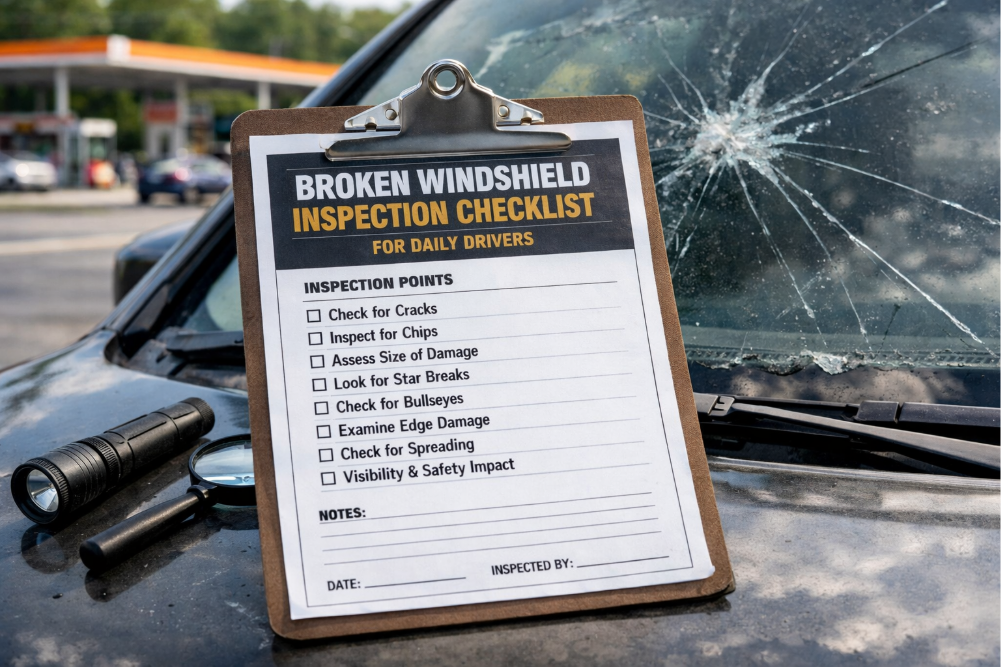
Broken Windshield Inspection Checklist for Daily Drivers
Right away, your gaze darts across the windshield in search of the collision site. Occasionally, you’re fortunate enough to see nothing except a little dust particle. In some cases, a spiderweb fracture or a clear white pit emerges immediately. When faced with a little chip, many everyday drivers tend to dismiss it. In addition to its function as a barrier against insects, the windshield is an important component of your vehicle’s safety system. It guarantees that your airbags will deploy properly in the event of an accident and makes a substantial structural contribution to the cabin. Ignoring little damage might eventually result in significantly larger repair costs and serious safety hazards.
Get An Auto Glass Replacement Quote Now 866.278.7417

Windshield Replacement & Repair
Our competitors push you into going to their shop to get your glass fixed-making it cheaper for them. We make it easier for YOU to get back on the road by offering free mobile repairs at your home or work. With our free mobile services servicing the entire Orange County & Los Angeles area, we can often handle your windscreen replacement the same day! So the next time you need a windshield replacement, give us a call.
Talk to a Windshield Replacement Specialist Now 866.278.7417

Calibration
Calibration is the process of returning a vehicle’s ADAS to OEM specifications. Calibration is necessary after a new glass installation, particularly a windshield with a camera mounted to it, to ensure that the ADAS features continue to function properly despite having been moved during installation. If a car’s ADAS is not properly calibrated, the system may not function safely. A misaligned camera could jeopardize the functionality of the system and lead to dangerous driving or accidents, so it is crucial that the cameras are aligned perfectly, which is what windshield calibration ensures.
Talk to a Calibration Specialist Now 866.278.7417

Fleet Auto Glass Repair
We provide expert auto glass repair and windshield replacement services for commercial fleets of all sizes. We are experienced with all manufacturers and machine types of domestic or foreign cars, trucks, vans, or commercial vehicles, including heavy equipment. Our same day mobile auto glass and windshield repair service will enable you to get back on the road faster and start saving you time and money instantly. Give us a call today! We are here to help!
Talk to a Fleet Auto Glass Specialist Now 866.278.7417
Healthy Windshield Matters More Than You Think
It’s critical to comprehend the true issues before beginning the examination. An engineering marvel of contemporary windshields is laminated safety glass, which is made up of two layers of glass with a film of polyvinyl butyral (PVB) sandwiched in between them.
It is the responsibility of the windshield to provide up to forty-five percent of the structural integrity of the cabin of the vehicle in the event that the vehicle is involved in an accident that results in the vehicle rolling over. The roof is more likely to fall if the glass is weakened by a fracture, thus increasing the possibility of passenger injuries.
Airbag Deployment: The windshield often serves as a backup for passenger-side airbags. The airbag bounces against the glass to properly position itself in front of the passenger before it bursts outward. The power of the airbag might break the glass or rip the windshield out completely if there is a fracture in it, making the safety device ineffective.
Advanced Driver Assistance Systems (ADAS): If your vehicle was built within the previous few years, cameras and sensors for functions like rain-sensing wipers, automated emergency braking, and lane departure alerts are probably located in your windshield. Safety systems may malfunction or fail as a result of a fracture in front of these sensors that interferes with their calibration.
The Step Windshield Inspection Checklist: A basic safety check may be performed without a qualified mechanic’s assistance. Once a month or as soon as you hear anything hit the glass, make it a habit to go over this checklist.
The Visual Scan
To prevent glare, start by parking your automobile in a well-lit place, ideally away from direct sunshine. Glass should be well cleaned since little cracks may be readily concealed by dust and dried insects.
External Scan: Examine the surface in detail. You are searching for simple chips, “bullseyes” (circular breaks), or “stars” (breaks with tiny radiating legs). Take special note of the glass’s outside borders. Because of manufacturing stress, the windshield’s perimeter is its weakest area, and fractures there propagate far more quickly than those in the middle.
If you want to do an interior scan, you should sit in the driver’s seat. In front of you, do you notice anything that may be harmful? Even a little scratch or distortion might result in deadly nighttime glare from the sun or headlights, briefly blinding you.
According to the fingernail test, damage might sometimes seem like a little superficial pit but be deeper. When you see any marks during your visual check, use your fingernail to gently massage them until they disappear.
Your fingernail has pierced the surface layer if it snags in the groove. This is an important discovery. This aperture allows moisture and dirt to enter.
The expansion that occurs when water enters a fracture and freezes is likely to cause the crack to spread over the whole windshield. You should contact a repair business if your nail catches.
Examine the Seals and “Frit”: “Frit” is the term for the black band that surrounds the edge of your windshield. The enamel ring that is baked into the glass gives the adhesive a stable surface on which to adhere the glass to the frame.
Examine the molding around the windshield, which is the rubber or plastic strip. It needs to be flush with the car’s body and glass. Seek out:
Brittleness or dry rot: Water may sneak in if the rubber is disintegrating.
Loose sections: The seal is jeopardized if the molding is separating or flapping.
Rust: Paint that is bubbling up close to the edge of the windshield indicates that water is seeping behind the seal and corroding the pinch weld metal frame, which may break the windshield’s attachment to the vehicle.
Do you have a Question?
Get An Auto Glass Replacement Quote Now 866.278.7417
Examine the Blades of Your Wiper
Although it may not appear connected, the most frequent reason for avoidable windshield damage is your wiper blades. Following the raising of the wiper arms, run your finger down the rubber edge of the wiper arms. It should be completely seamless.
The wiper’s metal arm may scrape against the window if the rubber is ripped, stiff, or missing pieces. This results in “wiper arc” scratches, which are deep grooves that may gradually erode the glass surface and are hard to clean out. To safeguard the glass, replace your wipers right away if they are streaking or chattering.
Watch out for leaks: Turn off your fan and radio when traveling at highway speeds. Is there a whistling noise coming from the region around the windshield?
Wind noise often indicates a failing seal. Even without any broken glass, a poor seal allows air and water to enter the cabin.
This diminishes the adhesive bond over time. After a downpour, the structural integrity of your windshield installation is questionable if you hear whistling or see wet patches on your carpet or dashboard.
Recognizing Damage: Replace vs. Repair: The key issue after examining the glass is whether a quick fix would suffice or whether a complete replacement is required. These are the broad rules; however, the ultimate decision is made by a qualified car glass specialist.
When to Repair: To fix a chip or crack in a windshield, a specific resin is injected into it and then exposed to UV radiation to cure it. It brings clarity and power back. Usually, you can fix the harm if
Dimensions: The crack or chip is around 6 inches in size, less than a dollar note.
Depth: The inner layer of plastic has not been affected.
Location: The damage is not immediately in the driver’s essential line of sight, nor is it on the glass’s edge.
When to Replace: When the glass is too structurally fragile to be saved, replacement is the only viable choice.
It is likely that a replacement is necessary if: It is more than six inches in length that the crack is.
Location: The damage is either directly in the line of sight of the driver (repairs usually leave a little blur), or it touches the edge of the windshield, which puts the seal in jeopardy.
Complexity: The glass is broken or has many fractures.
ADAS Interference: A camera or sensor is in front of the damage. To make sure safety systems function in this situation, the majority of manufacturers demand a replacement and recalibration.
The Price of Holding Out
Procrastination poses the greatest threat to auto glass. Many insurance plans cover the expense of repairing a minor rock chip with no deductible since they want you to remedy it before it spreads. Typically, this repair costs between $50 and $150.
You will need a complete replacement if that chip develops into a 12-inch crack, which may occur over a single speed bump or on a chilly night. The cost of a replacement might vary from $300 to more than $1,500, depending on the make, model, and ADAS calibration requirements of your car.
Drive with assurance: Your windshield serves as both a view to the outside world and a barrier to keep you and your loved ones safe. You may change your driving style from reactive to proactive by setting aside five minutes once a month to go over this inspection checklist.
In the event that you find a chip during your inspection performed today, you should immediately schedule an appointment for a repair. The easiest way to ensure that your vehicle continues to be as secure as the day it was created while also saving money is to use this strategy. On the road, sight is crucial, and clean glass ensures clear vision.
What Experts Consider Before Fixing Your Windshield: As you go about your day, a little chip in your windshield could seem like a minor inconvenience that you can overlook.
However, that little imperfection may easily grow into a large fracture, endangering both your safety and the structural soundness of your car. You may question why the mechanic recommends a complete replacement rather than a little fix when you eventually bring your vehicle in, or vice versa.
Making the choice to replace or repair a windshield is not a random one. To choose the safest and most efficient course of action, auto glass specialists adhere to a set of standards. To make sure a repair will last over time and, most importantly, keep you safe while driving, they assess the extent, location, and size of the damage.
Before you visit the store, you may establish reasonable expectations by being aware of these issues. When professionals check the glass in your car, they examine these factors.
The Size of the Damage
The size of the chip or crack is one of the first things a technician will measure. This is often the easiest way to tell whether a repair is possible.
In general, a rock chip is an excellent candidate for repair if it is less than a quarter, or around an inch, in diameter. Cracks are a little different; they may typically be fixed if they are less than three inches in length.
But because of advancements in technology, certain car glass firms are now able to fix breaks up to 12 or even 14 inches long, depending on the particular tools they employ.
Almost always, a replacement is required if the damage goes beyond these measurements. In the case of a rollover, large breaks in the glass make it less resilient to impact and less able to hold the top of the car.
The windshield is more than simply a piece of glass; it is also a measurement of the force that was applied to the vehicle when it was struck. They are built using two layers of glass that are sandwiched by a layer of polyvinyl butyral (PVB) plastic. This building process is known as the “sandwich” construction method.
Due to the existence of this safety layer, the glass is protected from being broken into sharp shards in the event that it is subjected to an impact. An experienced professional will examine your windshield in order to determine the extent of the damage that has been done to it.
Penetration of the Inner Layer
A repair is no longer a possibility if the damage has pierced the inner layer of glass within the cabin or, worse, the plastic layer. The compromised structural integrity necessitates a replacement to restore the vehicle’s safety.
A Chip or Crack is present. The position of the damage on your windshield is just as significant as its size or depth. Location is the most critical factor. When evaluating a place, technicians consider three primary zones.
The Driver’s Line of Sight: A little imperfection or distortion in the glass may remain after a successful repair.
This is usually unimportant on the passenger side, but it can be dangerous if it obstructs the driver’s view. Professionals will often advise a replacement if the damage is directly in front of the steering wheel (about the width of a typical sheet of paper) so the driver can see the road clearly.
Do you have a Question?
Get An Auto Glass Replacement Quote Now 866.278.7417
The Edges of the Windshield
Because of strain, the glass around the windshield is the least structurally sound. If a chip or fracture occurs within a few inches of the edge, it is more likely to spread quickly.
Repairs in this area are dangerous because the pressure from the repair procedure can sometimes cause the fracture to widen. Damage is close to the edge; hence, it often results in a replacement.
Sensors and Cameras: Advanced Driver Assistance Systems (ADAS) are becoming more widespread in modern vehicles. Some examples of ADAS components are automated braking and lane departure alerts. Additional features include cameras. In many cases, the foundation of these systems consists of cameras and sensors that are put behind the windshield.
Repairing these sensors could potentially impact their calibration and operation if damage occurs directly in front of them. The only method to guarantee that the car features function properly in these situations is to replace them and then recalibrate the safety systems.
The Age of the Damage
Time is crucial when it comes to windshield repair. Since a new chip is clean and open, the repair glue may easily enter the fracture and form a strong connection.
However, over time, moisture, dirt, and windshield cleaner fluid may contaminate the chip. This material may block the damage, making proper curing of the resin difficult or impossible.
The outcome of a chip repair will be hazy and structurally weak if it has been neglected for an extended period of time and is contaminated. In certain situations, a technician may conclude that a repair is not viable and suggest a replacement.
Evaluating Safety and Durability: Any auto glass specialist’s ultimate objective is to get the car back on the road safely. They are evaluating the durability of the repair rather than merely whether they can patch a fracture.
They take into account things like sharp variations in temperature. A weaker windshield is especially vulnerable to stress if you reside in an area with harsh winters or intense summers. The expert will put your safety first and suggest a replacement windshield if they think the repair won’t survive these environmental stresses.
Taking the Next Step
Windshield damage should never be ignored. A single pothole or cold snap can turn a small, fixable chip into an irreversible break.
Examine your glass closely using the aforementioned standards if you have discovered any damage. Is it smaller than a quarter? Is it out of your line of sight and away from the edges? If so, you’re probably lucky.
However, a certified expert inspection is the only way to be certain. They are able to deliver a definitive examination and ensure that your vehicle is kept safe and ready for the road at all times.
Mobile Safe Auto Glass
14241 E Firestone blvd suite 400,
La Mirada, CA 90638
Phone: (562) 608-1154
Toll Free: 1 866 278 7417
Mail: sales@mobilesafeautoglass.com
Get a FREE QUOTE today! You can get a free quote and schedule 24/7 using this free quote wizard.
Mon – Fri 8am – 5pm
Saturday 8am – 1pm
Sunday Closed