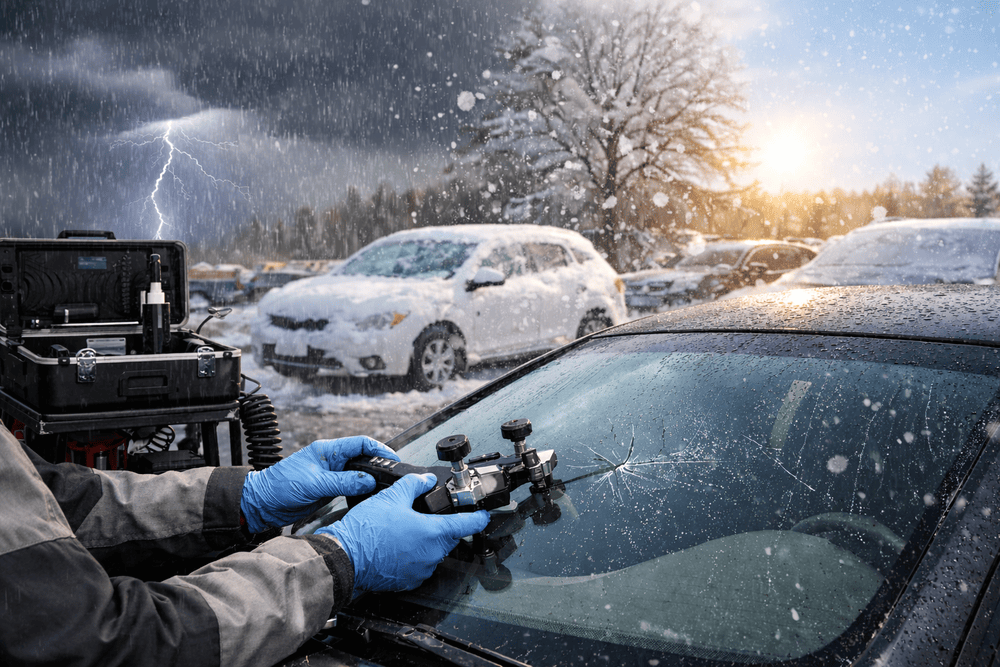
Weather Impact on Car Auto Glass Repair
The windshield on your automobile does more than just let you see the road clearly. It is an essential safety feature that protects you from flying objects, maintains the structural soundness of your car, and wards off the weather. However, severe weather can damage car glass, causing small chips to grow into large gaps and endangering your safety. You may take preventative measures and determine when it’s time for expert repair by being aware of how various weather patterns impact your windows and windshield. Every season presents different difficulties for the glass in your car, from the intense summer heat to the very cold winter months. Let’s look at how weather affects car glass and how to safeguard your investment.
Get An Auto Glass Replacement Quote Now 866.278.7417

Windshield Replacement & Repair
Our competitors push you into going to their shop to get your glass fixed-making it cheaper for them. We make it easier for YOU to get back on the road by offering free mobile repairs at your home or work. With our free mobile services servicing the entire Orange County & Los Angeles area, we can often handle your windscreen replacement the same day! So the next time you need a windshield replacement, give us a call.
Talk to a Windshield Replacement Specialist Now 866.278.7417

Calibration
Calibration is the process of returning a vehicle’s ADAS to OEM specifications. Calibration is necessary after a new glass installation, particularly a windshield with a camera mounted to it, to ensure that the ADAS features continue to function properly despite having been moved during installation. If a car’s ADAS is not properly calibrated, the system may not function safely. A misaligned camera could jeopardize the functionality of the system and lead to dangerous driving or accidents, so it is crucial that the cameras are aligned perfectly, which is what windshield calibration ensures.
Talk to a Calibration Specialist Now 866.278.7417

Fleet Auto Glass Repair
We provide expert auto glass repair and windshield replacement services for commercial fleets of all sizes. We are experienced with all manufacturers and machine types of domestic or foreign cars, trucks, vans, or commercial vehicles, including heavy equipment. Our same day mobile auto glass and windshield repair service will enable you to get back on the road faster and start saving you time and money instantly. Give us a call today! We are here to help!
Talk to a Fleet Auto Glass Specialist Now 866.278.7417
The Science of Glass Damage Caused by Weather
Although auto glass is designed to endure a lot of strain, it is not impervious. The two layers of glass in your windshield are separated by a plastic interlayer. When struck, its laminated design prevents the glass from breaking into sharp fragments.
Glass expands and contracts in response to temperature changes. When this occurs frequently or quickly, preexisting flaws turn into stress points. When exposed to high temperatures, a little chip that appeared innocuous the previous week can become entangled in a web of fissures.
When several areas of your windshield are concurrently exposed to varying temperatures, the problem gets worse. When the weather is cold, running your defroster on high causes thermal stress, which can swiftly spread damage.
How Summer Heat Damages Auto Glass: Your windshield is subjected to significant stress from intense heat. The glass in your car heats up and expands when it is exposed to direct sunshine. Uneven heating patterns are produced by dark dashboards that collect heat and transmit it toward the interior surface of the windshield.
Unless there is already a chip or crack in the glass, this expansion is often uniform. The defect grows because damaged glass heats and expands differently than whole glass. On a hot afternoon, what began as a pebble impact can develop into a crack that is a foot long.
This risk is greatly decreased by parking in the shade whenever possible. Get it fixed right away if you see a tiny chip throughout the summer. Waiting too long increases the likelihood that heat may transform that fixable chip into a windshield that need replacement.
Additionally, over time, UV exposure weakens the plastic interlayer, increasing the likelihood of impact damage to your windshield. Even though it happens gradually, years of exposure to the sun can erode an older windshield’s structural integrity.
Windshield Damage During the Winter
The challenges posed by cold weather are distinct but no less significant. As temperatures drop, glass shrinks, making any damage a weak spot where cracks can spread quickly.
Ice formation is especially troublesome. Moisture causes a chip or crack to enlarge significantly when it freezes. Overnight, this ice expansion can transform a chip the size of a quarter into a branching crack.
Pouring hot water on frozen windshields or turning the defroster to full power just after starting the car are common ways for drivers to exacerbate the issue. Thermal shock from the abrupt temperature shift can break windshields that are already damaged, let alone ones that are unbroken.
Gradual warming is the best strategy. Turn on your vehicle and allow the defroster to gradually warm up. During the colder months, store your automobile in a garage and use an ice scraper instead of hot water.
Risks also arise from winter traction sand and road salt. At highway speeds, these materials can crack your windshield after being kicked up by other cars. This risk can be decreased by keeping a safe following distance.
Rain, Hail, and Storm Damage: Although heavy rain by itself usually doesn’t harm car glass, it can lead to other issues. Water can leak into tiny chips and cracks, causing the windshield frame to corrode more quickly or freeze when temperatures decrease.
Hail is a completely different story. Auto glass can be pitted or cracked by even tiny hailstones moving quickly. Larger hail can seriously damage the windshield or smash side windows. It’s crucial to park in covered areas during severe weather alerts if you reside in a region that frequently experiences hailstorms.
Flying debris is another concern associated with severe thunderstorms. In strong winds, loose roofing materials, tree branches, and other things turn into projectiles. Your windshield has limitations even though it is made to withstand impacts.
Examine your car’s glass thoroughly after every significant storm. Small chips may not be noticeable right away, but if ignored, they can develop into more serious issues.
Do you have a Question?
Get An Auto Glass Replacement Quote Now 866.278.7417
Variations in Temperature and Quick Shifts
The most noticeable damage to glass is caused by abrupt changes in temperature. These happen when you run the defroster on frozen glass or blast cold air conditioning on a windshield that has been scorching in the sun.
The cause of the issue is unequal expansion and contraction. The stress that results from one area of your windshield heating or cooling significantly more quickly than another may be greater than what the glass can withstand.
For this reason, experts advise making temperature adjustments gradually. On a hot day, turn on the fans and leave the windows open before turning on the air conditioner to cool your automobile. On chilly mornings, start with a lower defroster setting when warming up.
Conditions are most difficult during seasonal transitions, when daily temperature variations are greatest. The temperature of a windshield may be 40°F in the morning and 90°F in the afternoon. Any weak spots in the glass are stressed by these cycles.
Signs Your Auto Glass Needs Attention: By recognizing when to get professional assistance, you can avoid small problems turning into larger ones. Keep an eye out for these warning indicators:
Chips and cracks: Any obvious damage, regardless of how minor, needs to be examined by a specialist. Cracks shorter than three inches and chips smaller than a quarter can frequently be fixed instead of needing to be replaced entirely.
Vision distortion: If there is waviness or distortion in your field of vision, it may be a sign of faulty installation or structural issues with the glass.
Pitting: When traveling in the direction of the sun, tiny divots on the windshield surface scatter light and produce glare. Visibility is eventually compromised by pitting, which appears gradually as a result of regular wear.
Damage to the edge: Cracks that start at or extend to the edge of the windshield are especially dangerous. They spread swiftly and jeopardize structural integrity.
Hazing or discoloration: The plastic interlayer may break apart or deteriorate, resulting in hazy areas that impair vision. Don’t put off dealing with these problems. Fast attention is a wise financial decision because many insurance policies cover windshield repair with no deductible.
How to Prevent Glass Breakage in Your Car
By being proactive, you may decrease weather-related damage and increase the lifespan of your windshield: Use covered parking: Carports and garages offer protection from weather extremes, hail, and falling objects.
When there isn’t covered parking available, park wisely by selecting areas that receive sunlight in the winter and shade in the summer. Old wiper blades can damage glass, causing weak spots where cracks can start. Replace them.
Keep a safe following distance to minimize rock chips from other cars and to provide you time to respond to debris. Chips should be fixed right away because most fixes take less than 30 minutes and are much less expensive than replacements.
Steer clear of temperature extremes by gently warming and cooling your car instead of using the highest settings. Use a rain repellent: Items that make water roll off and bead lessen the amount of moisture that reaches pre-existing damage.
Frequent inspections assist in identifying minor issues before they become more serious. Develop the practice of checking your windshield once a month to look for any new chips or cracks that are getting wider.
When to Repair vs. Replace: Not all damage to the windshield necessitates a full replacement. Expert professionals adhere to broad standards according to the kind, location, and extent of damage.
As long as the damage isn’t directly in the driver’s line of sight or extends to the border of the glass, repairs are effective for chips smaller than a quarter and cracks shorter than three inches. In order to restore structural integrity and clarity, modern restoration techniques inject a unique resin that combines with the glass.
Cracks larger than three inches, damage within the driver’s primary field of vision, compromised glass edges, or many sites of damage on the windshield necessitate replacement. If earlier repairs have failed, replacement is also necessary.
Location is important. To make sure these systems work correctly, damaged near sensors for rain-sensing wipers, automated emergency braking, or lane departure alerts frequently need to be replaced.
How Climate Affects Your Auto Glass Repair Frequency
Three months have passed since you had your windshield replaced, and now the glass is beginning to fracture again. Isn’t that frustrating? Although road conditions and driving behavior are important factors, your local climate may be the secret cause of your frequent vehicle glass issues.
Extreme weather, strong sunlight, and temperature fluctuations all have an effect on the integrity of your car’s glass in addition to your comfort. You can take preventative action and possibly avoid hundreds of dollars in repairs by being aware of how different temperatures affect windshield damage.
Stress Points Are Caused by Temperature Variations: Glass expands when heated and shrinks when cooled. Over time, the material becomes weaker due to the tension created by this continuous expansion and contraction. Auto glass is particularly strained in places with significant day-to-night temperature fluctuations.
Desert areas are a prime example of this issue. Overnight, a windshield may dip to 50°F after reaching 150°F in the afternoon. This temperature fluctuation of 100 degrees occurs repeatedly, causing microscopic fractures that eventually grow into noticeable cracks.
Your windshield’s margins are particularly susceptible. Urethane glue, which expands and contracts differently than glass, is used to adhere these sections to the metal frame. This mismatch eventually produces weak spots, which are frequently the source of cracks.
In regions with intense temperatures, even small chips quickly turn into big issues. After a few hot days and cool nights, a tiny stone chip that could stay stable in mild weather can become a spider-web crack.
Severe Heat Hastens Damage
The upkeep of vehicle glass presents particular difficulties in areas with continuously high temperatures. Long-term exposure to high temperatures erodes the plastic interlayer that keeps broken glass together and weakens the structural links in laminated glass.
UV rays intensify these consequences. The polyvinyl butyral (PVB) layer between glass sheets is progressively broken down by the sun’s UV rays, resulting in discoloration and decreased impact resistance. In bright areas, this process occurs gradually but unavoidably.
On hot days, parked cars’ dashboards can reach temperatures of over 200°F. Adding to the exterior temperature stress, this intense heat spreads from the inside onto the windshield. The combination produces a setting in which current chips can grow quickly.
Although they can be helpful, windshield treatments and tinted windows are not a perfect answer. Degradation is slowed but not completely stopped by these compounds, which lower interior temperatures and UV penetration.
There are challenges associated with cold weather. Freezing temperatures pose distinct but equally significant risks to automobile glass. The brittleness that glass develops in cold temperatures increases its susceptibility to breaking upon impact, and the pressure created by ice formation takes advantage of any preexisting vulnerabilities.
In chilly climes, drivers frequently exacerbate the situation with well-meaning acts. Glass can break rapidly when hot water is poured upon an icy windshield because it causes an abrupt thermal shock. Aggressive use of metal scrapers might result in scratches that serve as sites for the start of cracks.
De-icing agents and road salt raise further concerns. These chemicals have the potential to erode windshield seal edges, letting moisture seep in and cause freezing. Water swells tremendously when it freezes, pressing against the connections between the glass and the frame.
Physical tension is also increased by snow and ice accumulation. When braking, a lot of snow on the hood or roof may move, slide forward, and hit the windshield. Most people don’t know how often this occurs, especially when there is a lot of wet snow.
Do you have a Question?
Get An Auto Glass Replacement Quote Now 866.278.7417
Damage from Humidity and Moisture
Environments with high humidity cause issues that aren’t immediately apparent. Adhesive bonding can be weakened and the metal frame corroded by moisture seeping in around windshield edges. This erodes the installation as a whole over months and years.
Salt air presents additional difficulties for coastal communities. Glass and metal components are both attacked by sodium chloride, which is extremely corrosive. Deterioration is greatly accelerated by the combination of salt, moisture, and temperature changes.
Failure of the seal is indicated by condensation between glass layers. Delamination results from trapped moisture that can freeze once it reaches the laminated structure, causing internal pressure. Complete windshield replacement is necessary for this kind of damage.
Growth of mold and mildew along the borders of the windshield is a red flag. These biological agents point to ongoing moisture issues that will eventually jeopardize the structural soundness of the glass installation.
Damage Patterns from Hail and Storms: Although severe weather events clearly cause damage, the frequency of these events varies greatly by region. Auto glass claims in the Great Plains are disproportionately high in hail corridors. Hailstorms that cause damage occur often in some places throughout the year.
Damage from hail isn’t often obvious right away. Tiny chips or pits that appear trivial but jeopardize the glass surface can be caused by minor impacts. When exposed to temperature stress or other effects, they turn into the initial sites of cracks.
Debris that behaves like projectiles is carried by strong winds. In arid areas, dust storms gradually sandblast windshields, lowering visibility and giving the area a hazy look. The outer layer of glass is also weakened by this abrasion.
During storm season, auto glass damage increases in areas that are vulnerable to hurricanes. In coastal areas, maintenance frequencies are higher from June to November due to flying debris, fallen branches, and wind-driven rain.
Data on Regional Repair Frequencies
The frequency of auto glass maintenance required by vehicle owners is greatly influenced by their geographic location. Repair rates are highest in hot desert settings and regions with severe temperature fluctuations.
States with some of the highest rates of windshield damage claims are Arizona, Texas, and Nevada. Compared to drivers in moderate climates who require repairs every three to five years, drivers in these areas may require repairs on average every twelve to eighteen months.
High repair rates are also seen in northern states with severe winters, such as Minnesota, Wisconsin, and Michigan. Road salt, severe weather, and freeze-thaw cycles all have a significant negative impact.
Overall repair rates are lower in moderate coastal regions, such as the Pacific Northwest. These areas can still sustain damage, though, especially from falling trees and debris during windstorms.
Preventive Steps for Various Climates: The first step in protecting your car’s glass is to recognize the unique climate issues you face. Parking tactics are important; in hot and cold climates, covered parking offers significant protection.
Use windshield sunshades religiously in hotter areas. By lowering interior temperatures by 40–50°F, these easy-to-use gadgets lessen thermal stress. Because ceramic window tinting doesn’t interfere with electronics like metallic window tinting does, it can block UV radiation.
Purchase a high-quality ice scraper with a brush attachment if you live in a chilly climate. Hot water should never be poured over frozen glass. Rather, turn on your car and allow the defroster to function gradually. Make sure you have winter-rated fluid in your windshield washer reservoir.
Timely chip repair is beneficial in all climates. Since repairs are significantly less expensive than replacements, many insurance policies cover this service with no deductible. Chips should be fixed within a few days because delaying causes moisture and temperature stress to exacerbate the damage.
Frequent inspections aid in the early detection of issues. Look for any moisture between layers, inspect the glass for tiny chips or cracks, and check the windshield borders for seal damage. Instead of waiting for problems to worsen, deal with them right away.
Making Decisions Based on Climate Knowledge
Decisions on insurance and vehicles should be influenced by the weather patterns in your area. Despite higher premiums, comprehensive coverage frequently proves beneficial in areas with significant damage. Compare the predicted frequency of repairs against the cost of coverage.
Be sure to modify your maintenance expectations when moving to a different climate zone. After being moved to an area with severe weather, a car that required little glass work in mild circumstances would need routine maintenance.
When selecting replacement glass and installation services, quality is important. Better lifetime is achieved with premium glass that has improved UV protection and is installed correctly, especially in harsh areas. Choosing the least expensive choice frequently results in early failure and extra costs.
Take into account aftermarket windshield protection coatings. These transparent coatings can stop small impacts from creating damage, absorb UV rays, and lessen thermal stress. Although they are more expensive initially, they greatly increase glass life in abrasive conditions.
Maintain a Clear View: There is no denying that climate affects how long auto glass lasts and how often it needs to be repaired. You can better protect your car by being aware of these environmental elements, whether you’re dealing with coastal storms, winter ice, or desert heat.
Act now by checking your windshield for chips or edge damage, putting climate-appropriate preventive measures in place, and fixing minor problems before they become more serious. You can avoid frequent, expensive replacements and maintain your safety while driving by taking a few preventative measures.
Mobile Safe Auto Glass
14241 E Firestone blvd suite 400,
La Mirada, CA 90638
Phone: (562) 608-1154
Toll Free: 1 866 278 7417
Mail: sales@mobilesafeautoglass.com
Get a FREE QUOTE today! You can get a free quote and schedule 24/7 using this free quote wizard.
Mon – Fri 8am – 5pm
Saturday 8am – 1pm
Sunday Closed