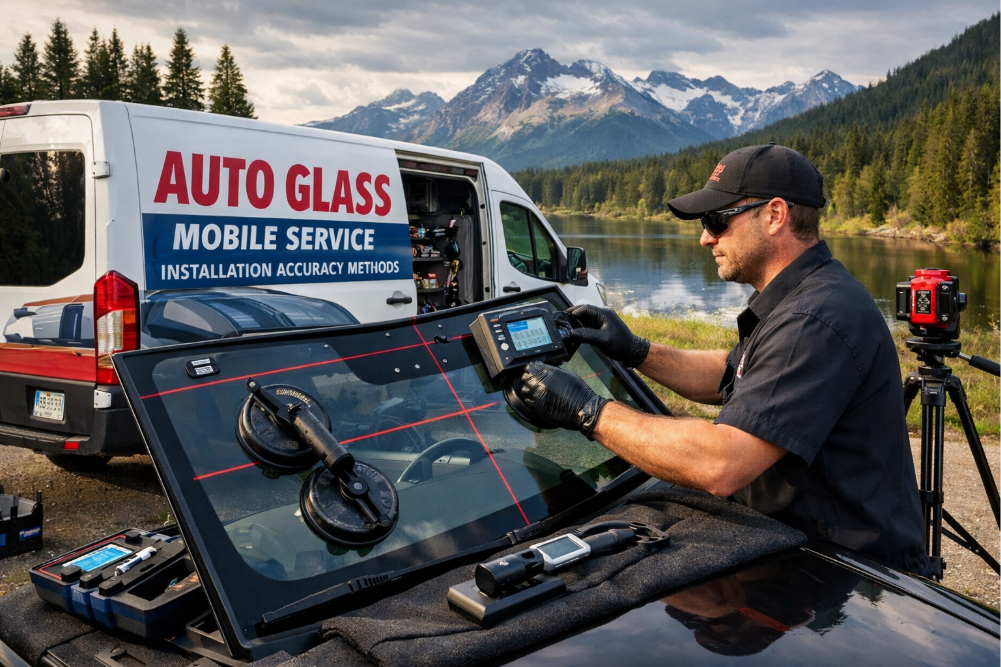
Auto Glass Mobile Service Installation Accuracy Methods
Convenience counts when your windshield breaks or cracks. You may save time and bother by having the repair company come to your driveway with mobile car glass services. However, can van-based professionals really match a typical shop’s level of precision? Yes, provided that the right procedures are used. Over the last ten years, mobile car glass installation has seen tremendous change. Whether your windshield is placed in a garage or the parking lot of your workplace, it will fit flawlessly and operate safely thanks to modern methods, calibrated equipment, and industry-certified procedures. The precision techniques used by mobile car glass specialists to provide expert findings on-site are examined in this tutorial. You’ll discover the methods, resources, and quality assurance procedures that make mobile installation as dependable as in-store service.
Get An Auto Glass Replacement Quote Now 866.278.7417

Windshield Replacement & Repair
Our competitors push you into going to their shop to get your glass fixed-making it cheaper for them. We make it easier for YOU to get back on the road by offering free mobile repairs at your home or work. With our free mobile services servicing the entire Orange County & Los Angeles area, we can often handle your windscreen replacement the same day! So the next time you need a windshield replacement, give us a call.
Talk to a Windshield Replacement Specialist Now 866.278.7417

Calibration
Calibration is the process of returning a vehicle’s ADAS to OEM specifications. Calibration is necessary after a new glass installation, particularly a windshield with a camera mounted to it, to ensure that the ADAS features continue to function properly despite having been moved during installation. If a car’s ADAS is not properly calibrated, the system may not function safely. A misaligned camera could jeopardize the functionality of the system and lead to dangerous driving or accidents, so it is crucial that the cameras are aligned perfectly, which is what windshield calibration ensures.
Talk to a Calibration Specialist Now 866.278.7417

Fleet Auto Glass Repair
We provide expert auto glass repair and windshield replacement services for commercial fleets of all sizes. We are experienced with all manufacturers and machine types of domestic or foreign cars, trucks, vans, or commercial vehicles, including heavy equipment. Our same day mobile auto glass and windshield repair service will enable you to get back on the road faster and start saving you time and money instantly. Give us a call today! We are here to help!
Talk to a Fleet Auto Glass Specialist Now 866.278.7417
The Significance of Installation Accuracy
More than just keeping wind and debris out of your car is what a windshield accomplishes. It is an essential structural element that protects passengers in crashes, supports your roof, and properly deploys airbags.
These safety features may be jeopardized by improper installation. An incorrectly seated windshield may fail in a collision, leak water, or produce wind noise. Advanced driver assistance systems (ADAS) in modern cars add another level of difficulty since even a little misalignment might interfere with automated braking and lane-keeping sensors.
The same requirements that apply to shop-based installations also apply to mobile professionals. The difference is not in quality, but rather in how they modify tried-and-true techniques for different settings.
Pre-Installation Evaluation and Setup: Precise installation starts prior to the removal of the previous windshield. Mobile technicians carry out in-depth analyses to pinpoint any problems and organize their strategy.
Vehicle and Damage Inspection: Technicians check for damage on the current windshield and frame. They look for corrosion, dents, or bad repairs from the past that could interfere with the new installation. Whether further preparation work is required is determined by this inspection.
By comparing specs and looking up the vehicle identifying number (VIN), they also confirm that the new glass is the right one. Fit and safety problems might arise from using the incorrect windshield, even one that seems identical.
Environmental Considerations: Location and weather must be taken into consideration by mobile services. While humidity may weaken bonds, temperature has an impact on how long an adhesive takes to cure. If bad weather compromises the quality of the installation, technicians keep an eye on the situation and may reschedule.
They evaluate the workspace as well. Although a flat surface is preferable, skilled experts may use the right methods and equipment to adjust to sloping driveways or uneven terrain.
Taking Off the Old Windscreen
It takes expertise and the appropriate equipment to remove a broken windshield without damaging the car. Mobile professionals make use of specialized tools designed for effective, safe removal.
The majority of mobile installers use the cold knife technique, which uses a blade made especially to cut through urethane glue. This technique reduces the possibility of paint damage while maintaining the pinch weld, the metal frame that supports the windshield.
To remove the glass from the glue, technicians carefully work around the edge, using steady pressure. If you rush this process, you risk damaging the frame or leaving extra glue that will get in the way of the new installation.
Safeguarding Vehicle Surfaces: Mobile technicians take additional precautions to safeguard the outside and inside of your automobile. To protect the hood and dashboard from tools and dirt, they utilize coverings.
Scratches are avoided while removing magnetic fender coverings. For mobile operations, when cars are left in parking lots or driveways exposed to the elements, these precautions are particularly crucial.
Frame Preparation and Priming: Accurate installation is strongly impacted by the state of the windshield frame. A clean, sturdy surface for the new glass is produced by proper preparation.
Cleaning and Inspection: Following the removal of the old windshield, experts meticulously clean the pinch weld by scraping away any remaining glue. They check for corrosion, which has to be fixed before installation. The seal may be jeopardized if even little rust spots grow under the new windshield.
To solve these problems on-site, mobile specialists provide touch-up paint and rust treatment products. This preparation guarantees that the glue adheres correctly and prevents further leaks.
Application of Primer: Primer forges a chemical connection between the glue and the frame. Before continuing, technicians apply a thin, uniform layer to the pinch weld and let it entirely cure.
In order to achieve the adhesive strength required by car makers, this step is essential. A 50% reduction in bond strength might result from speeding or skipping primer application.
Do you have a Question?
Get An Auto Glass Replacement Quote Now 866.278.7417
Application of Urethane and Positioning of Glass
Where accuracy really counts is in the application of the adhesive and the positioning of the glass. Mobile experts always guarantee precise placement by using tried-and-true methods.
Selection of Urethane Adhesives: Premium urethane adhesives made for automobile glass are used by expert mobile services. These adhesives’ strength and flexibility meet or beyond Original Equipment Manufacturer (OEM) requirements.
The kind of vehicle, the environment, and the drive-away time needs are taken into consideration by technicians when choosing adhesives. Shorter curing periods are possible with some formulations without sacrificing full power.
Accurate Glass Positioning: Proper windshield placement may make all the difference. To precisely position the glass, mobile technicians employ suction cups, alignment markers, and even a second person.
They line the windshield with the frame by gently lowering it onto the adhesive bead. To guarantee complete contact with the glue, they place them and then press firmly and evenly over the whole circumference.
Modern cars often feature sensors or molding clips that need to line up precisely. Before the glue starts to set, technicians make sure these parts fit properly.
Advanced Calibration for Automobiles with Advanced Driver Assistance Systems (ADAS): A lot of the more recent cars use cameras and sensors that are situated on or close to the windshield. For these devices to operate properly, they must be recalibrated after windshield replacement.
Depending on the needs of the vehicle, mobile technicians use either static or dynamic calibration. While attached to diagnostic equipment, static calibration entails placing certain targets in front of the car. This procedure usually takes 30 to 60 minutes and is done on-site.
Driving the car under certain circumstances while the system self-adjusts is necessary for dynamic calibration. For a full recalibration, certain cars need both techniques.
Transportable Calibration Tools
Portable ADAS calibration devices are purchased by expert mobile services. Folding frames, magnetic targets, and diagnostic tablets that link to the car’s computer system are all included in these packages.
To guarantee that cameras and sensors line up properly with the new windshield, technicians adhere to manufacturer-specific protocols. Maintaining the operation of the safety system requires this procedure.
Quality Control and Final Inspection: After the windshield is installed, the process is not finished. Before deeming a task finished, mobile technicians do comprehensive quality checks.
Verification of glue Cure: Technicians use manufacturer instructions to confirm appropriate glue cure. In order to make sure the glass won’t move when driving normally, they could conduct retention tests.
Although full cure strength takes 24 to 48 hours to develop, the majority of contemporary adhesives provide safe driving in as little as one to two hours. Depending on the glue being used and the surrounding circumstances, mobile professionals provide tailored advice.
Visual Inspection and Leak Testing: A water test looks for leaks around the edges of the windshield. In order to check for gaps, alignment problems, or excess adhesive, technicians carefully examine the installation from the inside and outside of the car.
They check that all sensors, wipers, and defrosters are operating properly. Before the procedure is finished, any heating components or rain sensors in the car’s windshield must function correctly.
Warranty and Documentation: Expert mobile services keep track of every installation, including the kind of adhesive used, the amount of time it takes to cure, and any calibrations made. They provide guarantees for both labor and materials.
If you ever need to refer to the work or decide to sell your car, this paperwork will come in handy. It also shows how dedicated the technician is to responsibility and excellence.
Typical Obstacles in Mobile Installation
Weather and Temperature Control: Adhesive effectiveness is impacted by very high or low temperatures. While too much heat might cause glue to run before it sets, cold weather delays the drying process.
To provide ideal conditions, skilled mobile experts bring portable fans or heaters. In colder climates, they could also utilize fast-cure adhesives or modify their schedule to operate in more hospitable temps.
Restricted Access to Space and Equipment: Parking lots and driveways lack the regulated atmosphere of a store. Mobile technicians adjust by arranging their equipment with care and using movable workstations. Whether it’s a tiny private driveway or a packed parking garage, they’ve learned to operate well in confined areas.
Power Supply Requirements: Electrical power is necessary for ADAS calibration and certain equipment. No matter where they are, mobile professionals can perform all required operations by carrying portable generators or battery packs.
Selecting a Trustworthy Mobile Auto Glass Service: Not all mobile auto glass providers uphold the same ethics. Look for these quality characteristics while choosing a service:
Training and Certifications: Technicians have to be certified by groups such as the National Glass Association (NGA) or the Auto Glass Safety Council (AGSC). These certifications show dedication to industry standards and professional training.
OEM-Equivalent Glass: High-quality services make use of glass that satisfies or beyond OEM requirements. The quality of aftermarket glass varies; premium alternatives are comparable to factory glass in terms of durability, fit, and optical clarity.
Appropriate Insurance and Warranties: Reputable businesses provide warranties on both parts and labor in addition to liability insurance. A strong guarantee shows that they are confident in their job.
Getting Mobile Installation to Work for You
Convenience and expert precision are combined in mobile vehicle glass installation. Selecting skilled experts who use the right techniques and tools is crucial.
Ask about the technician’s credentials, the quality of the new glass, and if they are capable of doing any required calibrations before making an appointment for servicing. Check to see whether they can meet the unique needs of your car.
Expect the expert to undertake a comprehensive evaluation upon arrival, safeguard your car while they work, and carry out meticulous quality checks before they are done. Never be afraid to voice issues about the installation or to ask inquiries about their procedure.
Your car’s lifespan should be extended by a properly mounted windshield. You can obtain shop-quality findings delivered to your location with the correct mobile solution, demonstrating that convenience and accuracy are not mutually incompatible.
The Importance of Expert Calibration for Mobile Auto Glass Teams Your mobile auto glass repair crew shows up at a customer’s driveway, fixes a broken windshield in less than two hours, and leaves with another happy customer. Well done. Not exactly.
Advanced driver assistance systems (ADAS) that use cameras and sensors mounted in or close to the windshield are common in modern cars. Automatic emergency braking, adaptive cruise control, and lane departure alerts are all powered by these technologies.
Even a little misalignment of these parts during windshield replacement might affect accuracy, endangering your client and making your company accountable. These days, professional calibration is more than simply a nice-to-have.
For mobile car glass services who want to maintain their reputation and provide safe, dependable work, it has become crucial. This article explains the importance of calibrating, the consequences of skipping it, and how mobile teams may easily include it into their daily operations.
ADAS calibration: what is it?The process of recalibrating a car’s safety systems after windshield replacement or repair is known as ADAS calibration. For these systems to work properly, exact camera angles and sensor placement are essential.
Even little adjustments might cause the calibration to be thrown off when a windshield is taken off and put back in. Two primary categories of calibration exist:
Static calibration uses specific targets and equipment placed around the vehicle in a controlled setting, usually a shop. While the vehicle is at rest, the system is re-calibrated.
Do you have a Question?
Get An Auto Glass Replacement Quote Now 866.278.7417
The Dangers of Neglecting Calibration
In the near term, skipping calibration might save time, but there could be serious repercussions. The purpose of ADAS features is to avoid accidents, and when they don’t work properly, the consequences might be hazardous.
Safety risks Automated braking may not engage at all or may activate too late if a forward-facing camera is not calibrated to identify an object. Instead of maintaining a motorist in their lane, lane-keeping assistance may cause them to veer into oncoming traffic.
Legal and financial liability: Your company may be subject to litigation, insurance claims, and reputational harm if a customer is hurt in an accident as a result of improper ADAS calibration. Industry standards are becoming more stringent, and some jurisdictions are starting to mandate calibration as part of windshield replacement. There may be penalties or loss of certification for not meeting these standards.
Compared to regular businesses, mobile auto glass experts operate in less regulated settings. Streets, driveways, and parking lots don’t usually provide the level, well-lit areas needed for static calibration. The procedure may also be hampered by the weather.
Furthermore, mobility teams often have busy schedules, hopping from one engagement to another. Planning, tools, and training are necessary for adding calibration to the process, and they might seem like roadblocks when you’re already overburdened.
How to include calibration into your mobile workflow: Including calibration in your workflow doesn’t need a complete rewrite. Investing in the appropriate tools and comprehending the needs are the first steps.
Invest in Portable Calibration Equipment
Mobile technicians are the target audience for portable calibration equipment. They work with a variety of vehicles and are lightweight and portable. Although there is an initial outlay, it is worthwhile since it increases your service capabilities and lowers liability.
Teach your team: Technical knowledge is necessary for calibration. Every vehicle has unique calibration instructions from the manufacturer, which must be strictly adhered to. Frequent training guarantees that your technicians can comfortably handle a range of makes and models and keep up to date with the latest advancements in ADAS technology.
Inform your clients: A lot of clients are unaware that calibration is required after windshield replacement. They are more likely to respect your service and appreciate the additional effort when you explain why it matters and how it safeguards their safety. Effective communication distinguishes you from rivals who don’t provide calibration and fosters trust.
When necessary, collaborate with nearby businesses: Not all project sites are appropriate for calibration, particularly if static calibration is needed. When on-site calibration isn’t practical, you may have a fallback alternative by developing partnerships with nearby establishments that provide calibration bays. This guarantees that you can continue to satisfy client demands without sacrificing quality.
Mobile auto glass services that provide calibration have a clear advantage over their competitors. The need for calibration will only increase as more cars have ADAS. Customers who value convenience and safety will choose you if you position your company as a one-stop shop for windshield replacement and calibration.
Additionally, insurance firms are beginning to understand the need of calibration. Some now demand it in order to process claims. If your staff is capable of handling calibration, you establish yourself as an insurer’s preferred supplier, creating new sources of income.
Offering calibration is just the right thing to do, regardless of the financial gains. It lowers the possibility of mishaps and injuries by guaranteeing that clients depart with fully operational safety measures.
Frequently Held Myths Regarding Calibration
Calibration is still not well understood, despite its significance. Let’s clear up some frequent misunderstandings:
“Calibration is only necessary for luxury vehicles.” True. Many mid-range and even inexpensive cars now come equipped with ADAS technology as standard. Calibration is probably necessary following glass repair for any vehicle having a forward-facing camera or sensors close to the windshield.
“The vehicle will recalibrate itself automatically.” Dynamic recalibration is a feature of certain systems, but not all of them. Customers may be left with malfunctioning equipment if automated recalibration is relied upon without being confirmed to have taken place.
“Calibration takes too long.” Calibration may be finished in 30 to 60 minutes with the correct tools and instruction. Even though it takes more time to complete, it’s a modest addition that greatly improves the quality and security of your business.
What ADAS and calibration have in store for the future: ADAS technology is developing quickly. Features that were previously only seen in luxury cars are now commonplace. Additionally, automakers are investigating new safety features that depend on accurate sensor calibration, including autonomous parking and pedestrian recognition.
Calibration will become more important—and more specialized—as these systems become more complicated. By investing in calibration today, mobile auto glass teams will be better equipped to satisfy client expectations and adjust to future developments.
Additionally, regulatory agencies are paying more attention. Some states are proposing legislation that requires calibration after windshield replacement, and industry standards for calibration are becoming more stringent. Keeping up with these developments guarantees compliance and safeguards your company.
Mobile Safe Auto Glass
14241 E Firestone blvd suite 400,
La Mirada, CA 90638
Phone: (562) 608-1154
Toll Free: 1 866 278 7417
Mail: sales@mobilesafeautoglass.com
Get a FREE QUOTE today! You can get a free quote and schedule 24/7 using this free quote wizard.
Mon – Fri 8am – 5pm
Saturday 8am – 1pm
Sunday Closed