Chip Windshield Repair Cost Lowered by Insurance
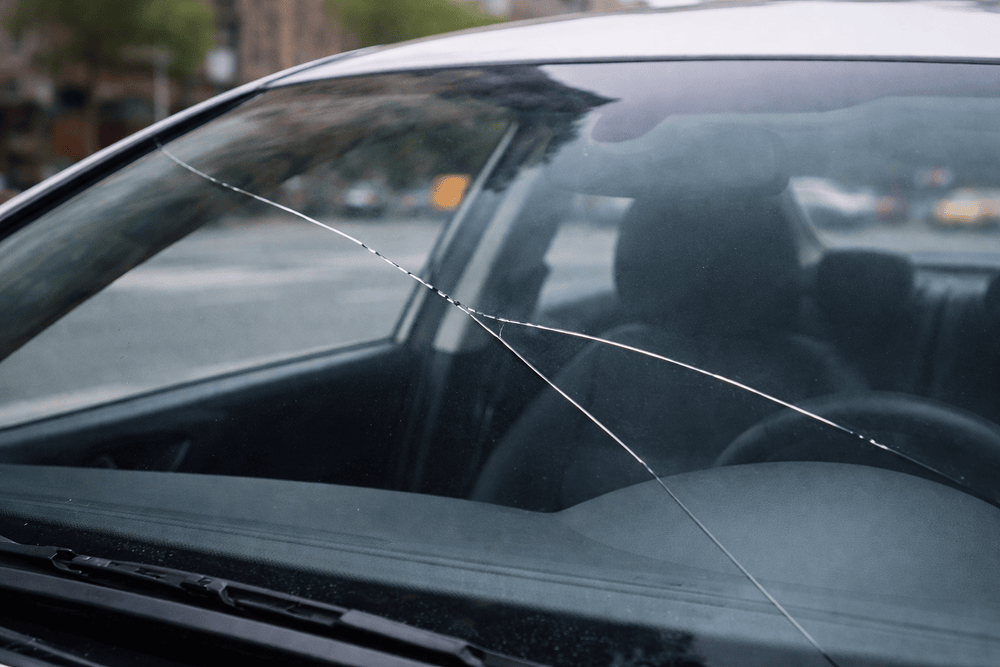
You’re listening to your favorite music while driving down the interstate when all of a sudden—crack. A passing vehicle kicks up a stray rock that strikes your windshield. It’s a sound every driver dreads. You inspect the glass and find a little chip. It appears modest, but you know that little chips may swiftly evolve into large fissures if left untreated. Your initial thought is typically an inconvenience. It’s quite likely that your second thought has to do with the price. Repairs for windshields might be an unforeseen cost that disrupts your monthly spending plan. But before you start sweating about the price tag, there is a high possibility your vehicle insurance policy has you covered.
Get An Auto Glass Replacement Quote Now 866.278.7417

Windshield Replacement & Repair
Our competitors push you into going to their shop to get your glass fixed-making it cheaper for them. We make it easier for YOU to get back on the road by offering free mobile repairs at your home or work. With our free mobile services servicing the entire Orange County & Los Angeles area, we can often handle your windscreen replacement the same day! So the next time you need a windshield replacement, give us a call.
Talk to a Windshield Replacement Specialist Now 866.278.7417

Calibration
Calibration is the process of returning a vehicle’s ADAS to OEM specifications. Calibration is necessary after a new glass installation, particularly a windshield with a camera mounted to it, to ensure that the ADAS features continue to function properly despite having been moved during installation. If a car’s ADAS is not properly calibrated, the system may not function safely. A misaligned camera could jeopardize the functionality of the system and lead to dangerous driving or accidents, so it is crucial that the cameras are aligned perfectly, which is what windshield calibration ensures.
Talk to a Calibration Specialist Now 866.278.7417

Fleet Auto Glass Repair
We provide expert auto glass repair and windshield replacement services for commercial fleets of all sizes. We are experienced with all manufacturers and machine types of domestic or foreign cars, trucks, vans, or commercial vehicles, including heavy equipment. Our same day mobile auto glass and windshield repair service will enable you to get back on the road faster and start saving you time and money instantly. Give us a call today! We are here to help!
Talk to a Fleet Auto Glass Specialist Now 866.278.7417
Understanding Windshield Damage
Before going into insurance coverage, it helps to understand what sort of harm you are dealing with. Not all glass damage is created equal, and the kind of damage generally defines whether a simple repair is doable or whether a complete replacement is required.
What is a rock chip? A rock chip refers to a small area where an object has made contact with the glass. It generally appears like a little star, a bullseye, or a half-moon form. The essential thing about chips is that they harm the surface layer of the laminated glass but normally don’t reach the inner plastic layer.
Because the structural integrity of the windshield remains mostly intact, chips are excellent candidates for repair rather than replacement. A specialist injects a special resin into the chip, which cures and binds the glass back together, restoring strength and clarity.
When Does a Chip Become a Crack?: Temperature variations, road vibrations, and even running your defroster might cause a steady chip to spread. Once a chip grows into a lengthy line, it becomes a crack. Cracks are very difficult to fix efficiently.
If a crack is longer than a dollar bill or runs to the edge of the windshield, a complete replacement is typically the only safe choice. Because insurance companies handle replacements and repairs differently, this difference is crucial. Repairs are inexpensive and quick; replacements are costly and difficult.
How Auto Insurance Handles Windshield Repairs
The link between vehicle insurance and glass repair is unusual. Unlike a fender collision, where you nearly always pay a deductible, glass claims frequently have specific provisions.
Comprehensive Coverage is Key: Standard liability insurance—the minimum needed by law in most places—only covers harm you cause to others. Your personal car is not covered. To have your windshield repaired by insurance, you normally require comprehensive coverage.
Comprehensive insurance provides coverage for damage to your automobile that does not result from an accident. This covers theft, vandalism, fire, falling items (like tree branches), and yes, pebbles striking your windshield.
The greatest news for drivers with chips is that many insurance carriers waive the deductible for windshield repairs. This is known as the “Zero Deductible” Waiver.
Why would they do this? This decision is based on simple mathematical calculations. A skilled chip repair can cost the insurance company $50 to $100.
A complete windshield repair on a contemporary vehicle—especially those equipped with Advanced Driver Assistance Systems (ADAS) like lane-keeping assist sensors—can cost anywhere from $300 to over $1,000. In the long run, the insurance saves hundreds of dollars by offering you a free early chip repair.
State-Specific Laws: Where you reside counts just as much as who insures you. Several states have legislation known as “zero deductible” glass laws. In locations like Florida, Kentucky, and South Carolina, insurers are obliged by law to waive the deductible for windshield replacement or repair if you have comprehensive coverage.
In other jurisdictions like Arizona and Massachusetts, you may get a particular glass endorsement or separate glass coverage with a low or zero deductible. To find out how your state handles vehicle glass claims, it is worthwhile to contact your agent or check local legislation.
Do you have a Question?
Get An Auto Glass Replacement Quote Now 866.278.7417
Will Filing a Glass Claim Increase My Rates
One of the main concerns of drivers is that their insurance rates would increase if they file a claim, even a little one for a chip repair. A thorough claim for glass damage is often regarded as a “not-at-fault” claim.
The rock struck your automobile because it was an inevitable road danger, not because of you. For that reason, submitting a single glass claim seldom results in a premium hike.
But frequency is important. If you make many glass claims in a short time, your insurance can see you as a greater risk. They may not increase your rates immediately, but they might reassess your insurance at renewal time.
If you are afraid, you may always question your agent hypothetically: “If I were to file a claim for a windshield repair, would it impact my premium?” Your policy and claim history will determine their precise response.
The Cost of Waiting: Why You Should Take Action Right Away: Windshields suffer from procrastination. A chip poses a significant risk. The next time you hit a speed bump, it may shatter over your whole field of vision, or it might remain steady for weeks.
Safety Concerns: Your windshield is a key safety component of your car. In front-end collisions, it offers up to 45% of the cabin’s structural integrity; in rollover accidents, it supplies up to 60%. A compromised windshield is one that has been damaged. Repairing a chip restores the structural strength of the glass, keeping you and your passengers safer.
Avoiding Replacement Costs: If you overlook a chip and it breaks, you shift from a possible $0 expense (covered by insurance) to a possibly pricey replacement. Even with insurance, you could have to pay your entire deductible for a replacement, which might run from $250 to $1,000 depending on your coverage.
Furthermore, changing a windshield takes extra time and damages the original seal on your automobile. While expert replacements are safe, retaining the original factory seal is always desirable if feasible.
How to Make a Claim for Windshield Repair
The procedure for having a chip fixed via insurance is often quick and hassle-free.
Verify Coverage: Ask clearly whether they waive the deductible for chip repairs.
Pick a shop: You normally can pick your repair facility. Many insurers work with huge national stores like Safelite, but you may frequently utilize small independent businesses too.
Schedule the Repair: Many glass repair firms provide mobile service. They will do the repair at your house or place of business, take care of the paperwork, and send a straight bill to the insurance provider.
Don’t Let a Small Chip Turn Into a Big Bill: Although a chipped windshield is an annoyance, it doesn’t have to be expensive. You may probably have the chip mended for free or at a very cheap cost if you know what your comprehensive insurance covers. The key is acting promptly.
Avoid waiting for a pothole or a cold snap to transform a little imperfection into a large crack. Check your coverage, contact your insurance agent, and arrange a repair. It keeps money in your wallet and ensures your car stays secure for the kilometers ahead.
How Deductibles and Coverage Work
Every motorist dreads the sound of a rock striking their windshield with a quick, piercing crack. It often occurs on a busy highway, leaving you feeling depressed about your financial account and with a chipped perspective.
Windshield damage is one of the most frequent insurance claims in the United States, although the laws regulating coverage remain a cause of uncertainty for many drivers. The answer isn’t a simple yes or no; it relies greatly on where you live, who insures you, and the precise sort of coverage you picked when you signed your policy.
Knowing how glass claims and deductibles work together may help you save hundreds of dollars. Before you contact your agent or go to a car glass repair, you need to understand the technicalities of your insurance.
Which Insurance Coverage Applies to Glass?: Many drivers feel that since they have “full coverage,” their windshield is automatically free to repair. However, “full coverage” is an industry phrase that often refers to carrying liability, collision, and comprehensive plans. It does not always guarantee free repairs.
Comprehensive Coverage: Windshield damage is often covered by comprehensive coverage. This is the element of your policy that covers you against non-collision incidents, such as theft, vandalism, falling items (including tree branches), fire, and animal attacks.
Comprehensive coverage begins since a rock kicking up from the road is not considered a traffic accident but rather as a random, inevitable incident. If you simply have liability insurance—which covers damage you do to others but not your vehicle—you will likely have to pay for the complete windshield repair yourself.
Collision Coverage
There is an exception. If your windshield is damaged after a car accident—for example, you rear-end another vehicle or strike a guardrail—the glass replacement would be part of the overall repair expense covered by your collision policy. In this circumstance, the glass isn’t handled as a separate claim but as part of the entire bodywork repairs.
The Deductible Dilemma: The most complicated element of windshield replacement is the deductible. A deductible is the amount of money you agree to pay out-of-pocket before your insurance provider pays the remainder.
If you have a $500 deductible on your comprehensive coverage and your windshield repair costs $400, your insurance company will pay nothing. You are accountable for the whole charge since the cost hasn’t surpassed your deductible level.
However, if you drive a contemporary car equipped with Advanced Driver Assistance Systems (ADAS)—features like lane-keeping assist, automated braking, and rain-sensing wipers—a windshield replacement is no longer simply a piece of glass. It involves extensive calibration of cameras and sensors. The cost of these replacements might potentially reach $1,000 or more.
A Cost Difference
Insurance companies favor repairs over replacements. Repairs are cheaper and quicker and they retain the original factory seal of the windshield intact. Many insurers provide a deductible waiver for repairs as a result.
A specialist may often inject a specific glue to seal damage if the chip is less than a quarter or the fracture is shorter than six inches. If you take this path, many insurance carriers may waive your deductible totally, making the treatment free for you.
However, if the damage is immediately in the driver’s line of sight or the fracture is too severe, safety requirements necessitate a complete replacement. Once you proceed from repair to replacement, the deductible normally applies again, unless you have a particular coverage add-on.
The “Full Glass” Endorsement: To eliminate the hassle of deductibles, several insurance carriers provide an extra add-on called “Full Glass Coverage” or a “Zero Deductible Glass Endorsement.”
This rider explicitly removes the deductible for glass claims in exchange for a tiny monthly premium increase, usually just a few dollars. If you have this endorsement, you may have your windshield fixed without paying a dime ahead, regardless of your regular comprehensive deductible.
Do you have a Question?
Get An Auto Glass Replacement Quote Now 866.278.7417
The States with Free Windshields
Geography has a big effect on your wallet’s health regarding vehicle glass. Given that a broken windshield poses a serious risk to public safety, some jurisdictions have enacted legislation encouraging drivers to swiftly repair damaged glass.
In these “zero deductible” jurisdictions, insurance companies are obligated by law to waive the deductible for windshield repair if you have comprehensive coverage:
Florida: Under Florida law, you cannot be charged a deductible for windshield damage if you have comprehensive coverage. This applies just to the windshield, not side windows.
Kentucky: Kentucky provides a zero-deductible benefit for all glass, not just the windshield.
South Carolina: Like Kentucky, South Carolina does not charge a deductible for any replacement safety glass.
Other jurisdictions, including Arizona, Connecticut, Massachusetts, Minnesota, and New York, allow or require insurers to provide separate glass coverage with a low or $0 deductible; however, it isn’t automatically waived by state legislation.
Will My Rates Go Up If I File a Glass Claim? The most prevalent concern that prevents individuals from using their insurance is this one. Generally speaking, a single comprehensive claim for a damaged windshield is unlikely to cause a substantial jump in your rates. Glass damage is considered a “not-at-fault” occurrence by insurers.
But frequency is important. If you submit three windshield claims in two years, your insurance could perceive you as high-risk. They might hike your premiums or, in extreme situations, refuse to renew your coverage.
Additionally, some businesses monitor “claim frequency” independently from “claim severity.” Even little claims may clog your CLUE report (Comprehensive Loss Underwriting Exchange), which is the database insurers use to evaluate your past.
In order to maintain a clean claims record, it is often preferable to pay out of pocket if the replacement’s cost is just marginally greater than your deductible—for instance, a $550 repair with a $500 deductible.
OEM Versus Aftermarket Glass
When you make a claim, you may expect you would obtain a windshield similar to the one that came from the manufacturer. This is not always the case.
OEM (Original Equipment Manufacturer): Glass created by the same manufacturer as your original windshield, generally embossed with the automobile brand’s insignia.
OEE (Original Equipment Equivalent) / Aftermarket: Glass created by a third-party manufacturer engineered to suit your automobile but not branded by the carmaker.
Most conventional insurance plans only agree to pay for aftermarket/OEE glass since it is much cheaper. Although OEE glass must adhere to federal safety regulations, several drivers choose OEM because of its flawless fit and clarity.
Unless your coverage expressly specifies otherwise, you could have to pay the difference out of pocket if you insist on OEM glass. Check your lease agreement if you rent a car; you could be required by contract to return the automobile with original glass.
Making the Right Call for Your Car: Navigating windshield insurance claims demands a rapid cost-benefit analysis. You must weigh your deductible and the long-term viability of your insurance payments against the immediate expense of the repair. Before you arrange an appointment with a glass business, do these steps:
Check your policy declaration page: Please verify that you have comprehensive coverage and review the exact deductible amount.
Verify your state laws: See whether you reside in a state that demands a deductible waiver.
Get a cash quotation first: Call a local glass business and ask for the “cash price” for a replacement. Compare the cost to your deductible.
Ask about ADAS: If your vehicle has cameras in the windshield, check the estimate to see if it includes calibration expenses, since this generally puts the price much over ordinary deductibles.
A clear vision of the road is vital for safe driving. Knowing your coverage guidelines allows you to patch that fracture without letting it ruin your budget.
Commonly Asked Questions
Does insurance pay for the calibration of safety cameras? Yes, the required calibration of ADAS (Advanced Driver Assistance Systems) cameras and sensors is covered if your comprehensive coverage covers windshield replacement. This is a critical aspect of the repair procedure for contemporary automobiles.
Can I choose the glass repair business of my choice? Indeed. While your insurance company could propose a certain “preferred” vendor or network, you legally have the freedom to pick who fixes your car.
However, if your selected shop costs more than the usual local rate that the insurance is prepared to pay, you can be liable for the difference. Is a glass claim considered an accident?
No, a glass claim submitted under comprehensive coverage is not considered an accident. It is considered a non-collision incident. However, it still shows on your insurance record as a claim paid out by the insurer. What if the damage was caused by another driver?
If a boulder fell from a dump truck and smashed your windshield, the trucking firm is accountable for the damage. However, establishing the responsible party may be challenging.
To make a claim against their liability insurance, you would need to get the truck’s license plate, the name of the business, and perhaps dashcam video. Without evidence, you will have to utilize your own complete coverage.
Mobile Safe Auto Glass
14241 E Firestone blvd suite 400,
La Mirada, CA 90638
Phone: (562) 608-1154
Toll Free: 1 866 278 7417
Mail: sales@mobilesafeautoglass.com
Get a FREE QUOTE today! You can get a free quote and schedule 24/7 using this free quote wizard.
Mon – Fri 8am – 5pm
Saturday 8am – 1pm
Sunday Closed