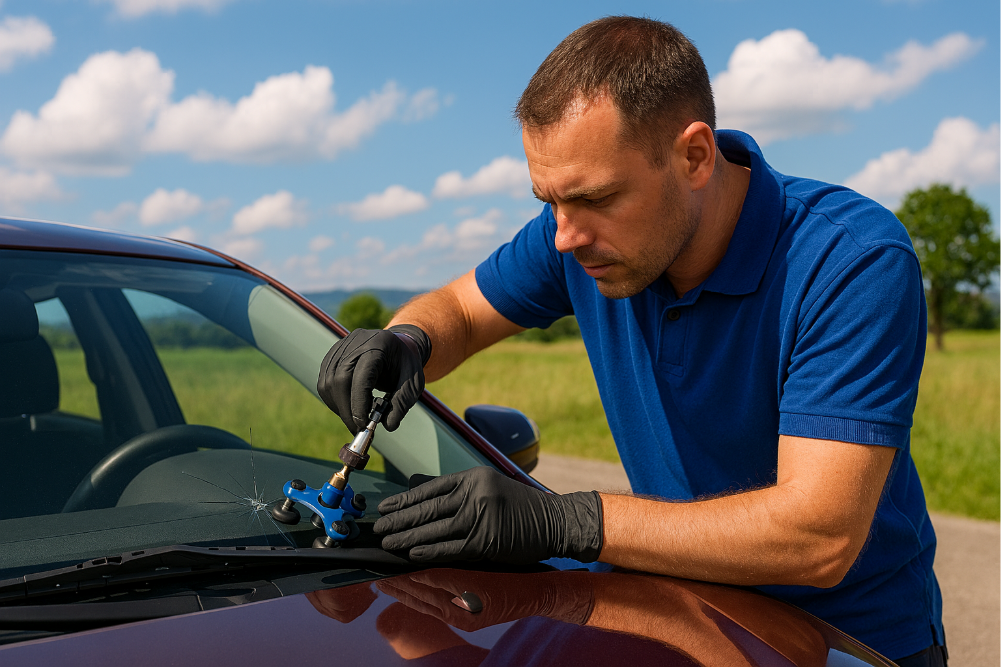
Avoid Auto Glass Windshield Repair Mistakes
Everybody has heard that awful sound. While you are driving down the highway, taking your time, a loud crack reverberates through the cabin. The truck’s tires have thrown up a rock, imprinting it on your windshield. Your heart sinks as you spy the little starburst pattern directly in your line of sight. This is a pivotal moment for you. How you manage this little damage impacts whether you spend a minimal price for a fast repair or hundreds of dollars for a complete windshield replacement. Sadly, many drivers choose the incorrect route. They make hasty decisions that compromise the structural integrity of their car, overlook the damage, or resort to questionable home remedies.
Get An Auto Glass Replacement Quote Now 866.278.7417

Windshield Replacement & Repair
Our competitors push you into going to their shop to get your glass fixed-making it cheaper for them. We make it easier for YOU to get back on the road by offering free mobile repairs at your home or work. With our free mobile services servicing the entire Orange County & Los Angeles area, we can often handle your windscreen replacement the same day! So the next time you need a windshield replacement, give us a call.
Talk to a Windshield Replacement Specialist Now 866.278.7417

Calibration
Calibration is the process of returning a vehicle’s ADAS to OEM specifications. Calibration is necessary after a new glass installation, particularly a windshield with a camera mounted to it, to ensure that the ADAS features continue to function properly despite having been moved during installation. If a car’s ADAS is not properly calibrated, the system may not function safely. A misaligned camera could jeopardize the functionality of the system and lead to dangerous driving or accidents, so it is crucial that the cameras are aligned perfectly, which is what windshield calibration ensures.
Talk to a Calibration Specialist Now 866.278.7417

Fleet Auto Glass Repair
We provide expert auto glass repair and windshield replacement services for commercial fleets of all sizes. We are experienced with all manufacturers and machine types of domestic or foreign cars, trucks, vans, or commercial vehicles, including heavy equipment. Our same day mobile auto glass and windshield repair service will enable you to get back on the road faster and start saving you time and money instantly. Give us a call today! We are here to help!
Talk to a Fleet Auto Glass Specialist Now 866.278.7417
Ignoring the Chip and Hoping for the Best
Procrastination is the biggest threat to a broken windshield. A little chip could appear minor, particularly if it is on the passenger side or out of your direct line of sight. It is simple to glance at a tiny defect and say, “I’ll get to that later.”
However, glass is under continual tension. Your automobile rattles as it goes along the road, and the frame bends slightly during curves. These pressures operate on that weak area in the glass. Furthermore, temperature variations are a big hazard.
If you blast the defroster on a chilly morning or crank the A/C on a hot afternoon, the quick expansion or contraction of the glass will cause that little chip to race across your windshield. Once a fracture surpasses the size of a dollar note, mending is typically no longer a possibility. You are then compelled to pay for a complete replacement. The golden rule of vehicle glass is simple: repair it promptly.
Relying on DIY Repair Kits: Walk into any vehicle parts shop, and you will notice shelves packed with do-it-yourself windshield repair kits. For a little portion of the cost, they guarantee expert outcomes. Relying on these kits is often risky, even if they can function in very narrow, limited situations.
Professional experts employ high-quality, commercial-grade resin and sophisticated equipment to inject that resin into every tiny crevice of the crack. They also use vacuum pressure to remove air pockets that could compromise the repair. DIY kits depend on basic syringes and lower-grade fillers.
Here is the actual danger: you only have one chance at a windshield repair. If you use a DIY kit and the resin cures poorly, a professional cannot go back in and repair it. The old resin inhibits the fresh resin from entering the fissure. If your home repair fails—which occurs frequently—your only remaining alternative is a thorough windshield replacement.
Using the Wrong Tape
If you cannot go to a repair shop promptly, you need to protect the injured area. A typical error is leaving the chip exposed to the weather. Dirt, washer fluid, and road grit may make their way into the crack. Even if a technician fixes the glass later, the trapped dirt might make the restoration seem foggy or discolored.
Some drivers attempt to patch the fissure with superglue or nail paint. Please avoid this. Like the DIY kits, these chemicals seal the gap and prevent professional resin from bonding properly afterward.
The suitable temporary remedy is transparent packing tape. To keep the chip clean and dry until your appointment, place a little piece over it (on the outside of the glass). But keep in mind that tape doesn’t provide any structural support. It will not stop the fracture from widening; it merely keeps the wound clean.
Assuming Insurance Won’t Help: Many drivers avoid reporting glass damage to their insurance provider because they worry their rates will soar. They assume that the deductible will exceed the cost of the repair, leading them to either cover the cost themselves or ignore the damage.
This is an expensive assumption. In many places, insurance rules handle windshield repair differently from accident claims. Insurance companies often waive the deductible for chip repairs because they would rather pay $100 for a repair than $500+ for a replacement.
Consult your policy or give your agent a call. It’s possible that the repair may cost you nothing at all and won’t affect your future insurance rates. Check your insurance to save money.
Do you have a Question?
Get An Auto Glass Replacement Quote Now 866.278.7417
Failing to Check the Technicians Qualifications
Not every car glass store is the same. When you need a fix, it’s easy to pick the first business that appears on Google or the one with the lowest price. However, installing vehicle glass requires precision.
Improperly fitted windshields are a major safety threat. If the technician does not use gloves, oils from their hands might prevent the urethane (glue) from adhering. If they do not prime the metal frame appropriately, rust may build behind the glass, causing leaks and ultimate collapse. Ask questions prior to scheduling an appointment:
Are your technicians certified? Check for Auto Glass Safety Council (AGSC) certifications. What type of guarantee do you provide? For as long as you own the vehicle, a respectable shop will guarantee their work against leaks and flaws. What is the duration of the “drive-away”? This brings us to the next typical error.
Driving Away Too Soon: Adhesives need time to cure. Even the most modern urethane needs a precise window of time to cure enough to keep the glass in place during a collision.
Some unethical mobile repair services or “quick fix” firms could inform you that you can drive immediately after a replacement. The windshield may come loose if you are in an accident or hit a pothole before the glue hardens.
Always adhere closely to the Safe Drive-Away Time (SDAT) advised by your technician. This normally spans from one hour to twenty-four hours, depending on the kind of glue used and the humidity conditions. Be wary if a technician suggests you can start driving right away.
Poor Aftercare Habits
You believe you are safe now that the replacement or repair has been completed. However, the first 48 hours following a new windshield installation are essential. Many vehicle owners accidentally harm the new seal by treating the car regularly.
Avoid High-Pressure Car Washes: High-pressure water jets might displace the glass or destroy the seal before it has completely healed. For a few days, don’t wash the automobile at all or stick to a mild hand wash.
Avoid Slamming Doors: When you slam a vehicle door, the air pressure within the cabin suddenly rises. This pressure pushes outward on the windows.
On a recently fitted windshield, this surge of pressure may blow away the seal, generating air leaks or water leaks. Close your doors gently, or leave a side window open an inch to enable air to escape.
Leave the Retention Tape: To keep the windshield molding in place while the glue cures, technicians often use special blue tape. It looks unattractive, and the impulse to tear it off is overwhelming. Resist that impulse. Remove the tape immediately after 24 to 48 hours to guarantee the molding does not shift.
Cleaning Using Products Based on Ammonia
You want to keep your windshield clean once it has been repaired. However, taking the bottle of blue glass cleaner from beneath your kitchen sink is a mistake.
Many home glass cleaners include ammonia. Ammonia may damage automobiles even though it can cut through grease. Ammonia dries out plastic, rubber, and vinyl—the precise materials that frame your windshield.
Overspray may eventually harm both your dash and the rubber seals that secure your glass. Furthermore, if you have tinted windows, ammonia will ultimately cause the tint to peel and bubble.
Invest in a specialist vehicle glass cleaner that is ammonia-free. Microfiber towels are also preferable to paper towels, which may leave lint and harm sensitive surfaces.
Clear Vision and Safe Travels: Your windshield is your window to the world as you drive, but it is also a shield protecting you and your passengers. You can keep your car safe and roadworthy by avoiding these common errors in windshield repair.
Don’t allow a minor chip to develop into a large hassle. Give your automobile the necessary attention it needs, treat damage as soon as possible, and trust qualified experts over do-it-yourself kits. In addition to saving you money over time, taking a proactive strategy guarantees that you have a clear picture of what is ahead.
Common Windshield Errors That Worsen Damage
A little thwack on the glass is the first sound. A little chip or a spiderweb fracture in your windshield may be invisible at first, but a closer look reveals it. It’s bothersome, but life is hectic, and it’s easy to put it at the bottom of your to-do list.
Unfortunately, auto glass is not self-healing. What starts as a modest cosmetic problem may soon evolve into a big safety hazard—and a far more costly repair bill. Many drivers inadvertently do activities (or fail to take action) that accelerate this deterioration, converting a simple repair job into a complete windshield replacement.
Understanding how to care for compromised glass is vital for each automobile owner. This tutorial explains the most common errors drivers make when dealing with windshield damage and how to prevent a little crack from becoming a shattered nightmare.
Ignoring the Issue: Procrastination is the largest error made by drivers. It is easy to look at a little chip and think it will remain that way. However, windshields are under continual tension.
Your car’s structure bends when you drive over bumps and negotiate turns. Temperature changes cause the glass to expand and compress. Wind pressure pushes the surface.
All these pressures work together to enlarge existing fissures. A chip that might have been corrected for a small amount in thirty minutes may spread over your line of sight overnight, needing a thorough and expensive replacement.
The Fix: As soon as you see damage, examine it. If it is less than a quarter, a repair specialist can probably fill it with resin to restore clarity and structural integrity.
Do you have a Question?
Get An Auto Glass Replacement Quote Now 866.278.7417
Using the Defroster or AC on High Blast
One of the main threats to damaged glass is thermal shock. Glass expands when heated and shrinks when cold. If you have a chip in your windshield, the structural integrity of that precise place is already poor.
In winter, when you blast the defroster on high heat against a frozen windshield, the glass expands quickly. This abrupt change in temperature severely strains the flaw, often causing it to “run” or spread quickly across the glass. In the summer, blasting ice-cold air conditioning against a sun-baked windshield can shatter it, following the same reasoning.
The solution is to gently adjust the temperature. If it is chilly outside, run the defroster on a low or medium level and let the vehicle warm up gently. In the summer, angle the vents away from the glass until the internal temperature stabilizes.
Slamming Car Doors: We seldom think about the air pressure inside a car, although it plays a factor in glass safety. There is an abrupt increase in cabin pressure when you slam a vehicle door when the windows are rolled up.
This difference in pressure won’t cause any problems for a healthy windshield. A cracked windshield, however, has lost part of its tensile strength. The pressure wave formed by a slammed door pushes outward on the glass, which may easily compel a minor fracture to grow farther.
The Fix: Be kind. Close doors firmly but without undue force. If feasible, crack a window slightly before shutting the door to enable air pressure to equalize.
Using Cold Water to Wash the Car
Keeping your vehicle clean is usually excellent practice, but washing a hot car with cold water is a formula for catastrophe if your windshield is damaged. Similar to the defroster problem, this is about heat shock.
The temperature of the glass in your automobile may be much greater than the surrounding air temperature if it has been exposed to summer heat. Rapid contraction results when hitting the heated glass with cold water from a hose. The tension of this abrupt cooling is frequently enough to break a windshield from end to end.
To wash your car, do it in the shade or when it’s cooler, like in the morning or evening. If you must wash it during the day, test the glass temperature with your hand beforehand. If it feels heated, wait for it to cool down.
When driving aggressively or on rough roads, your windshield may make up as much as 30% of the structural strength of your car in the event of a rollover. It is a vital aspect of the safety cage. When you drive, vibrations flow through the chassis and into the glass.
Gravel roads, speed bumps, and potholes produce significant vibrations and jolts. These shocks drive the break further into the substance if the glass is already damaged, much like a hammer striking a chisel. Aggressive driving, such as rapid braking or quick turning, also torques the car chassis, placing extra stress on the glass edges.
The Fix: Until you can have the repair done, drive cautiously. Steer clear of paths with construction or potholes. Slow down slightly for speed bumps and take turns softly to prevent chassis flex.
Misuse of DIY Repair Kits: Auto parts retailers provide numerous DIY windshield repair kits. While some of these solutions perform quite well for microscopic surface holes, they pose dangers.
If the region is not thoroughly cleaned, moisture or debris may be trapped within the crack, weakening the repair and eventually causing the resin to become yellow. If you use the glue incorrectly or don’t cure it properly, the repair may fail, and you may not be able to fix it again. A professional is often unable to repeat the work after resin has been injected into a fracture.
The Fix: Unless you are confident in your skills and the damage is minuscule, leave it to the specialists. When weighed against the expense of a failed repair that necessitates a replacement, the cost difference between a DIY kit and a professional chip repair is often insignificant.
Ignoring Worn Wiper Blades
This may seem unrelated to cracks, yet worn wiper blades are a primary source of surface damage. When the rubber on your wiper blades fails, the metal arm might scrape straight against the glass.
This metal-on-glass contact generates severe scratches. While these scratches aren’t fractures, they reduce the surface tension of the glass and distort your vision, particularly at night or in intense sunlight. A badly scarred windshield is more likely to break or fracture if a rock strikes it.
The Solution: Every six months, check your wiper blades. If you observe any fractures in the rubber or notice they are leaving streaks, please replace them promptly.
Protect Your View and Your Wallet: Your windshield does more than simply keep the bugs out of your teeth; it supports the roof of your vehicle and ensures your airbags deploy appropriately. Treating a chip or crack as a minor irritation is a risk with your safety and your financial account.
By avoiding these frequent errors—like blasting the AC or ignoring that early chip—you may often preserve the factory glass. But keep in mind that speed is not always the greatest option. The sooner you treat the harm, the better the result will be. Please schedule the repair promptly to prevent the crack from widening, allowing you to drive with confidence.
Mobile Safe Auto Glass
14241 E Firestone blvd suite 400,
La Mirada, CA 90638
Phone: (562) 608-1154
Toll Free: 1 866 278 7417
Mail: sales@mobilesafeautoglass.com
Get a FREE QUOTE today! You can get a free quote and schedule 24/7 using this free quote wizard.
Mon – Fri 8am – 5pm
Saturday 8am – 1pm
Sunday Closed