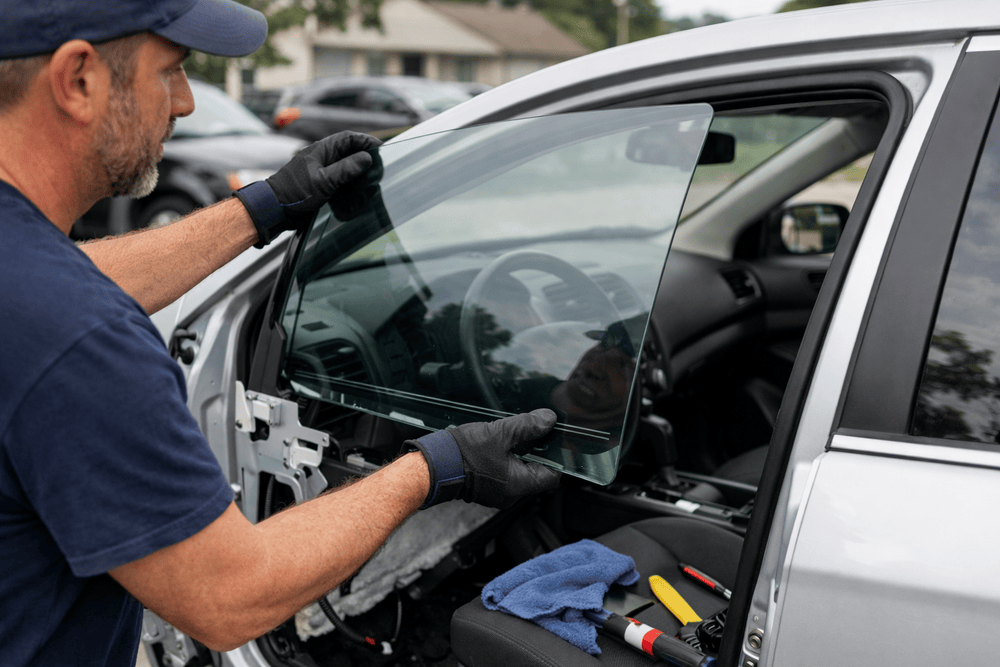
Passenger Side Window Glass Replacement Installation
In addition to framing the view, your passenger side window keeps your car safe and shields you from wind, rain, and debris. For comfort and safety, it must be replaced right away if it breaks or cracks. Knowing how to replace your window will help you make wise choices, regardless of whether it was broken by a stray rock, a break-in, or normal wear and tear. From identifying damage to deciding between do-it-yourself and expert installation, this article covers all the information you need to replace the glass in your passenger side window.
Get An Auto Glass Replacement Quote Now 866.278.7417

Windshield Replacement & Repair
Our competitors push you into going to their shop to get your glass fixed-making it cheaper for them. We make it easier for YOU to get back on the road by offering free mobile repairs at your home or work. With our free mobile services servicing the entire Orange County & Los Angeles area, we can often handle your windscreen replacement the same day! So the next time you need a windshield replacement, give us a call.
Talk to a Windshield Replacement Specialist Now 866.278.7417

Calibration
Calibration is the process of returning a vehicle’s ADAS to OEM specifications. Calibration is necessary after a new glass installation, particularly a windshield with a camera mounted to it, to ensure that the ADAS features continue to function properly despite having been moved during installation. If a car’s ADAS is not properly calibrated, the system may not function safely. A misaligned camera could jeopardize the functionality of the system and lead to dangerous driving or accidents, so it is crucial that the cameras are aligned perfectly, which is what windshield calibration ensures.
Talk to a Calibration Specialist Now 866.278.7417

Fleet Auto Glass Repair
We provide expert auto glass repair and windshield replacement services for commercial fleets of all sizes. We are experienced with all manufacturers and machine types of domestic or foreign cars, trucks, vans, or commercial vehicles, including heavy equipment. Our same day mobile auto glass and windshield repair service will enable you to get back on the road faster and start saving you time and money instantly. Give us a call today! We are here to help!
Talk to a Fleet Auto Glass Specialist Now 866.278.7417
When Is It Time to Replace Your Passenger Window
A complete window replacement is not necessary for every chip or blemish. However, replacement is inevitable due to certain sorts of damage. Temperature variations and vibrations while driving may cause even little damage to spread fast. Within days, a little fissure might develop into a significant issue.
Types of Passenger Side Window Glass: Knowing what kind of glass you’re dealing with is helpful before making an appointment for a repair. There are two primary forms of glass used in vehicles, each with a distinct function.
Tempered Glass: Tempered glass, used in the majority of side windows, is heated and quickly cooled during production. As a result of doing this operation, it is between four and five times more durable than regular glass.
Rather than breaking into dangerous shards, it fractures into little bits that are rather harmless. Because it provides a fair blend of strength, safety, and cost, tempered glass is the industry standard for passenger side windows.
Laminated Glass: The side windows of certain modern and premium cars are made of laminated glass. This kind has a plastic interlayer positioned in between two glass layers. The plastic coating keeps the fragments from breaking apart by holding them together.
Despite the fact that laminated glass is more costly than tempered glass, it provides higher sound insulation and also gives superior security. Additionally, robbers find it more difficult to get in.
Do-it-yourself vs. Expert Installation When it comes to replacing your passenger side window, you have two choices: do it yourself or get a specialist. Every strategy has unique benefits and drawbacks.
DIY Window Replacement
You may save money on labor charges by replacing a window yourself. Only the glass and any required equipment or supplies will be your responsibility. You could feel more at ease doing this activity if you have a natural talent for mechanics and have previous experience working on automobiles.
Usually, the procedure entails taking out the door panel, unplugging the window regulator, removing the shattered glass, and putting in the replacement pane. Despite the fact that it seems to be straightforward, there can be complications. When the installation is not done correctly, it may result in water leaks, wind noise, or windows that are not securely sealed.
Expert Installation: Every day, skilled professionals replace windows. They have access to high-quality replacement glass that satisfies manufacturer standards, as well as the appropriate equipment and knowledge. For your piece of mind, the majority of stores provide labor and part warranties.
One to two hours are usually needed for a professional installation. The technician will inspect for leaks, verify the window’s functionality, and guarantee correct alignment. Although this method is more expensive up front, it lowers the possibility of errors that might need costly repairs later.
The Professional Installation Process: Knowing what to anticipate and what occurs during professional installation guarantees that the task is done properly.
Step 1: Evaluation and Planning: The technician examines the damage and determines which components need repair. They will look for more problems in the door panel, window regulator, and surrounding parts. They properly clean the work area after removing any last bits of glass.
Do you have a Question?
Get An Auto Glass Replacement Quote Now 866.278.7417
Removal of Door Panels
To reach the window mechanism on the majority of passenger side windows, the internal door panel must be removed. Without breaking any clips or fasteners, the technician gently removes trim pieces, disconnects the electrical connections for the power windows and locks, and places the panel aside.
Glass Installation: After being properly placed, the new glass is fastened to the window regulator. For the window to glide smoothly down its track, the technician makes sure that everything is aligned correctly. They verify the window’s functionality many times and reconnect any electrical components.
Reassembly and Testing: The technician replaces the door panel and trim parts after making sure everything functions as it should. They examine the window’s whole range of motion, look for any gaps or misalignment, and make sure that the sealing is adequate. A last quality check guarantees that the window functions as intended.
Cost considerations: The price of replacing a passenger side window varies depending on a number of criteria. If you are aware of these things, you will be able to avoid unpleasant surprises and create a budget that is satisfactory.
The kind of glass has a big effect on cost. Regular tempered glass is less costly than laminated glass, which is more expensive. The type and model of your car is also important; rare and premium autos sometimes need more costly glass that may need to be specially ordered.
The intricacy of the task and your location affect labor expenses. While some cars have simple window mechanics, others need to be disassembled completely in order to reach the glass.
Average price ranges:
Glass that is tempered: $100 to $350
Glass laminate: $200–$500
Professional labor: $50 to $200
For convenience, mobile repair services could cost a little more, but they save you time and effort. Professional installation may be less expensive than you anticipate since some insurance plans cover glass replacement with little to no deductible.
Selecting a Glass Replacement Supplier
Not every car glass business offers the same quality of materials or services. Choosing the appropriate supplier guarantees that your window will be replaced safely and professionally.
Seek for places that employ trained technicians with knowledge of the make and model of your car. Make sure to inquire about warranties; reputable companies provide a guarantee on their work that is at least one year long. By reading reviews on the internet, you may find out what other customers have to say about the product’s quality, price, and support for customers.
If you want to ensure that the replacement glass meets or exceeds the specifications that were established by the original equipment manufacturer (OEM), follow these steps. If aftermarket glass doesn’t adhere to these guidelines, it could not fit correctly or provide sufficient protection.
By visiting your house or place of business, mobile repair services provide even more convenience. If you have a hectic schedule or your car is unsafe to drive with a damaged window, this option is a good fit.
Preventing Future Window Damage: Although it’s not always possible to stop window damage, you may lower your risk and extend the life of your new glass by adopting certain behaviors.
Whenever feasible, park in a shady or covered place. Direct sunlight and temperatures that are either very high or extremely low may cause stress on glass over time. If you are located in an area that is prone to experiencing severe weather, you should think about obtaining a car cover.
To reduce your exposure to pebbles and debris that other cars may kick up, keep a safe following distance. Construction sites and gravel roads are especially dangerous.
Get minor cracks and chips fixed right away. Within days, something that looks little now might cause irreversible harm. There is a good chance that your insurance policy will pay for chip repairs without increasing your premium.
Ensure that your window tracks and seals are kept clean and lubricated at all times. When sliding windows up and down, dirt and debris in the tracks may put undue strain on the glass.
Make the Correct Decision for Your Car: The safety, comfort, and security of your car are all jeopardized by a broken passenger side window. Whether you decide to do the installation yourself or hire an expert, taking prompt action can shield you from the weather and save more damage.
Most car owners choose professional installation because it provides knowledge, guarantees, and piece of mind. You can save money if you have the know-how and equipment to replace it yourself; just be sure to select high-quality glass and adhere to the right installation techniques.
Consult your insurance company prior to arranging repairs. The cost of expert installation is surprisingly inexpensive since many comprehensive plans cover glass replacement with a low or no deductible.
Spend some time looking into nearby suppliers, reading reviews, and enquiring about glass quality and warranties. Your everyday driving experience is greatly impacted by your passenger side window. Give it the time and attention it needs.
A Professionals Step by Step Guide
Vehicle comfort, safety, and security are all jeopardized by a broken or cracked side window. Damaged side glass, whether from accidents, vandalism, or road debris, has to be fixed right away. Professional replacement guarantees correct sealing, structural integrity, and long-term durability, even if some car owners try do-it-yourself fixes.
From the first evaluation to the last quality checks, this book takes you step-by-step through the expert process of replacing the glass in your side windows. Car owners may appreciate the accuracy needed for high-quality work and automotive specialists can improve their expertise by understanding this procedure.
Pre-Replacement Assessment and Preparation: Examine the damaged window and its surroundings carefully before removing any glass. Examine the window regulator mechanism, weather stripping, and door frame for any more damage. To prevent surprises during installation, record all findings.
assemble the required equipment and supplies: window regulator lubricant, new glass (OEM or comparable), the proper adhesive or sealant, trim removal tools, and safety gear such as eye protection and cut-resistant gloves. The year, make, model, and trim level all have an impact on the glass’s measurements and tinting, so be sure the new glass fits the vehicle’s requirements.
Set up the workspace by putting up the right lighting and protecting nearby objects to avoid scratching. To facilitate simple access when the panel is removed, clear the space around the inside door panel.
The first step in safely removing damaged glass is to gently remove the internal door panel. To prevent breaking clips and fasteners, use plastic trim tools instead of metal screwdrivers. Before removing the panel completely, disconnect any electrical connections that operate the speakers, locks, or windows.
If at all feasible, lower the glass a little once you have access to the window mechanism; this usually facilitates removal. You’ll have to work around the glass’s existing location if it’s too broken to relocate.
Take off the weather stripping and window trim pieces that surround the broken glass. These parts must be carefully removed without breaking since they are often secured with glue or clips. Any reusable components should be arranged and set away for future use.
Use a wire or specialized cutting tool to remove the glass from the frame of side windows that are adhered to the frame. Work steadily and slowly all the way around the perimeter. In order to keep the glass from dropping, carefully remove any nuts or clips holding it in place, which are prevalent in older cars.
When working with shattered glass, put on thick gloves. Put the glass that has been removed right away in trash containers that can withstand punctures. Never place shattered glass in an area where it might injure someone.
Setting Up the Channel and Frame
Remove the old glass and give the window frame and channel a good cleaning. Eliminate any remaining glue, sealant, or rubber gasket residue. This procedure is best completed with a razor blade or specialist adhesive remover, but be careful not to harm the painted surfaces.
Examine the mechanism of the window regulator. Make sure it moves smoothly and doesn’t make any strange sounds by testing its functioning. If necessary, lubricate moving components. Replace the regulator right away rather than after the new glass is installed if it exhibits wear or damage.
Examine the weather stripping and seals on the door. Regardless of the quality of the glass, damaged seals might result in wind noise and water leakage. Before continuing, replace any weather stripping that is worn out or damaged.
When dealing with glass that has been adhesively bonded, prep the bonding surface in accordance with the manufacturer’s instructions. This stage is essential for good adhesion and usually calls for a certain amount of drying time prior to adhesive application.
When installing the new glass, make sure it is properly aligned with the window frame and channel by carefully positioning it. Before fastening, line up the glass with the mounting brackets or clips for windows that are installed on regulators. To avoid misalignment or drops, have a helper assist you in placing bigger pieces of glass.
Depending on the manufacturer’s instructions, apply glue around the glass or frame in a continuous, even bead. The majority of automotive adhesives have a short working period before they start to cure, so work swiftly yet cautiously.
Avoid smearing or disturbing the adhesive bead as you move the glass into place. To guarantee that the glass and adhesive make excellent contact, press firmly around all corners. Apply the appropriate amount of pressure; if you apply too much, you risk removing the glue that is important, while using too little will result in weak bindings.
When it comes to glass that is mechanically connected, it is imperative that all nuts and clips be tightened to the torque levels that are suggested by the designer. While undertightening permits undesired movement, overtightening may cause the glass to break.
Do you have a Question?
Get An Auto Glass Replacement Quote Now 866.278.7417
Weather Protection and Sealing
After the glass is in place, either replace the weather stripping or, if it’s still in excellent shape, reuse it. Make sure there are no holes and that the weather stripping is completely covered by pressing it firmly into its channel.
Verify that the whole perimeter is properly sealed. To find any gaps or inconsistencies in the weather stripping or glue, run your finger over the edges. Before the glue cures, take care of any problems right away.
During the time frame given by the adhesive manufacturer, which is usually 1-4 hours for initial cure and 24-48 hours for complete cure, avoid moving the car or testing the window. Moving too quickly might weaken the connection and lead to leaks.
Testing Window Operation and Final Checks: Test the window’s functionality after the proper curing period. Repeatedly raise and lower it across its entire range of motion. Keep an ear out for odd noises that might be signs of binding or misalignment. There should be no hesitancy or vibration in the glass’s movement.
Gently spray water along the window’s edge to check for leaks. Apply a little spray at first, then progressively raise the pressure. Check the passenger compartment and the door panel for water intrusion.
After reconnecting all electrical components, reinstall the inside door panel. To make sure everything is working properly, test door locks, power window switches, and any other impacted functions.
Examine the external look. There should be no gaps or misalignments between the new glass and the surrounding body panels. Unless all side glass is being replaced, the tint and hue should match those of adjacent windows.
Typical Problems and How to Avoid Them
After window replacement, water leaks are the most frequent complaint. These are often caused by weather stripping damage, contaminated bonding surfaces, or insufficient adhesive coverage. By using the right surface preparation techniques and giving the material enough time to cure, you can stop leaks.
Wind noise is often a sign of faulty seals or incorrect glass sitting. Verify again that the glass fits properly in its channel and that the weather stripping covers the whole area without any gaps.
A window that is difficult to operate usually indicates a misaligned glass or a problem with the regulator. Prior to installing new glass, always verify the regulator’s operation. During installation, make sure the glass is aligned correctly.
When technicians fail to adhere to cure time guidelines or improperly prepare surfaces, premature adhesive failure occurs. Always use the primer recommended for your glue system and don’t hurry the drying process.
Safety Considerations During the Process Replacing a side window presents a number of safety risks. There is a clear danger of cuts from broken glass, so always use the proper gloves and eye protection. Broken glass should be disposed of appropriately in containers that can withstand punctures and are marked “glass waste.”
Hazardous substances are often found in automotive primers and adhesives. Observe all manufacturer safety instructions and work in well-ventilated environments. When handling these products in confined areas, use the proper respiratory protection.
Modern doors include electrical components that, if handled improperly, may shock or short people. Before working on power window systems, disconnect the battery and make sure all electrical connections are properly labeled for proper reassembly.
If dropped, heavy glass panels may seriously injure someone. Never work in areas where falling glass might hit you or others, and always get help while handling big pieces.
Assurance of Quality and Professional Standards
Every stage of a professional window replacement project demands close attention to detail. Customer dissatisfaction and callbacks result from rushing through surface preparation, omitting quality tests, or disregarding manufacturer standards.
Take pictures of your work at important points, such as before removal, during preparation, after installation, and after final inspections. This documentation helps you find opportunities for process improvement and safeguards you in the event that questions subsequently come up.
Provide the proper guarantees to support your job. The majority of expert installs need to come with a minimum one-year guarantee that covers installation flaws, adhesive failure, and leaks.
Get industry certifications and participate in manufacturer training programs to keep improving your abilities. Keeping up with the latest developments in glass technology, adhesives, and vehicle designs guarantees that you can manage any replacement situation.
Proceeding with Self-Assurance: Accurate side window glass replacement requires technical know-how, the right supplies, and meticulous execution. Every stage builds on the one before it, resulting in a secure, waterproof installation that improves vehicle comfort and safety.
Knowledge of this workflow lays the groundwork for high-quality work, whether of whether you’re an experienced technician honing your technique or someone thinking about pursuing a career in auto glass. Prioritize safety at all times, take your time to become proficient in each step, and never skimp on preparation or curing.
The details—correct adhesive application, careful testing, surface preparation, and painstaking attention to cure times—are what distinguish an ordinary replacement from an outstanding one. If you understand these basics, you can create installations that are free of leaks, noise, and problems with operation for years to come.
Mobile Safe Auto Glass
14241 E Firestone blvd suite 400,
La Mirada, CA 90638
Phone: (562) 608-1154
Toll Free: 1 866 278 7417
Mail: sales@mobilesafeautoglass.com
Get a FREE QUOTE today! You can get a free quote and schedule 24/7 using this free quote wizard.
Mon – Fri 8am – 5pm
Saturday 8am – 1pm
Sunday Closed