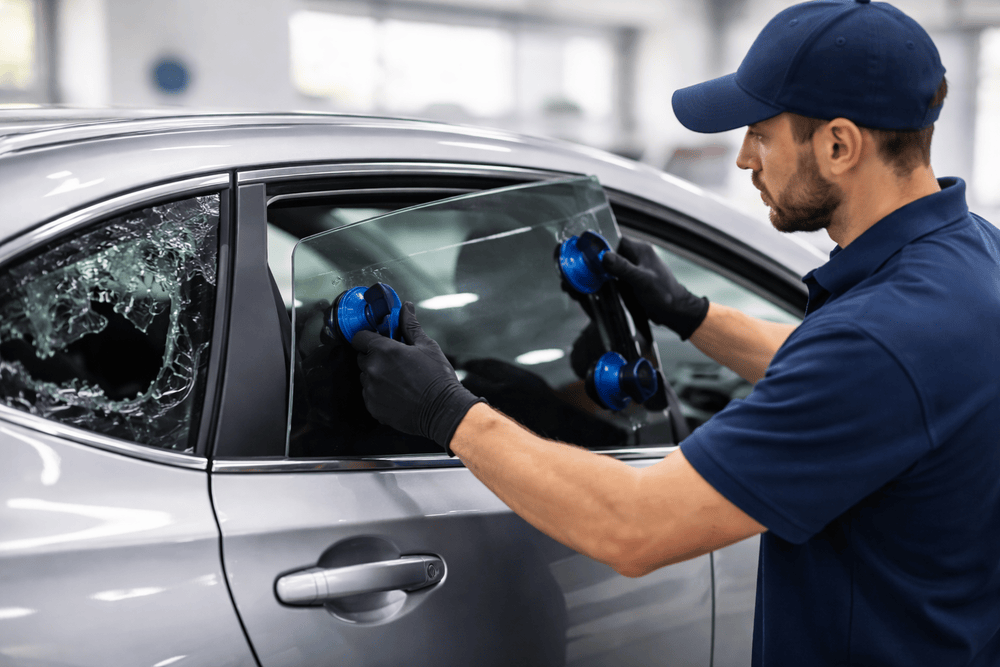
Passenger Side Window Glass Replacement Quality Guide
There is more to your car’s passenger side window than just keeping rain and wind out. It helps maintain structural integrity, protects passengers, and is a part of your car’s safety features. You may be surprised to learn how important installation and material quality are when it comes time to replace this glass. This is a predicament that many automobile owners encounter after accidents, break-ins, or normal wear and tear. Although replacing glass appears simple, not all glass is made equal. Knowing the differences between high-end and low-cost replacement glass may help you avoid future financial losses, annoyance, and even safety hazards. Everything you need to know about passenger side window glass replacement quality is covered in this guide, from installation concerns and pricing variables to material kinds and safety regulations.
Get An Auto Glass Replacement Quote Now 866.278.7417

Windshield Replacement & Repair
Our competitors push you into going to their shop to get your glass fixed-making it cheaper for them. We make it easier for YOU to get back on the road by offering free mobile repairs at your home or work. With our free mobile services servicing the entire Orange County & Los Angeles area, we can often handle your windscreen replacement the same day! So the next time you need a windshield replacement, give us a call.
Talk to a Windshield Replacement Specialist Now 866.278.7417

Calibration
Calibration is the process of returning a vehicle’s ADAS to OEM specifications. Calibration is necessary after a new glass installation, particularly a windshield with a camera mounted to it, to ensure that the ADAS features continue to function properly despite having been moved during installation. If a car’s ADAS is not properly calibrated, the system may not function safely. A misaligned camera could jeopardize the functionality of the system and lead to dangerous driving or accidents, so it is crucial that the cameras are aligned perfectly, which is what windshield calibration ensures.
Talk to a Calibration Specialist Now 866.278.7417

Fleet Auto Glass Repair
We provide expert auto glass repair and windshield replacement services for commercial fleets of all sizes. We are experienced with all manufacturers and machine types of domestic or foreign cars, trucks, vans, or commercial vehicles, including heavy equipment. Our same day mobile auto glass and windshield repair service will enable you to get back on the road faster and start saving you time and money instantly. Give us a call today! We are here to help!
Talk to a Fleet Auto Glass Specialist Now 866.278.7417
Knowing the Types and Standards of Auto Glass
Not every car glass fulfills the same requirements or has the same function. Knowing the variations between the types of glass used in your windshield and passenger window can help you make well-informed replacement options.
Tempered vs. Laminated Glass: Tempered glass, which is four to five times stronger than ordinary glass due to a heat treatment procedure, is often used for side windows.
Instead of shattering into hazardous shards, it breaks into tiny, comparatively innocuous fragments. Passengers are protected by this safety feature in the event of an accident or break-in.
Commonly used for windshields, laminated glass is made up of two glass layers separated by a plastic layer. The majority of ordinary cars continue to utilize tempered glass for the side and rear windows, however some premium cars employ laminated glass for the side windows to improve security and lower noise levels.
Look for Safety Certifications: High-quality replacement glass must adhere to certain safety regulations. Look for the Department of Transportation’s (DOT) number engraved on the glass in the US. The glass satisfies Federal Motor Vehicle Safety Standards, according to this indication.
Additional information is provided by the AS (American Standard) label. Usually used for windshields, AS-1 glass satisfies the highest optical quality requirements.
All additional windows, including those on the passenger side, may use AS-2 glass. Because of its worse optical quality, AS-3 glass is often only used in certain applications.
Elements That Affect the Quality of Replacement Glass
The performance and quality of replacement passenger side window glass are influenced by a number of variables. Knowing these enables you to weigh your selections and make the best inquiries while looking for replacements.
Glass from Original Equipment Manufacturers (OEMs) is made at manufacturers that provided glass for your car when it was brand-new. These producers adhere to stringent quality control procedures and create glass that precisely fits the original specs of your vehicle.
The quality of aftermarket glass varies. While less expensive aftermarket products could skimp on fit, tinting, or thickness, premium options often meet OEM specifications at cheaper costs. The durability and performance of the finished product are influenced by the materials used, quality control procedures, and manufacturing method.
Fit and Thickness: The right thickness guarantees that your glass will work well with the mechanics of your door. Too-thin glass might rattle or not seal correctly. Overly thick glass might cause fitting problems and strain window regulators.
High-quality replacement glass properly fits the specs of your car. Inadequately fitted glass leaves holes that increase wind noise, let water in, and jeopardize security. To guarantee a good fit, premium vendors employ precise measurements and patterns.
Tinting and UV Protection: In addition to being aesthetically pleasing, factory window tint lowers heat accumulation in your car and blocks dangerous UV rays. High-quality replacement glass should have the same UV protection and tint level as your car’s original.
Some inexpensive alternatives employ subpar tinting techniques that don’t match your other windows or fade over time. This lessens UV protection and produces an uneven look. Verify that the tint darkness and UV blocking percentage of the new glass match those specified by the manufacturer for your car.
Assessing Glass Installers and Suppliers: The location of your replacement glass purchase is just as important as the glass itself. Your whole experience is influenced by the supplier’s reputation, warranty options, and installation quality.
Do you have a Question?
Get An Auto Glass Replacement Quote Now 866.278.7417
Questions for Possible Vendors
Start by inquiring as to whether they provide OEM or aftermarket glass, and if the latter, which manufacturers they collaborate with. Ask about warranties; reputable vendors provide thorough coverage to back up their goods.
Inquire about the installation procedure and whether the right adhesives and sealing supplies are used. Check to see whether their technicians are certified by groups such as the Auto Glass Safety Council (AGSC). These credentials attest to appropriate instruction in safety protocols and installation methods.
Red Flags to Look Out for: Suppliers that offer pricing far lower than market rates should be avoided. Exceptionally cheap costs are sometimes a sign of shoddy glass, hasty installation, or unstated costs that come up later.
Steer careful of vendors that are unable to provide precise information regarding the origins of their glass, their warranties, or their installation procedures. This information is easily shared by legitimate companies. Also, watch out for pressure techniques that want you to commit right away without giving you time to think things through or weigh your choices.
Considerations for the Warranty: Full warranties provide coverage for both the glass and installation work. Although the exact conditions vary, quality providers usually provide lifetime guarantees on their work. Know what is covered by the warranty, how long it lasts, and what might make it invalid.
If you sell your automobile, certain warranties are transferred to the new owners, increasing the car’s value. Others cover prospective problems with mobile service. Before choosing a provider, thoroughly review the warranty conditions.
The Procedure for Installation and Quality Measures
When fitted improperly, even high-end glass performs badly. To guarantee lifespan and safety, professional installation calls for specialized knowledge, equipment, and supplies.
Appropriate Installation Methods: Skilled installers start by carefully clearing away any shattered glass and giving the window frame a thorough cleaning. They check the frame for any damage that might compromise the fit or seal of the new glass. Before installing new glass, any underlying problems are addressed.
Applying adhesive correctly is essential. Instead of using generic sealants, installers should utilize automotive-grade urethane adhesives made specifically for glass installation. They provide full covering with no gaps by applying glue uniformly throughout the frame.
Professional installers give the new glass enough time to cure before putting your car back. If this procedure is rushed, the seal is compromised, which may result in leaks or broken glass.
Post-Installation Inspection: Carefully check the installation before accepting your automobile. Verify that there are no gaps or misalignments and that the glass is flat with the surrounding body panels. Check the window’s functionality; it should rise and fall smoothly and without making odd sounds or binding.
Make sure the weather stripping was installed correctly and that the outside and inside of your automobile are free of any adhesive residue. Professional installers provide your car a full cleaning and a polished appearance.
Cost considerations and value assessment: Glass quality, car make and model, and installation difficulty all affect replacement prices. You may identify fair pricing and create an adequate budget by being aware of these aspects.
Price Ranges and Their Content
For ordinary cars, basic aftermarket glass installation usually costs $150 to $300. The price range for OEM glass or high-end aftermarket alternatives is $250 to $450. Complex installations, specialist glass, or luxury cars might cost more than $500.
Glass, labor, adhesives, and basic warranties are often included in these costs. If available, mobile service might cost an additional $50 to $100. Window tinting and other treatments are included in package offers offered by some vendors.
When to Select High-End Options: If you want to retain your car for a long time, go for OEM or high-end aftermarket glass. The improved durability, appropriate fit, and preserved resale value make the greater initial cost worthwhile.
For luxury models, newer automobiles, or autos with cutting-edge safety features, premium alternatives make sense. Certain car functions, such lane departure alerts, depend on side glass that is placed correctly and has the right characteristics. For older cars with lesser values, budget choices could be enough, but compromising quality runs the risk of future issues and higher replacement costs.
Common Problems with Low-Quality alternatives: Being aware of such concerns enables you to steer clear of subpar alternatives and identify problems early on if they do arise.
Water Leaks and Air Infiltration: Water may enter your car via improperly installed glass or insufficient sealing. This results in corrosion in door frames, mold development, and interior damage. In addition to lowering heating and cooling efficiency, poor seals produce whistling sounds at high highway speeds.
Premature Failure
Glass of inferior quality is more likely to chip or fracture than glass of superior quality. Unsightly patches are produced when inferior tinting fades unevenly. Cheap adhesives break down more quickly, resulting in seal failure and the need for frequent replacements.
Compatibility Problems: Some low-cost alternatives fail to take into consideration aspects unique to a certain car, such as rain sensors, heating elements, and antenna connections. You must give up these features if the glass is incompatible, or it will take more time and money to get it working again.
Making Your Final Choice: When deciding to replace the glass in your passenger side window, you must weigh convenience, affordability, and quality. Start by reading customer reviews and investigating reliable local vendors.
Get quotations from many suppliers, contrasting not just costs but also included services and warranty conditions. Don’t make a snap judgment based just on price.
Take into account the age, condition, and anticipated length of ownership of your car. Take into account the reputation of the provider as well as the quality of their installation services.
Inquire about the brand of glass they plan to use, its manufacturer, whether it is OEM or aftermarket, and how it stacks up against the original specs of your car. Check their post-installation assistance, cure timeframes, and installation procedure.
A high-quality replacement for the passenger side window glass safeguards your safety and preserves your investment. Your new window will function dependably for many years if you know what makes replacement glass good and choose trustworthy vendors.
Select Sturdy Materials for Replacing Glass in Side Windows
Side windows that are cracked are more than simply an eyesore. They jeopardize your safety, expose you to the weather, and weaken the structural integrity of your car. You may be surprised to learn how important the material you pick is when it comes time to repair that broken glass.
Glass for cars is not all made equal. While some alternatives balance cost and performance, others put budget over lifespan. Making an educated choice that safeguards your car and your pocketbook may be made easier if you know the distinctions between tempered glass, laminated glass, and other materials.
Everything you need to know about choosing long-lasting materials for side window glass replacement is covered in this article, from weighing the benefits and drawbacks of each choice to identifying quality markers that distinguish high-end glass from less expensive options.
Although low-quality replacement glass may save you money up front, there are often unstated expenses involved. Chips, cracks, and early failure are more likely to occur with inferior materials. They could also not adhere to safety regulations, cause excessive wind noise, or impair vision.
Over the course of your vehicle’s life, you will need fewer replacements if you invest in robust materials. Additionally, it guarantees that your windows will function as intended in an emergency, giving you and your passengers the security you need.
Tempered Glass: The Industry Standard The most popular material for side and rear windows in contemporary cars is tempered glass. Because of a unique heat treatment procedure, this kind of glass is around four to five times stronger than regular glass.
Tempered glass does not shatter into sharp shards when it breaks; instead, it fractures into little, blunt pieces. The chance of being hurt in an accident or during a break-in is greatly decreased by this safety measure.
Advantages of Tempered Glass
Tempered glass is perfect for side window applications because it provides a number of advantages.
Increased strength: By compressing the surface during the tempering process, the glass becomes very impact-resistant.
Safety performance: Its breaking mechanism reduces the possibility of passenger injuries.
Heat resistance: Compared to ordinary glass, tempered glass is more resilient to temperature changes.
Cost-effectiveness: Tempered glass is readily accessible and reasonably priced, since it is the industry standard.
Limitations to Take into Account: Tempered glass has several disadvantages in spite of its benefits. Glass that has been tempered cannot be altered, drilled, or cut without breaking it. This implies that any personalization has to take place prior to the tempering procedure.
Furthermore, tempered glass is not unbreakable even if it is tough. It may still shatter entirely with a concentrated, sharp blow, such as a rock striking at just the appropriate angle.
Premium Protection Laminated glass is made up of two glass layers joined by a plastic interlayer, usually polyvinyl butyral (PVB). Laminated glass has historically been used for windshields, but it is becoming more and more common for side windows, particularly in high-end and secure cars.
The glass doesn’t break into fragments because the plastic covering keeps it together even when it breaks. Compared to tempered glass, this feature offers improved security and sound insulation.
Do you have a Question?
Get An Auto Glass Replacement Quote Now 866.278.7417
Benefits of Laminated Side Windows
For side window applications, laminated glass has many benefits:
Better security: It is far more difficult for criminals to get beyond the connected layers.
Cost and Availability: The material and installation of laminated glass are usually more expensive than those of tempered glass. Additionally, it weighs more, which might somewhat reduce certain cars’ fuel economy.
Availability may be restricted based on the make and model of your car. You may need to make an order in advance or look for specialist suppliers since not all auto glass stores have laminated side window replacements.
Considerations for Replacement Glass: Choosing the best glass for your side window replacement entails taking into account a number of crucial aspects in addition to endurance.
Type of Vehicle and Usage: Take into account your driving habits. Do you usually park in places with high crime rates? The added security features of laminated glass may make the additional expense worthwhile. Good tempered glass ought to be enough if you want a low-cost option and you mostly drive in secure areas.
Materials with improved temperature resistance may be advantageous for cars that spend a lot of time in harsh weather. Security may take precedence above financial savings in commercial vehicles or those used to move expensive products.
Things to Consider When Buying New Glass
Not every glass product labeled as “tempered” or “laminated” satisfies the same requirements for quality. Here’s how to spot high-quality materials.
Certifications and Standards: Seek for glass that satisfies or above American National Standards Institute (ANSI) and Department of Transportation (DOT) requirements. These certificates will be widely displayed by reputable producers.
Original Equipment Manufacturer (OEM) glass is usually the best choice since it is made especially for your car model. If aftermarket glass is produced by reliable companies with the appropriate certifications, it may be just as excellent.
Optical Clarity: Visibility without distortion is a feature of premium car glass. Look for any waviness, bubbles, or other flaws in the glass that can impair your vision or strain your eyes while you’re driving for a long time.
The edges must be carefully polished and smooth. Uneven or rough edges are a sign of subpar manufacture and might cause premature failure or installation issues.
producer Reputation: Before buying, find out more about the glass producer. Long-standing, well-known names in the automotive glass industry usually have stronger quality control than unidentified producers with dubiously cheap costs.
Based on their installation expertise, ask your car glass specialist which manufacturers they suggest after reading customer feedback. Experts that deal with various kinds of glass on a regular basis may provide insightful information on which products work best.
Quality of Installation Is Just as Important as Material
Inadequate installation will cause even the strongest glass to break too soon. How well the glass withstands tension, how well it seals against weather, and whether it preserves the structural integrity of the vehicle are all impacted by the installation procedure.
glue Quality: The durability and functionality of your side window are greatly influenced by the glue that was used to fix it. Premium urethane adhesives provide strong, pliable bonding that allow for the body of your car to naturally bend.
Find out from your installer what kind of glue they use and how long you have to wait before you can drive your car. For high-quality adhesives to reach their maximum strength, the right curing period is necessary.
Making Your Final Choice: Selecting long-lasting materials to replace the glass in your side windows doesn’t have to be difficult. Determine your goals first, whether they are security, cost, noise reduction, or a mix of these.
Obtain estimates from many trustworthy car glass companies. Examine not just costs but also the quality of materials provided, warranties, certifications, and customer feedback. Over time, a somewhat greater initial investment often results in better value.
Never be afraid to ask questions. Instead of just pushing the most costly choice, a reliable installation will take the time to go over your alternatives, explain the distinctions between materials, and provide recommendations based on your unique requirements.
Keep in mind that your side windows are more than simply glass; they are safety measures. Selecting high-quality components and having them professionally installed safeguards your investment in your car as well as you and your passengers.
Mobile Safe Auto Glass
14241 E Firestone blvd suite 400,
La Mirada, CA 90638
Phone: (562) 608-1154
Toll Free: 1 866 278 7417
Mail: sales@mobilesafeautoglass.com
Get a FREE QUOTE today! You can get a free quote and schedule 24/7 using this free quote wizard.
Mon – Fri 8am – 5pm
Saturday 8am – 1pm
Sunday Closed