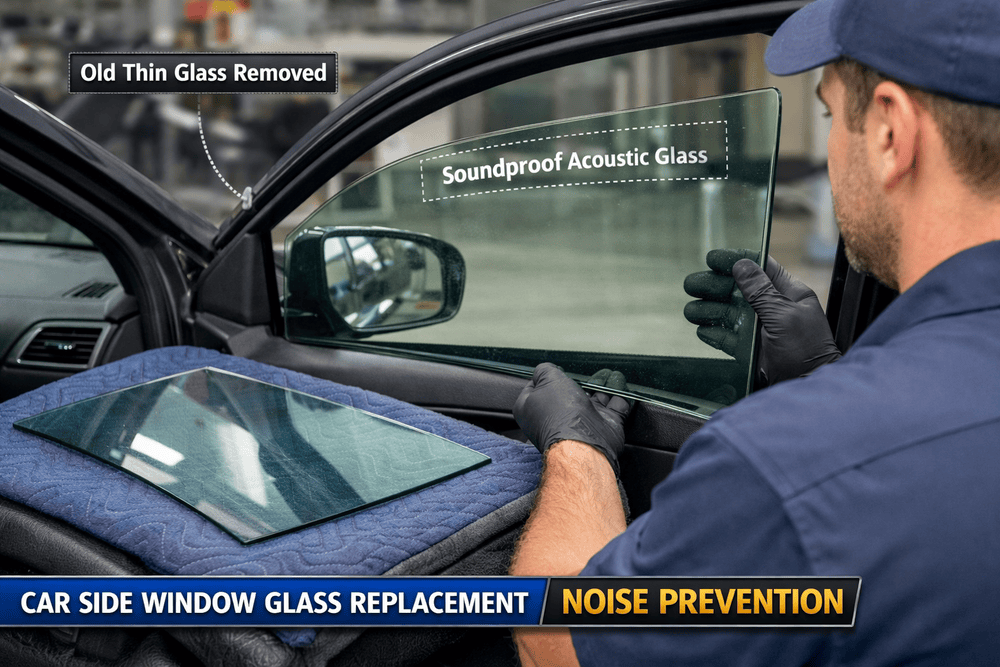
Car Side Window Glass Replacement Noise Prevention
Sometimes replacing the side window glass on your automobile causes an unforeseen issue: more road noise. These problems, which might include wind blowing through cracks or creaking noises that weren’t there before, can make an otherwise pleasant journey unpleasant. The good news? The majority of noise issues after side window glass replacement are avoidable. You may avoid frequent visits to the auto shop and restore the calm cabin of your car by knowing why they happen and how to fix them. This tutorial explains the typical reasons for noise in your automobile after a replacement and offers workable fixes to keep the inside as quiet as possible.
Get An Auto Glass Replacement Quote Now 866.278.7417

Windshield Replacement & Repair
Our competitors push you into going to their shop to get your glass fixed-making it cheaper for them. We make it easier for YOU to get back on the road by offering free mobile repairs at your home or work. With our free mobile services servicing the entire Orange County & Los Angeles area, we can often handle your windscreen replacement the same day! So the next time you need a windshield replacement, give us a call.
Talk to a Windshield Replacement Specialist Now 866.278.7417

Calibration
Calibration is the process of returning a vehicle’s ADAS to OEM specifications. Calibration is necessary after a new glass installation, particularly a windshield with a camera mounted to it, to ensure that the ADAS features continue to function properly despite having been moved during installation. If a car’s ADAS is not properly calibrated, the system may not function safely. A misaligned camera could jeopardize the functionality of the system and lead to dangerous driving or accidents, so it is crucial that the cameras are aligned perfectly, which is what windshield calibration ensures.
Talk to a Calibration Specialist Now 866.278.7417

Fleet Auto Glass Repair
We provide expert auto glass repair and windshield replacement services for commercial fleets of all sizes. We are experienced with all manufacturers and machine types of domestic or foreign cars, trucks, vans, or commercial vehicles, including heavy equipment. Our same day mobile auto glass and windshield repair service will enable you to get back on the road faster and start saving you time and money instantly. Give us a call today! We are here to help!
Talk to a Fleet Auto Glass Specialist Now 866.278.7417
Why Does Noise Occur After Window Replacement
Replacing a pane of glass is just one aspect of replacing side window glass. The procedure requires careful consideration of weatherstripping, seals, and appropriate installation methods. Noise may enter when any of these components are not managed properly.
Bad seal installation: The main defense against wind and traffic noise is the rubber seal that surrounds your window.
Gaps may appear during replacement if the seal is not installed properly or if a lower-quality seal is utilized. These openings let air pass through, producing howling or whistling noises, particularly while traveling at high speeds on the highway.
Misaligned glass: The auto glass has to be flush with the window frame. Wind may enter via gaps created by even a millimeter of misalignment. Though hurried or incompetent labor might lead to poor fitting, professional fitters utilize specialized equipment to assure optimal alignment.
Worn or damaged weatherstripping: The window seal and weatherstripping along the door frame provide a comprehensive barrier. This weatherstripping won’t provide sufficient noise shielding if it is broken during the replacement process or if it has worn out prior to the job starting.
Insufficient curing time: Contemporary car glass adhesives need time to completely cure. The glass may move slightly if you drive your car before the glue has had time to cure, weakening the barrier and letting noise in.
Selecting the Appropriate Glass Replacement
Replacement glass comes in several varieties. The kind and caliber of glass you choose has a big influence on cabin noise levels.
Original Equipment Manufacturer (OEM) glass is made especially for your car model, as opposed to aftermarket glass. Its thickness and acoustic qualities are precisely the same as those of your manufacturing glass. Even while aftermarket glass is sometimes less costly, it can not provide as much noise insulation.
Options for acoustic glass: Certain cars include acoustic laminated glass, which has a unique coating that reduces noise. There will be a noticeable increase in cabin noise if you replace the original glass in your automobile with regular glass. Before replacing any glass in your car, be sure it’s the right kind.
The thickness of the glass is important since thicker glass inherently blocks more sound. Talk to the installer about your choices for glass thickness if noise reduction is a top concern while replacing your window. There is a discernible change in cabin silence with a little increase in thickness.
Best Practices for Installation: A noiseless window replacement starts with a proper installation method. This is what a professional installation ought to include.
Surface preparation: The window frame and door surfaces should be completely cleaned by the installer prior to the installation of new glass. To guarantee that the new seal attaches correctly and forms an airtight fit, any leftover adhesive, dirt, or debris must be eliminated.
Do you have a Question?
Get An Auto Glass Replacement Quote Now 866.278.7417
Using Quality Sealants and Adhesives
High-quality urethane adhesives are made especially for installing glass in cars. After curing, these materials preserve their flexibility, enabling regular vehicle movement while preserving a strong seal. Low-cost substitutes could eventually harden and break, allowing noise to enter.
Appropriate healing period: Avoid the temptation to drive your car right away once it has been replaced. The majority of adhesives need at least a few hours to cure, and it takes 24 to 48 hours for them to reach their peak strength. Prior to driving and utilizing a vehicle wash, abide by the wait durations specified by your installation.
Testing before departure: Before you go, a trustworthy installation will check for noise and leakage. Usually, this entails closing the doors and splashing water over the window to check for air leaks. If this proof is not provided, don’t be afraid to request it.
Post-Installation Measures to Reduce Noise: You may take extra precautions to make sure your replacement window stays silent even after flawless installation.
Examine the weatherstripping: Look for any cracks or damage along the rubber weatherstripping that runs along the frame of your door. To make sure it’s inserted correctly, gently press along the whole length. Make sure to replace any portions that are loose, broken, or crushed.
Align the door: To guarantee that the window and seals make good contact, the door itself may sometimes need to be slightly adjusted. A door alignment adjustment may fix the problem if you hear more road noise coming from one corner of the glass.
Use Extra Sound Deadening
You may add sound-deadening material to the door cavity of cars that didn’t have acoustic glass at first. These mats lessen the transmission of noise by absorbing vibrations. This may significantly increase cabin silence, although it does involve removing the door panel.
Routine upkeep: Inspect your weatherstripping and window seals every few months, particularly if you park outside a lot. Over time, rubber components may deteriorate due to UV exposure and severe temperatures. These seals may last longer if a silicone-based conditioner is applied.
Common Errors to Avoid: understanding the proper course of action is only as essential as understanding what not to do.
DIY sealants: Using caulks or sealants from hardware stores to try to solve noise problems often makes them worse. These materials may interfere with good sealing or complicate future repairs since they are not intended for use in automobiles.
Ignoring little leaks: Although a small whistle may not seem like much, it is a sign of a defective seal. The same opening may allow water to enter, which might lead to electrical problems or corrosion. Instead than waiting for any noise issues to become worse, take quick action to address them.
Driving too soon: After window replacement, patience is rewarded. The glue requires time to acquire its maximum strength, even if it seems dry to the touch. Driving too soon might cause the glass to move and jeopardize the seal.
Selecting the least expensive option: One area where you really get what you pay for is auto glass replacement. The least expensive provider often employs subpar materials or expedites the installation process. Long-term financial and frustration savings may be achieved by making an initial investment in high-quality work.
When to Get Expert Assistance
Certain noise problems need to be diagnosed and fixed by professionals. After your window replacement, return it to the technician within the warranty term if you continue to hear wind noise, water leaks, or rattling noises. Reputable stores guarantee their work and will fix installation problems for free.
Noise that appears months after repair may be caused by weatherstripping or regular seal deterioration rather than poor installation quality. Whether you need door adjustments, new seals, or other repairs may be assessed by a professional.
Safeguarding Your Investment: A side window that is placed correctly should last for many years without leaking. You may stop noise problems before they begin by selecting high-quality materials, making sure the installation is done by professionals, and keeping the weatherstripping and seals in good condition.
Instead of being a source of annoyance, the interior of your car should be a haven from traffic noise. Make sure your new glass is placed properly by taking the time to check it, and don’t be afraid to ask your installer to fix any issues you find. Thousands of hours of pleasant driving will be the payoff for the few additional minutes you spend on quality inspections and enough curing time.
How to Lower Side Window and Windshield Glass Replacement Costs: A broken side window or a cracked windshield may ruin your whole week. In addition to the aggravation of handling the damage, automobile owners are sometimes surprised by the expense of replacement.
The cost of repairing a windshield may vary from $200 to more than $1,000, depending on the make and model of your car, while side windows usually cost between $100 and $400. The good news? Contrary to popular belief, you have greater control over these expenses.
You may drastically lower your out-of-pocket expenses by learning what factors influence replacement costs and which tactics are effective. This tutorial explains how to reduce the cost of replacing your windshield and side windows without sacrificing quality or safety.
Recognizing the Factors Affecting Glass Replacement Prices
Understanding the reasons behind the large price range is helpful before looking at cost-cutting measures. The cost to replace your glass depends on a number of things.
The manufacturer and model of the vehicle is important. Because they need specialist glass with integrated sensors and cameras, luxury cars and more recent models with sophisticated driver-assistance systems (ADAS) usually cost more to fix.
A 2023 Mercedes-Benz with lane departure warning systems will cost far more than a basic windshield for a 2010 Honda Civic. The kind of glass is also important.
Aftermarket options are less expensive than Original Equipment Manufacturer (OEM) glass, which is manufactured by the same business that created the original windows for your automobile. Although OEM glass ensures a flawless fit, high-quality aftermarket alternatives often function just as well at a far lower cost.
The entire cost is increased by labor and calibration. Your total cost may increase by $100 to $300 if your windshield has sensors or cameras that need to be recalibrated after installation.
Pricing is also influenced by geographic location. Shops in urban regions with greater operational expenses often charge higher prices than those in rural areas. Price reductions may also result from competition among nearby suppliers.
Verify Your Insurance Coverage First: You may be surprised to learn how much your vehicle insurance policy will cover glass damage. Glass coverage is often covered by plans with little or no deductible, so this should be your first port of call before making an out-of-pocket payment.
Windshield and window damage from non-collision occurrences, such as fallen branches, hail, vandalism, or road debris, is usually covered under comprehensive coverage. To find out what’s covered, check your policy documentation or give your insurance agent a call.
Insurers are required by law in some states to waive deductibles for windshield repairs. Several states have “zero deductible” policies for glass claims, including South Carolina, Kentucky, and Florida. If you reside in one of these states, repairs ought to be covered by your insurance at no additional expense to you.
In contrast to an at-fault collision, submitting a glass claim often won’t raise your rates, even if you have a deductible. You may utilize your policy without worrying about premium increases since glass claims are often regarded as “no-fault” accidents.
One thing to keep in mind is that submitting glass claims often in a short period of time may cause your insurer to become suspicious. Try to fix all of the chips or cracks at once rather than submitting separate claims if you have more than one.
Do you have a Question?
Get An Auto Glass Replacement Quote Now 866.278.7417
Repair Minor Damage Before It Spreads
Complete glass replacement is not usually necessary for minor chips and cracks. Saving hundreds of dollars may be achieved by identifying damage early and choosing repair over replacement.
Since repairing minor damage avoids more costly claims later, many insurance plans include windshield repairs with no deductible. Although professional outcomes are often more permanent, do-it-yourself repair kits may cost as little as $10 to $20, even without insurance.
A little chip may grow into a large break in a matter of days due to temperature fluctuations, bumpy roads, and stress on the glass. You have the highest chance of repairing rather than replacing if you act fast.
Repairs aren’t always feasible, however. For safety concerns, chips that pierce both layers of laminated glass, cracks that extend to the edge of the windshield, or damage immediately in the driver’s line of sight usually need to be replaced completely.
Shop Around and Compare quotations: Obtaining many quotations is crucial since glass replacement costs might vary significantly across suppliers. Never accept the first estimate you are given.
Make at least three local auto glass businesses your first port of call. Give them the year, make, and model of your car, as well as the specific window that needs to be replaced. Request a thorough breakdown that accounts for labor, glass, and any other costs.
In order to save you time, mobile glass services often provide affordable prices and come to your house or place of business. Compared to conventional stores, these services offer fewer overhead expenses, which might save you money.
Both small individual stores and national businesses like Safelite offer benefits. While smaller stores may provide more individualized service and pricing flexibility, chains may offer price-matching promises and uniform service.
Be mindful of the inclusions while comparing quotes. While some businesses guarantee the installation for a year, others provide lifetime guarantees on their work. When determining which choice offers the greatest value, take these precautions into account.
Never be afraid to bargain. If a store has a much cheaper price, let the other stores know and ask them to match or even beat it. A smaller profit margin is preferable than losing your company completely for many companies.
Think About Aftermarket Glass
You may save 30% to 50% on replacement costs without compromising quality by using aftermarket glass instead of OEM.
Third-party businesses, not the original manufacturer of your car, make aftermarket glass. These substitutes are safe and structurally sound because they adhere to the same federal safety regulations as OEM glass.
The primary distinction is found in branding, and sometimes in little aesthetic elements. Performance and safety are unaffected by modifications in aftermarket glass, such as a slightly altered logo location or a different tint hue.
Although some auto owners are concerned that aftermarket glass won’t fit correctly, trustworthy producers make sure their goods are precisely designed to meet OEM specs. When you deal with a skilled installation, fit problems are uncommon.
Inquire about the brands your installer carries and if they provide warranties for their aftermarket alternatives. Reputable stores will boldly suggest aftermarket alternatives when the time is right.
Seek for Special Offers and Discounts: Auto glass providers often have sales that may drastically lower your expenses. It might be worthwhile to invest a few minutes in looking for bargains.
For the most recent deals, see the websites of the companies. Seasonal specials are offered by many stores, particularly during sluggish business times. Access to exclusive discount coupons is often granted when you sign up for email newsletters.
You may be eligible for membership discounts via AARP, AAA, or your employer’s benefits plan. Additionally, some credit cards provide savings on vehicle glass as part of their benefits package.
Inquire about referral schemes. You could be eligible for a referral discount if you know someone who just had their glass replaced.
In the vehicle glass sector, price-matching practices are widespread. Many stores will match or surpass a competitor’s lower quoted price to get your business.
Saving money is another benefit of social media. Flash deals or follower-only discounts may sometimes be found by following nearby glass stores on Facebook or Instagram.
Handle ADAS Recalibration Smartly
You cannot avoid recalibration if your car includes sophisticated driver-assistance technologies, but you may control the expense.
Cameras and sensors installed on or close to your windshield are necessary for ADAS functions like adaptive cruise control, lane-keeping assistance, and automated emergency braking. These systems lose their calibration when the glass is changed, and they must be reset in order to operate correctly.
While some stores charge for recalibration separately, others include it in their replacement quotation. Always inquire up front whether recalibration is covered and, if not, how much it will cost.
Dynamic calibration necessitates driving your car under certain circumstances, while static calibration is done in the shop using specialist tools and objectives. Static calibration is often less costly and quicker.
Make sure the shop has the right tools for the make and model of your car if you require recalibration. You may need to visit a dealership, which usually costs extra, since not all car glass firms are able to provide this service.
It is often less expensive to handle glass replacement and recalibration together rather than separately when done with the same vendor. Consider the overall cost of both services while looking for estimates.
Maintain Your Windows to Avoid Future Damage: The best strategy to save long-term glass replacement expenses is prevention. You can prevent damage to your windshield and side windows by adopting a few easy maintenance practices.
To lessen the chance of other cars kicking up road debris, maintain a safe following distance. Windshield chips are mostly caused by rocks and gravel.
Whenever possible, park strategically. Your glass is shielded from hail, fallen branches, and sharp temperature changes that might exacerbate pre-existing cracks when you park in a garage or under cover.
Before the worn wiper blades begin to scrape your windshield, replace them. Over time, scratches from broken blades with exposed metal may erode the glass.
Don’t smash doors too forcefully. Changes in pressure inside your car may put additional strain on already fragile glass, leading to tiny chips spreading.
Mobile Safe Auto Glass
14241 E Firestone blvd suite 400,
La Mirada, CA 90638
Phone: (562) 608-1154
Toll Free: 1 866 278 7417
Mail: sales@mobilesafeautoglass.com
Get a FREE QUOTE today! You can get a free quote and schedule 24/7 using this free quote wizard.
Mon – Fri 8am – 5pm
Saturday 8am – 1pm
Sunday Closed