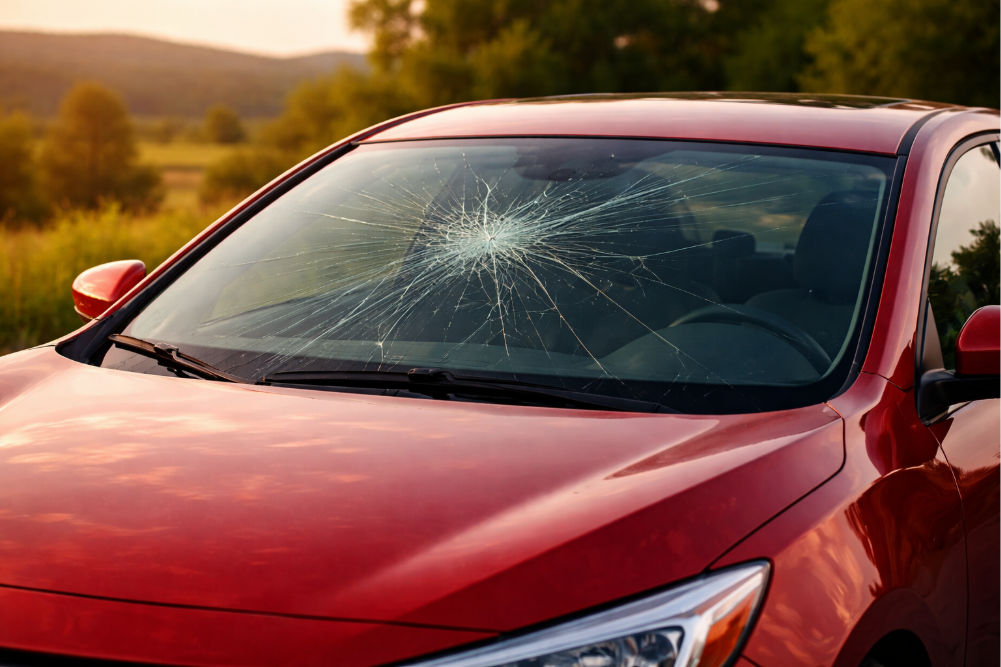
Broken Windshield Insurance Claims That Are Approved
That sudden, sharp crack is a sound every driver dreads. You watch as a pebble kicks up from the tire of the truck ahead of you, colliding with your glass and leaving a star-shaped blemish right in your line of sight. For many, the immediate reaction is frustration, followed quickly by procrastination. If the crack is small or out of the direct line of vision, it’s easy to tell yourself you’ll fix it “later.” But “later” often turns into weeks or months, and that small chip accompanies you on every commute. While a damaged windshield is always a safety concern, the danger multiplies exponentially when driving conditions deteriorate. When the sun sets or the clouds open up, a minor imperfection in your auto glass transforms from a cosmetic annoyance into a critical safety hazard.
Get An Auto Glass Replacement Quote Now 866.278.7417

Windshield Replacement & Repair
Our competitors push you into going to their shop to get your glass fixed-making it cheaper for them. We make it easier for YOU to get back on the road by offering free mobile repairs at your home or work. With our free mobile services servicing the entire Orange County & Los Angeles area, we can often handle your windscreen replacement the same day! So the next time you need a windshield replacement, give us a call.
Talk to a Windshield Replacement Specialist Now 866.278.7417

Calibration
Calibration is the process of returning a vehicle’s ADAS to OEM specifications. Calibration is necessary after a new glass installation, particularly a windshield with a camera mounted to it, to ensure that the ADAS features continue to function properly despite having been moved during installation. If a car’s ADAS is not properly calibrated, the system may not function safely. A misaligned camera could jeopardize the functionality of the system and lead to dangerous driving or accidents, so it is crucial that the cameras are aligned perfectly, which is what windshield calibration ensures.
Talk to a Calibration Specialist Now 866.278.7417

Fleet Auto Glass Repair
We provide expert auto glass repair and windshield replacement services for commercial fleets of all sizes. We are experienced with all manufacturers and machine types of domestic or foreign cars, trucks, vans, or commercial vehicles, including heavy equipment. Our same day mobile auto glass and windshield repair service will enable you to get back on the road faster and start saving you time and money instantly. Give us a call today! We are here to help!
Talk to a Fleet Auto Glass Specialist Now 866.278.7417
The Science of Visibility and Light Refraction
The most immediate danger of driving with a cracked windshield at night is the unpredictable way damaged glass interacts with light. When a windshield is in perfect condition, it is supposed to be optically transparent, which means that light may flow through it without being distorted. However, a crack or chip disrupts the smooth surface of the glass, creating a prism effect.
The Halo and Starburst Effect: When the headlights of oncoming traffic hit a crack in your windshield, the light doesn’t pass through directly. Instead, it refracts, scattering in multiple directions.
This phenomenon creates “starbursts” or “halos”—blinding flares of light that can wash out your entire field of vision. At night, your eyes are already working hard to adjust to low-light conditions.
The sudden introduction of scattered, intense light can cause temporary flash blindness. Even a split second of inability to see the road is enough to miss a pedestrian crossing the street, a car braking suddenly ahead of you, or a curve in the road.
Distorted Depth Perception: Cracks don’t just scatter light; they bend images. If a crack runs through your line of sight, it acts like a lens, shifting the position of objects on the other side.
At night, when the only visual signals available are taillights and reflectors, this distortion may be very dangerous and even ultimately lethal. You might misjudge the distance of a car ahead of you or fail to see an obstacle until it is too late to react.
The Compounding Dangers of Rain
Rain introduces a chaotic element to driving that demands 100% of your vehicle’s safety features to be functional. When you add a compromised windshield to a heavy downpour, you are navigating a perfect storm of risk factors.
Wiper Blade Failure: Windshield wipers are designed to glide over a smooth surface. A crack, pit, or chip acts like a snag in fabric. Every time the wiper blade passes over the damage, the rubber edge gets nicked or torn. Over the course of a single rainy drive, a jagged crack can destroy the effectiveness of your wipers.
Instead of clearing water, damaged wipers leave streaks and smears across the glass. Combined with the refraction issues mentioned earlier, this creates a wall of blurriness. If you are driving at night in the rain with a cracked windshield, streetlights and headlights will smear across the wet, cracked glass, reducing visibility to near zero.
Fogging and Moisture Infiltration: Windshields are made up of two layers of glass with a layer of polyvinyl butyral (PVB) resin sandwiched in between to prevent fogging and moisture infiltration.
It is possible for this barrier to be compromised by a deep break, which would enable moisture to infiltrate between the layers. This trapped moisture can cause the glass to fog up from the inside of the laminate, a type of fog that your defroster cannot clear.
Furthermore, a significant crack can break the airtight seal of the cabin. In heavy rain, water can leak into the vehicle, potentially damaging dashboard electronics and sensors located near the rearview mirror, such as those used for automatic braking or lane-keep assist systems.
Do you have a Question?
Get An Auto Glass Replacement Quote Now 866.278.7417
Thermal Stress and Structural Failure
Glass expands and contracts with temperature changes. This is a natural physical property, but damaged glass loses its ability to handle these fluctuations evenly.
The Danger of Defrosting: During a cold rainstorm, the outside temperature drops rapidly. Inside the car, drivers typically crank up the defroster to keep the glass clear. This creates a severe temperature differential: cold rain on the outside, hot air on the inside.
Intact glass can handle this stress. Cracked glass cannot. The stress concentrates at the tip of the crack, often causing it to run suddenly and violently across the entire windshield. If this happens while you are driving, the sudden “pop” and the spiderwebbing of the glass can cause panic, leading to loss of vehicle control.
Compromised Roof Strength: Many drivers are unaware that the windshield contributes significantly to a car’s structural strength—up to 45% in a head-on collision and up to 60% in a rollover accident. The glass acts as a beam that supports the roof.
If the glass is cracked, its structural integrity is compromised. A cracked windshield is more likely to shatter or come out of the frame completely in the case of a rollover on a slick, rain-slicked road. Without that support, the roof is more likely to collapse into the passenger cabin.
Airbag Deployment Risks: Modern safety systems are an ecosystem, and the windshield plays a vital role in airbag deployment. When the passenger-side front airbag deploys, it shoots upward and bounces off the windshield to cushion the passenger.
The windshield must be strong enough to withstand the explosive force of the airbag deployment. If the glass is already weakened by a crack, the force of the airbag could shatter the windshield or punch right through it. If the windshield fails to support the airbag, the bag may deploy outside the vehicle or fail to position itself correctly, leaving the passenger unprotected during a collision.
Legal and Insurance Considerations
Beyond the physical dangers, driving with a cracked windshield carries legal and financial risks.
Traffic Violations: Driving with a windshield crack that blocks the driver’s vision or impedes the wipers’ ability to work is prohibited in many areas.
Police officers can issue citations for “unsafe vehicle condition.” If you are involved in an accident—especially in rain or at night—and it is determined that your visibility was impaired by a pre-existing crack, you could face increased liability.
Insurance Claims: Most comprehensive insurance policies cover windshield repair or replacement. Because they realize that a simple chip repair can save a far more costly replacement later, insurance companies often waive the deductible for such repairs.
Ignoring the issue, however, may result in issues. If a crack spreads and the windshield shatters while driving, leading to an accident, the insurance investigation might complicate your claim if negligence regarding vehicle maintenance is found.
Frequently Asked Questions: Can I drive my car if the windshield is cracked? Technically, yes, you can physically drive the car. However, if the crack obstructs your view, it is illegal and dangerous. It should be changed right away since the structural integrity is jeopardized if the fracture is longer than a dollar note or reaches the glass’s edge.
Will rain make a windshield crack get bigger? Yes. Rain often brings cooler temperatures. If you run your heater or defroster while it is raining, the temperature difference between the inside and outside of the glass causes stress that can cause the crack to spread instantly. Additionally, water freezing inside a crack expands and pushes the glass apart.
Does a cracked windshield affect my car’s sensors? Absolutely. Advanced Driver Assistance Systems (ADAS), such as automated emergency braking and lane departure alerts, are included in many contemporary cars. These cameras and sensors are often mounted behind the windshield. A crack in front of a sensor can disrupt its ability to “see” the road, causing safety systems to malfunction or fail.
How can I tell whether I need a replacement or a repair? Chips can usually be fixed if they are less than a quarter and out of the driver’s direct line of sight. If the crack is longer than three inches, reaches the edge of the glass, or is deep enough to penetrate the inner layer of glass, a full replacement is usually required.
Prioritize Clarity and Safety
The windshield is your lens to the world while driving. Allowing that lens to remain damaged is a gamble with your safety and the safety of others on the road. The risks of driving with a cracked windshield—blinding glare at night, wiper failure in the rain, and structural weakness during accidents—far outweigh the inconvenience of scheduling a repair.
Don’t wait for the next storm or a long night drive to wish you had fixed that chip. Assess the damage today, contact a professional auto glass technician, and restore the structural and visual integrity of your vehicle. Clear glass isn’t just about a nice view; it’s about arriving alive.
Is Your Windshield Hiding Hazards? The Visibility Risks You Miss: You likely have a routine for car maintenance. You check the oil, monitor tire pressure, and listen for strange rattles in the engine. But there is a massive safety component sitting right in front of your face that rarely gets a second thought until it’s too late: the windshield.
Most drivers treat their windshield as a passive window—something to look through, not at. As long as there isn’t a massive spiderweb crack right in the driver’s line of sight, we assume it is doing its job.
However, visibility is the single most critical factor in avoiding accidents. If you cannot see a hazard, you cannot react to it. The degradation of your view happens slowly.
It is a gradual decline in clarity that the human brain adapts to, meaning you might not realize how compromised your vision is until you are driving into a setting sun or through a heavy downpour. Understanding the hidden mechanics of windshield visibility and structural integrity can change the way you drive and, ultimately, keep you safer on the road.
The Invisible Enemy
We tend to look for big chips caused by errant rocks, but the real enemy of clear vision is much smaller. It is called micro-pitting. Every time you drive at highway speeds, your car is bombarded by microscopic debris. Sand, dust, dirt, and tiny pebbles strike the glass at 60 miles per hour or more.
Over time, these impacts remove tiny specks of glass from the surface. You might not see them while your car is parked in the shade, but they are there, turning your smooth glass into a cratered surface on a microscopic level.
The Diffraction Effect: The danger of micro-pitting reveals itself when light hits the glass. A smooth windshield allows light to pass through directly. A pitted windshield creates a prism effect. When direct sunlight or the high beams of an oncoming truck hit these tiny craters, the light scatters.
This diffraction causes the “dazzle” effect—a sudden, blinding glare that turns the entire windshield white or hazy. In that moment of blindness, your reaction time drops to zero. If your car has high mileage and you struggle with glare during sunrise or sunset, the glass itself, not just the sun, is likely the problem.
The Inside Job: Chemical Haze: Drivers often scrub the outside of their windshields religiously while ignoring the interior. Yet, a significant amount of visibility loss comes from inside the cabin. If you have ever swiped your finger across the inside of the glass and left a clean streak, you are dealing with vinyl haze.
This film is not just dust. It is the result of “off-gassing.” The plastics, vinyls, and synthetic materials used to build your dashboard and upholstery release chemical compounds as they heat up in the sun. These airborne particles settle on the coolest surface they can find, which is usually the glass.
This oily film is stubborn. It resists dry wiping and creates a severe halo effect around streetlights at night. It also makes your defroster less effective, as moisture clings to the film rather than evaporating off the clean glass. Regular cleaning with a microfiber cloth and an ammonia-free cleaner is the only way to combat this invisible buildup.
The First Line of Defense
Your windshield is only as good as the mechanism keeping it clean. Wiper blades are often used long past their expiration date. We usually wait until they are screeching across the glass or leaving massive un-wiped streaks before replacing them, but the damage is often done by then.
The Hidden Wear Factors: Wiper blades live a hard life. They bake in the sun, freeze in the winter, and scrape against abrasive road grime.
Ultraviolet Degradation: The sun breaks down the rubber edge, causing it to harden and crack. Hard rubber cannot conform to the curve of the glass, leaving gaps where water remains.
The Chatter Effect: When blades harden, they skip across the glass. This “chatter” leaves a ripple pattern of water that distorts light and vision during heavy rain.
Abrasive Damage: Old wipers can trap grit in the rubber. As they drag across the windshield, they act like sandpaper, accelerating the micro-pitting process mentioned earlier.
Safety experts recommend replacing blades every six to twelve months, regardless of how often you use them. If you live in a hot, sunny climate, the heat may destroy the rubber faster than rain wear would.
Structural Integrity: More Than Just a Window: While visibility is the most obvious function of the windshield, its role in keeping you alive during a crash is equally vital. The safety cell of a modern car is structurally supported by its windshield.
Do you have a Question?
Get An Auto Glass Replacement Quote Now 866.278.7417
Roof Crush Protection
In the event of a rollover accident, the windshield provides a significant amount of vertical support to the roof. It prevents the cabin from collapsing in on the passengers. A windshield that is improperly installed or weakened by a large crack can fail under pressure, allowing the roof to crush downward.
Airbag Deployment: The passenger-side airbag relies on the windshield to function correctly. When that airbag deploys, it fires upward and bounces off the windshield to position itself in front of the passenger.
This happens with explosive force. If the windshield is compromised, the force of the airbag can blow the glass out of the frame. Without the backstop of the glass, the airbag may deploy out the window opening, offering zero protection to the passenger. This is why ignoring a “small crack” is dangerous. That crack represents a breach in your car’s structural armor.
Rain Repellents and Hydrophobic Coatings: Technology has given drivers an edge in the battle for visibility. Hydrophobic coatings (often known by brand names like Rain-X) work by modifying the surface tension of the glass.
On untreated glass, water creates flat, irregular sheets that distort vision. On hydrophobic glass, water beads up into tight spheres. The wind generated by driving blows these beads off the glass instantly.
Applying a rain repellent can improve visibility by over 30% in wet conditions. That improvement translates to faster reaction times. Seeing a brake light a second earlier because your glass is clear can be the difference between a near-miss and a collision.
However, these coatings are not permanent. They require re-application every few months and must be applied to perfectly clean glass to function without streaking.
Clearer Views for Safer Roads
We spend thousands of dollars on safety features like lane-assist, automatic braking, and blind-spot monitoring. Yet, we often neglect the low-tech, high-impact safety feature that sits right before our eyes.
Maintaining your windshield is not just about aesthetics; it is about survival. It means recognizing that glass wears out, just like brake pads. It means cleaning the inside as often as the outside. Additionally, it entails fixing the cracked glass before it jeopardizes your car’s structural integrity.
Before you go out for your next drive, take a time to examine your glass carefully. If the view looks hazy, speckled, or distorted, it is time to take action. What you can see determines your safety.
How can I tell whether the pitting in my windshield need replacement? If you struggle to see when driving toward the sun, or if oncoming headlights at night create a “starburst” effect rather than looking like distinct points of light, your windshield likely suffers from severe micro-pitting. If polishing doesn’t resolve the glare, replacement is the only option.
Can I just repair a long crack? Generally, no. Resin may be poured into tiny chunks (less than a quarter) to stop them from spreading. The structural integrity is jeopardized, however, if a fracture approaches the edge of the glass or is longer than a few inches. Most safety standards require a full replacement for long cracks.
What is the most effective method for cleaning the windshield’s interior? Steer clear of common home glass cleaners that include ammonia since they might harm dashboard materials and aftermarket tint. Use a fresh microfiber cloth and a glass cleaner designed specifically for cars. To lessen streaking, use a “box” motion (up, over, down) instead of circles.
Mobile Safe Auto Glass
14241 E Firestone blvd suite 400,
La Mirada, CA 90638
Phone: (562) 608-1154
Toll Free: 1 866 278 7417
Mail: sales@mobilesafeautoglass.com
Get a FREE QUOTE today! You can get a free quote and schedule 24/7 using this free quote wizard.
Mon – Fri 8am – 5pm
Saturday 8am – 1pm
Sunday Closed