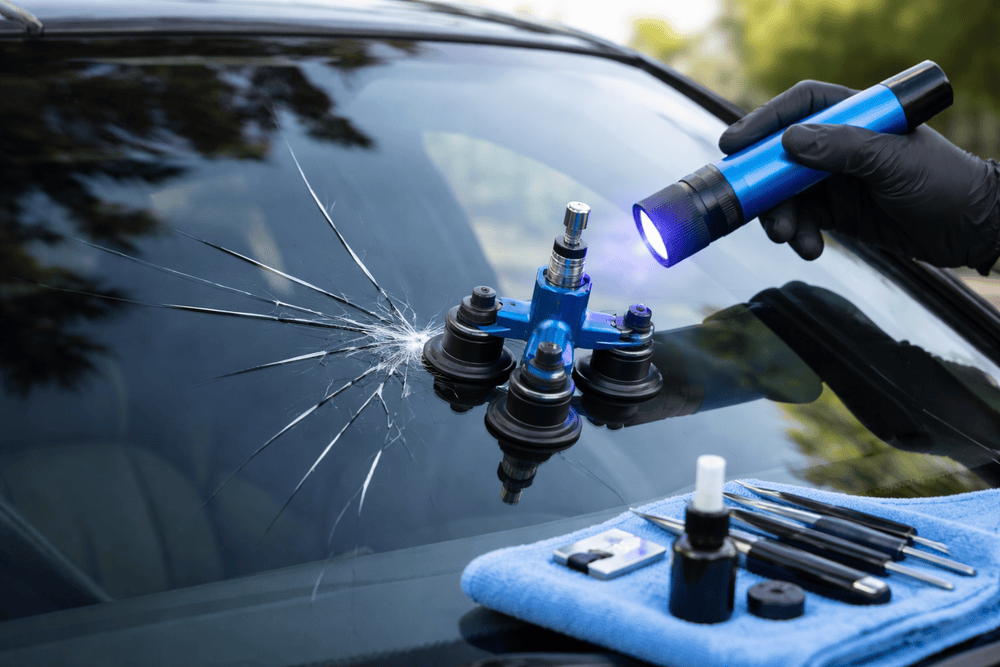
Broken Windshield Damage That Worsens Fast
The sound is familiar to you. A chunk of gravel gets kicked up by a dump truck in the adjacent lane as you are driving along the highway. Your heart falls as you hear a loud thwack. You look at the window and see it: a little, inconsequential chip near the wiper blade. Ignoring it is appealing. You have a hectic schedule, and it’s little, after all. However, that little flaw is essentially a structural vulnerability that is just waiting to become worse. To support the top of the car and aid in airbag deployment, windshields are designed to withstand extreme stress. You may save the expense of a complete repair and drive more safely if you know why and how windshield damage develops.
Get An Auto Glass Replacement Quote Now 866.278.7417

Windshield Replacement & Repair
Our competitors push you into going to their shop to get your glass fixed-making it cheaper for them. We make it easier for YOU to get back on the road by offering free mobile repairs at your home or work. With our free mobile services servicing the entire Orange County & Los Angeles area, we can often handle your windscreen replacement the same day! So the next time you need a windshield replacement, give us a call.
Talk to a Windshield Replacement Specialist Now 866.278.7417

Calibration
Calibration is the process of returning a vehicle’s ADAS to OEM specifications. Calibration is necessary after a new glass installation, particularly a windshield with a camera mounted to it, to ensure that the ADAS features continue to function properly despite having been moved during installation. If a car’s ADAS is not properly calibrated, the system may not function safely. A misaligned camera could jeopardize the functionality of the system and lead to dangerous driving or accidents, so it is crucial that the cameras are aligned perfectly, which is what windshield calibration ensures.
Talk to a Calibration Specialist Now 866.278.7417

Fleet Auto Glass Repair
We provide expert auto glass repair and windshield replacement services for commercial fleets of all sizes. We are experienced with all manufacturers and machine types of domestic or foreign cars, trucks, vans, or commercial vehicles, including heavy equipment. Our same day mobile auto glass and windshield repair service will enable you to get back on the road faster and start saving you time and money instantly. Give us a call today! We are here to help!
Talk to a Fleet Auto Glass Specialist Now 866.278.7417
The Anatomy of Automotive Glass
To understand why damage spreads, you must first understand how your windshield is made. Automobile windshields are composed of laminated safety glass, rather than the glass in your home windows, which breaks into jagged fragments.
This coating is made up of two glass layers encasing a polyvinyl butyral (PVB) plastic layer. When a rock hits your windshield, the outside layer of glass usually breaks, but the plastic and inner layers stay in place.
To ensure its durability, the glass is subjected to continuous stress throughout the production process. This tension is broken with a chip. The energy from the impact seeks the path of least resistance because the surrounding glass is inclined to break apart, and a smooth surface does not provide sufficient structural strength. It turns into a crack.
The Three Primary Causes of Worse Damage: Securing an automobile in a garage virtually prevents a chip from turning into a fracture. This issue typically arises while you are driving the car. A $50 chip that may be repaired can often become a $400 replacement job overnight due to three main reasons that speed up the progression of damage.
Temperature Variations: In hotter climates, glass expands, whereas in colder ones, it contracts. The main adversary of a damaged windshield is this thermal expansion.
If you use the defroster on a chip in the winter, you are applying extreme heat to a sheet of ice-cold glass. The glass flexes due to the quick expansion. The tension concentrates on the chip since it is a weak spot, which causes the glass to break and fly across your vision in an instant.
In the summer, the same holds true. A temperature disparity caused by blasting the air conditioning on a hot day or washing a heated automobile with cold water causes the fracture to enlarge.
Body Roll and Road Vibrations
Your vehicle is a dynamic entity. The chassis bends and twists while you drive, particularly when you encounter potholes, speed bumps, and turns. The windshield adds to the overall structural stiffness of the vehicle since it is attached to the frame.
A shockwave passes through the car’s structure and into the glass each time you bump against anything. This vibration is readily handled with a clean windshield. A damaged windshield can’t. The vibrations agitate a chip’s sharp edges, creating tiny cracks that eventually join together to create a lengthy crack (“running”).
Dirt and moisture intrusion is a slower but equally harmful cause. Water molecules may penetrate a chip’s tiny cracks because they are small enough. The water becomes ice and expands if the temperature falls below freezing, pushing the glass layers apart.
Debris and washer fluid may also contaminate the brake. The pollution may prevent a subsequent repair even if the break doesn’t widen right away. For the resin that car glass specialists use to properly adhere, the surface must be clean. The repair may not work, or the expert may have to suggest a complete replacement if the chip is covered in road filth.
Not every chip is made equally; therefore, it’s important to recognize high-risk damage. While some are infamous for spreading in a matter of days, others are steady and may remain tiny for months.
The Star Break: It seems to be a core impact point with small fractures spreading outward like a star, just as it sounds. They are quite flammable. Any pressure on the glass is likely to prolong one of those legs since the damage has already begun “running” in many different ways.
The Bullseye: A bullseye is a circular fracture where the impact split a cone of glass. Since there aren’t any radiating cracks yet, they are often more stable than star breaks. However, proper restoration becomes challenging if dirt enters inside the circular gap.
The Edge Crack: Damage is virtually certain to spread rapidly if a rock strikes the windshield within two inches of its edge. The biggest manufacturing stress is seen along the windshield’s edge.
A break in this area instantly jeopardizes the glass’s strength and seal. Cracks that begin at or extend to the glass’s edge are often irreparable by most professionals and need a complete replacement.
Do you have a Question?
Get An Auto Glass Replacement Quote Now 866.278.7417
The Consequences for Safety
Although it is easy to consider a crack a financial burden or a visual inconvenience, its main concern is safety. One of the most important safety features of modern cars is the windshield.
Up to 45% of the cabin’s structural integrity is provided by the windshield in the case of a front-end collision. In a rollover, that figure rises to 60%. The likelihood of the roof collapsing increases if a huge break weakens the glass.
The windshield also serves as a backstop for passenger-side airbags. When the airbag deploys, it shoots upward and bounces against the glass to cushion the passenger. The power of the deploying airbag may cause a fractured windshield to shatter, making the safety feature ineffective.
The Dollar Bill Rule: How can you tell whether your windshield can be saved? Repair vs. Replace? The industry commonly uses the magnitude of the damage in relation to a dollar note or a quarter as a guideline.
Repairable: A chip or crack is most likely repairable if it can be covered by a quarter. To restore structural integrity, many shops can still fix a crack that is around 6 inches (less than a dollar bill) using resin.
Replacement Needed: You probably need a new windshield if the crack is longer than a dollar bill, extends to the glass’s edge, or is in the driver’s direct line of sight. A little distortion may remain after repairs in the driver’s perspective, endangering sight.
Quick Actions to Take
There are two things you should do to give yourself some time if you are unable to see a repair shop today: Wrap the chip with transparent packaging tape. This procedure keeps dirt and water out of the fissure but does not stop the split from expanding.
This procedure guarantees a stronger and cleaner repair when you finally visit the shop. Superglue clogs the resin and prevents expert repair, so avoid using it.
Steer clear of extreme temperature variations. In the summer, park in the shade; in the winter, park in a garage. Use the floor vents to gently warm or cool the cabin rather than blasting the heater or air conditioner straight into the glass.
Don’t Wait Until It Breaks: Windshield damage may be deceptive. Although it seems immobile, it is always responding to its surroundings. One pothole or one chilly morning may frequently be the difference between a simple 30-minute resin fill and an expensive, intricate windshield repair.
In addition to saving you money, taking care of the damage right away guarantees that your car will protect you in the manner for which it was intended.
Why Minor Cracks in the Windshield Proliferate Quickly
A chunk of gravel gets kicked up by a dump truck in the next lane while you are speeding down the highway. The sound of the gravel being kicked up is deafening, and suddenly you notice a tiny starburst. You choose to overlook it because it seems inconsequential—it’s barely the size of a cent.
After all, a trip to the car glass shop seems like a needless inconvenience when you have a busy week ahead. Two days later. With coffee in hand, you go out to your vehicle in the morning to see that the little chip has grown into a jagged line that runs halfway across the passenger side.
What took place? While the automobile was parked in your driveway, how could a tiny flaw like that turn into a significant structural failure? For drivers, this situation is quite frequent.
A range of environmental and physical factors constantly stress glass, despite its seeming permanence and rigidity. Understanding why these minor imperfections escalate could potentially prevent accidents and reduce the cost of a full replacement.
The Anatomy of Modern Auto Glass: To understand why fractures spread, you must first understand what you are looking at. Your windshield is made up of more than just one piece of windowpane glass. Laminated safety glass is a very advanced technical technique.
Two layers of glass are encased in a layer of polyvinyl butyral (PVB) plastic to create laminated glass. In the event of a break, the plastic inner layer holds the glass pieces together, preventing them from flying into the cabin and injuring passengers. This design fulfills a vital safety function.
However, this arrangement also creates a certain level of tension. To reinforce the glass, it is heated throughout the production process and then quickly cooled (tempering). As a result, the glass’s molecular structure experiences internal stress.
This delicate equilibrium of tension is upset when a pebble strikes your windshield. That little chip is a surface tension weak spot that is just waiting for a tiny amount of outside pressure to cause the bond to break even more.
The Function of Variations in Temperature
Temperature is the greatest threat to a chipped windshield. When glass becomes heated, it expands, and when it gets cold, it shrinks. Even though this movement is little, it has enough force to tear a tiny split open.
Thermal Shock: When several glass components have abrupt temperature fluctuations at the same time, thermal shock occurs. Extreme weather is when this occurs most frequently:
Winter Defrosting: Your windshield is coated with ice on a chilly morning. The defroster is set high. While the top of the glass stays frozen and contracts, the bottom of the glass swiftly expands when the hot air strikes it. The glass is pulled apart by this differential stress, which often results in a fracture that emerges straight up from the bottom.
Summer Cooling: In the summer, the opposite occurs. The dashboard of your automobile has reached a temperature of more than 150 degrees Fahrenheit due to the sun’s heat. You get in and turn on the air conditioner right away. When cold air strikes heated glass, it rapidly contracts, which may deepen a fracture right away.
The Greenhouse Effect: Parking your automobile outdoors might result in glass damage even if you don’t have air conditioning or a heater.
Your car’s metal frame expands more quickly than the glass when heated by the sun. The windshield’s edges are compressed as a result. The pressure from the expanding metal frame may crush the glass if there is a fracture close to the edge, pushing the crack inward.
Physical Stress and Road Vibrations
A vehicle is a mechanism that is always moving, vibrating, twisting, and bending; it is not a static item. Shockwaves enter the car’s chassis via the suspension every time you drive over a pothole, a speed bump, or even plain uneven pavement.
The windshield is structural; it stiffens the frame and aids with roof support. It absorbs a large portion of this kinetic energy since it is securely attached to the car’s frame.
A spotless windshield can easily withstand this strain. A damaged windshield doesn’t. Because it focuses the mechanical energy into that one weak spot instead of dispersing it equally throughout the surface, a chip or fracture is referred to in engineering as a “stress raiser.”
Consider it similar to a piece of cloth. A substantial piece of fabric holds up well when pulled on. The cloth tears easily from the smallest split if you cut it in the center and pull with the same power. The pushing power of the vibrations caused by regular driving rips the glass structure apart at its weakest point.
One of the few materials on Earth that expands when it freezes is moisture, sometimes known as the silent expander. If you live in a cooler region, moisture poses a significant threat to your auto glass.
Rain, snow, or even water from a vehicle wash may penetrate deeply into the tiny cracks of a windshield chip. That stored water turns to ice and swells by around 9% when the temperature falls below freezing overnight.
This phenomenon pushes the glass apart from the inside out, producing a strong wedge effect. This is often the reason why, despite the automobile not having moved an inch, drivers wake up to discover a split has widened considerably overnight.
Water may bring debris and grime into the gap, even in warm areas. Waiting too long may render a chip irreparable, even if it hasn’t spread yet, since this pollution hinders the resin used in expert repairs from properly bonding with the glass.
Do you have a Question?
Get An Auto Glass Replacement Quote Now 866.278.7417
Crack Types Are Important
Damage is not all the same. How rapidly an effect spreads depends in part on its form.
Bullseye: A circular fracture in the outer layer of glass that has a split cone. Although they still need to be repaired, they are usually stable and less likely to spread fast.
Star Break: Tiny fissures extending from a point of impact in the middle. They are quite flammable. Road vibration may readily extend one of the star’s “legs” since they are already spreading in many directions.
Edge Crack: A crack that extends to the windshield’s edge or begins within two inches of it. Because of the high stress levels close to the windshield bond, they are the most harmful and spread the quickest. Instead of being repaired, they often need to be replaced right away.
The Safety Consequences of Ignoring a Crack A cracked windshield is a real safety danger, yet many drivers consider it to be a cosmetic problem or a bother.
The structural stability of contemporary cars depends on the windshield. In a rollover accident, the windshield provides up to 60% of the roof’s crush protection.The roof is more likely to fall if there is a huge break in the glass, which greatly raises the possibility of passenger injuries.
Additionally, your passenger-side airbag cannot function correctly without the windshield. When the airbag deploys, it shoots upward and bounces against the windshield to cushion the passenger. Weak glass might be broken or burst out of the frame when struck by an airbag, rendering the safety device useless.
Commonly Asked Questions
Can I fix a windshield crack on my own? DIY resin kits are sold by auto parts stores. They can function on extremely little, simple chips, and you can catch them immediately. They usually work worse than specialized equipment, however.
Before injecting premium resin, professional repair businesses employ high-pressure vacuums to extract air from the crack. If a do-it-yourself repair doesn’t work, you’ll often have to replace the whole windshield since the filthy resin will prevent a professional repair.
How can I tell whether it needs to be replaced or repaired? The “dollar bill test” is a commonly used guideline. A chip or crack is often repaired if it can be fully covered by a $1 bill. The windshield often has to be replaced if it is longer than a dollar bill or if it is directly in the driver’s line of sight, when a repair might result in optical distortion.
Is it against the law to drive with a cracked windshield? Yes, in many jurisdictions. State and national laws differ, but generally speaking, you may be stopped and given a penalty if a crack blocks the driver’s vision or jeopardizes the vehicle’s structural integrity. Checking your local traffic regulations is the best course of action.
Is windshield repair covered by insurance? Because insurance companies would rather pay $100 for a repair than more than $500 for a replacement later, many comprehensive insurance plans include glass repair with no deductible. Verify the specifics of your particular insurance.
Avoid Waiting Until It’s Too Late: The science is unmistakable: hydraulics, kinetic energy, and thermodynamics are all constantly attacking windshield glass. That little chip on your glass represents a dynamic failure in progress rather than a static issue.
Early damage repair is almost always safer and less expensive. A quick 30-minute resin injection can restore the glass’s structural integrity. A few days of waiting might result in a pricey replacement that requires recalibration of driver-assist cameras and sensors.d. d.
As soon as you hear the distinctive sound of a rock striking glass, check the damage. To keep moisture and debris out, cover the chip with transparent tape (this is a stopgap solution, not a permanent solution).
Mobile Safe Auto Glass
14241 E Firestone blvd suite 400,
La Mirada, CA 90638
Phone: (562) 608-1154
Toll Free: 1 866 278 7417
Mail: sales@mobilesafeautoglass.com
Get a FREE QUOTE today! You can get a free quote and schedule 24/7 using this free quote wizard.
Mon – Fri 8am – 5pm
Saturday 8am – 1pm
Sunday Closed