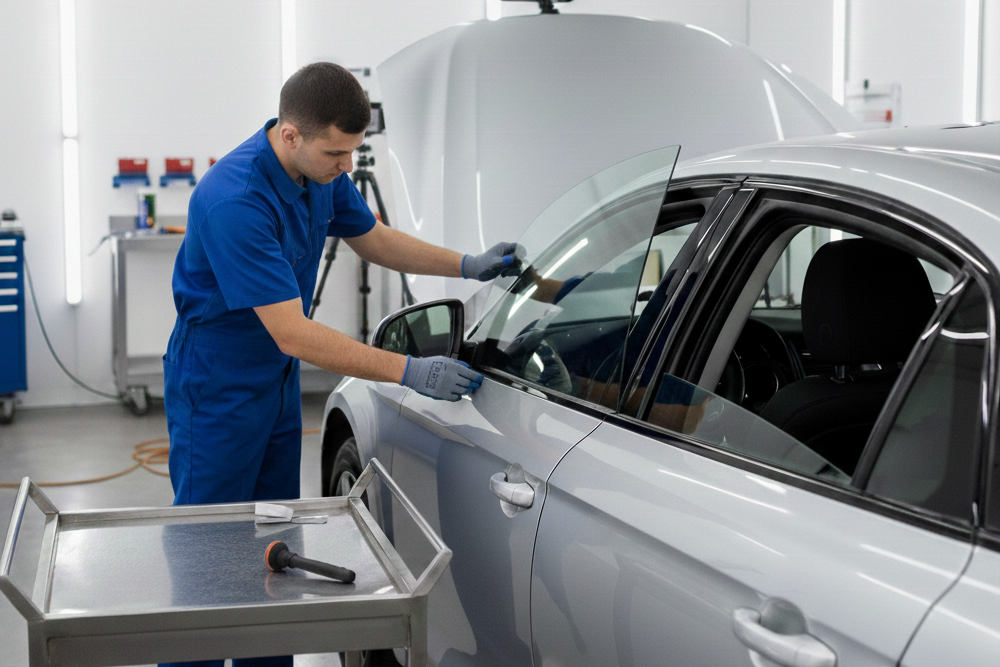
Automobile Window Replacement Quality Standards Explained
A huge boom reverberates through the cabin, a rock flies off a truck on the highway, and then you find yourself looking at a spiderweb crack. For drivers, dealing with a cracked windshield is a frustrating daily challenge. Your first instinct will probably be to find the quickest, least expensive repair shop in your area or check your insurance deductible. But replacing a windshield is much more complicated than changing your oil or repairing a flat tire. The engineering of the glass sheet is truly sophisticated. The windshield is a vital safety component of contemporary automobiles, supporting both the vehicle’s structural soundness and the efficient operation of sophisticated safety features. There are significant hazards involved when selecting a replacement purely on the basis of pricing.
Get An Auto Glass Replacement Quote Now 866.278.7417

Windshield Replacement & Repair
Our competitors push you into going to their shop to get your glass fixed-making it cheaper for them. We make it easier for YOU to get back on the road by offering free mobile repairs at your home or work. With our free mobile services servicing the entire Orange County & Los Angeles area, we can often handle your windscreen replacement the same day! So the next time you need a windshield replacement, give us a call.
Talk to a Windshield Replacement Specialist Now 866.278.7417

Calibration
Calibration is the process of returning a vehicle’s ADAS to OEM specifications. Calibration is necessary after a new glass installation, particularly a windshield with a camera mounted to it, to ensure that the ADAS features continue to function properly despite having been moved during installation. If a car’s ADAS is not properly calibrated, the system may not function safely. A misaligned camera could jeopardize the functionality of the system and lead to dangerous driving or accidents, so it is crucial that the cameras are aligned perfectly, which is what windshield calibration ensures.
Talk to a Calibration Specialist Now 866.278.7417

Fleet Auto Glass Repair
We provide expert auto glass repair and windshield replacement services for commercial fleets of all sizes. We are experienced with all manufacturers and machine types of domestic or foreign cars, trucks, vans, or commercial vehicles, including heavy equipment. Our same day mobile auto glass and windshield repair service will enable you to get back on the road faster and start saving you time and money instantly. Give us a call today! We are here to help!
Talk to a Fleet Auto Glass Specialist Now 866.278.7417
The Windshield’s Structural Function
Knowing what your windshield performs is essential before investigating its manufacturing requirements. This is not merely a barrier against the wind and insects. The windshield serves two life-saving purposes in the case of an accident.
To cushion the passenger, the airbag releases with explosive force, shooting upward and rebounding off the glass. In the event that the windshield is either fragile or improperly positioned, the airbag has the potential to dislodge it from the frame, rendering the safety restraint ineffective.
Second, in the event that the vehicle rolls over, the windshield has the ability to maintain up to sixty percent of the structural integrity of the cabin. It prevents the roof from sinking in on the people who are inside the building. The roof is much more likely to collapse if the glass breaks or pops out.
Understanding OEM, OEE, and Aftermarket Glass Types. When you request an estimate for a replacement, you will likely encounter a variety of glass quality levels. The first step in making sure quality standards are fulfilled is to comprehend the difference.
Original Equipment Manufacturer (OEM): This glass is produced by the same manufacturer (such as Pilkington, PGW, or Saint-Gobain) that was responsible for the production of the original glass for your car.
The producer has very specific specifications for the thickness, color, shape, and durability of the product, and it is manufactured in compliance with those requirements. The manufacturer’s logo will be shown on it. Although it is sometimes the priciest choice, this type is the gold standard for fit and quality.
Original Equipment Equivalent, or OEE: OEE glass is frequently produced on the same assembly lines as OEM glass by the same manufacturers. The construction of it is carried out in compliance with the predetermined standards and specifications. The absence of the carmaker’s branding is the only distinction. This type of windshield is essentially of the same quality as OEM, although it is typically less expensive.
Glass Aftermarket: At this point, quality standards start to fluctuate. These manufacturers produce a product that fits “mostly” correctly because they are legally prohibited from reverse-engineering the glass due to patent restrictions. Although many aftermarket manufacturers are trustworthy, less expensive alternatives may have problems such as:
Visual Distortion: Glass ripples or waves that can strain the eyes.
Inaccurate Curvature: Causes water leaks or wind noise.
Differences in thickness can have an impact on acoustic dampening, which makes your ride louder.
The Overarching Safety Guidelines
How can you determine the safety of the glass and its installation? To safeguard consumers, some industry and federal standards have been established.
Federal Motor Vehicle Safety Standards is what the acronym FMVSS stands for. Establishing the minimum criteria in the United States is the responsibility of the National Highway Traffic Safety Administration (NHTSA). The two most important requirements for car glass are
FMVSS 205: This standard regulates the actual glazing materials. Transparency, strength, and resistance to penetration are all specified. This requirement must be met by every windshield glass sold in the United States, and each piece will bear a “DOT” code on the bug (the stamp located in the corner of the glass).
FMVSS 212: Windshield mounting is the main topic here. It requires that during a barrier accident test, a specific proportion of the windshield retention be kept. In essence, this regulation guarantees that in the event of an accident, the glue will hold and the glass will remain in the vehicle.
The AGRSS Standard and AGSC: The Auto Glass Safety Council (AGSC) establishes the standard for the procedure, while the government establishes the baseline for the final product. The Auto Glass Replacement Safety Standard (AGRSS) is the name of this.
Additionally, despite the fact that it is a voluntary norm, it functions as a standard for professional competence. An AGSC-registered store has pledged to adhere to stringent guidelines concerning: Choosing an adhesive: Making use of premium urethanes that adhere to production requirements.
Making sure installers are qualified and knowledgeable about the intricacies of contemporary vehicles is known as technician training. Maintaining records: For traceability, keep track of the quantity of adhesive and primer used on your vehicle. One of the best ways to assess a shop’s dedication to quality is to find out if they are AGSC-registered.
Do you have a Question?
Get An Auto Glass Replacement Quote Now 866.278.7417
The Adhesive That Secures Everything
Even if you purchase the best OEM glass available, the installation will fail if the shop applies it poorly or with cheap adhesive.
Specialized structural urethane is the adhesive used to replace windshields. It is made to create an incredibly strong link between glass and metal. However, technicians are required to adhere to the “Safe Drive Away Time” (SDAT) due to quality standards.
It takes time for urethane to cure and become strong enough to withstand a collision. The drive-away time of premium urethanes may range from 30 to 60 minutes. The car may need to sit for a whole day if the adhesive is cheap and of poor quality.
A technician is likely violating important safety regulations if they claim that you can drive immediately after installation or if they fail to wear gloves, as hand oils can interfere with the glue’s adhesion.
ADAS’s Effect on Quality Standards: Over the past ten years, replacing a windshield has become a technological task rather than a mechanical one. In the majority of new automobiles, advanced driver assistance systems, also known as ADAS, are included as standard equipment. Adaptive cruise control, automated emergency braking, and lane departure warning are some of the tasks that are made possible by cameras that are situated directly behind the glass.
This system adds another level of quality requirements. The optical quality of the glass that is within the field of view of the camera must be perfect. Even the tiniest distortion that is invisible to the human eye can confuse the camera, causing the car to brake suddenly or swerve.
As a result, automakers frequently require OEM glass for ADAS-equipped vehicles. Additionally, the camera must be recalibrated before the installation is finished. By doing this, the system is guaranteed to read the road accurately through the new glass. A business offering to repair your windshield but unable to calibrate it is putting your safety systems at risk and leaving the job partially completed.
Putting Safety Before Savings
It’s normal to want to cut costs when a repair bill comes up. Nonetheless, the windshield is an essential part of your car’s safety cage.
To guarantee that the replacement you receive satisfies quality standards:
Verify Certification: At the repair business, look for the AGSC logo.
Inquire About the Glass: If your car has safety sensors and is newer, ask for OEM or OEE glass.
Ask About Adhesives: Find out from the technician how long the urethane they are using has a safe drive-away time.
Verify Calibration: Make sure the shop includes calibration in the estimate if your car has ADAS. Knowing these rules makes you an active decision-maker, ensuring your car is as safe after repairs as it was new.
Are You at Risk from Your Inexpensive Windshield Replacement? Every driver fears the sound of an unexpected crack. A truck kicks up a pebble on the highway, instantly ruining your day by striking your windshield with a spiderweb fracture. The quickest and least expensive way to get back on the road is probably what your first instinct will tell you. It’s only a piece of glass, after all.
That assumption is risky, unfortunately. Modern automotive glass acts as more than just a barrier against the wind and insects; it is a vital safety feature that maintains the structural integrity of your vehicle in the case of an accident.
Vehicle owners frequently run serious risks when they choose a repair business based only on price. A certified installation is very different from hastily completed, low-quality work. Knowing the difference between a “shortcut” work and a professional replacement could mean the difference between escaping an accident with serious injuries or dying.
The Windshield’s Structural Function
You must first comprehend the true function of your windshield to appreciate why workmanship is important. Glass served only as a means of shielding the driver’s face from weather and debris in the early days of automobile history. Currently, it is an essential part of the safety restraint system (SRS) that is installed in the automobile.
Deployment of Airbags: The passenger-side airbag deploys at about 200 miles per hour in a front-end accident. Instead of shooting directly at the passenger, it bounces off the windshield to find the proper position.
The power of the airbag can blast the glass out of the frame entirely if the windshield was mounted using poor adhesive or incorrect procedures. The airbag becomes ineffective without the glass to support it, depriving the passenger of a vital line of defense.
The windshield offers protection against roof crush by providing up to sixty percent of the vehicle’s structural integrity in the event of a rollover accident and up to forty-five percent in the event of a head-on collision. The glass keeps the roof from falling on the passengers in the event that the automobile topples over. Under the strain of the car’s weight, a badly placed windshield could come out, causing the roof to collapse.
The Unspoken Risks Associated with Risky Shortcuts
To save money and increase turnover, untrained or dishonest technicians frequently take shortcuts. After replacing the molding, the unaided eye rarely notices these shortcuts, yet they compromise the car’s safety.
The Method of “Cut and Run”: Care must be taken when removing a windshield. The “pinch weld”—the metal frame that holds the glass in place—must be preserved when technicians remove the old glass. Technicians frequently use their tools to scrape the paint on the pinch weld during hurried jobs.
The new glass will start to rust if these scratches are not adequately coated and treated. This rust erodes the metal frame over time. The bond between the automobile and the glass eventually breaks entirely. Even though the rust may not be visible for months or years, the structural damage is occurring covertly.
Safe Drive-Away Time (SDAT) Ignorance: The glue that keeps the car together is called adhesive. In order for urethane of professional grade to cure properly, it must be subjected to particularly high temperatures and humidity levels. The “Safe Drive-Away Time” is the period of time the automobile must sit before it is safe to drive, and it is specified by each urethane manufacturer.
When the glass is set, shops that put volume before safety frequently release the automobile to the customer right away. Road vibrations might cause the glass to shift and break the seal if you drive the car before the urethane has had time to dry. In the worst situation, the windshield provides no structural support because the glue is still wet in the event of a collision on the way home.
Recycling Single-Use Components
Many contemporary automobiles feature one-time-use molding and clips. A qualified technician will include the price of new moldings in the quote. A bargain store can attempt to glue back the old, distorted moldings. The result of this can be problems such as water leaks, noise from the wind, and even detachment when traveling at high speeds.
The Significance of ADAS Adjustment: Cars manufactured during the last ten years likely have Advanced Driver Assistance Systems (ADAS) installed. The adaptive cruise control, automatic emergency braking, and lane departure warning are some of the functionalities that are included in these. These systems utilize sensors and cameras, often placed directly behind the windshield.
Changing a windshield causes a tiny alteration in the camera’s angle. Even a one-degree change can impact where the camera “looks” in the future. If the system misperceives an obstacle as being farther away than it actually is, the automatic brakes may not engage promptly.
The Approved Method: Accredited shops spend a lot of money on calibrating tools. Following the actual installation, they either do a dynamic calibration (driving the car at certain speeds to relearn the road) or a static calibration (using targets in a controlled shop setting).
The Quick Cut Method: Discount installers frequently lack the tools and expertise necessary to carry out calibration. After installing the glass, they might declare the vehicle “good to go,” which would leave your safety systems inoperable. Alternatively, they can make use of inferior aftermarket glass with optical distortion. The computer cannot accurately interpret the road markers if there are waves or other flaws in the glass in front of the camera lens.
When comparing manufacturer-manufactured glass to aftermarket glass, the quality of the glass itself can vary. Original Equipment Manufacturer (OEM) or Original Equipment Equivalent (OEE) glass is often given priority in organizations that have passed the certification process.
The same company that initially supplied your car’s glass also produces OEM glass. In terms of thickness, color, and precise measurements, it is one hundred percent similar to the original.
Low-cost aftermarket glass frequently has inadequate quality control. Because it may be thinner than the original, there may be more road noise. If it doesn’t fit properly, the technician may have to apply too much glue to push it in, which puts more strain on the glass and may eventually cause stress cracks. Cheap glasses frequently exhibit optical distortion, which can lead to headaches and eye strain in drivers.
Do you have a Question?
Get An Auto Glass Replacement Quote Now 866.278.7417
The Significance of Certification
So, how can you tell the difference between a dangerous gamble and a professional one? Be sure to get certified. Auto Glass Safety Council (AGSC) is the primary organization that exists for the purpose of ensuring the secure replacement of auto glass.
In accordance with the Automotive Glass Replacement Safety Standard (ANSI/AGSC/AGRSS), an AGSC Registered Member Company has pledged to adhere to the standards mentioned above. The industry’s sole standard that covers practices, instruction, and product performance is this one.
Additionally, technicians must be individually certified. This indicates that they have received instruction on: Appropriate handling and selection of adhesives. Scratch corrosion treatment. ADAS calibration methods. Consider how airbags and glass interact mechanically.
Things to Consider Before Giving Up Your Keys: Before making an appointment, ask these pointed questions to protect yourself. A trustworthy store will confidently respond to these; a quick-fix store will probably be evasive.
“What is the safe drive-away time for the adhesive you use?” Go elsewhere if they say “immediately” or appear perplexed. A time frame ought to be included in the response, and this ought to be contingent upon the urethane product that they use.
“Do you prime any scratches on the pinch weld?” Yes, of course. For safety, rust prevention cannot be compromised.
“Will you recalibrate my ADAS camera?” The shop must have a calibration process in place if your automobile includes safety features. Make sure to account for the time and expense if they advise you to take it to the dealership later, and be aware that your safety features won’t function until you do.
“Are your technicians AGSC certified?” In a field that is evolving quickly, certification is evidence of continuous learning.
Put Safety Before Savings
Temptation to forgo spending $100 on a windshield replacement is understandable, especially when the damage appears unexpected and sudden. However, the potential cost of taking shortcuts greatly outweighs the short-term benefits.
There is more to a windshield than just a piece of glass; it is a vital safety feature that protects you in the event of an accident by working in conjunction with other safety features such as airbags, seatbelts, and the structural design of the vehicle. You shouldn’t tolerate inferior glass or hasty installation, just as you wouldn’t trust uncertified seatbelts or “discount” airbags from an unknown vendor.
Selecting a registered supplier guarantees that the replacement glass satisfies or surpasses the necessary safety requirements, that the right primers and adhesives are used, and that the windshield will stay attached to the car in the event of a collision or rollover.
Advanced driver-assistance systems that depend on exact alignment and calibration to work properly, including front collision sensors and lane-keeping cameras, also depend heavily on proper installation.
When it comes to the safety of both you and your passengers, there is no room for disagreement or compromise. Reliable installation techniques, skilled workers, and high-quality materials are not optional—they are necessary. You may drive with assurance, security, and peace of mind if you invest in competent workmanship today.
Mobile Safe Auto Glass
14241 E Firestone blvd suite 400,
La Mirada, CA 90638
Phone: (562) 608-1154
Toll Free: 1 866 278 7417
Mail: sales@mobilesafeautoglass.com
Get a FREE QUOTE today! You can get a free quote and schedule 24/7 using this free quote wizard.
Mon – Fri 8am – 5pm
Saturday 8am – 1pm
Sunday Closed