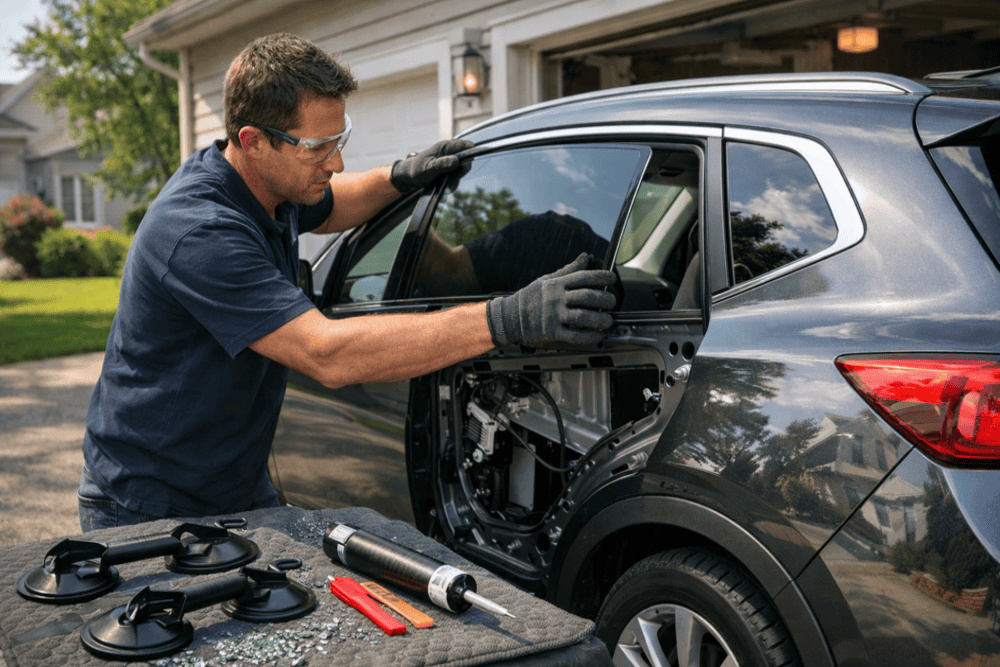
Guide for DIY Rear Side Window Replacement
Broken or broken rear-side glass is not only unsightly, but it also poses a danger of weather-related damage and security issues. If you have the necessary equipment and a small bit of work, you can repair the window on your car yourself, even if hiring a professional to fix the glass may be more expensive. From the first step of gathering the necessary supplies to the last step of installing the new glass, this page will walk you through the whole process of replacing a rear side window on your own. You will be able to approach this repair with confidence, which will eventually save money.
Get An Auto Glass Replacement Quote Now 866.278.7417

Windshield Replacement & Repair
Our competitors push you into going to their shop to get your glass fixed-making it cheaper for them. We make it easier for YOU to get back on the road by offering free mobile repairs at your home or work. With our free mobile services servicing the entire Orange County & Los Angeles area, we can often handle your windscreen replacement the same day! So the next time you need a windshield replacement, give us a call.
Talk to a Windshield Replacement Specialist Now 866.278.7417

Calibration
Calibration is the process of returning a vehicle’s ADAS to OEM specifications. Calibration is necessary after a new glass installation, particularly a windshield with a camera mounted to it, to ensure that the ADAS features continue to function properly despite having been moved during installation. If a car’s ADAS is not properly calibrated, the system may not function safely. A misaligned camera could jeopardize the functionality of the system and lead to dangerous driving or accidents, so it is crucial that the cameras are aligned perfectly, which is what windshield calibration ensures.
Talk to a Calibration Specialist Now 866.278.7417

Fleet Auto Glass Repair
We provide expert auto glass repair and windshield replacement services for commercial fleets of all sizes. We are experienced with all manufacturers and machine types of domestic or foreign cars, trucks, vans, or commercial vehicles, including heavy equipment. Our same day mobile auto glass and windshield repair service will enable you to get back on the road faster and start saving you time and money instantly. Give us a call today! We are here to help!
Talk to a Fleet Auto Glass Specialist Now 866.278.7417
Why Replace Your Rear Side Window Yourself
Depending on the make and model of your car, professional auto glass services usually cost $200 to $500 to repair the rear side window. You may save a lot of money by doing it yourself, usually only paying for the glass and other materials.
In addition to saving money, doing your own replacement allows you to get a practical understanding about your car. You’ll become less dependent on mechanics for little repairs as you acquire talents that you can use for future repairs.
What You Will Need:
Prior to beginning, collect the necessary equipment and supplies: Instruments:
Phillips and flathead screwdrivers
Plastic pry bars or tools for removing trim
The vacuum cleaner
Glass scraper or utility knife
Protective eyewear and safety gloves
Hair dryer or heat gun (optional, for removing glue)
Resources:
OEM or aftermarket rear side window replacement
Butyl tape or automotive glue
Cleaner for glass
Cloths made of microfiber
Tape for masking
Verify that the new window fits the specs of your car. To discover the right glass online or at an auto parts shop, look up the year, make, and model of your vehicle.
The inside trim panel should be removed. The first step is to remove the inside door panel or trim in order to get access to the window.
Find and remove any screws or clips that are holding the panel in place first. These are often concealed within door handle recesses or behind tiny plastic coverings. Gently peel these covers off with a trim removal tool or flathead screwdriver.
After removing the screws, gently remove the panel from the door frame. To prevent breaking any clips, work gently. The panel may feel stuck, so check again for any concealed fasteners. Place the panel aside in a secure location to prevent damage.
Clear the Broken Glass: During this process, safety is very important. Before handling any glass, put on safety goggles and gloves.
To get rid of loose shards from the door chamber and its surroundings, use a vacuum cleaner. Be meticulous since tiny fragments may conceal themselves in confined areas and lead to future injuries.
Use a tool knife or glass scraper to gently remove any tough pieces that have adhered to the frame or glue. Make sure the frame is totally free of dirt and old glass by taking your time. To get rid of any last bits of dust or debris, use a microfiber cloth to clean the window frame.
Remove Old Adhesive and Prepare the Frame
Before the new window is installed, the old butyl tape or glue must be taken off. Use a hair dryer or heat gun to soften the glue if it is tough and challenging to scrape off. To prevent causing damage to the paint or plastic, shift the heat source back and forth while keeping it a few inches from the surface.
Use a utility knife or scraper to remove the glue when it has softened. To prevent scratching the frame, work cautiously.
Use a microfiber cloth and glass cleaner to give the frame a thorough cleaning after removing all of the old glue. To guarantee a good connection with the new glass, the surface has to be clean and smooth.
In the new window, apply the adhesive: The new window has to be ready for installation. Place the replacement window on a spotless, level surface. Following the thickness and positioning guidelines provided by the manufacturer, apply a continuous bead of butyl tape or automotive adhesive around the glass’s perimeter.
Make sure the adhesive is made for automobile glass if you want to use it. Vehicles encounter vibrations and temperature fluctuations that ordinary home adhesives cannot withstand. Adhesive is pre-applied on certain replacement windows. Before installing, just take off the protective backing if that’s the case.
Do you have a Question?
Get An Auto Glass Replacement Quote Now 866.278.7417
Put the New Window in Place
This stage calls for accuracy and a steady hand. Place the new window into the door frame after carefully lifting it. Make sure it rests flush on all sides by aligning it with the frame’s boundaries.
To guarantee that the glue adheres correctly, push the window firmly into position, evenly exerting pressure around the edges. If you’re working alone, temporarily secure the window in place while the glue cures using masking tape.
Before allowing the glue to set, make sure everything is aligned correctly. It’s considerably harder to change the window after it’s established.
Give the adhesive time to cure. Although certain fast-setting adhesives may cure faster, automotive glue normally takes 24 to 48 hours to completely cure. For precise curing periods, see the product’s instructions.
Do not operate the car or roll down any windows during this time. If at all possible, park the vehicle in a dry, protected spot to avoid moisture getting in the way of the glue. If the window was held in place using masking tape, keep it on until the glue has completely cured.
Put the inside trim panel back in place: It’s time to reassemble everything when the glue has dried.
Gently push the trim piece into position after aligning it with the door frame. Before you replace any screws, make sure all the clips snap in place.
To make sure everything works correctly, try the window controls and door handle and replace any plastic coverings you previously removed. To get rid of any smudges or fingerprints, give the window one last wipe-down with glass cleaner.
Advice for an Effective Do It Yourself Replacement
Work in an environment that is clean and well-lit. You can see concealed screws, clips, and detritus that could otherwise go missed if you have good illumination.
While disassembling, take pictures. As you remove the hardware and trim panel, take photographs of each step. When everything is put back together, these pictures will be a useful guide.
Don’t hurry things along. The key is patience. Errors like misplaced glass or broken trim panels might result from rushing.
Before you drive, check the seal. Check for leaks by misting the window’s edges with water after the glue has dried. Apply more glue and let it cure again if you see any gaps.
When to Contact an Expert: Although most individuals can replace their rear side windows on their own, there are several circumstances in which hiring a professional is preferable.
If your car includes sophisticated safety systems like rain sensors built into the windshield or blind-spot monitoring, installation calls for specific training and calibration. If you do this yourself, you can end up with broken systems.
In a similar vein, before replacing the glass, a specialist must inspect and fix any damage or bends in the window frame. Lastly, a professional service guarantees the task is done properly and safely if you’re uncomfortable dealing with adhesives or don’t have the required gear.
Return to the Road: Changing your rearview window doesn’t have to be costly or difficult. You may save hundreds of dollars by doing this repair yourself if you have the proper equipment, supplies, and a systematic approach.
Take your time, pay close attention to each step, and don’t be afraid to seek help from other sources if you need it. When the work is over, your car will be safe and road-ready once again, and you’ll feel good about doing it yourself.
Common Errors to Steer Clear of
Although changing a side window may seem simple, it’s surprisingly simple to do it incorrectly. Understanding what may go wrong will help you save time, money, and aggravation whether you’re hiring a professional or doing it yourself.
Inadequate side window replacement may result in diminished structural integrity, wind noise, water leaks, and potentially safety risks. Minor mistakes made during installation, such as using the incorrect glue or neglecting to properly prepare the surface, might later result in expensive repairs.
This post explains seven typical errors people make while replacing side windows and explains how to prevent them. Whether you’re managing a professional project or performing the work yourself, you’ll know precisely what to look out for at the end.
Using the Incorrect Kind of Glass: Glass for cars is not all made equal. Typically, side windows are composed of tempered glass, which breaks in an accident into tiny, comparatively innocuous fragments. Laminated glass, which keeps together when damaged, may be used in place of glass in certain vintage cars or particular models.
Installing the incorrect kind of glass jeopardizes safety and could not comply with local regulations. Check the precise requirements for the make, model, and year of your car before buying a new window. Seek advice from a qualified car glass expert or refer to your owner’s handbook.
What to do in its place: Always check the glass type against the criteria provided by the manufacturer of your car. Before placing an order for a new window, get an expert to examine the current one if you’re not sure.
Ignoring Surface Preparation
Proper preparation is the first step toward proper adhesion. Cleaning and priming the window frame before installation is something that many do-it-yourselfers speed through or entirely neglect. Rust, dampness, dirt, and leftover adhesive all hinder the proper bonding of fresh glue.
Your window may seem secure at first but may eventually loosen if the surface is not properly prepped. This leaves spaces for wind noise and water to enter, and in extreme situations, the window may come off while you’re driving.
What to do in its place: Use isopropyl alcohol or a specialist glass cleaner to give the window frame a thorough cleaning. Use a wire brush or scraper to get rid of any remaining adhesive residue. Before continuing, apply a rust converter to any visible rust. For optimal adherence, use the primer that the manufacturer recommends.
Selecting the Incorrect Adhesive: Adhesive for automotive windows is not a universally applicable product. Depending on variables like window size, vehicle type, and ambient conditions, various cars need different adhesive formulas. It’s a recipe for trouble to use general-purpose glue or silicone from the home.
The proper adhesive sustains the vehicle’s crash integrity, offers structural support, and is resistant to vibrations and temperature changes. The incorrect one may not work for weeks or even days.
The alternative is to use adhesives made especially for installing glass in automobiles. Observe the guidelines provided by the manufacturer for your particular vehicle type. Keep an eye on cure timeframes; some adhesives set more quickly than others, and others need a full day to cure before the car is safe to drive.
Neglecting the Appropriate Curing Time
In relation to cure timeframes, impatience is problematic in this situation. It takes time for contemporary urethane adhesives to dry completely and become as strong as possible. If you drive the car too quickly, the connection may be broken and the glass may move or leak.
Curing time is also influenced by environmental conditions. While chilly temperatures slow down the process, high humidity speeds it up. If you rush this phase, all of your hard planning will be for nothing.
What to do in its place: For suggested cure times, see the glue manufacturer’s specs. If you’re working in frigid weather, allow additional time. Wait until the glue has completely dried before removing the supports or masking tape. Make sure you schedule your replacement project so you won’t need the car right away.
Incorrect Window Alignment: For a side window to properly seal, it must be flush with the vehicle’s body. Water leaks, early adhesive breakdown, and continuous wind noise may all result from even a little misalignment of a few millimeters.
Rushing the installation or failing to use the right support during the curing process are common causes of alignment problems. Repositioning without starting over becomes difficult or impossible after the glue begins to harden.
What to do in its place: To find any alignment problems, dry-fit the glass before applying glue. Mark the proper location using masking tape. Use spacers or supports to keep the window in the correct place while the glue sets, and work cautiously while applying the adhesive. Periodically take a step back to examine alignment from various perspectives.
Do you have a Question?
Get An Auto Glass Replacement Quote Now 866.278.7417
Neglecting the Weatherstripping
A lot of side windows include rubber weatherstripping, which adds another layer of protection from the weather. Weatherstripping that is outdated, broken, or incorrectly installed can compromise even a well-installed window.
Over time, weatherstripping deteriorates as a result of regular wear, temperature fluctuations, and UV exposure. When installing a new window, it is a false economy to reuse existing weatherstripping, which usually results in leaks and drafts.
What to do in its place: Before installing, thoroughly inspect the weatherstripping. Keep an eye out for any tears, cracks, hardness, or loss of pliability. If its condition is uncertain, replace it. Make sure there are no overlaps or gaps in the new weatherstripping when it is installed.
Forgetting to Test for Leaks
When the glue hardens, the installation process is not finished. One crucial mistake is not checking the window for leaks before declaring the work finished. Water damage may occur gradually, and by the time you discover it, rust or mold may have already taken hold.
Instead, do a comprehensive leak test when the glue has completely dried. Water should be sprayed around the window’s perimeter using a garden hose, moving up from the bottom. Look for any indications of water seeping inside. Run the test from several perspectives for a few minutes. Before using the vehicle in wet weather, locate any leaks and seal them up as needed.
Make the first time right: The proper materials, patience, and attention to detail are necessary when replacing a side window. All of the errors listed here may be avoided with careful preparation and implementation.
Take your time and don’t skimp if you’re doing this job yourself. Use this information to guarantee high-quality work and ask knowledgeable questions if you’re hiring a professional.
You should be safe, dry, and comfortable while driving for years to come with a properly placed side window. Keep in mind that it will always be less expensive to spend a little more for high-quality materials and take more time for a thorough installation than to have to redo the whole work.
Mobile Safe Auto Glass
14241 E Firestone blvd suite 400,
La Mirada, CA 90638
Phone: (562) 608-1154
Toll Free: 1 866 278 7417
Mail: sales@mobilesafeautoglass.com
Get a FREE QUOTE today! You can get a free quote and schedule 24/7 using this free quote wizard.
Mon – Fri 8am – 5pm
Saturday 8am – 1pm
Sunday Closed