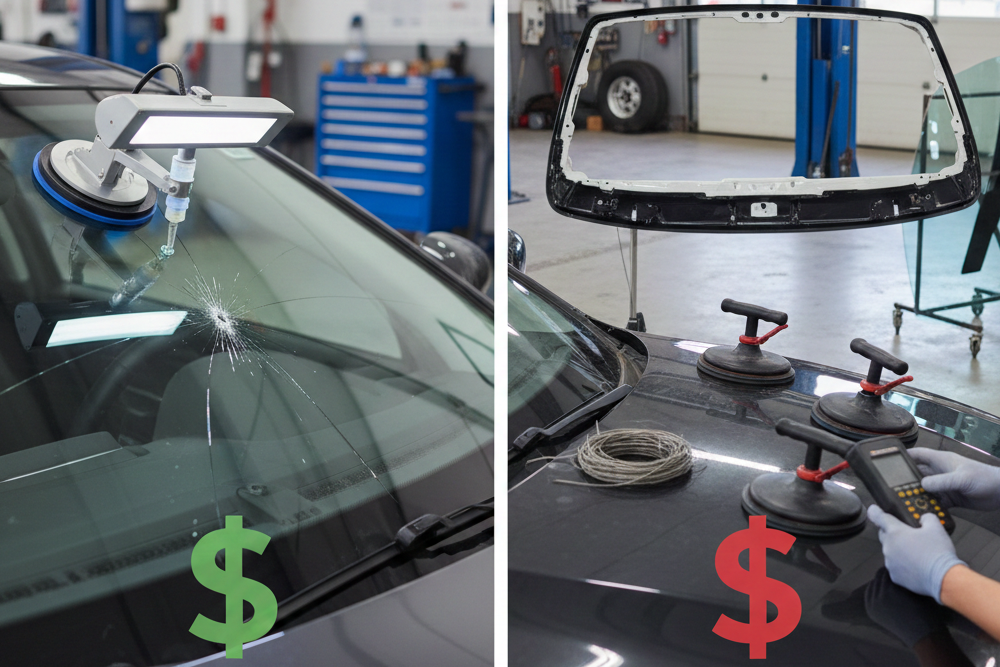
Crack Repair vs Replacement Cost Breakdown
Any homeowner would be horrified to discover a fracture in the concrete slab or foundation of their house. The worst-case scenario is frequently assumed right away, whether it’s a spiderweb fracture on the garage floor or a jagged line running up your basement wall: structural catastrophe and financial devastation. But panic rarely makes an effective project manager. Often, the reality is less dire than you might think. Some fissures are simply the aesthetic outcome of settling or shrinking, while others are a sign of more serious structural problems. There is a significant price difference—often tens of thousands of dollars—between tearing out a foundation and patching a fissure. Knowing which flaws can be fixed and which need to be replaced is vital for your budget.
Get An Auto Glass Replacement Quote Now 866.278.7417

Windshield Replacement & Repair
Our competitors push you into going to their shop to get your glass fixed-making it cheaper for them. We make it easier for YOU to get back on the road by offering free mobile repairs at your home or work. With our free mobile services servicing the entire Orange County & Los Angeles area, we can often handle your windscreen replacement the same day! So the next time you need a windshield replacement, give us a call.
Talk to a Windshield Replacement Specialist Now 866.278.7417

Calibration
Calibration is the process of returning a vehicle’s ADAS to OEM specifications. Calibration is necessary after a new glass installation, particularly a windshield with a camera mounted to it, to ensure that the ADAS features continue to function properly despite having been moved during installation. If a car’s ADAS is not properly calibrated, the system may not function safely. A misaligned camera could jeopardize the functionality of the system and lead to dangerous driving or accidents, so it is crucial that the cameras are aligned perfectly, which is what windshield calibration ensures.
Talk to a Calibration Specialist Now 866.278.7417
Fleet Auto Glass Repair
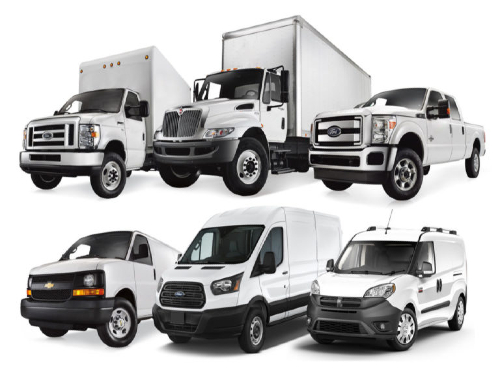
We provide expert auto glass repair and windshield replacement services for commercial fleets of all sizes. We are experienced with all manufacturers and machine types of domestic or foreign cars, trucks, vans, or commercial vehicles, including heavy equipment. Our same day mobile auto glass and windshield repair service will enable you to get back on the road faster and start saving you time and money instantly. Give us a call today! We are here to help!
Talk to a Fleet Auto Glass Specialist Now 866.278.7417
Not Every Crack Is the Same
You must know what you are looking at before you open your wallet. The ground beneath the concrete moves, despite the concrete’s rigidity. There will inevitably be some cracking.
Cracks in the hairline: Typically, the width of these small cracks is less than 1/16 of an inch. They frequently show up as the concrete hardens and shrinks soon after it is put. These are usually aesthetic problems that don’t jeopardize the house’s structural soundness.
Cracks in Settlement: Your house settles as the soil beneath it compresses. Concrete will crack and endure stress if the settling occurs unevenly. These may be diagonal or vertical. Although they require maintenance to stop water leaks, they are frequently fixed.
Cracks in the Structure: These are the warning signs. Significant pressure from the surrounding soil is indicated by horizontal foundation wall cracks, cracks larger than 1/8 inch, or cracks where one side of the wall protrudes past the other. These necessitate prompt professional assessment and frequently more costly solutions.
The Price of Repair: Repair is nearly always the most economical option when concrete is fractured but structurally intact. Re-bonding the concrete and protecting it from moisture are the objectives here.
Injections of Epoxy and Polyurethane
Injection is the industry standard for vertical fissures in walls made of poured concrete.
Epoxy: This substance cures more firmly than concrete. It successfully “welds” the wall back together, giving it structural integrity again.
Polyurethane: This foam stays flexible while expanding to fill the space. It is perfect for keeping water out of cracks that may move a little.
Each fracture is expected to cost between $300 and $800. It is more cost-effective to fix three cracks at once rather than calling the contractor out three times because most of them have a minimum visit fee.
Straps made of carbon fiber. Injections are insufficient if a wall has a structural crack and is starting to bow slightly inward. You require support. Vertical carbon fiber straps are epoxied onto the wall to secure it and stop it from moving. Compared to steel beams, they are less intrusive and extremely sturdy.
Each strap is expected to cost between $400 and $700. Depending on the degree of bowing, a normal wall may need four to six straps.
Poly-Leveling and Mudjacking: It is not always necessary to repair concrete if the soil beneath your concrete slab (such as a patio or driveway) has washed away and caused cracks. You must make the support better. To raise the concrete back to level, “slab jacking” entails pumping a slurry or foam underneath it.
For a typical project, the estimated cost is between $900 and $2,500. Compared to tearing out the concrete and pouring new slabs, this is much less expensive.
Do you have a Question?
Get An Auto Glass Replacement Quote Now 866.278.7417
The Price of Replacing
Replacing is the most cost-effective option. It is costly, time-consuming, and disruptive. Sometimes, though, concrete is too fractured, pitted, or degraded to support a restoration. Patching won’t solve the issue if the cement paste is crumbling and the aggregate is visible.
Concrete Slab Replacement: Jackhammering the old concrete, removing the debris, compacting the soil, and pouring new concrete are the steps involved in replacing driveways, patios, or garage floors.
$6 to $15 per square foot is the estimated cost. For a typical 600-square-foot two-car driveway, this comes to between $3,600 and $9,000. The thickness of the slab, local labor costs, and the need for reinforcement, such as rebar, all affect this cost.
Replacement of Foundation Walls: This construction job is quite large. A foundation wall needs to be excavated from the outside if it has fully failed (extreme bowing or collapse). A new wall must be poured or constructed with blocks, the old wall must be destroyed, and the home must be shored up (temporarily supported).
Cost estimate: between $20,000 and $60,000. This price includes excavation, engineering costs, permits, and landscaping restoration. The task is extensive and usually requires several weeks to complete.
A Comparative Analysis of Prices
Here is a summary of typical situations that homeowners encounter to illustrate the cost impact.
Problem
Method of Repair
Est. Cost of Repair
Method of Replacement
Est. Cost of Replacement
Leaking Crack in the Basement
Injection of Urethane/Epoxy
Between $400 and $800
Waterproofing and Wall Excavation
Between $5,000 and $15,000.
Basement Wall Bowing
Straps made of carbon fiber
Between $3,000 and $5,000
Complete Wall Restoration
Between $20,000 and $40,000.
Section of the Sunken Driveway
Poly-lifting/mudjacking
Between $1,000 and $2,000
Dismantling and New Pour
Between $4,000 and $8,000
Garage Floor Cracks
Epoxy coating or resurfacing
Between $1,500 and $3,000.
Take out and replace the slab.
Between $3,500 and $6,000.
Elements That Affect Your Quotation
Although the figures above represent national averages, your exact quote will vary depending on various factors.
Accessibility: Is it possible for the contractor to bring their equipment to the site? For a patio pour, they must wheelbarrow it in if a concrete truck cannot get to your backyard, which raises labor costs. In a similar vein, you will be responsible for the cost of demolishing and remodeling the interior wall in the basement if your foundation crack is concealed by finished drywall.
Geographical Features and Soil Properties: The labor rates in rural Ohio and New York City are very different. Your soil type is also important. Compared to sandy soils, heavy clay soils expand and contract considerably, necessitating more reinforcement for both replacements and repairs.
Engineering and Permits: Simple crack injections rarely need permits. However, a building permit and a structural engineer’s inspection are nearly always necessary for structural work, including carbon fiber, underpinning, or replacement. The cost of an engineer’s report alone might range from $500 to $1,000.
When Is It Time to Do It Yourself: Patch kits and tubes of concrete repair caulk are available in the hardware shop. Are they worthwhile?
A do-it-yourself patch is ideal if you have a small hairline crack in a horizontal surface, such as a patio or sidewalk. It prevents weeds from sprouting and enhances the appearance.
But it’s dangerous to try to fix a foundation wall yourself. Most of the time, over-the-counter sealants are merely surface-level. They don’t reach the crack’s entire depth. The repair won’t work if the wall shifts once more. Even worse, using a shallow patch to hide a fracture makes it more difficult for a professional to inject it correctly afterward, which could increase the final repair’s cost.
Commonly Asked Questions: Will foundation repair be covered by insurance? Generally, ordinary homeowners insurance policies do not cover foundation damage resulting from settling, earth movement, or subpar design. However, coverage might be applicable if the crack was brought on by a covered risk, such as an explosion or a plumbing flood. Always verify your particular policy.
What is the duration of repairs? An epoxy injection done correctly is irreversible. The strength of the concrete is not as great as the strength of the relationship. Typically, subsequent owners pass on lifetime or extended warranties to carbon fiber straps, thereby increasing their resale value.
Does a mended crack impact resale value? Unfixed cracks undoubtedly lower a property’s resale value. A mended crack, a transferable warranty, and an engineer’s approval demonstrate the home’s maintenance history. While a brand-new slab may appear the best, most house inspectors and purchasers will accept a certified expert repair.
Selecting the Best Option for Your House
Structural necessity, not taste or apprehension about the future, should almost always be the deciding factor when choosing between repair and replacement. Repair is usually the most cost-effective course of action if the damage is restricted to a stable crack and the concrete is still structurally sound.
In contrast to complete replacement, modern repair techniques like epoxy or polyurethane injections are quick, minimally intrusive, and significantly less disruptive. For a fraction of the price of more involved work, they typically restore the structure’s integrity while keeping moisture out.
Conversely, complete replacement ought to be saved for circumstances in which the concrete has failed structurally or has reached the end of its useful life. Widespread cracking, substantial displacement, bowing walls, or continuous water penetration that repairs are unable to stop are indicators of this. In these situations, replacement is required to prevent increasing deterioration in the remaining structure, not an update.
Stay calm if you see a crack, but pay attention to it. Monitor it first. Measure the breadth, snap a picture, and return in a few weeks or a month. Unaltered cracks are frequently cosmetic or the consequence of natural settling. Cracks that enlarge, develop, or let moisture in are indicators that the underlying problem might be getting worse.
It is advisable to contact a foundation specialist for a professional assessment if you notice any changes or if you are planning a large project, such as finishing your basement. If you discover an issue early, a simple $500 crack injection could prevent a later $50,000 excavation or structural rebuild. It’s important to take prompt action regarding foundations to preserve your property’s long-term stability and worth, not only to save money.
Is the Risk of Your Cheap Auto Repair Really Worth It
Everybody has been there. You’re standing at the mechanic’s counter, staring at an estimate that makes your stomach turn, and you can smell the rubber and grease in the air. The sum is twice as much as you anticipated.
Your mind starts searching for alternatives right away. Can you wait another month before replacing the brake pads? Does that suspension work need to be done now? Ask your neighbor who “knows cars” to look at it, or see if you can find a cheaper part online.
There is a strong incentive to cut costs on auto repairs. Budgets are limited, and spending $1,000 on a device that only transports you from one place to another frequently feels like throwing money into a void. But it’s not as simple as comparing invoices when it comes to auto maintenance. Risk is a variable that is hidden in the equation.
Cutting corners may temporarily improve your financial account, but it usually results in a debt that must be paid back later, sometimes with interest and other times with your safety. Every car owner must be aware of the trade-off between current savings and potential risks.
The Deceit of Immediate Savings: You are basically playing against physics when you choose to put off maintenance or do a poor repair to save money. The immediate benefit is obvious: you keep your money. However, the possible punishment is frequently ambiguous and simple to overlook until it materializes.
Think about tires. The cost of a good set of four tires might easily exceed $800. You might save that $800 today by purchasing old tires or by pushing your current pair of tires over their safe tread depth. You may not notice the difference on a sunny, dry road. However, that savings estimate quickly changes when you come across a patch of standing water on the highway. Millimeters of rubber tread are frequently the difference between hydroplaning into a guardrail and grabbing onto the asphalt.
This circumstance is known as the “deferred maintenance trap.” The dependability and security of your car actually secures the loan, despite the apparent savings.
Cosmetic Fixes vs. Critical Systems
Not every auto repair is equally important. Making the distinction between issues that impact your comfort and those that impact your survival is vital.
You run the danger of being hot and unpleasant on your commute if your air conditioner compressor malfunctions. You may have to open the door to pay a toll if your electric window motor burns out. These are annoyances. There is almost no safety risk when saving money by utilizing inexpensive parts or neglecting these problems.
However, you should never jeopardize the “safety triangle” of your car—braking, steering, and stability.
The Braking Mechanism: As consumables, brake rotors and pads are made to wear out. Choosing the least expensive brake pads frequently leads to components that make noise, emit a lot of dust, or fade quickly in hot conditions. Even more hazardous is the potential for catastrophic failure if grinding sounds or a “soft” brake pedal are ignored. It doesn’t matter what else you do if you can’t stop. The responsibility of a rear-end collision is far greater than the few hundred dollars saved on a brake job.
Suspension and steering: Your suspension maintains your tires’ contact with the road in addition to mitigating bumps. When performing emergency maneuvers, a vehicle with worn shocks or struts becomes unstable and requires more stopping distance. A weakened suspension could result in you losing all control if you have to swerve to avoid a deer or a distracted motorist.
Visibility: Headlights and windshield wipers are frequently disregarded. Purchasing the least expensive wiper blades may seem like a beneficial idea until you are unable to see the road lines at night due to a heavy downpour. This instance is an excellent illustration of a low-cost product with a significant safety impact.
Neglect’s Domino Effect: In addition to the immediate safety hazards, “saving” money by neglecting minor issues frequently results in expensive repair expenses down the road. Automobiles are intricately linked systems. Other sections are frequently stressed when one fails.
For instance, consider the cooling system. It may appear like you can handle a minor coolant leak by just filling up the reservoir once a week. A new water pump or radiator is costly; a bottle of coolant is inexpensive. However, your engine may overheat if that leak suddenly gets worse when you are delayed in traffic.
A head gasket blow or cylinder head warping might result from an overheated engine. A large engine overhaul or replacement now costs several thousand dollars, whereas a hose or pump used to cost a few hundred dollars. That “saving” you made at the beginning has now cost you ten times as much.
Engine damage is also accelerated when a basic oil change is neglected to save $50. Sludge accumulates, oil channels clog, and essential parts run out of lubricant. The damage is irreparable by the time the engine begins to make noise.
Do you have a Question?
Get An Auto Glass Replacement Quote Now 866.278.7417
An Analysis of the Cheap Fix
Many car owners are using “backyard mechanics” or do-it-yourself fixes in the era of online instructions to save money. Learning how to take care of your car is perfectly acceptable, but it’s important to know your limits.
One excellent method to save money is to replace a battery or air filter. Attempting to replace a wheel bearing or timing belt without the necessary equipment and expertise can lead to disastrous outcomes. As soon as you turn on the engine, a poorly installed timing belt could potentially damage it. At highway speeds, a wheel may come off due to a loose wheel nut.
Consider the following before trying a repair or paying an unlicensed mechanic to do it for you: Do I have the appropriate equipment? Bolts can be stripped and pieces left loose when pliers are used in place of a wrench.
Am I aware of the dangers? What happens if this repair doesn’t work while I’m driving? Is a warranty in place? Reputable shops provide job guarantees. They fix any parts that break. You pay twice if your do-it-yourself remedy doesn’t work.
How to Make Safe Savings: You don’t have to incur high costs for every repair simply because you understand the risks. There are clever, secure methods to lower car ownership expenses without putting you or other people in danger.
OEM vs. Aftermarket Parts: The car’s maker produces Original Equipment Maker (OEM) parts, which are typically the priciest. For a fraction of the cost, high-quality aftermarket parts manufactured by reliable third-party suppliers can frequently perform just as well. Research is crucial. Choose a well-known brand like Bosch, Denso, or Moog over the dealership item, but stay away from the cheapest “white box” parts without a brand name.
Preventive Upkeep: This is the most efficient method of saving money. You can avoid the huge, unexpected costs that push you to take shortcuts by spending a small amount on a regular basis. Regular inspections, filter replacements, and fluid changes detect problems early on, allowing for easy and affordable repairs.
Second Views: Seek a second opinion if a quote seems excessive. The labor rates and diagnostic methods used by mechanics differ. While one mechanic may know how to fix only the damaged part, another may recommend replacing the complete assembly.
Put Safety First: Ask your mechanic to prioritize your large list of repairs if you have a tight budget. A competent mechanic will advise you to fix the brakes right now and put off fixing the oil leak for another month. Be honest with yourself: “I have $500 to spend right now. Could you please advise on what is essential to ensure the safety of this car?
The Importance of Mental Calm: The ultimate aim of car ownership is mobility and independence. Constantly worrying about whether your car will start, stop, or hold together diminishes your independence.
Peace of mind has a measurable worth. You can concentrate on the road and the destination, knowing that your family is traveling in a car that is in excellent mechanical condition. Consider the cost of stress when calculating the cost of a repair. Is the worry of hearing odd sounds every time you apply the brakes worth saving $200?
When examining a repair bill, it is easy to perceive it solely as a financial loss. Try to change your viewpoint. Reliability is what you are buying. You’re buying security. You are investing in the guarantee that your car will fulfill your requests at the precise moment you need it to.
Making the Wise Decision
There is no denying that cars are costly. Owning a car might feel like a continual financial burden because of the costs associated with gas, insurance, upkeep, and unforeseen problems.
Although it’s normal to search for ways to save expenses, considering safety to be an optional luxury is a tactic that rarely works out in the long term. That decision’s repercussions are usually costly and harsh, and they frequently appear when you least expect them.
The next time you’re looking at a large repair estimate, take a moment to consider your options before deciding on the quickest or least expensive way out. Please take a moment to carefully review the line items.
Determine which repairs are directly related to the car’s ability to stop, steer, protect, and react in an emergency, and which are more for convenience or aesthetic reasons. Understanding that not all repairs are equal can assist you in making more informed decisions during stressful situations.
Compromise makes sense in many situations. You can put up with a blemish in the bumper that doesn’t impede performance, a finicky radio knob, or worn interior trim. Although those problems could be inconvenient, they have no bearing on whether the vehicle will keep you safe in an accident, a storm, or an abrupt halt.
Airbags, windshields, steering elements, brakes, tires, and driver-assistance technologies are all considered safety systems. The investment is particularly important when it comes to the systems that are meant to keep you, your passengers, and other road users safe.
Taking shortcuts when it comes to safety frequently results in unintended consequences that cannot be reversed by savings, such as higher risk, more frequent failures, or higher long-term repair costs. On paper, the bargains you find in the bargain bin could seem wonderful, but in practice, they might cost far more than you had planned to spend.
Mobile Safe Auto Glass
14241 E Firestone blvd suite 400,
La Mirada, CA 90638
Phone: (562) 608-1154
Toll Free: 1 866 278 7417
Mail: sales@mobilesafeautoglass.com
Get a FREE QUOTE today! You can get a free quote and schedule 24/7 using this free quote wizard.
Mon – Fri 8am – 5pm
Saturday 8am – 1pm
Sunday Closed