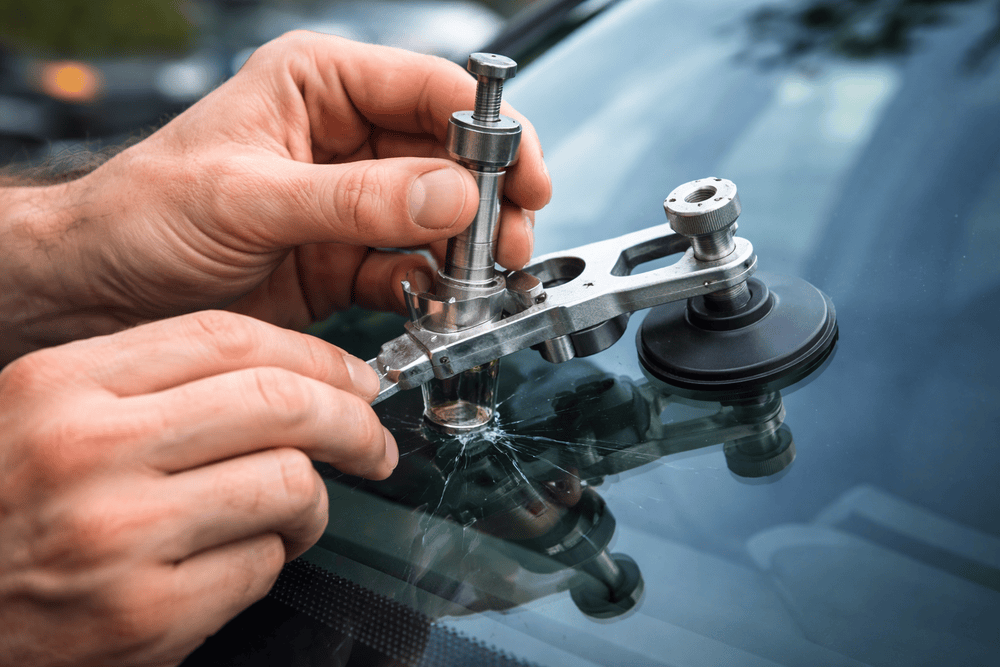
At Home Car Windshield Repair in Cold Winters
Driving in the cold brings with it a certain type of fear. You are scraping ice off your vehicle in the dreary morning light, your breath fogging in the air, when you notice it. A tiny, angular star on your windshield. Perhaps it was struck yesterday by a pebble that a snowplow churned up, or maybe heat stress finally caused a tiny chip to become noticeable. The worst season for windshield damage is winter. A dime-sized chip may become a spiderweb break over your whole field of vision in a matter of minutes due to a tug-of-war on the glass caused by the combination of cold outside temperatures and blasting interior heaters.
Get An Auto Glass Replacement Quote Now 866.278.7417

Windshield Replacement & Repair
Our competitors push you into going to their shop to get your glass fixed-making it cheaper for them. We make it easier for YOU to get back on the road by offering free mobile repairs at your home or work. With our free mobile services servicing the entire Orange County & Los Angeles area, we can often handle your windscreen replacement the same day! So the next time you need a windshield replacement, give us a call.
Talk to a Windshield Replacement Specialist Now 866.278.7417

Calibration
Calibration is the process of returning a vehicle’s ADAS to OEM specifications. Calibration is necessary after a new glass installation, particularly a windshield with a camera mounted to it, to ensure that the ADAS features continue to function properly despite having been moved during installation. If a car’s ADAS is not properly calibrated, the system may not function safely. A misaligned camera could jeopardize the functionality of the system and lead to dangerous driving or accidents, so it is crucial that the cameras are aligned perfectly, which is what windshield calibration ensures.
Talk to a Calibration Specialist Now 866.278.7417

Fleet Auto Glass Repair
We provide expert auto glass repair and windshield replacement services for commercial fleets of all sizes. We are experienced with all manufacturers and machine types of domestic or foreign cars, trucks, vans, or commercial vehicles, including heavy equipment. Our same day mobile auto glass and windshield repair service will enable you to get back on the road faster and start saving you time and money instantly. Give us a call today! We are here to help!
Talk to a Fleet Auto Glass Specialist Now 866.278.7417
Why Auto Glass Is Brutal in the Winter
Before undertaking a repair, it is vital to understand why winter provides such a harsh environment for your windshield. Glass expands when heated and shrinks when cold. In the winter, the glass shrinks, becoming more brittle and less flexible.
When you blast your defroster, you are delivering quick heat to the interior surface of the glass while the outside stays frigid. This generates thermal shock. If a chip has already compromised the structural integrity of the glass, this tension will undoubtedly lead to the spread of the damage.
Moreover, dampness silently destroys windshields. Water from melting snow or road sprays may enter the small fissures of a fracture. That water expands when it refreezes overnight. The glass is forced apart from the inside out by this internal pressure. Speed is your greatest defense.
The Challenges of Cold-Weather Resin: The biggest difficulty with DIY kits in winter is the viscosity of the resin. Most windshield repair kits use a specific type of acrylic resin that cures under ultraviolet (UV) light.
In warm weather, this resin flows effortlessly like water, filling every small gap in the crack. In cold conditions, the resin turns thick and syrupy. If the resin is too thick, it won’t penetrate the whole depth of the chip. Even if you seal the surface, the air pocket beneath will still exist.
The air pocket leaves a weak place that will likely break again whenever the temperature varies. To create a professional-quality bond, you have to adjust the temperature of both the glass and the repair materials.
Managing the Temperature
You cannot fix a windshield that is coated with ice or resting at 10°F (-12°C). Success hinges on preparedness.
Dry the Area Completely: Moisture is the enemy of adhesion. If there is any ice or water within the chip, the resin will not attach to the glass. To gently dry the region, use a hairdryer rather than a heat gun.
The heat will remove any trapped moisture. Prior to repair, avoid cleaning the area with windshield washer fluid, as it may remain in the crack. Use a dry paper towel or a prep pad from the package.
Warm the Windshield (Carefully): You need to reach the glass temperature between 60°F and 90°F (15°C – 32°C). This is the ideal temperature range where the glass remains stable and the resin flows properly.
Defroster Method: Turn on your automobile and set the defroster to medium-low. You want to warm the glass gradually. Blasting tremendous heat into frozen glass may shatter it instantaneously.
Hair dryer Method: Use a hairdryer from the interior of the automobile, directly at the damage. To prevent a hot area, keep the dryer moving. Check the temperature with your hand on the exterior of the glass. It should feel warm to the touch, not hot.
Warm the Resin: Keep your windshield repair gear out of the chilly automobile. Keep the resin bottle in your pocket or inside your residence until the very last second. Keeping the fluid heated ensures it stays thin enough to go into the injury.
Do you have a Question?
Get An Auto Glass Replacement Quote Now 866.278.7417
Detailed Guide to Winter Repairs
Once you have handled the temperature and moisture, the actual repair procedure is identical to summer repairs, but with tighter scheduling.
Clean Up Loose Glass: Take the safety razor blade given in your kit (or a push pin) and carefully scrape away any loose shards of glass from the center of the impact spot. This clears a passage for the resin to enter. Be careful; cold glass is fragile.
Set Up the Bridge and Injector: Mount the suction cup tool so the injector nipple is directly above the center of the chip. Make sure the injector is firmly in contact with the glass by screwing it down. In chilly weather, suction cups may be problematic. You may improve the rubber cup’s adherence to the chilly windshield by breathing on it or gently warming it.
Pressure and Injection: Fill the injector with the resin droplets. As you initiate the pressure cycle by screwing in the plunger, closely monitor the crack from the inside of the vehicle. Because the resin is thicker owing to the ambient cold, you may need to keep it under pressure longer than the instructions advise. Give the resin additional time to crawl into the tightest corners of the break.
Eliminating Air Bubbles: To relieve pressure and let trapped air escape, unscrew the plunger. This is the vacuum cycle. Repeat the pressure and vacuum cycles a few times. In winter, tenacious air bubbles adhere to the glass surfaces more securely. Multiple cycles guarantee a clean, transparent fill.
Curing with UV Light: This is the toughest aspect of winter restoration. UV radiation is lesser since the sun is lower in the sky and sometimes hidden by clouds. Ideally, use a specialist UV curing light if you have one.
As an alternative, park your vehicle such that it faces the sun. You will need to keep the curing film on substantially longer than in summer—wait at least 30 to 60 minutes to ensure the resin properly hardens.
Common Winter Mistakes to Avoid
Even with the greatest intentions, it is simple to make a mistake that destroys the windshield permanently. Never use boiling water. It is an online fallacy that you can de-ice a windshield with hot water. Pouring hot water on a frozen windshield will almost surely cause it to shatter instantaneously due to thermal shock.
Avoid applying too much pressure. Use a gentle touch while cleaning the pit or fastening the bridge. Cold glass has decreased tensile strength. A “runner”—a fracture that quickly extends from the chip to the glass’s edge—can result from being too forceful.
Don’t disregard the prediction. Wait until the following several hours if a storm or a lot of snow is forecast. You need a dry window of time. If snow falls over the curing resin, it might disrupt the chemical process.
Frequently Asked Questions: Can I patch a large fracture in the winter, or just chips? Generally, DIY kits are excellent for chips and “bullseyes” smaller than a quarter. Even in ideal circumstances, long cracks are difficult to fix at home. In winter, the structural load on a lengthy fracture renders DIY repair very prone to failure. For cracks greater than three inches, expert replacement is typically safer.
My resin won’t come out of the bottle. How should I proceed? The cold has caused the resin to gel. Place the sealed bottle in a basin of warm (not hot) tap water for five minutes. It will flow more easily as a result of the reduced viscosity.
Will the chip vanish completely? No remedy can completely erase the damage. The objective is to stabilize the glass and restore structural integrity. A successful repair generally clears up the defect by 80-95%, leaving just a tiny, faint patch where the impact happened.
Is it safe to use the defroster soon after repair? It is wise to wait. Let the repair dry and the windshield temperature stabilize for at least an hour before blasting the heat or the A/C. Rapid temperature fluctuations soon after repair might damage the freshly healed bond.
Don’t Let the Cold Win: Winter driving is stressful enough without gazing at a crack in your windshield that appears to get worse with every dip in temperature. While the cold adds a layer of intricacy to the mending process, it is not an insurmountable obstacle.
By managing the variables—specifically heat and moisture—you may produce a professional-grade repair in your driveway. The key is patience. Take the time to preheat the glass correctly, maintain your ingredients at room temperature, and allow for additional curing time. To save the hundreds of dollars required to replace a whole windshield, a few dollars for a kit and an hour of your afternoon is a little thing to pay.
Why the Cold Is Your Enemy
That piercing snap of a rock striking your windshield is a sound every motorist dreads. It’s an annoyance in July, but in January, that small chip indicates a far more complicated issue.
While your temptation may be to ignore it or slap a DIY patch on it, winter weather fundamentally modifies the laws of vehicle glass repair. In addition to being challenging, trying to repair a windshield while the temperature lowers may potentially exacerbate the damage if the proper safety measures aren’t taken.
The chemistry of the repair glue, the physical qualities of the glass, and the existence of concealed moisture all conspire against a successful repair. You may avoid the costly pain of a complete windshield replacement later on by understanding why low temperatures inhibit effective sealing.
The Physics of Cold Glass: You must first comprehend the thermal behavior of glass to comprehend why windshield repairs fail during the winter. Windshields are built of laminated glass—two layers of glass with a plastic layer (polyvinyl butyral) in between. Glass expands in hot weather and shrinks in cold weather, much like the majority of materials.
When your automobile is sitting outdoors in frigid weather, the glass shrinks. This causes the chip or fracture to tighten up. While such shrinkage may seem like a positive thing (making the fracture appear smaller), it is really a nightmare for repair work.
For a windshield repair to be effective, the glue must flow into every tiny crevice of the defect. If the glass has contracted and pressed the fracture shut, the resin cannot penetrate deep enough.
The underlying structural weakness persists even if the surface is sealed. That “repaired” chip might rip up into a huge spiderweb fracture as soon as the glass expands once again or the car strikes a bump.
Thermal Shock Danger
The way we warm up our autos is the other physical danger. We have all done it: gotten into a frigid vehicle and quickly blasted the defroster on high heat. The heat generates fast thermal expansion in select parts of the glass while the remainder stays cool.
This quick temperature shift exerts great stress on the windshield. If there is a chip—which is already a weak spot in the glass’s structural integrity—this heat shock is frequently the catalyst that converts a quarter-sized defect into a foot-long break quickly.
Why Resin Behaves Poorly in Winter: The repair substance itself is the second significant obstacle. Windshield repair resin is an acrylic acid that cures when exposed to ultraviolet (UV) radiation. Its efficiency depends greatly on its viscosity—essentially, how thick or runny the liquid is.
These resins are made by manufacturers to flow best at moderate temperatures, usually between 60°F and 90°F (15°C and 32°C). When the temperature dips below this range, the resin thickens dramatically.
Think of it like maple syrup. Syrup flows smoothly at room temperature. That syrup becomes thick and sluggish if it is frozen. Cold resin acts in the same manner. When a professional (or a DIYer) tries to inject this thicker glue into a chip, it faces too much resistance. It cannot wick into the delicate legs of the star break or the bottom of the bullseye.
The outcome is an incomplete fill. Inside the fix, air pockets get trapped. These trapped pockets provide internal pressure points that will ultimately lead to the repair failing because air expands and contracts differently than auto glass or resin.
Do you have a Question?
Get An Auto Glass Replacement Quote Now 866.278.7417
The Unseen Enemy
Temperature impacts more than just the glass and the adhesive; it also determines the ecosystem within the fracture. Winter conditions are nearly invariably accompanied by snow, sleet, or frost.
A chip in your windshield isn’t simply a depression; it’s a rough, jagged aperture. Moisture from the air, melting snow, or washer fluid readily seeps into this aperture. In cold conditions, this liquid might freeze within the crack.
One of the few materials that expands when it freezes is water. If water trapped deep within a chip freezes to ice, it works like a wedge, literally driving the layers of glass apart. This technique causes “micro-cracks” that are imperceptible to the human eye but structurally destructive.
Furthermore, you cannot put resin over water. Wet glass will not adhere to hydrophobic resins. If you try to fix a chip that has not been properly dried out—a tough operation when it is 20°F outside—the glue will just float on top of the moisture. Once the water evaporates, it leaves behind a void, and the patch will pop out or flake off.
Why DIY Kits Are Risky in December: Walk into any car parts shop, and you will find shelves of DIY windshield repair kits offering expert results for a few bucks. While they may be useful in optimum summer weather, deploying them in winter is frequently a risk with low chances. The majority of do-it-yourself kits lack the equipment needed to combat the cold. They lack:
Moisture evaporators: Professional technicians use particular instruments to heat the glass gently and remove hidden moisture before adding resin.
Viscosity modifiers: Professionals frequently have access to multiple resin formulas suitable for lower temperatures.
UV curing lamps: Winter days are shorter and typically cloudy, meaning there is less natural UV light to cure the resin. If the resin doesn’t cure entirely, it stays weak.
Without this equipment, a DIY repair in the cold is likely to result in a surface-level patch that looks acceptable for a week but fails the next time you hit a pothole.
How to Handle Damage in Cold Weather
If you find yourself with a chipped windshield in the midst of winter, you don’t have to wait for spring to replace it. In fact, waiting is the worst thing you can do. However, you need to approach the fix differently.
Warm the Glass Gradually: If you are performing a repair or bringing it to a shop, the glass has to be brought up to temperature gently. Parking the automobile in a warm garage for a few hours is the best technique. This allows the moisture to evaporate and the glass to organically expand.
Prevent the Defroster Direct Hit: Steer clear of blasting hot air directly into the windshield until the chip is repaired. Direct the heat to the floor vents first. This enables the interior to warm up and the windshield to heat indirectly, lowering the danger of thermal shock.
Cover the Chip: Keep moisture and road salt out of the damage. Place a tiny piece of transparent packing tape over the chip (on the exterior of the glass). This is a temporary method to keep the space clean and dry until it can be restored. Do not use duct tape, since it might block the driver’s vision.
Seek Professional Help: Because of the difficulties of resin viscosity and moisture removal, winter is the time to depend on specialists. Auto glass businesses use climate-controlled bays. They have the technology to dry the material fully and put the glass at the right temperature for the resin to flow and bind permanently.
Don’t Let the Freeze Break Your Glass: Winter driving is perilous enough without observing the road through a shattered windshield. While low temperatures make chip sealing challenging, they don’t make it impossible—they merely require a greater level of care.
The cold thickens resin, shrinks glass, and conceals moisture, producing a trifecta of obstacles for successful bonding. Knowing these hazards, you may escape the trap of a botched DIY repair. Treat a winter chip as an urgent maintenance problem.
Get the car warm, keep the damage dry, and leave the procedure to someone with the equipment to combat the cold. A minor investment in a thorough repair now beats the expense of a new windshield later.
Mobile Safe Auto Glass
14241 E Firestone blvd suite 400,
La Mirada, CA 90638
Phone: (562) 608-1154
Toll Free: 1 866 278 7417
Mail: sales@mobilesafeautoglass.com
Get a FREE QUOTE today! You can get a free quote and schedule 24/7 using this free quote wizard.
Mon – Fri 8am – 5pm
Saturday 8am – 1pm
Sunday Closed