Getting Coverage for Broken Windshield Repairs
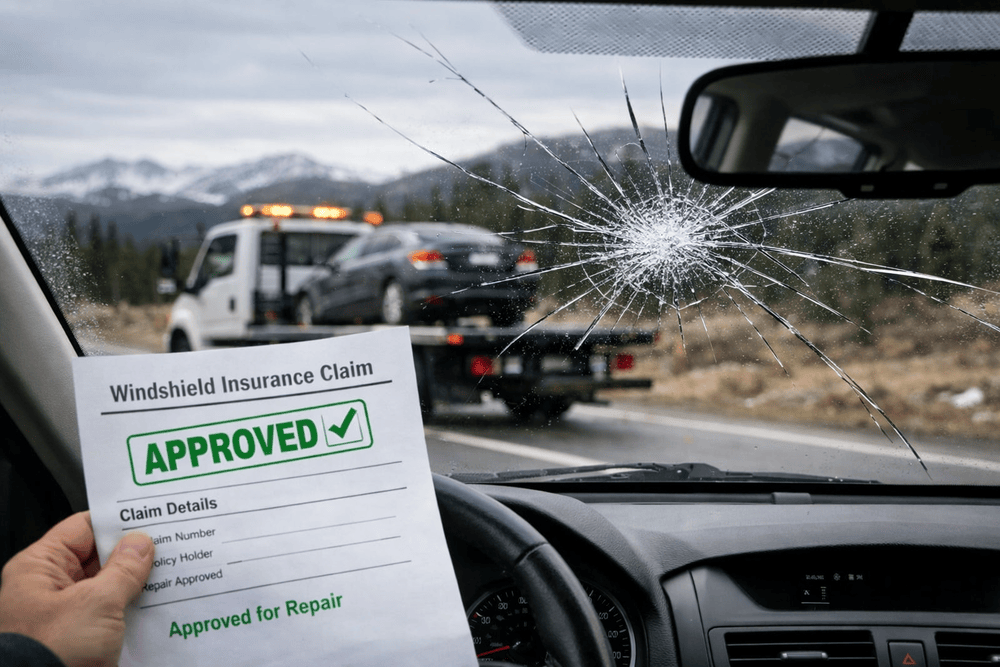
The sound is familiar to you. A bit of dirt kicks up from the vehicle in front of you while you are driving down the highway, taking it easy. Your heart falls as a loud crack reverberates throughout the cottage. There’s a spiderweb fracture just in front of you. Almost instantly, panic sets in. What will the cost of this injury be? Is driving safe right now? Will I have to bear the financial burden of hundreds of dollars, or will my insurance provide coverage? Until it breaks, the windshield is merely a piece of glass for many drivers, and then it becomes a significant financial burden. Fortunately, one of the most frequent insurance claims made each year is for windshield damage.
Get An Auto Glass Replacement Quote Now 866.278.7417

Windshield Replacement & Repair
Our competitors push you into going to their shop to get your glass fixed-making it cheaper for them. We make it easier for YOU to get back on the road by offering free mobile repairs at your home or work. With our free mobile services servicing the entire Orange County & Los Angeles area, we can often handle your windscreen replacement the same day! So the next time you need a windshield replacement, give us a call.
Talk to a Windshield Replacement Specialist Now 866.278.7417

Calibration
Calibration is the process of returning a vehicle’s ADAS to OEM specifications. Calibration is necessary after a new glass installation, particularly a windshield with a camera mounted to it, to ensure that the ADAS features continue to function properly despite having been moved during installation. If a car’s ADAS is not properly calibrated, the system may not function safely. A misaligned camera could jeopardize the functionality of the system and lead to dangerous driving or accidents, so it is crucial that the cameras are aligned perfectly, which is what windshield calibration ensures.
Talk to a Calibration Specialist Now 866.278.7417

Fleet Auto Glass Repair
We provide expert auto glass repair and windshield replacement services for commercial fleets of all sizes. We are experienced with all manufacturers and machine types of domestic or foreign cars, trucks, vans, or commercial vehicles, including heavy equipment. Our same day mobile auto glass and windshield repair service will enable you to get back on the road faster and start saving you time and money instantly. Give us a call today! We are here to help!
Talk to a Fleet Auto Glass Specialist Now 866.278.7417
Determine Which Coverage Applies to Glass
You must understand what you are really paying for before you contact your agent or use your insurance app. Broken glass is not always covered by auto insurance.
If you just have “liability” coverage, which protects you from financial responsibility for other people’s injuries, you will most likely be responsible for paying for your windshield. Generally speaking, in order for your claim to be recognized, you will need to provide one of the following:
The most popular method of covering windshields is comprehensive coverage. Your car is protected by comprehensive insurance if it sustains damage that was not the result of an accident involving another automotive vehicle.
This kind of insurance covers falling things (such as tree branches), theft, vandalism, fire, and—most importantly—rocks striking your windshield. Your claim is likely to be accepted if you have full coverage.
You still have to pay your deductible, however. The insurance company will not cover anything if the cost of replacing your windshield is $400 and your deductible is $500. You would just give the store your money.
If you reside in a region that has a lot of gravel roads or construction roads, this specific endorsement or add-on is a godsend for you. It provides full coverage for your driving glasses. Full glass coverage is offered by certain insurers.
For glass replacement or repair, this coverage often has no deductible. You have a good probability of being approved and paying nothing out of pocket if this option is on your policy declarations page.
Coverage for Collisions
Simple rock chips rarely fall within this category. If your windshield breaks as a result of colliding with another vehicle or a fixed object, such as a lamp post, collision coverage begins. In this case, the glass is just a portion of the whole cost of the repairs.
Will They Accept Repair vs. Replacement? Insurance companies select the most cost-effective option because they are businesses. That indicates that they vastly favor repairs over replacements in the vehicle glass industry.
The Repair Standard: Your insurance is likely to authorize a repair if the chip or crack is less than a dollar note (about six inches) and out of the driver’s direct line of sight.
The Benefit: The deductible for repairs is often waived by insurance carriers. To avoid having to purchase you a new windshield later, they may cover the whole cost of filling a rock chip with resin if you notice it early.
The Replacement Standard: For safety reasons, a replacement is required if the fracture is more than six inches long, has intricate cracks, extends to the glass’s edge, or blocks the driver’s vision.
The Cost: Your deductible often applies here unless you reside in a state with a zero-deductible policy or have particular glass coverage.
The “Free Windshield” states: Whether or not your claim is accepted with no out-of-pocket costs depends surprisingly much on your geographic location.
Insurance companies are required by law in some areas to waive the deductible for replacing safety glass if you have comprehensive coverage. In these states, you could qualify for a replacement policy with no deductible if you have comprehensive coverage:
Florida: Windshields have no deductible.
Kentucky: All glass has a zero deductible.
South Carolina: All glass has a zero deductible.
Although Glass is not often included in comprehensive policies, some jurisdictions, such as Arizona, Connecticut, Massachusetts, Minnesota, and New York, have optional separate glass coverage with a low or $0 deductible.
Do you have a Question?
Get An Auto Glass Replacement Quote Now 866.278.7417
A Comprehensive Guide to Making a Claim
Adhering to the proper protocol is necessary to get permission. By moving fast, you can save a little chip from becoming a large crack that needs a more costly fix.
Document the Damage Right Away: Take crisp pictures of the vehicle’s exterior and interior damage. Take note of the time and date it occurred. For a typical road debris issue, your word and the images are typically enough, but if it was vandalism, you may require a police complaint.
Verify Your Deductible: Prior to filing, review your policy. It makes no sense to file a claim if the windshield replacement would cost $350 and your deductible is $500. It will register a claim against you with no compensation. Get a cash quotation from a nearby glass shop first so you can compare the cost to your deductible.
File the Claim: You can usually do this via a helpline or your insurance’s mobile app. Describe in detail how the harm happened. It is obvious that “I was driving on I-95, and a rock hit the glass” is covered by comprehensive insurance. Steer clear of ambiguous terminology.
Select Your Repair Facility
Third-party administrators are often used by insurance carriers to manage glass claims. They will urge you to work with their chosen suppliers.
Although handy, most areas allow you to legally choose the repair business of your choice. Inform the insurance if you have a preferred dealership or a particular local store that you trust.
A typical topic of contention is whether to ask about OEM vs. aftermarket glass. Insurers often approve “aftermarket” (OEE) glass, which satisfies safety regulations but lacks the automaker’s logo.
Original Equipment Manufacturer (OEM) glass may be required if you drive a premium car equipped with advanced driver-assistance systems (ADAS), such as heads-up displays or lane-keeping assist, to guarantee the sensors function properly. Unless your policy calls for OEM use, you may have to battle for OEM permission or pay the difference in price.
Common Reasons for Denial: Claims may be denied even in cases when coverage is complete. You may steer clear of these hazards by being aware of them.
Pre-Existing Damage: The adjuster could reject a claim for a crack that occurred three months ago if you move insurance companies since it is considered pre-existing damage.
Lapsed Coverage: The claim will be rejected if you failed to make a payment and your policy was essentially terminated the day the rock struck your vehicle.
Intentional Damage: An adjuster will look into and probably reject the claim if they suspect fraud, as if the glass seems to have been damaged from the inside out.
Wear and Tear: Standard pitting—tiny micro-dots from sand from years of driving—is often not covered unless it seriously impairs vision.
Will My Rates Increase If I File a Glass Claim
The most prevalent worry among drivers is this one. In most cases, your rates won’t increase if you file a single comprehensive claim for broken glass.
Glass damage is considered a “not-at-fault” occurrence in ratemaking models. It is considered bad luck rather than poor driving. But frequency counts.
Your insurance could consider you a high-risk customer if you submit three windshield claims in a two-year period. Although they may not directly increase your premium for the glass, they could raise your comprehensive deductible at renewal or take away your low-deductible glass endorsement.
Frequently Asked Questions: Can I drive while awaiting permission if my windshield is cracked? The severity determines this. If the fracture blocks your eyesight or interferes with the windshield wipers, it is against the law to drive in many areas.
Additionally, the windshield gives the roof structural support; a significant break jeopardizes safety. If there is significant damage, it is advisable to park the vehicle or hire one.
How much time does it take to be approved? Glass claims may be processed as one of the quickest. Approval is often instantaneous over the phone. It is often possible to arrange repairs for the same day or the next day.
This is an essential component of the repair. Because recalibration may sometimes cost as much as the glass itself, be sure your insurance policy covers this expense.
Avoid Being Slowed Down by a Crack: Although a cracked windshield is inconvenient, the insurance procedure doesn’t have to be. You can confidently navigate the system by making sure your insurance covers everything, knowing your deductible, and taking quick action to fix chips before they turn into cracks.
Above all, don’t overlook the harm. A damaged windshield impairs both your car’s structural safety and visibility. After submitting the claim and receiving clearance, you may resume driving safely and with an unobstructed view of the road.
Will Insurance Cover My Cracked Windshield
A tiny rock kicks up on the roadway, causing a loud thwack throughout the cabin, and suddenly, there it is: a spiderweb fracture on your windshield. Drivers see this painfully often, but it’s frequently unclear what to do next.
Do you make your own payments? Are you a claimant? Is your insurance likely to cover the costs if you decide to file a claim? A common misconception among drivers is that “full coverage” automatically protects them from any damage to their car.
Regretfully, insurance policy reality is seldom so straightforward. Windshield claims fall into a special area where coverage is mostly determined by state legislation, the kind of insurance you have, and even the extent of the damage.
You may save hundreds of dollars by navigating these intricacies, but doing so requires knowing how insurance companies assess glass claims. It’s helpful to know precisely what elements affect whether your claim will be approved—and if it’s worth your time to file one—before you contact your agent or make the trip to the closest repair shop.
Knowing Your Policy Coverage The first and most important aspect influencing the success of your claim is the kind of coverage you have. Most jurisdictions need basic liability coverage, which simply covers harm you do to other people’s property.
Your car is not covered. You usually need one of the following in order for your insurer to replace or repair your windshield:
Extensive Coverage
When it comes to windshield claims, this is the most popular method. Comprehensive insurance covers damage to your car that isn’t caused by an accident.
Comprehensive insurance covers theft, vandalism, falling items (such as tree branches), animal attacks, and—most importantly—flying boulders and other road debris. You should be able to submit a glass claim if you have full coverage.
Complete Glass Coverage: A few insurance companies provide a glass-specific endorsement or add-on. This often enables you to completely avoid your typical deductible when it comes to glass replacements or repairs. This add-on might save you a lot of money if you live in a place with gravel roads or a lot of construction going on.
Collision coverage is applicable if your windshield was damaged in an accident with another car or object, while it is less typical for minor rock chips. In contrast to a comprehensive claim, submitting a collision claim often entails a larger deductible and a higher chance of premium increases.
The Function of Deductibles: Even if your coverage includes glass damage, the calculations may not work in your favor. The deductible is applicable in this situation.
Assume your comprehensive deductible is $500 and the cost of repairing your windshield is $400. Your insurance won’t cover anything since the repair cost is less than your deductible.
It would be useless to file a claim since you would be paying the business $400 directly, and it may even damage your claims record. However, to incentivize drivers to remedy minor damage before it spreads, many insurance companies waive the deductible for repairs (such as filling a tiny chip).
Replacing the whole windshield often results in the deductible being charged unless you have “zero deductible” glass coverage or live in a jurisdiction with certain consumer protection rules.
Do you have a Question?
Get An Auto Glass Replacement Quote Now 866.278.7417
State Laws and Free Windshield Replacement
Surprisingly, where you reside affects your chances of success. Laws in several US states prohibit insurers from charging comprehensive policyholders a deductible for windshield claims.
For glass, they are sometimes referred to as “zero deductible” states. In locations like Florida, Kentucky, or South Carolina, your insurer is usually obligated to waive the deductible for windshield repair if you have comprehensive coverage.
Filing a claim is almost always the best financial course of action in these areas. Additionally, Massachusetts and Arizona have special legislation or voluntary low-deductible glass waivers that significantly reduce the cost of repairs.
Verify local laws at all times. If you reside in a state with a zero deductible, you might have to shoulder the cost of a repair that your premiums previously covered.
The “Dollar Bill” Rule states that since windshield repairs are much less expensive than replacements, insurers prefer to do so. The extent of the damage will frequently determine whether your claim pays for a complete replacement.
The “dollar bill” rule is a simple heuristic used by the majority of insurance adjusters. A chip or crack is often regarded as repairable if it is entirely covered by a dollar note, which is around 6 inches.
A complete replacement is necessary if the damage is more than that or if it blocks the driver’s view. The following elements often need a replacement:
Location: For safety concerns, damage that is immediately in the driver’s line of sight must often be replaced since fixes may leave a little distortion.
Depth: The break cannot be fixed if it extends through both safety glass layers.
Edge Cracks: Damage that extends to the windshield’s edge weakens the glass’s structural integrity and usually necessitates replacement. You could have to pay the difference out of pocket if you insist on a replacement when the insurer thinks a repair would suffice.
OEM vs Aftermarket Glass
The kind of glass used is another subject of contention in claims. Your car’s factory glass and Original Equipment Manufacturer (OEM) glass are the same. Third-party businesses create aftermarket (OEE) glass to suit your vehicle, albeit it may not have the manufacturer’s emblem.
Due to its lower cost, many insurance plans only cover aftermarket glass. Aftermarket glass may not calibrate properly if you drive a premium car equipped with advanced driver-assistance systems (ADAS), such as heads-up displays, lane-keeping assistance, or rain sensors.
In certain situations, you may have to argue for OEM glass coverage by demonstrating that the safety features of your car cannot be adequately protected by aftermarket glass. For an additional cost, many insurance policies include an “OEM endorsement” that ensures factory glass for any repairs.
Weighing the Impact on Premiums: Lastly, take the long-term cost into account before submitting a claim. The idea that detailed claims never increase your rates is a prevalent misconception.
Even though they are less likely to result in a premium increase than an at-fault collision, they are nevertheless recorded on your Comprehensive Loss Underwriting Exchange (C.L.U.E.) report. Insurers may consider you a greater risk if you submit many complete claims in a short period of time, even minor ones like glass.
This could lead to a rate increase or even non-renewal of your policy. It could be wiser to pay with cash and maintain a spotless claims record for a straightforward $60 chip repair. The claim is often valid for a $1,000 replacement on a contemporary automobile with sensors.
Choosing Wisely Regarding Glass Claims
Damage to the windshield is annoying, but it doesn’t have to be a costly catastrophe. You may decide whether to lodge a claim by examining the precise glass coverage provided by your policy, confirming the deductible requirements in your state, and determining the extent of the damage.
Remember, modern windshields serve as structural components of your car and frequently integrate with advanced safety features. Don’t overlook the harm. The best approach to guarantee your safety while driving is to get it repaired as soon as possible, whether you want to pay out of cash or utilize insurance.
Mobile Safe Auto Glass
14241 E Firestone blvd suite 400,
La Mirada, CA 90638
Phone: (562) 608-1154
Toll Free: 1 866 278 7417
Mail: sales@mobilesafeautoglass.com
Get a FREE QUOTE today! You can get a free quote and schedule 24/7 using this free quote wizard.
Mon – Fri 8am – 5pm
Saturday 8am – 1pm
Sunday Closed