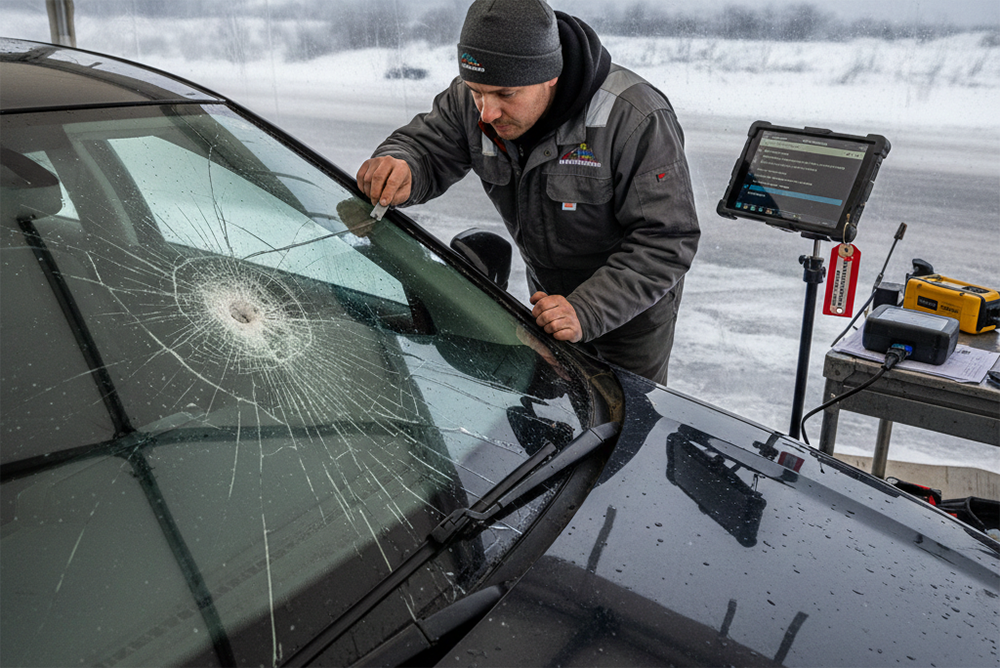
Windshield Crack Repair in Extreme Weather Conditions
Just as you are making your way down the highway, a rock comes flying out of the tire of a truck that is in front of you. When it strikes your windshield, it makes a loud and sharp impact, leaving behind a little chip in the shape of a star. It is possible that you may put off mending it for a week or two if the weather is moderate. However, whether you are in the midst of a sweltering hot or a freezing winter blizzard, you will no longer have the luxury of time. When it comes to causing damage to vehicle glass, the deadliest adversary is extreme weather.
Get An Auto Glass Replacement Quote Now 866.278.7417

Windshield Replacement & Repair
Our competitors push you into going to their shop to get your glass fixed-making it cheaper for them. We make it easier for YOU to get back on the road by offering free mobile repairs at your home or work. With our free mobile services servicing the entire Orange County & Los Angeles area, we can often handle your windscreen replacement the same day! So the next time you need a windshield replacement, give us a call.
Talk to a Windshield Replacement Specialist Now 866.278.7417

Calibration
Calibration is the process of returning a vehicle’s ADAS to OEM specifications. Calibration is necessary after a new glass installation, particularly a windshield with a camera mounted to it, to ensure that the ADAS features continue to function properly despite having been moved during installation. If a car’s ADAS is not properly calibrated, the system may not function safely. A misaligned camera could jeopardize the functionality of the system and lead to dangerous driving or accidents, so it is crucial that the cameras are aligned perfectly, which is what windshield calibration ensures.
Talk to a Calibration Specialist Now 866.278.7417

Fleet Auto Glass Repair
We provide expert auto glass repair and windshield replacement services for commercial fleets of all sizes. We are experienced with all manufacturers and machine types of domestic or foreign cars, trucks, vans, or commercial vehicles, including heavy equipment. Our same day mobile auto glass and windshield repair service will enable you to get back on the road faster and start saving you time and money instantly. Give us a call today! We are here to help!
Talk to a Fleet Auto Glass Specialist Now 866.278.7417
The Scientific Theory Behind Temperature and Glass
In order to comprehend the significance of weather, it is necessary to first comprehend the subject matter. There is more than one sheet of glass that makes up your windshield. A layer of vinyl (polyvinyl butyral) is sandwiched between two layers of glass to create a laminated sandwich. The sandwich is made up of three layers. When there is an accident, the glass will not shatter into sharp fragments because of the architecture of the glass product.
When it is heated, glass expands, and when it is cooled, it shrinks. This is normal behavior for many materials. Generally speaking, the entire windshield will expand and shrink at a pace that is rather consistent during the entire process. On the other hand, a chip or crack will cause that surface tension to diminish at a particular place.
In the event that the glass undergoes fast expansion or contraction, the stress is concentrated at the weakest spot, which is the fracture. The glass will break even more in order to alleviate the tension that it is experiencing in the event that the pressure becomes too much for the damaged structure to manage. It is referred to as a thermal stress fracture when this condition occurs. When this happens, the windshield will often develop a crack that is horizontal and extends the whole length of the windshield.
Problems with Winter: Making Repairs in the Cold
A distinct set of dangers is presented to automobile glass when the temperature is low. Due to the decrease in temperature, the glass undergoes a contraction, which causes the sides of a chip to move away from one another. Because of this tension, the damage has become extremely explosive. Winter is characterized by the presence of precipitation in the form of snow, sleet, and rain. If a chip is exposed to moisture and the temperature falls below freezing, the water that is present in the chip will transform into ice.
Water experiences a freeze-thaw expansion of around nine percent. This expansion acts like a wedge inside of a minuscule fissure, and it exerts a tremendous amount of force inside of the glass to force it apart. It is not uncommon for this internal pressure to be sufficient to transform a chip that is repairable into a complete replacement job overnight. The danger of the defroster The most common error that drivers make during the winter is to blast the defroster on a windshield that has frozen.
When you apply intense heat onto glass that is below zero degrees, you produce a quick temperature difference. This is true even if you need to remove the ice in order to drive safely. While the exterior of the glass continues to compress, the inside of the glass becomes rapidly expanded. This thermal shock is a safe and reliable method for splitting a windshield that has been damaged.
Windshield repair requires pumping a particular resin into the void, which presents a number of challenges for the resin curing process. In order for this resin to connect with the glass and cure, it is often exposed to ultraviolet radiation. Temperatures below freezing prevent the resin from flowing correctly through the glass because it is too cold. It becomes thick and viscous, and it is unable to cover the crack’s microscopic crevices after it has been applied. Before making an effort at a repair, it is necessary for trained professionals to carefully get the glass to the ideal temperature in order to guarantee that the bond will remain intact.
The Stress of Summer: Making Repairs in the Heat
On the opposite end of the range, severe heat is just as harmful as extreme cold. When the dashboard and the dark tint of the glass borders are exposed to direct sunlight, they absorb heat, which causes the temperature of the windshield to spike, frequently reaching temperatures that are significantly higher than the air outside.
When you leave your vehicle parked in the sun, the air inside your vehicle will heat up, which will cause the pressure within your vehicle to increase. The expansion of the glass occurs simultaneously. Despite the fact that this may appear to be beneficial, it really results in distortion since it presses the edges of a chip together. The tension has the potential to cause the glass to collapse and break.
In the same way that the defroster is painful during the winter, the air conditioner is even more painful during the summer. When you get into a car that has been roasting in temperatures of one hundred degrees, you instantly turn the air conditioning up to “Max.” The cool air strikes the heated glass, which causes the glass to rapidly contract in some regions. Rock chipping will be the path of least resistance for the tension that is caused as a result of the situation.
Overly rapid curing of resin heat has the ability to speed up chemical processes. It is possible that the resin will cure prematurely before it has completely filled the damage if a maintenance professional attempts to repair a windshield when it is exposed to direct sunshine on a hot day. A “brittle” repair that seems hazy and has very little structural support is the end outcome of this process. Before beginning their job, professionals will frequently bring the car into a shaded bay and wait for the glass to reach a temperature that is neutral before beginning their work.
Do you have a Question?
Get An Auto Glass Replacement Quote Now 866.278.7417
“First Aid” for Your Windshield, Immediately Available
In the case that you are unable to reach a repair shop in a timely manner, you can take a few short-term actions to prevent the damage from spreading further. It is possible that these remedies will buy you some time until you can get a full repair done, but they are not permanent fixes. In order to conceal the damage, you should wrap the chip with a piece of transparent packaging tape.
Dirt, debris, and moisture are prevented from entering the crack as a result of this. Repairing a fracture that is clean is considerably simpler than repairing one that is unclean. Avoid using duct tape since it has the potential to impede your view. During the warmer months, it is recommended to park in the shade or within a garage in order to maintain a lower temperature for the glass. Driving a vehicle in a garage during the winter months shields the glass from the buildup of snow and the high wind cold.
Maintain a moderate temperature and steer clear of rapid shifts in temperature. Warming up the automobile should be done gradually throughout the winter months, with the heat being directed toward the floor rather than the windshield until the interior is warm. Roll down the windows during the summer months to allow hot air to escape before turning on the air conditioner. Door Slamming Should Be Avoided The air pressure that is created when a car door is slammed shut might cause the windshield to shake. If you want to allow the air pressure to equalize, you should either softly close doors or leave a window slightly cracked.
What Makes Professional Repairs Necessary in Extreme Conditions
Even while do-it-yourself windshield repair kits are available at auto parts stores, it is not a good idea to use them when the weather is very severe. A generic resin is typically included in these kits, and it is possible that the resin is not designed to withstand high or low temperatures. In addition, the repair is likely to be unsuccessful if the appropriate instruments, which are necessary to heat or cool the glass to the appropriate temperature range, are not available.
The management of these factors is accomplished by professional car glass specialists through the utilization of climate-controlled facilities or customized mobile protocols. They have access to resins that come in a variety of viscosities and are suitable for use at a variety of temperatures. In order to guarantee that the resin flows into the crack, for instance, a thinner resin may be used in colder conditions, whereas a thicker resin might be helpful at hotter temps.
In addition, professionals make use of bridges and injectors, which provide exact pressure to the damage in order to guarantee that all air is totally expelled and resin completely fills the air space. In a driveway, it is impossible to reach this level of precision with a kit designed for the general public.
Comparison of When to Repair and When to Replace
There are some cracks that cannot be repaired, particularly if the severity of the weather has already been reached. A repair is considered to be feasible in most cases if the chip is less than a quarter. Although there is some technology that allows for lengthier repairs, the crack is of a length that is less than three inches. It is not possible for the motorist to see the damage right in front of them.
There is no evidence that the damage has reached the inner layer of the glass. If the fracture has grown to the edge of the windshield as a result of the harsh weather, or if the glass for the windshield is tempered rather than laminated, then replacement is typically the only alternative that is considered to be safe.
Questions That Are Frequently Asked:
If my windshield has a crack, is it possible for me to wash my car? Do not wash your vehicle until the fracture has been mended. This is the best course of action. It is possible for the fracture to spread as a result of the pressure exerted by the water jets as well as the temperature differential between the water. In addition, water and soap have the potential to become trapped inside the crack, which will make the final healing considerably more challenging and less pleasant to the eye.
How long does it take for a professional to make repairs? Rock chip repairs typically take around half an hour to complete. On the other hand, if the weather is very severe, the technician might want additional time to bring the temperature of the glass back to normal before they can start the actual process of repairing it.
As a result of the repair, will the crack be entirely eliminated? No. The restoration of structural integrity and the forestalling of further spread are the major objectives of a repair. A minor blemish or scar will often remain where the impact happened, despite the fact that the visibility of the injury will be considerably reduced (commonly by anywhere between 80 and 90 percent).
There is no need to wait for the forecast to change. The chip in the windshield is like a ticking clock. When you drive over a pothole, slam your door, or switch on the heating, ventilation, and air conditioning system, you are playing a game of chance. Weather conditions that are extreme are stacked against you. When compared to the expense of a complete windshield replacement and calibration, the cost of a straightforward resin repair is very little.
When you find that your glass has been damaged, check the weather forecast. Immediate attention should be given to the repair in the event that a heatwave or a cold front is on its way. The fact that the glass is secured now guarantees that your car will continue to be safe and ready for the road, regardless of what the thermometer indicates.
A Look at the Effects of Temperature and Pressure on the Results of Auto Glass Repair
It’s possible that a minor chip in your windshield will appear to be unimportant at first. When you walk out to your car one morning, you see a crack running across the windshield. It has been there for a long time, hardly apparent until you notice it. What caused this to take place? In many cases, the solution can be found in the factors of physics that are not visible to the naked eye, notably variations in temperature and pressure.
The glass used in automobiles is made to be durable, but it is not indestructible. The ability of your windshield to maintain its structural integrity is dependent on a careful equilibrium between tension and compression. This equilibrium is disrupted when a rock chip causes it to be compromised, and external forces such as the sweltering heat of summer, the frigid mornings of winter, and the air pressure inside the cabin begin to play havoc.
By gaining an understanding of the factors that contribute to windshield deterioration, you can avoid having to install an expensive replacement. In this article, the science underlying vehicle glass repair is broken down, and the reasons why time is essential when it comes to mending that chip are explained.
When It Comes To Glass And Thermal Stress
It is necessary to have an understanding of the material itself before attempting to comprehend why repairs are unsuccessful or why chips spread. As heated auto glass gets larger, and as it is colder, it gets smaller. The term “thermal expansion” refers to this natural physical feature that was discovered. When a windshield is in good condition, it responds to these changes in the same manner. As a single unit, the glass undergoes both expansion and contraction.
Having a chip or crack, on the other hand, produces a weak spot. Consequently, the glass’s surface tension is disrupted in a homogeneous manner. When there is a change in temperature, the stress tends to concentrate at that weak location rather than being distributed equally over the windshield. Heat stress is the term used to describe this occurrence. It is one of the most common reasons for repairs to fail, and it is the fundamental reason why even little chips can develop into fissures that cannot be repaired.
What Effects Does Heat Have on Windshield Repairs?
Damage to automobile windows is famously more likely to occur during the summer months. When combined, the warmth of the surrounding air and the presence of direct sunlight provide an environment that is unfriendly to a windshield that has been damaged. The “Greenhouse” Effect: Glass exhibits a high level of insulating effectiveness. In the event that you park your vehicle in the sun, the interior will quickly become warm. During the time that the sun is beating down from the outside, the dashboard is able to collect heat and then reflect it upward into the glass.
On a day with a temperature of 90 degrees Fahrenheit, the temperature of your windshield can quickly rise to more than 150 degrees Fahrenheit. It is because of this extreme heat that the glass undergoes a substantial expansion. When a chip is present, the expansion either presses the sides of the crack toward each other or pulls them apart, depending on the location of the damage and the type of damage that has occurred. The fracture will frequently “run” or widen immediately as a result of this action happening.
Heat and the Curing of Resin: Temperature is another factor that is quite important during the actual process of repairing anything. An injection of a specific glue into the chip is required in order to restore the windshield. It is necessary for this glue to cure, or harden, in order to successfully reattach the glass. It is possible that the resin will begin to solidify before it has fully penetrated the crack if the glass is heated to an excessively high temperature during the repair process.
Additionally, this results in the formation of air pockets within the chip, which weakens the integrity of the repair and makes the injury more obvious. Reduced Viscosity: The resin becomes thinner as a result of heat. It is possible that this will cause the resin to flow out of the repair area before it has had a chance to completely cure, despite the fact that it may assist it in flowing into narrow gaps. Before making an attempt at repairing the glass, professional specialists will frequently bring it down to the ideal temperature in order to guarantee that the resin will bind properly.
The Risks Involved with Temperatures Below Freezing
On the other hand, cold produces constriction, while heat causes expansion. Automobile glass has a unique set of obstacles during the winter season, but these challenges are just as harmful. In response to a decrease in temperature, the glass undergoes a process known as condensation. Any existing damage is subjected to an enormous amount of strain as a result of this shrinkage. Chips have a sixty percent greater chance of spreading into fractures when the temperature dips below thirty-two degrees Fahrenheit, according to research conducted by the Motor Industry Research Association.
A further element of peril is added by moisture levels. There is a possibility that water from precipitation or snowmelt might leak into the minuscule cracks of a windshield chip. When the temperature falls below freezing, the water that is trapped in the container will freeze into ice. When water freezes, it expands, and this expansion acts as a wedge, which causes the glass to become further separated from the inside out.
In the winter, the most common error that drivers do is to blast the defroster on a windshield that is frozen. This can cause thermal shock, which is a dangerous condition. A phenomenon called makethermal shock is produced as a result of this. Whenever a material is exposed to a sudden change in temperature, a phenomenon known as thermal shock takes place. The inner layer of the windshield expands fast when hot air is directed against cold glass, whereas the outside layer of the windshield stays contracted and cold regardless of the situation.
When it comes to a chipped windshield, this differential tension is frequently the point at which it breaks. Within a matter of seconds, the fracture might make its way across your line of sight. In order to prevent this from happening, it is recommended by specialists that the vehicle be warmed up gradually and that the airflow be directed toward the floor first. This will allow the temperature of the cabin to gradually increase.
Do you have a Question?
Get An Auto Glass Replacement Quote Now 866.278.7417
The Function of Variations in Pressure
Your windshield is being affected by a number of invisible forces—temperature is only one of them. Pressure variations, whether they be atmospheric or mechanical, have a substantial impact on the stability of a chip as well as the amount of success that a repair has. Pressure within the cabin: Your automobile is a pressurized vessel. Pressure differentials are produced as a result of the aerodynamic forces that are present when driving at high speeds. Furthermore, a quick increase in the pressure within the vehicle is caused by the act of just slamming the door.
The sudden surge of air pressure exerts a force that is directed outward on the glass of your windows when they are rolled up. A sturdy windshield is able to endure this with relative ease. The structural stiffness of a windshield that has been chipped, on the other hand, has been reduced. When a door is slammed, the pressure wave that it creates can be sufficient to transform a small break that is repairable into a lengthy fracture.
During the process of repair, specialists will first use a bridge tool to generate a vacuum, and then they will apply pressure in order to drive the resin into the breach. Finding the optimal pressure balance is an art form in and of itself. Excessive pressure has the potential to significantly enlarge the break while the repair is being attempted.
An insufficient amount of pressure will prevent the resin from being forced into the tiny points of the fracture, which will result in a failed repair that appears foggy or weak. Variations in barometric pressure, such as when one is driving up a mountain, can also have an effect on the way uncured resin is positioned within a crack; however, this is a less typical occurrence than problems with mechanical pressure.
Why the Timing of Repairs Is So Important
As a result of the interplay between temperature, pressure, and glass, there is one conclusion that absolutely cannot be avoided: the longer you wait, the less likely it is that the repair will be effective. When it is new, a chip is clean and dry. Dirt, road salt, washer fluid, and wax are some of the substances that accumulate within the brake over time. As a result of this pollution, the relationship between the repair resin and the glass is made more complex.
To add insult to injury, each day that you wait is an additional cycle of heating and cooling. During the day, the glass will expand, and when night falls, it will compress. The glass surrounding the damage becomes fatigued as a result of this frequent flexing. The tiny stress fractures that are around the chip are developing, which makes the final repair less stable and increases the likelihood that it will fail. This is true even if the chip has not spread visually.
Advice on How to Preserve a Windshield That Has Chipped
In the event that you are unable to reach a repair shop in a timely manner, there are a few measures that you can take to reduce the likelihood of the damage spreading as a result of temperature and pressure. These include parking in the shade and maintaining the glass temperature as consistently as possible. During the summer, attempt to avoid direct sunlight, and during the winter, try to park in a garage. By cracking a window, you may reduce the temperature inside your home and prevent heat from building up during the summer months. If it is safe to do so, you can leave a window slightly open.
To avoid the defroster, warm up the car gradually throughout the winter months. It is not a good idea to put really intense heat onto the windshield. Take Care to Close Doors: It is important to avoid slamming doors or the trunk, since this causes shockwaves to go through the frame of the car and the glass. It is possible to prevent dirt and moisture from entering the chip by covering it with a piece of transparent packaging tape and placing it on the exterior of the chip. Although this may not prevent the fracture from expanding further, it helps keep the region clean, which will result in a better repair in the future.
The Point at Which Repair Is No Longer an Option
Even with the most advanced technologies, it is not possible to repair every defect. To assess whether or not a repair is possible, the size, location, and severity of the damage, in addition to the exposure to the environment, are taken into consideration. It is often possible to fix the chip if it is less than a quarter in size and provided it is not in the driver’s line of sight.
If, on the other hand, the fracture created by thermal stress has spread all the way to the edge of the glass, then the structural integrity of the windshield has been jeopardized. The only safe option in these circumstances is to do a complete replacement. Due to the fact that the windshield contributes up to thirty percent of the structural strength of a vehicle in the event of a rollover accident, it is never worth the risk to compromise safety.
Look Out For Both Your Wallet And Your View
Glass repair is a race against the elements, according to the physics of the process. Heat causes the damage to dilate, cold causes it to wedge open, and pressure causes it to be pushed to the point where it breaks. The present resin technology is capable of producing remarkable outcomes; yet, it is not capable of performing miracles on glass that has been subjected to stress that exceeds its limitations.
The first step in maintenance is to become aware of how susceptible your windshield is to the temperature and pressure variations that are caused by these changes. In order to guarantee that the repair is successful, inconspicuous, and long-lasting, it is important to address any damage as soon as possible, before the next heatwave or frost. Instead of allowing the weather to determine how long your windshield will last, take prompt action and make sure that you have a good view of the road.
Mobile Safe Auto Glass
14241 E Firestone blvd suite 400,
La Mirada, CA 90638
Phone: (562) 608-1154
Toll Free: 1 866 278 7417
Mail: sales@mobilesafeautoglass.com
Get a FREE QUOTE today! You can get a free quote and schedule 24/7 using this free quote wizard.
Mon – Fri 8am – 5pm
Saturday 8am – 1pm
Sunday Closed