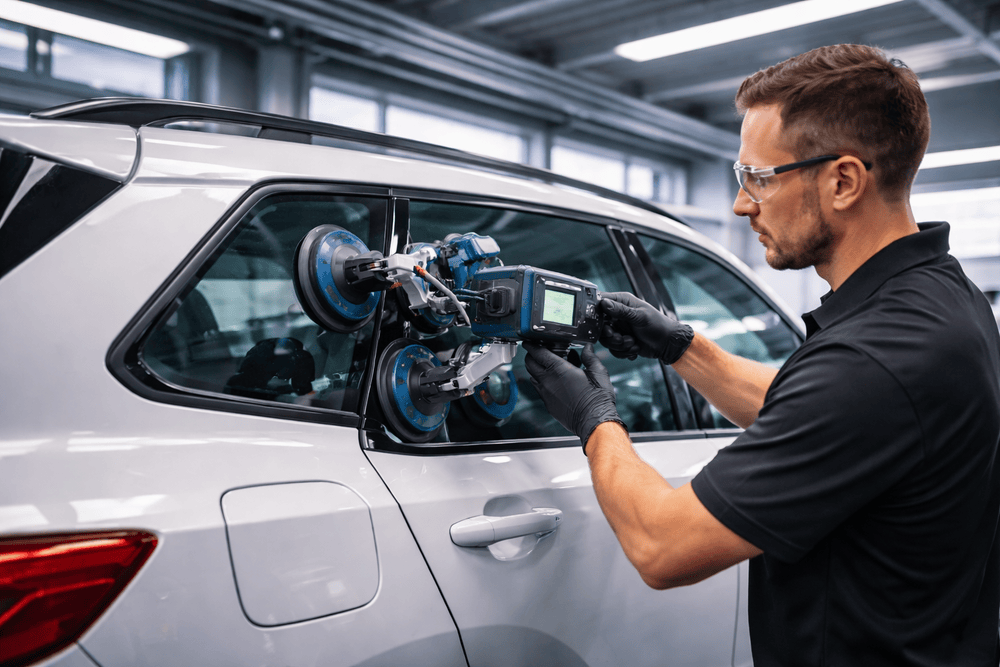
Modern Technology in Rear Side Window Replacement
In the past, fixing a broken rear-side window was simple: take out the old pane, install a new one, and you were back on the road. No more. Advanced electronics are crammed into every available space in modern cars, even the windows. What was once a straightforward repair has become a precise operation because of the integration of sensors, cameras, heating elements, and even antennas inside the back side glass. Knowing how technology has altered the procedure might help you make wise choices if you need to replace your rear side glass. This article examines the developments influencing rear window repairs, their implications for the functioning and safety of your car, and what to anticipate when a replacement is necessary.
Get An Auto Glass Replacement Quote Now 866.278.7417

Windshield Replacement & Repair
Our competitors push you into going to their shop to get your glass fixed-making it cheaper for them. We make it easier for YOU to get back on the road by offering free mobile repairs at your home or work. With our free mobile services servicing the entire Orange County & Los Angeles area, we can often handle your windscreen replacement the same day! So the next time you need a windshield replacement, give us a call.
Talk to a Windshield Replacement Specialist Now 866.278.7417

Calibration
Calibration is the process of returning a vehicle’s ADAS to OEM specifications. Calibration is necessary after a new glass installation, particularly a windshield with a camera mounted to it, to ensure that the ADAS features continue to function properly despite having been moved during installation. If a car’s ADAS is not properly calibrated, the system may not function safely. A misaligned camera could jeopardize the functionality of the system and lead to dangerous driving or accidents, so it is crucial that the cameras are aligned perfectly, which is what windshield calibration ensures.
Talk to a Calibration Specialist Now 866.278.7417

Fleet Auto Glass Repair
We provide expert auto glass repair and windshield replacement services for commercial fleets of all sizes. We are experienced with all manufacturers and machine types of domestic or foreign cars, trucks, vans, or commercial vehicles, including heavy equipment. Our same day mobile auto glass and windshield repair service will enable you to get back on the road faster and start saving you time and money instantly. Give us a call today! We are here to help!
Talk to a Fleet Auto Glass Specialist Now 866.278.7417
The Evolution of Automotive Glass Technology
Glass for cars has advanced significantly from its first use as a weatherproofing material. Windows were only useful decades ago; they allowed light in while keeping out wind, rain, and debris. However, the glass components of cars also evolved in sophistication.
From Simple Glass to Smart Windows: Simple annealed glass, which was prone to breaking into hazardous shards, was utilized in early automobiles. Tempered glass’s debut significantly increased safety. Tempered glass shatters into tiny, comparatively innocuous bits rather than jagged shards.
Laminated glass was a step above. Laminated glass, which was first only used for windshields, is made up of two layers joined by a plastic interlayer. By keeping shattered fragments in situ and preventing total glass breaking, this design lowers the danger of damage.
Similar laminated technology is now starting to be used in rear-side windows, particularly in premium and more recent models. However, the inventiveness doesn’t end there.
Modern Windows with Integrated Technology: Contemporary rear-side windows often feature:
Heating components: In cold climates, defrosting grids keep windows clean.
Integrated antennas: For cellular, GPS, and radio communication
Rain sensors: These cause the wipers to turn on automatically
Acoustic interlayers: To lessen noise in the cabin
UV and infrared coatings: To control temperature and prevent damaging rays. Although these features improve comfort and convenience when driving, they also make replacement more difficult.
Why Replacing Rear Side Windows Is Now More Difficult
It’s not as easy as it used to be to replace a rear side glass. Technicians have to do more than just install a new pane since technology is integrated into the glass itself. After installation, they must guarantee that every embedded system keeps working properly.
Calibration and Connectivity: After being replaced, any antennas or sensors that are located in a rear side window need to be correctly linked and calibrated. Inadequate window installation may result in poor signal reception, broken sensors, or even system failures that cause dashboard alerts.
The stakes are significantly greater for cars equipped with advanced driver-assistance systems (ADAS). Cameras or sensors installed in some rear-side windows provide information to systems such as lane-keeping assistance or blind-spot monitoring. The safety features of your car may be jeopardized if they are not calibrated properly.
Structural Integrity and Adhesive Technology: The adhesives used in vehicle glass installation have advanced considerably in recent years. These high-strength urethanes aren’t only glues; they’re designed to fuse glass to the car’s frame, enhancing the structural soundness of the vehicle.
In many cars, the windows serve to support the cabin in the event of an accident or rollover. This structural support may be weakened by improper application or use of glue, endangering occupants.
Although these adhesives’ curing periods have decreased, accuracy is still necessary. Leaks, wind noise, or even the window breaking off in severe weather might result from rushing the procedure or utilizing inferior materials.
OEM vs. Aftermarket Glass: Original Equipment Manufacturer (OEM) glass is manufactured in accordance with the manufacturer’s precise standards. Although aftermarket glass is often less expensive, it does not necessarily have the same integrated technology or adhere to the same quality requirements.
If you choose aftermarket glass without heating elements or antennae on your rear side window, you will lose functionality. Although the quality varies, some aftermarket alternatives do provide these characteristics. It’s worthwhile to inquire with your expert about the variations and the finest option for your particular car.
Do you have a Question?
Get An Auto Glass Replacement Quote Now 866.278.7417
The Role of ADAS in Window Replacement
In many new cars, advanced driver-assistance systems are now standard. These systems use sensors, radar, and cameras placed all around the vehicle, even on or next to the back windows.
ADAS: What Is It? A variety of technologies aimed at enhancing convenience and safety are included in ADAS. This includes features like parking assistance, adaptive cruise control, automated emergency braking, and blind-spot recognition.
A lot of these systems rely on accurate sensor calibration and location. Performance may be impacted by even a little misalignment, which can result in false alarms or, worse, an inability to identify real threats.
Calibration After Replacement: Recalibration is often required when replacing a rear-side window with integrated sensors. This procedure guarantees that sensors and cameras are oriented appropriately and interact with the car’s computer systems.
Usually, calibration calls for certain tools and software. Selecting a skilled technician is essential since not all auto glass businesses possess the equipment or expertise necessary to do this service.
Although skipping calibration might save you money and effort up front, it could jeopardize your car’s safety features. Consult your owner’s handbook or speak with a qualified technician if you’re not sure whether your car needs to be calibrated after a window replacement.
Choosing the Best Auto Glass Service: Choosing the best service provider for rear side window replacement is more crucial than ever since there is so much technology involved. It pays to conduct your research since not all shops are prepared to handle current cars. What to Search for
Certification and Training: Seek for technicians that have earned certification from groups such as the National Glass Association (NGA) or the Auto Glass Safety Council (AGSC). These credentials show that the technician has been properly trained in contemporary vehicle glass installation methods.
Experience with Your Car: Find out whether the shop has worked on cars of your make and model before. Specialized understanding is needed for vehicles with embedded electronics like ADAS.
High-quality Materials: Verify that the shop employs glass and adhesives that are on par with or better than OEM requirements.
Warranty: A trustworthy business will provide a labor and material warranty to back up its work.
Calibration Services: Verify if the shop can undertake post-replacement calibration on your vehicle or if it has a connection with a facility that can.
Questions to Pose
Ask if OEM or aftermarket glass will be used before agreeing to a service. Are the heating elements, antennae, and other characteristics of my original window still present in the new glass?
Can you do the calibration, and will it be required? What is your policy on warranties? How much time, including curing time, will the repair take? You may avoid misunderstandings and guarantee that your car receives the high-quality care it requires by having open lines of communication up front.
The Cost Factor: Replacing rear-side windows with modern technology may cost more. Compared to simple aftermarket solutions, OEM glass with incorporated functionality is more costly. If calibration services are included, the cost may increase even further.
Cutting costs to save money, however, might be a false economy. Future issues, such as broken systems or impaired safety, might result from using subpar materials or neglecting calibration.
Auto glass replacement is covered by many insurance plans, sometimes with no deductible. To find out what is covered and if your insurance has recommended providers, review your policy. It’s important to talk about your alternatives with the repair business and your insurance since some may mandate the use of aftermarket glass.
How to Take Care of Your Backside Windows
Maintaining your rear-side window after it has been changed will help it last longer and guarantee that the inbuilt technology keeps working. Avoid slamming doors too hard as this might cause stress on the glass and the adhesive bond.
Clean carefully: To prevent heating or harming coatings, use a soft cloth and cleaners without ammonia.
Examine frequently: Look for indications of leaks, fractures, or loose seals, particularly after severe weather.
Test features: Make sure that antennas, heating elements, and any sensors are operating properly on a regular basis. You can safeguard your investment and the equipment within your automobile by taking good care of the glass.
Future Prospects: Glass technology for automobiles is still developing. Electrochromic tinting, which changes transparency with the push of a button, is already being used in windows. Heads-up displays are becoming more common in side windows as opposed to windshields. Some manufacturers are even investigating solar-powered glass.
Auto glass replacement will only become more complicated as these advances become more widely used. For car owners, being informed and selecting skilled experts will continue to be crucial.
Safeguarding Your Investment and Your Safety: Replacing a rear side window has become more complex than a straightforward fix, requiring skill and accuracy. Glass is essential to modern cars because it houses vital technology that improves comfort, safety, and connection in addition to protecting occupants.
You should never take quick corners when you need a replacement. Select a qualified mechanic who is aware of the unique needs of your car. Demand high-quality supplies and accurate calibration. The additional work and cost are investments in your long-term car’s performance and safety.
The windows of your automobile are made of more than simply glass. They are a component of an intricate system that keeps you connected and protected. If you take good care of them, they will continue to serve you well for many years to come.
How Side Window Replacement Is Changing Due to Technology
In the past, replacing a car’s side window required a drawn-out repair procedure and days of waiting for parts. However, new developments are completely altering that experience. The auto glass sector is undergoing a technological transformation that benefits everyone, from repair shops to car owners, thanks to innovations like precision-cut glass made on demand and sophisticated adhesives that cure in just a few minutes.
Speed isn’t the only factor in this change. The quality, safety, and environmental effect of side window replacements are all being improved by new technology.
Understanding these advancements shows how far the industry has come, whether you’re a shop owner trying to simplify operations or an automobile owner wondering what goes on during a repair. Let’s examine the main technologies that are changing side window replacement and their implications for vehicle glass repair in the future.
Precision glass cutting technology: Computerized glass cutting is one of the biggest developments in side window replacement. Conventional techniques mostly depended on hand-cutting and manual measuring, which increased the risk of inaccuracy and material waste.
This has entirely altered with the advent of CNC (Computer Numerical Control) cutting machines. These devices ensure that every piece fits precisely the first time by cutting glass with millimeter-level accuracy using computerized templates.
The procedure is quicker, generates less waste, and gets rid of the aggravation that comes with poorly fitted replacements. Waterjet cutting technology, which uses high-pressure water combined with abrasive particles to cut through glass without causing heat-related stress fractures, is currently used in certain stores.
For tempered glass used within windows, where preserving structural integrity is crucial, this technique is very helpful. The outcome? Technicians spend less time making modifications or obtaining new parts, and customers get precise replacements that fit the specifications of their vehicles.
Superior Adhesive Technologies
Your side window’s adhesive does more than just keep the glass on your vehicle. It promotes airbag deployment, strengthens the vehicle’s structure, and keeps the passenger compartment intact in the event of an accident.
Without compromising bond strength, recent adhesive advancements have significantly shortened cure periods. When using traditional urethane adhesives, it often took a full day before a car was safe to drive. In as little as an hour, new formulations may attain safe-drive-away times; under the correct circumstances, certain medicines can cure even quicker.
Additionally, these contemporary adhesives function better at a range of temperatures. Whether exposed to the heat of the desert or the freezing temperatures of the winter, they retain their pliability and adhesive power.
Certain formulations include UV inhibitors, which prolong the installation’s lifetime by preventing deterioration from sun exposure. Higher throughput and pleased clients who don’t have to plan alternate modes of transportation for prolonged periods of time are what repair firms stand to gain from this.
Mobile repair capabilities: Technology has made it possible for the shop to come to you, in addition to improving what takes place inside. Although mobile vehicle glass replacement services have been around for a while, new developments have increased their dependability and efficiency.
When needed, technicians may make bespoke glass pieces on-site using portable cutting devices. Tools that run on batteries provide the same level of accuracy as shop equipment without the need for electrical outlets.
Regardless of the ambient temperature, climate-controlled glue application methods guarantee adequate cure. Software for GPS monitoring and route optimization enables mobile techs to provide more effective client service.
They come with the right glass and supplies thanks to real-time inventory management systems, which cut down on delays and return trips. Both fleet managers and individual automobile owners gain from this convenience as it reduces downtime by allowing repairs to be done wherever their cars are.
Do you have a Question?
Get An Auto Glass Replacement Quote Now 866.278.7417
Improved Production of Safety Glass
There have been major advancements made to the glass itself. Several safety elements that were not achievable with earlier manufacturing techniques are included into modern side windows.
Better quality control is now a part of the manufacture of tempered glass thanks to automated inspection technologies that find minute defects before the glass is delivered to clients. This lessens the possibility of sudden breaking, which is an uncommon but worrisome problem with tempered glass.
Similar to windshields, some manufacturers are creating laminated side windows. Two layers of glass are adhered to a plastic interlayer to form these windows. If shattered, the glass pieces stay attached to the plastic instead of dispersing, lowering the possibility of accidents and theft.
Instead of being applied after the fact, advanced tinting technologies may now be incorporated during manufacture. This results in tints that are more resilient to fading and won’t bubble or peel over time.
Digital measuring and fitting systems: Obtaining precise dimensions for replacing side windows after rigorous human measurements or physical templates are needed. Ordering the incorrect glass and having to start again was the result of a single error.
These days, digital measuring technologies generate accurate 3D models of window openings using photogrammetry or laser scanning. Before placing an order for glass, technicians may quickly compare these measures to the manufacturer’s standards and identify any differences.
In order to assist personnel see the installation procedure and spot any possible roadblocks or necessary revisions before starting work, some systems use augmented reality elements that superimpose digital templates onto the real car.
When it comes to older or customized automobiles, where typical templates may not be applicable, these tools are very helpful. They reassure technicians that even in odd circumstances, the glass will fit well.
Simplified Supply Chain Administration
Behind the scenes, side window replacement has become quicker and more dependable due to advancements in inventory control and logistics. Repair businesses may verify many suppliers’ real-time availability at once using cloud-based inventory systems.
When a client makes an appointment, automated ordering systems may place orders right away, guaranteeing that the glass will arrive before the planned repair time. These days, several providers use just-in-time production strategies made possible by the previously discussed precision cutting technology.
When an order is placed, they can swiftly create the precise piece required rather than keeping thousands of pre-cut windows for every car make and model in storage. This method guarantees fresher inventory while cutting expenses and waste. Additionally, it makes it simpler to get glass for vintage or uncommon cars that may not warrant maintaining inventory.
Environmental factors: Innovations that lessen the effect on the environment are being driven by the growing importance of sustainability in vehicle glass replacement.
Used vehicle glass is being processed more effectively by recycling systems. By separating glass from plastic interlayers and adhesives, new methods enable the materials to be recycled instead of ending up in landfills.
Water-based primers and adhesives are taking the place of solvent-based ones, which lowers the emissions of volatile organic compounds (VOCs) during installation. These devices provide technicians healthier working conditions while performing just as well as their predecessors.
The carbon footprint of the materials needed to replace side windows has decreased thanks to energy-efficient glass and adhesive production techniques. Some manufacturers now provide goods that use renewable energy sources or glass that has been partly recycled.
Developments in Training and Certification
The need for skilled technicians is growing along with technology. In response, the industry has raised certification requirements and enhanced training initiatives.
Before working on real automobiles, technicians may practice installs on virtual ones using virtual reality training systems. By presenting uncommon situations or obstacles that would not often arise in real life, these simulations might better prepare technicians for unforeseen difficulties.
Platforms for online education provide continuous instruction on new goods, methods, and safety regulations. Attending in-person training courses allows technicians to keep up to date without taking time off from work.
Auto glass technology’s future: Side window replacement has advanced significantly since the days of makeshift repairs and long wait periods. The inventions covered here only reflect the condition of the business at the moment; further developments are currently underway.
Self-healing glass that fixes small scratches, smart glass that can electrically change tint levels, and even stronger, lighter materials are all still being researched. As automobiles themselves advance technologically, so too will the glass that shields their passengers.
Mobile Safe Auto Glass
14241 E Firestone blvd suite 400,
La Mirada, CA 90638
Phone: (562) 608-1154
Toll Free: 1 866 278 7417
Mail: sales@mobilesafeautoglass.com
Get a FREE QUOTE today! You can get a free quote and schedule 24/7 using this free quote wizard.
Mon – Fri 8am – 5pm
Saturday 8am – 1pm
Sunday Closed