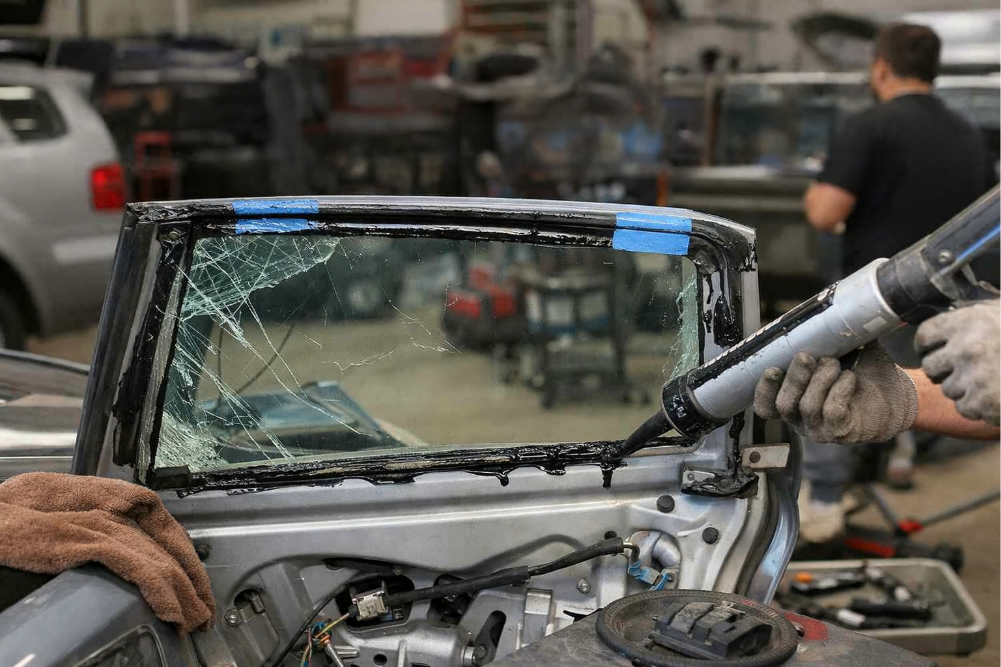
Common Car Side Window Repair Costly Mistakes
More than simply a nuisance, a broken or cracked automobile side window poses a safety and security danger as well as the opportunity for financial gain if not addressed properly. How you handle the repair may have a big impact on your wallet and the long-term health of your car, regardless of whether your window was broken by a wayward baseball, a break-in attempt, or just won’t roll up longer. Many automobile owners handle side window damage by making preventable blunders. In an attempt to conserve money, some people put off repairs, which leads to more serious issues later. Others try do-it-yourself repairs without the necessary equipment or expertise, which may cause more harm.
Get An Auto Glass Replacement Quote Now 866.278.7417

Windshield Replacement & Repair
Our competitors push you into going to their shop to get your glass fixed-making it cheaper for them. We make it easier for YOU to get back on the road by offering free mobile repairs at your home or work. With our free mobile services servicing the entire Orange County & Los Angeles area, we can often handle your windscreen replacement the same day! So the next time you need a windshield replacement, give us a call.
Talk to a Windshield Replacement Specialist Now 866.278.7417

Calibration
Calibration is the process of returning a vehicle’s ADAS to OEM specifications. Calibration is necessary after a new glass installation, particularly a windshield with a camera mounted to it, to ensure that the ADAS features continue to function properly despite having been moved during installation. If a car’s ADAS is not properly calibrated, the system may not function safely. A misaligned camera could jeopardize the functionality of the system and lead to dangerous driving or accidents, so it is crucial that the cameras are aligned perfectly, which is what windshield calibration ensures.
Talk to a Calibration Specialist Now 866.278.7417

Fleet Auto Glass Repair
We provide expert auto glass repair and windshield replacement services for commercial fleets of all sizes. We are experienced with all manufacturers and machine types of domestic or foreign cars, trucks, vans, or commercial vehicles, including heavy equipment. Our same day mobile auto glass and windshield repair service will enable you to get back on the road faster and start saving you time and money instantly. Give us a call today! We are here to help!
Talk to a Fleet Auto Glass Specialist Now 866.278.7417
Postponing the Repair
Repairing a broken side window might seem enticing, particularly if it’s just a little chip or crack. You may be waiting till you have more money saved up, or you may believe it is not essential. However, putting off this repair might have detrimental effects.
Temperature variations, road vibrations, and the stress of daily driving may all cause small fractures to develop fast. A modest problem may escalate into a full window replacement, which is much more expensive than fixing a tiny fracture. Furthermore, a weakened glass makes it simpler for criminals to steal into your automobile and degrades its structural integrity.
Additionally, driving with a broken glass exposes the inside of your car to dust, rain, and debris. Moisture intrusion into the door frame may result in mold development, electrical problems, or corrosion. The total cost of the damage increases with the amount of time that passes.
How to prevent it: As soon as damage is seen, schedule a repair. Numerous insurance coverage cover window repairs with little to no deductible, and the majority of vehicle glass companies provide prompt examinations.
Selecting the Cheapest Option Without Research: It’s normal to go for the most economical option when confronted with an unexpected auto repair cost. But picking a service provider just on the basis of cost might backfire in a number of ways.
Budget repair businesses may use lower-quality glass that doesn’t satisfy safety regulations or fit your car correctly. Water leaks, wind noise, and improperly sealed windows may all result from poor installation. Poor quality work may sometimes even make your car’s warranty worthless.
Furthermore, low-cost providers may omit crucial procedures like properly cleaning the frame, using the right glue, or giving it enough time to cure. These quick cuts may jeopardize both your safety in the case of an accident and the longevity of the glass.
How to prevent it: Do extensive research on repair businesses. Check whether the store utilizes OEM (Original Equipment Manufacturer) or OEM-equivalent glass, read internet reviews, and get referrals from friends and family. Never be afraid to inquire about labor and component warranties.
Attempting Difficult Do It Yourself Repairs
Car window repair seems surprisingly easy thanks to online guides. While certain little repairs may be handled by skilled do-it-yourselfers, side window repair often calls for specific equipment, supplies, and knowledge that most automobile owners lack.
The intricate window mechanics seen in modern cars include sensors, motors, tracks, and regulators. Accurate alignment and appropriate sealing methods are necessary when installing a new window. Without the proper tools or skills, you run the danger of scratching the new glass, breaking the door panel, or leaving openings that let water in.
Furthermore, windows that are fitted incorrectly may pose a safety risk. The windows on your automobile add to the vehicle’s structural strength in the event of an accident. Inadequate support from a badly built window may increase the risk of harm.
Avoid it by being honest about your lack of expertise. You may be able to do simple jobs like cleaning tracks or changing window regulators, but it’s better to leave glass replacement to experts. When you do a do-it-yourself project, the money you save is often used to correct errors.
Ignoring the Cause: A shattered window might sometimes simply be a broken window. However, the failure is often caused by an underlying problem, and if you don’t fix it, you’ll continue to have issues.
For instance, changing the glass alone won’t fix the issue if your window broke because of a malfunctioning regulator. Once the replacement window is subjected to stress from the malfunctioning mechanism, it is likely to shatter again.
Likewise, if your window isn’t staying up, it might be a problem with the electrical system, tracks, or motor instead of the glass. If the fundamental problem is not identified and fixed, you will have to pay for several repairs when a single, thorough treatment would have been sufficient.
Avoid it: Request that your repair specialist examine the window system as a whole, not just the glass. A trustworthy store will point up any associated concerns and explain what has to be done to avoid such complications.
Do you have a Question?
Get An Auto Glass Replacement Quote Now 866.278.7417
Using the Incorrect Kind of Glass
Glass for cars is not all made equal. Tempered glass, which makes up the side windows of your automobile, is engineered to break into tiny, comparatively innocuous fragments when struck. Serious safety issues arise when individuals attempt to replace side windows with non-automotive glass or laminated glass, which is used for windshields.
Inappropriate glass use may impair vision, jeopardize your car’s safety features, and in some places, it may even be against the law. Furthermore, aftermarket glass that doesn’t fit well or provide sufficient protection may not be up to industry requirements.
How to prevent it: Make sure the tempered safety glass used in your repair shop complies with Federal Motor Vehicle Safety Standard (FMVSS) 205. Request documentation attesting to the kind and quality of the glass.
Not Verifying Insurance Coverage: A lot of drivers are unaware that side window repairs may be covered by their vehicle insurance policy, sometimes with little or no deductible. You can be wasting money if you pay out of pocket without first verifying your coverage.
Generally speaking, comprehensive insurance covers window damage from theft, vandalism, bad weather, and collisions with objects (such as pebbles or trash). Certain plans even cover glass with no deductible, so you won’t have to pay for repairs.
How to prevent it: Prior to arranging repairs, give your insurance provider a call. Inquire especially about deductibles, glass coverage, and if submitting a claim would impact your rates. For glass-only claims, many insurers won’t increase rates.
Neglecting to Safeguard the Repair Site
It takes time for the glue to completely cure once your window has been fixed or replaced. Leaks or poor adhesion may result from the seal being compromised by driving right away, rolling down the window, or subjecting it to very high or low temperatures.
Although this varies according to the glue used and the weather, most installations need to cure for at least 24 hours. It’s a typical error to rush this procedure, which might ruin professional work and cause you to have continuing issues.
How to prevent it: Pay close attention to the post-repair recommendations provided by your specialist. Avoid washing your vehicle, keep the window up for the proper amount of time, and don’t slam doors too often. During the first healing time, if you must drive the car, do it carefully and steer clear of roads.
Making Wise Decisions Regarding Your Car Windows: Repairing your car’s side windows doesn’t have to break the bank or jeopardize your safety. You can save money and make sure your car stays safe and functional by avoiding these common mistakes: putting off repairs, prioritizing cost over quality, trying difficult do-it-yourself fixes, ignoring underlying problems, using the wrong kind of glass, forgetting to insure, and failing to protect new installations.
Ask inquiries about the repair procedure, learn about your insurance coverage, and investigate reputable repair companies. Because they are so important to comfort and safety, your car’s windows are worth the money for regular maintenance and expert repair.
Five Do-It-Yourself Side Window Repair Errors That Increase Your Cost: You see a crack in the side window of your automobile. Maybe someone tried to break in, or maybe it was from a stray rock on the roadway. In any case, your initial impulse may be to do it yourself to save money.
The problem is that side window repair is more complicated than it first seems. If you take the incorrect steps, what begins as a straightforward do-it-yourself job may rapidly become an expensive nightmare. Unknowingly, many automobile owners exacerbate window damage, turning a little repair into a complete replacement.
Take a moment to read about the most frequent errors people make before you start removing shattered glass or grabbing that repair kit. You may save hours of frustration and hundreds of dollars by being aware of these hazards.
Using the Incorrect Kind of Adhesive or Glass
Glass for cars is not all made equal. Tempered glass, which is used to make side windows, is intended to break into tiny, comparatively innocuous fragments when struck. Your windshield, on the other hand, employs laminated glass.
Buying the incorrect supplies is a crucial mistake that many do-it-yourselfers make. They may attempt to utilize domestic glass adhesives or, worse, purchase windshield glue for a side window. These items won’t pass safety tests and don’t provide your car the structural integrity it requires.
For automotive glue to provide a waterproof seal and preserve your car’s structural integrity, it must cure completely. If you use the incorrect product, your window may rattle, leak, or even fall out while you’re driving. Furthermore, poor adhesive will not withstand changes in temperature or shocks from the road.
Make sure the materials are made especially for side window installations on cars before buying any. Verify the make and model specifications of your automobile since some need OEM (original equipment manufacturer) glass in order to uphold safety regulations and warranties.
The wrong way to remove broken glass: When a side window breaks, little pieces of glass go into your door panel, seats, carpet, and ventilation system, among other places. The impulse to vacuum or sweep it up right away might result in embedded glass, which can create issues for months.
Rushing the cleaning procedure often causes glass to be pushed further into the inside of your automobile. These tiny fragments find their way into door mechanisms, trim parts, and fabric. Weeks after cleaning everything, you may discover glass fragments cutting your hands.
Another problem is the door cavity itself. Glass pieces fall into the area between the inner and outer panes of your door when it cracks. These parts will rattle obtrusively and may harm your window regulator, which is the device that raises and lowers your window, if you don’t take them off before installing a new window.
It takes time and the proper equipment to remove glass properly. Wear heavy-duty gloves, use a shop vacuum with a brush attachment, and think about using duct tape to pick up any last bits of debris. Use compressed air to force glass pieces out of confined locations and remove door panels to reveal concealed glass.
Disregarding the Track and Window Regulator
Through a sophisticated network of rails, channels, and a motorized (or manual) regulator, your side window glides up and down rather than just being in one spot. Many do-it-yourself repairs ignore these important parts entirely in favor of concentrating just on the glass.
It’s likely that your regulator was harmed if your window was broken by an accident or an attempted theft. Your window may not roll up and down correctly if you install a new one without first inspecting the regulator. It could move erratically, grind, or get stuck in the middle.
Inspection of the window tracks and channels is also necessary. Bent tracks might cause your new glass to bind or break under pressure, as well as hinder smooth window operation. Friction from debris in the channels puts stress on your regulator motor, which might cause it to fail too soon.
Check your window regulator before replacing the glass. Check for damage at all mounting places, listen for odd sounds, and make sure it glides smoothly over its whole range of motion. Straighten any bent portions and give the tracks a good cleaning. This additional care guarantees that your new window will continue to operate as intended for many years to come.
Do you have a Question?
Get An Auto Glass Replacement Quote Now 866.278.7417
Skipping the Proper Curing Time
Before your car is safe to drive, modern automotive adhesives need to cure for a certain amount of time. This is not only a recommendation; it is necessary for both the integrity of the repair and your safety. But in their haste to get back on the road, many do-it-yourself repairers skip this step.
Manufacturers of adhesives usually advise curing for at least 24 hours, while some formulations may take up to 72 hours to reach their maximum strength. The glue creates molecular connections with the car structure and the glass during this time. The seal is compromised if this procedure is halted by slamming doors, driving too quickly, or subjecting the patch to high temperatures.
Although a partly dried glue may seem sturdy, it is not strong enough to withstand temperature variations, structural stress, and road vibrations. When it starts to rain, your window can start to leak, or worse, it might break off while you’re traveling at high speeds.
Humidity and temperature have an impact on curing time. High humidity may actually speed up the process, whilst cold weather slows it down. Plan your repair around the weather and carefully read the technical requirements of the glue. When working in a garage, keep the temperature constant and steer clear of drafts that might interfere with the cure.
Throughout the whole healing time, keep your automobile at a standstill. Avoid rolling down other windows since the new adhesive may be stressed by the pressure variations. For the same reason, don’t smash doors. Set a reminder on your calendar and avoid the temptation to test your work too soon.
Ignoring Weatherstripping and Water Leaks: A side window repair isn’t finished unless you’ve made sure the window is properly sealed from the weather. One of the most frequent complaints after do-it-yourself window installations is water leaks, which are often caused by neglected weatherstripping.
The rubber seals that surround your window, known as weatherstripping, disintegrate with time. When replacing a window, weatherstripping that is old and damaged will not effectively seal against new glass. Even the slightest cracks allow water to seep in, causing internal dampness, mold development, and electrical issues.
Additionally, many do-it-yourselfers neglect to apply the appropriate quantity of glue in the appropriate locations. Insufficient glue creates spaces for water to seep in. Excessive amounts might cause unattractive clutter or make the window not sit flat in its frame.
Examine all weatherstripping thoroughly before installing your window. Check for brittleness, fractures, or areas that have separated from the door frame. Any weakened weatherstripping should be replaced; it’s a cheap solution that avoids future costly water damage.
Before the glue completely hardens, check for leaks after installation. To mimic rain, use a garden hose, being especially careful around the upper corners where leaks are most likely to happen. You may take care of any water infiltration right away rather than waiting until the next storm to find out about it.
When to Make a Professional Call
Although they may save money, do-it-yourself fixes aren’t always the best option. In some cases, professional knowledge is required. A professional company has the equipment and know-how to solve complicated issues including frame deformation, door misalignment, or major electrical difficulties if your window damage involves any of these.
Another factor to consider is insurance coverage. Glass repair is covered by many comprehensive insurance with little to no deductible. A professional installation often comes with guarantees that safeguard your investment, something a do-it-yourself project won’t provide.
Think about the expense of any errors as well as the worth of your time. Using OEM-quality materials and specialized equipment, skilled technicians do side window repairs in a few hours. They take care of any issues that come up and guarantee their work. Professional servicing is more cost-effective for many car owners than a dangerous do-it-yourself project.
If you determine that getting expert assistance is the best course of action, thoroughly investigate nearby auto glass businesses. Ask about warranties, check user reviews, and look for qualified experts. A reputable company will use original equipment manufacturer (OEM) or OEM-equivalent glass, adhere to correct installation protocols, and guarantee their work.
Mobile Safe Auto Glass
14241 E Firestone blvd suite 400,
La Mirada, CA 90638
Phone: (562) 608-1154
Toll Free: 1 866 278 7417
Mail: sales@mobilesafeautoglass.com
Get a FREE QUOTE today! You can get a free quote and schedule 24/7 using this free quote wizard.
Mon – Fri 8am – 5pm
Saturday 8am – 1pm
Sunday Closed