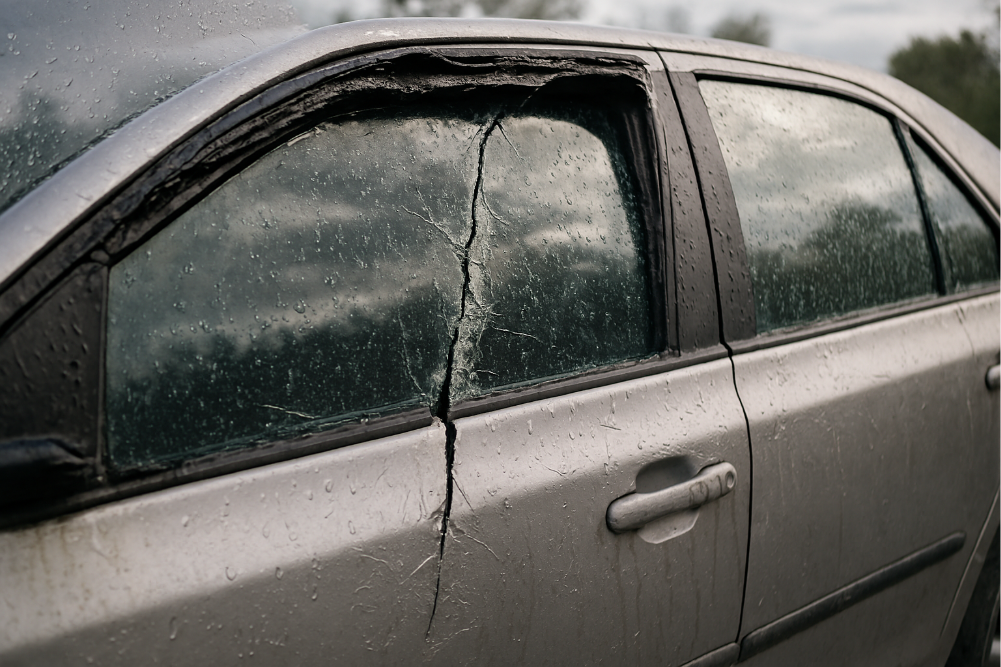
Car Side Window Repair and Weather Seal Failures
Have you ever rolled down your vehicle window during a thunderstorm only to feel water soaking inside or hear an eerie whoosh of wind? Side window weather seal failures are more frequent than you may imagine. Although these rubber strips may seem to be little parts, if they break, your car may suffer water damage, make more noise on the road, or even develop mold. You may avoid paying hundreds of dollars for expert repair by knowing how to spot and fix weather seal problems. This tutorial will teach you how to identify issues, choose the appropriate materials, and do repairs on your own, regardless of whether you’re dealing with premature failure on a newer model or worn-out seals on an older one.
Get An Auto Glass Replacement Quote Now 866.278.7417

Windshield Replacement & Repair
Our competitors push you into going to their shop to get your glass fixed-making it cheaper for them. We make it easier for YOU to get back on the road by offering free mobile repairs at your home or work. With our free mobile services servicing the entire Orange County & Los Angeles area, we can often handle your windscreen replacement the same day! So the next time you need a windshield replacement, give us a call.
Talk to a Windshield Replacement Specialist Now 866.278.7417

Calibration
Calibration is the process of returning a vehicle’s ADAS to OEM specifications. Calibration is necessary after a new glass installation, particularly a windshield with a camera mounted to it, to ensure that the ADAS features continue to function properly despite having been moved during installation. If a car’s ADAS is not properly calibrated, the system may not function safely. A misaligned camera could jeopardize the functionality of the system and lead to dangerous driving or accidents, so it is crucial that the cameras are aligned perfectly, which is what windshield calibration ensures.
Talk to a Calibration Specialist Now 866.278.7417

Fleet Auto Glass Repair
We provide expert auto glass repair and windshield replacement services for commercial fleets of all sizes. We are experienced with all manufacturers and machine types of domestic or foreign cars, trucks, vans, or commercial vehicles, including heavy equipment. Our same day mobile auto glass and windshield repair service will enable you to get back on the road faster and start saving you time and money instantly. Give us a call today! We are here to help!
Talk to a Fleet Auto Glass Specialist Now 866.278.7417
What Are Car Window Weather Seals
The rubber or silicone barriers that run down the margins of the side windows of your automobile are known as weather seals, window sweeps, or weather stripping. They perform many vital tasks, including keeping water out of the cabin, lowering wind noise, shielding the window glass from debris, and ensuring that the window glides up and down in the correct alignment.
The majority of cars have two kinds of side window seals. The outer seal, also known as belt molding, runs along the top of the door frame, while the inner seal is positioned between the door panel and the window glass. Together, they form a waterproof barrier.
Indications That Your Weather Seals Need to Be Repaired: By identifying weather seal issues early on, you can shield the inside of your car from more serious harm. Keep an eye out for these indicators:
The most visible sign is a water leak. Your seals have probably failed if you see water stains on the inside trim, moisture on the floor mats under the door, or water gathering on the door panel.
Driving with more wind noise indicates seal gaps. At highway speeds, you could find that the cabin seems less soundproof or hear whistling noises.
Visual examination makes it simple to identify visible rubber breakdown. Check for areas where the seal has come away from the door frame, fractures, rips, or hardening of the material. Windows that are difficult to roll up or down may have a bloated, deformed, or misaligned seal that is resisting the glass.
Why Do Weather Seals Failing? You may avoid future issues by knowing why seals fail. Deterioration is caused by a number of factors:
The main factors are age and sun exposure. Over time, UV rays degrade rubber compounds, making them brittle and prone to cracking. In hotter areas or for cars that are often parked in full sunlight, this process quickens.
Seals are forced to constantly expand and contract due to extreme temperature variations, which weakens their structure. While summer heat may lead rubber to soften and lose its form, cold winters can make it rigid and prone to ripping.
Seal materials may deteriorate due to chemical exposure from cleaning supplies, automobile washes, and environmental contaminants. Petroleum-based products and harsh detergents are especially harmful.
Regular window operation causes physical wear and friction, which gradually erodes the seal surface. Even little abrasion builds up after thousands of cycles.
If at all feasible, get new OEM (Original Equipment Manufacturer) seals. They usually last longer than generic equivalents and are made especially for your car. Select replacement seals from reliable suppliers if OEM parts are either too costly or unavailable.
Take Off the Weather Seal
To make accessing the seal easier, begin by fully lowering the window. Carefully pry off any clips or fasteners that are keeping the seal in place using trim removal tools. To prevent breaking clips or causing damage to the door frame, work gently.
It can be necessary to use a hair dryer to provide heat in order to weaken the glue on adhesive-mounted seals before removing them. Peel smoothly and continuously from one end to the other.
Clean the Installation Surface: After removing the previous seal, give the channel where it was installed a thorough cleaning. To get rid of oils, grime, and adhesive residue, use rubbing alcohol. A clean surface guarantees good adhesion and prevents the new seal from failing too soon.
Check for corrosion or rust in the channel. Before putting the new seal in place, little surface rust may be treated using a rust converter agent.
Measure and Cut the New Seal: Carefully measure the channel’s length. Mark the area where the new seal has to be cut if it arrived in a longer universal size. Because the seal may compress slightly during installation, allow an additional quarter-inch to guarantee a tight fit. For precise cuts, use a utility knife or sharp scissors. Tears may form in weak spots created by jagged edges.
Install the New Weather Seal: To install a clip-in seal, begin at one end of the channel and proceed down it, using pressure to ensure that each portion snaps into place. Every clip should sound or feel captivating.
Apply a thin, uniform layer of weatherstrip adhesive to the channel for adhesive sealing. To prevent air bubbles from being trapped, press the seal into place from the middle toward both ends.
Along the length, apply steady pressure for 30 to 60 seconds at intervals. Before rolling up the window or letting the car get wet, let the adhesive seals set for at least 24 hours.
Lubricate and Test: Lightly lubricate the area of the seal that comes into touch with the window glass using silicone lubricant. This prolongs seal life and lowers friction.
Roll the window up and down a few times to test it. It need to move without binding and smoothly. Gently run your palm along the seal and push to check for any gaps; there shouldn’t be any holes or loose areas.
Do you have a Question?
Get An Auto Glass Replacement Quote Now 866.278.7417
When to Seek Expert Assistance
Certain weather seal fixes are more intricate and can call for expert help: Before putting in new seals, any damage to the window regulator—the device that raises and lowers the window—should be fixed.
Before seals can be correctly fitted on severely corroded door frames, welding may be required. Professional installation lowers the possibility of expensive errors for luxury cars with specialist seals or electrical components built into the window system.
Keeping Your Weather Seals in Good Condition: Keeping your weather seals in good condition greatly increases their lifespan.
Seals should be cleaned once a month using a gentle cloth and a light soap solution. Steer clear of abrasive objects or strong chemicals that might harm the rubber. To maintain the flexibility of seals, use a rubber conditioner every few months. Petroleum jelly and silicone-based products are effective.
To reduce UV damage, park in a shaded area whenever you can. If there isn’t covered parking, think about utilizing window shades or a vehicle cover. To reduce friction and stop sticking, lubricate seals with silicone spray on a periodic basis, particularly prior to winter and summer.
Protect Your Investment: Although it may not seem glamorous, maintaining your vehicle’s weather seals is crucial to maintaining its comfort, worth, and structural soundness. Thousands of dollars in water damage restoration expenses may be avoided with a few hours of preventative maintenance or do-it-yourself repair.
A routine examination just takes a few minutes. Develop the practice of inspecting your seals when you change your oil or wash your automobile on a regular basis. Early detection of minor separation or cracks results in a simple repair rather than a full replacement.
It’s time to deal with those bothersome wind whistles or enigmatic water patches if you haven’t already. The majority of weather seal repairs are easily accomplished by the typical automobile owner with a few simple tools and perseverance.
The Importance of Repairing Side Windows
The side windows on your automobile may do more than simply roll up and down. They keep your car safe and shield you from wind, rain, and debris. However, many drivers believe that a crack or a failing seal is a minor cosmetic problem that can wait.
The truth is quite different. A broken side window may jeopardize your safety, necessitate costly future repairs, and even undermine the structural soundness of your vehicle.
You may avoid future problems and expensive expenses by knowing how leaks occur and why prompt side window repair is important. Let’s examine the reasons of side window damage, how leaks occur, and why it is imperative that every car owner take immediate action to resolve these problems.
How Side Window Damage Happens: Side windows are exposed to the weather all the time. Over time, wear and tear from daily wear and tear, road debris, and temperature changes all have an impact.
Common Causes of Side Window Damage: One of the most evident causes is impact damage. Chips or cracks that spread quickly might be caused by hail during a storm, a stray pebble thrown up by another car, or even a misplaced elbow.
Stress from temperature is also important. Glass expands in extreme heat and contracts in cold temperatures. Even in the absence of direct contact, this cycle gradually erodes the glass, increasing its vulnerability to breaking.
Deterioration of seals occurs gradually. Your side windows’ rubber seals guard against air and moisture intrusion. These seals harden, break, and finally fail due to UV exposure, aging, and temperature fluctuations.
An improper installation might cause issues right away. There may be holes that let water in if a window was not put in properly after a prior repair.
Knowing How Leaks Occur
It’s not always the case that a broken side window would cause water to flood your vehicle. Leaks can begin as a little moisture infiltration and become worse over time.
The Development of a Window Leak: Moisture may enter via tiny chips or fissures. You may first notice nothing at all. However, water seeps through the glass and into the door frame as the damage grows, which is almost always the case.
This process is accelerated by worn weatherstripping. The rubber seals can no longer provide a tight barrier once they become less flexible. Water slowly seeps into the door hollow after collecting in the window track.
From there, the moisture might enter the interior parts of your car. Behind your door panels are speakers, wiring, and door lock mechanisms, all of which are susceptible to water damage.
Signs will eventually become apparent, such as musty smells, moist flooring, or cloudy glass. The leak has probably been there for weeks or months by now, resulting in damage that is buried under the surface.
The Hidden Risks of Postponing Repair: Although postponing side window repair may seem to save money, it often results in higher long-term expenditures. Here are the dangers of ignoring a broken window.
Structural Compromise: The windows on your automobile help to maintain its overall structural soundness. The windows safeguard occupants in the case of a rollover accident by preserving the strength of the roof. This protection is weakened and the danger of damage is increased by a window that is cracked or not properly sealed.
Damage to the Electrical System
Sophisticated electronics are integrated into the door panels of modern cars. Sensitive wiring is necessary for central locking systems, speakers, and power window motors. Corrosion occurs in these places when water seeps in.
You may have crackling and cutting speakers, broken locks, or faulty power windows. The expense of repairing electrical components damaged by water is far more than that of repairing the window leak. Whole wire harnesses may need to be replaced in extreme circumstances.
Growth of Mold and Mildew: Mold and mildew thrive in environments that are consistently damp. These fungi grow well under carpets and in dark, moist areas like the holes in your doors. In addition to its disagreeable odor, mold may be harmful to one’s health, particularly for those who have respiratory or allergy disorders.
Professional treatment is necessary to get rid of established mold. Disassembling interior panels, treating impacted areas, and even replacing porous materials like insulation or carpets are all necessary.
Water is the biggest enemy of metal when it comes to corrosion and rust. Rust starts to develop when moisture gets to the steel parts of your windowsills or inside your doors. While deep corrosion weakens the metal and may be irreparable, surface rust is often treatable.
Rust restoration is an expensive and time-consuming procedure that entails cutting away damaged metal and welding in new portions. This degree of harm may be completely avoided by detecting leaks early.
Reduced Resale Value: Your car’s resale value may suffer if there is obvious damage or indications of prior water infiltration. Window damage is often seen by prospective purchasers as a sign of inadequate upkeep. Persistent problems, such as musty smells or electrical malfunctions, might cause suspicions during inspections, even if you fix the window before selling.
Do you have a Question?
Get An Auto Glass Replacement Quote Now 866.278.7417
Indications That Your Side Window Needs Repair
Being aware of the telltale symptoms of window deterioration enables you to take care of issues before they get out of hand. Keep an eye out for these signs:
Visible chips or cracks: Vibration, temperature fluctuations, or other impacts may cause even minor damage to spread swiftly.
Inability to roll windows up or down: This might indicate damage to the motor, regulator, or window track—problems that often accompany window leaks.
Wind noise when driving: If you hear more road noise, it means your window seals aren’t keeping the air out.
Water stains or dampness: After rain or vehicle washes, look for indications of moisture on your door panels, window sills, and floor mats.
Foggy glass: Prolonged internal fogging or condensation between window layers are signs of a failed seal. Musty smells: A musty, moldy smell indicates that there is moisture lurking under your carpets or within your door panels.
Make an appointment for an examination with a certified car glass expert if you see any of these signs. Minor problems are prevented from becoming significant repairs by early attention.
What Side Window Repair Entails: Depending on the kind and extent of damage, professional side window repair takes many forms. Knowing the procedure enables you to make wise choices about the maintenance of your automobile.
Repairing minor chips and fractures sometimes doesn’t need replacing the whole window. In order to restore structural integrity and stop future spread, technicians patch the affected region with specialist glue. For little damage, this procedure is efficient, economical, and rapid.
Repair isn’t always feasible, however. Complete replacement is usually necessary for chips in the driver’s line of sight, damage close to the window’s edge, and cracks longer than a few inches.
Window Replacement: The side window must be replaced if repair is not an option. Using the right adhesives and sealing methods, a skilled expert will remove the broken glass, clean the frame, and install a new window.
Good installation is important. Poor technique may result in lower structural integrity, water leaks, and wind noise. Select a trustworthy car glass company with knowledgeable staff and robust guarantees.
Replacement of Weatherstripping and Seals
Sometimes the seals have failed, but the glass itself is OK. Your window’s waterproof barrier may be restored by replacing damaged weatherstripping. This fix may stop significant water damage and is reasonably priced.
Selecting the Best Repair Service: There are differences among car glass services. Take into account the following elements while choosing a side window repair provider:
Experience and certification: Seek for experts that have been certified by trade associations and educated in correct installation methods.
Materials of high quality: Verify that the service makes use of original equipment manufacturer (OEM) or comparable glass and adhesives. Low-cost aftermarket components could not fit well or provide sufficient protection.
Warranty coverage: Reputable stores provide extensive labor and part warranties to back up their work.
Mobile services: For extra convenience, a lot of car glass businesses provide mobile repair, which comes to your house or place of business.
Insurance support: To expedite the claim-filing process, choose a supplier that has expertise dealing with insurance companies.
Act Now Before Minor Issues Grow Into Major Ones: Although side window damage may seem to be a small annoyance, there may be costly and significant repercussions if repair is put off. Water leaks cause corrosion, structural weakness, electrical malfunctions, and the development of mold, all of which lower the safety and value of your car.
The good news? Early issue detection simplifies and lowers the cost of repair. Frequent inspections, quick damage detection, and selecting high-quality repair services safeguard your investment and keep you safe while driving.
Don’t wait for a little crack to turn into a big one. Make an appointment for an examination with a reputable car glass specialist right now if you’ve seen any indications of side window damage or leakage. Both your pocketbook and your automobile will appreciate it.
Mobile Safe Auto Glass
14241 E Firestone blvd suite 400,
La Mirada, CA 90638
Phone: (562) 608-1154
Toll Free: 1 866 278 7417
Mail: sales@mobilesafeautoglass.com
Get a FREE QUOTE today! You can get a free quote and schedule 24/7 using this free quote wizard.
Mon – Fri 8am – 5pm
Saturday 8am – 1pm
Sunday Closed