Auto Glass Repair Near Me for ADAS-Equipped Vehicles
Cracks in the windshield are no longer only a visual annoyance for drivers of current automobiles, which are defined as vehicles manufactured during the past five to ten years. Not only does it affect visibility, but it also poses a serious threat to public safety. In most modern automobiles, Advanced Driver Assistance Systems (ADAS) are already installed as standard equipment. These are the features that assist you in parking without colliding with the curb, automatically apply the brakes in the event that the traffic suddenly stops, and keep you in the lane that you are in. The cameras and sensors that are used in these systems are extremely important, and the majority of them are installed just behind the windshield.
Get An Auto Glass Replacement Quote Now 866.278.7417

Windshield Replacement & Repair
Our competitors push you into going to their shop to get your glass fixed-making it cheaper for them. We make it easier for YOU to get back on the road by offering free mobile repairs at your home or work. With our free mobile services servicing the entire Orange County & Los Angeles area, we can often handle your windscreen replacement the same day! So the next time you need a windshield replacement, give us a call.
Talk to a Windshield Replacement Specialist Now 866.278.7417

Calibration
Calibration is the process of returning a vehicle’s ADAS to OEM specifications. Calibration is necessary after a new glass installation, particularly a windshield with a camera mounted to it, to ensure that the ADAS features continue to function properly despite having been moved during installation. If a car’s ADAS is not properly calibrated, the system may not function safely. A misaligned camera could jeopardize the functionality of the system and lead to dangerous driving or accidents, so it is crucial that the cameras are aligned perfectly, which is what windshield calibration ensures.
Talk to a Calibration Specialist Now 866.278.7417
Fleet Auto Glass Repair
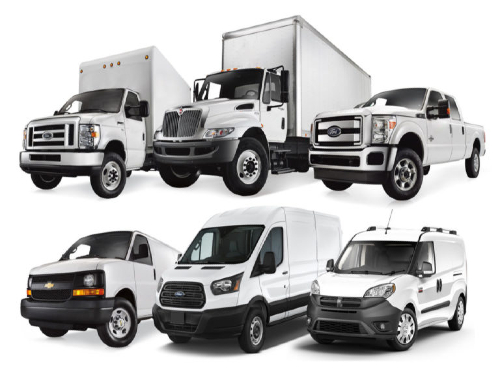
We provide expert auto glass repair and windshield replacement services for commercial fleets of all sizes. We are experienced with all manufacturers and machine types of domestic or foreign cars, trucks, vans, or commercial vehicles, including heavy equipment. Our same day mobile auto glass and windshield repair service will enable you to get back on the road faster and start saving you time and money instantly. Give us a call today! We are here to help!
Talk to a Fleet Auto Glass Specialist Now 866.278.7417
Your Vehicle’s Unseen Safety Network
Having a solid understanding of what is actually going on behind the glass is crucial before beginning any kind of repair work. The term “Advanced Driver Assistance Systems” refers to a set of electronic technologies that provide assistance to drivers in the areas of driving and parking. The Advanced Driver Assistance System (ADAS) improves the safety of automobiles and roads by providing a secure interface between humans and machines.
Although these systems make use of a variety of sensors, including radar, lidar, and ultrasonic sensors, the camera that is installed on the windshield and faces forward is frequently considered to be the most valuable component of the setup. The Lane Departure Warning (LDW) system is a common example of an ADAS feature that relies on your windshield. This system notifies you if you wander over lane markers without signaling. The Lane Keep Assist (LKA) feature is responsible for actively guiding the vehicle back into the middle of the lane.
An approaching collision with a vehicle or obstruction in front of the vehicle is detected by the Forward Collision Warning (FCW) system. Automatic Emergency Braking (AEB) is a system that applies the brakes automatically in order to prevent or avert a collision. Maintains a predetermined distance from the vehicle in front of you, which is referred to as adaptive cruise control (ACC). This feature reads the speed limit and other road signs and shows them on your dashboard. It is considered traffic sign recognition.
Even a slight change of a fraction of a millimeter in the camera that supplies data to these systems can have significant repercussions, and this shift can occur during the process of replacing the windshield. It is possible that a camera that is slightly off-axis will not see a stopped automobile until it is too late, or that it will give the impression that you are drifting out of your lane even when you are properly centered.
Both Replacement And Recalibration Are Included In The Two-Step Process
Auto glass repair was an easy trade for earlier automobiles; removal of shattered glass and replacement of it with new glass was all that was required. It is just half the fight when it comes to ADAS vehicles to replace them. The calibration stage is the second step, and it is equally important. The procedure of calibrating the camera involves changing the lens so that it captures a whole view of the road. This ensures that the ADAS systems get information that is correct.
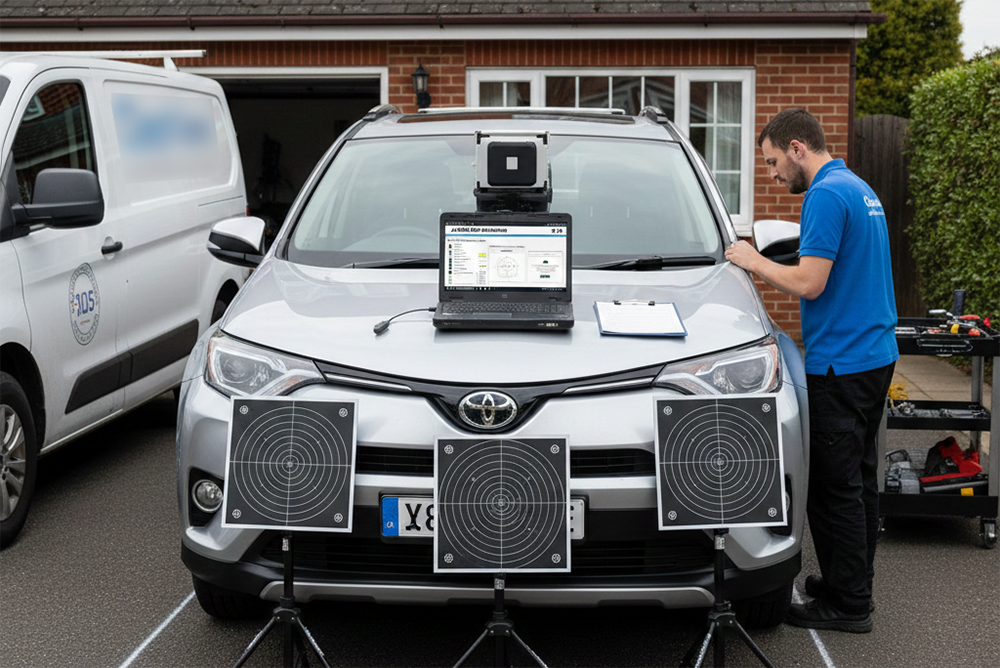
In general, there are two primary forms of calibration, and depending on the standards provided by the manufacturer, your vehicle may require either one or both categories. The process of static calibration is carried out in a shop setting that is under strict control. After the car has been parked on a level surface, the technician will position a certain target picture that is fixed on a fixture at a given distance and height from the vehicle. After that, the computer in the vehicle goes into a “learning mode” in order to match the camera with the focal point.
In order to do static calibration, you need a spacious and clear workplace. Floor that is level and flat. Certain illumination conditions, including the absence of glare and shadows. Highly accurate targets that are specific to your automobile brand. The procedure of dynamic calibration takes place while the vehicle is in motion. Following the replacement of the glass, a technician will next take the vehicle for a drive while simultaneously plugging a portable device into the OBD II port of the vehicle. They are required to drive for a predetermined period of time at a particular pace on roads that are properly marked.
Using real-world reference points such as lane markings, this enables the system to adjust to the new glass and become more comfortable with it. In order to perform dynamic calibration, the weather must be clear (no snow or rain). A bright day. roads that have lines that are plainly drawn. For certain automobiles, notably certain types of Honda and Subaru, it may be necessary to perform both static and dynamic calibration in order to guarantee complete performance.
Do you have a Question?
Get An Auto Glass Replacement Quote Now 866.278.7417
What Makes “Cheapest” Not the “Best” Option for ADAS Repairs
In the event that an unanticipated expenditure arises, such as a broken windshield, the immediate response is often to search for the most affordable option. Nevertheless, when it comes to ADAS, decreasing expenses might imply taking shortcuts with regard to safety protocols. A store that provides a quote that appears to be “too good to be true” may be bypassing the calibration process completely or utilizing glass that is not of sufficient quality.
When it comes to the realm of autonomous driving systems (ADAS), the quality of the glass is of the utmost importance. Original Equipment Manufacturer (OEM) refers to the glass that was manufactured by the same manufacturer that was responsible for producing the original glass for your vehicle. The factory glass is exactly the same as this one. The glass that is referred to as OEE (Original Equipment Equivalent) or aftermarket is manufactured by a different business specifically for your vehicle.
When it comes to a 1998 car, aftermarket glass is OK; but, when it comes to a 2024 SUV with automatic brakes, it might pose problems. There is a possibility that the camera’s vision will be affected if the glass in the camera region contains defects or tiny distortions that the human eye would overlook. When it comes to ensuring the dependability of ADAS, several manufacturers either expressly advocate or need OEM glass.
Information on How to Locate the Appropriate Auto Glass Shop
A search engine will most likely return dozens of hits if you put “auto glass repair near me” into the search bar. When searching for a company that is competent in managing high-tech safety systems, how do you go about filtering through all of them? Listed here are the precise inquiries that you ought to inquire about prior to scheduling an appointment. “Do you perform ADAS calibration in-house?” Some glass companies will repair the windshield, but then they will let you know that you need to send the vehicle to the dealership for the calibration.
A second appointment and a second charge will be added to your day as a result of this. You should look for a business that provides a “turnkey” solution, meaning that they will handle both the replacement and the calibration in a single visit. Reputable establishments make investments in high-quality calibration equipment such as Autel or Opti-Aim. “What calibration equipment do you use?” You should take this as a warning sign if they are evasive regarding the equipment or method they use.
“Do you offer a warranty on the calibration?” The majority of businesses promise that the glass will not leak, but whether or not they stand behind the technology is something you need to know. In the event that your lane departure warning begins to malfunction a week later, would they repair it at no cost to you? You should look for accreditation from the Auto Glass Safety Council (AGSC) if you are searching for “Are your technicians certified?” The technicians will have received training on the correct installation procedures and safety requirements as a result of this.
Windshields Covered By Insurance And Equipped With ADAS
The unfortunate reality is that the cost of replacing an ADAS windshield is much more than the cost of replacing a normal windshield. It is not uncommon for bills to range anywhere from $700 to over $1,500 due to the high-tech glass together with the labor time required for calibration. The good news is that this is typically covered by comprehensive homeowner’s insurance policies. The majority of the time, insurance companies will pay for the entire service (less your deductible) because windshields are considered to be a safety component, and calibration is a needed safety process.
It is important to note that in some areas, such as Florida, Kentucky, and South Carolina, insurance companies are obligated to waive the deductible charge for windshield repair. Look into the legislation in your area as well as the policy that you have. When you are completing the claim, you need to make sure that the insurance is okay with the cost of calibration as well as the cost of the glass.
DIY Is Not A Viable Option
A robust industry exists for do-it-yourself windshield repair products that are designed to mend minor damages. In the event that you have a rock chip that is around the size of a quarter and is not in the driver’s or the ADAS camera’s line of sight, a resin fill could be an option.
On the other hand, if the crack is greater than a dollar bill or if the damage is immediately in front of the camera region, the only solution that is considered to be safe is to replace the entire camera. In your driveway, you are unable to make calibration calculations. It necessitates the spending of thousands of dollars on targets and computers that are very specialized and expensive. Only qualified individuals should apply for this position.
Making Certain That You Are Safe While Driving
Each year, your automobile is becoming more intelligent. These sensors and cameras are your co-pilots; they are always on the lookout for potential threats and are always prepared to take action in order to save your life. On the other hand, they are only as good as the window through which they gaze. Your vehicle that is equipped with ADAS should not be treated like a car from the 1990s.
When the glass breaks, give importance to technical competence rather than the bidder with the lowest price. You can guarantee that the safety features of your vehicle are as crisp and responsive as the day they were first released from the manufacturer by selecting a certified shop that is familiar with the nuances of calibration. This will allow you to get back on the road with confidence. Be careful behind the wheel, and never lose your vision.
When it comes to your windshield, safety sensors, and the role that local calibration plays. At this point in time, automobiles have developed into very complex devices that are dependent on computer code just as much as they are on internal combustion engines. If you drive a vehicle that was produced within the past ten years, there is a good possibility that it is fitted with Advanced Driver Assistance Systems, which are more frequently referred to as ADAS.
Managing everything from lane retention to emergency braking, these systems are the unseen co-pilots that assist in keeping you safe. They are responsible for controlling everything. The equipment that is responsible for these features, on the other hand, is frequently located in a susceptible location, which is just behind your windshield. The fact that the glass is chipped or cracked is not only a nuisance from a purely aesthetic standpoint; it also poses a possible threat to the safety network of your car.
When a windshield has to be replaced, it is essential for car owners to have a solid grasp of the relationship that exists between the glass and the computer in the vehicle. The purpose of this tutorial is to examine the reasons why local calibration capabilities are necessary for current driving systems, as well as the reasons why it is crucial for your safety to select a shop that executes this procedure in-house.
A Comprehensive Understanding of Your Vehicle’s Eyes
Prior to gaining an understanding of calibration, it is necessary to first comprehend what is being viewed through the glass. When it comes to monitoring the road, ADAS features rely on a sensor network that includes cameras, radar, and lidar. In many automobiles, the primary camera that faces forward is fixed directly to the windshield, typically in the mirror that is located behind the rearview mirror.
Some of the most important safety features that these cameras are responsible for include the following: Lane Departure Warning: This function notifies you if you drift across lane markers without signaling. The Automatic Emergency Braking system automatically applies the brakes in the event that the driver is unable to respond in a timely manner. The Adaptive Cruise Control system keeps a predetermined distance between your car and the one in front of you.
Traffic Sign Recognition is a system that reads various traffic signs, including speed restrictions. On account of the fact that these cameras are attached to the glass, the perspective of the camera must be manually removed and then reinstalled after a windshield repair. Even if the replacement glass is completely placed, there is still a possibility that the angle of the camera will move by a fraction of a millimeter.
The Repercussions of Being Out of Alignment
There is a possibility that a change of one degree will appear insignificant to the naked eye. On the other hand, the chance of making a mistake increases exponentially as the angle projects further down the road. It is possible for a camera that is slightly off-axis to make an inaccurate calculation of the distance between you and the automobile in front of you or to fail to accurately view the lane markings.
The process of calibrating begins at this point. The procedure involves making electrical adjustments to the camera and sensors in order to ensure that they are in perfect alignment with the geometry of the car and the road. If you skip this step, your safety systems might not activate when they are supposed to, or, on the other hand, they might activate without warning.
Do you have a Question?
Get An Auto Glass Replacement Quote Now 866.278.7417
Contrasting Static and Dynamic Calibration
Different forms of calibration are often performed by local auto glass shops that have sophisticated capabilities. The type of calibration performed is determined by the criteria of the car manufacturer. Through the procedure of dynamic calibration, the technician is required to drive the vehicle at certain speeds on routes that have been clearly designated. The ADAS system is communicated with via a portable device that is hooked into the diagnostic port of the vehicle. This device teaches the camera to detect lane markings and road geometry in real time.
Static Calibration: This technique is carried out within the confines of the store. An atmosphere that is regulated, with floors that are level and lighting that is particular, is required. In order to ensure accurate results, technicians position precise targets and patterns at specific distances and angles from the vehicle. The computer in the vehicle goes through these objectives in order to position the sensors. In order to ensure complete road safety, certain vehicles need to undergo both dynamic and static treatments.
The Importance of Having Capabilities for Local Calibration
When a windshield was changed in the past, it was common practice for the owner of a vehicle to drive their vehicle to a dealership in order to have the sensors reset. This resulted in an additional appointment, additional downtime, and thus, an increased fee. This dynamic has undergone a substantial shift as a result of the proliferation of local auto glass businesses that are equipped with calibrating capabilities in-house.
The One-Stop Solution: When a local business makes an investment in calibrating equipment (such as the Autel or Opti-Aim systems), they are able to conduct both the replacement and the safety check in a single visit. This guarantees that your vehicle will be instantly safe to use once you have driven away from the location. There is no such thing as a “gap period” in which you are driving a car that has safety systems that have not been calibrated while you are waiting for an appointment at a dealership.
Expertise in a Particular Field: General mechanics and even dealership technicians are responsible for repairing every component of a vehicle, from the transmission to the oil replacement. When it comes to the interaction between the glass and the safety systems, auto glass specialists that specialize in calibration are completely focused on the material. When it comes to resolving specific difficulties with ADAS that are associated with glass installation, this focused attention frequently results in increased accuracy and efficiency.
Cost and Insurance Efficiency: A significant number of insurance plans cover the replacement of windshields as well as the requirement for calibration. Stores in the neighborhood that are capable of providing both services typically have billing procedures that are more simplified with insurance companies. It is not necessary for the automobile owner to make separate claims for the glass and the dealership servicing since this eliminates the administrative burden that they would otherwise have to deal with.
Potential Dangers of Ignoring Calibration
It is a risky assumption to make that the camera will “figure it out” on its own once it has been replaced. You are taking a risk when a business promises to repair your windshield but then advises you to handle the calibration elsewhere at a later time. Driving with sensors that have not been calibrated might result in false activations, which means that the vehicle may apply the brakes for a “ghost” barrier that is not actually in your path. System Failure: If the system fails to function properly, it may completely deactivate itself, causing warning signals to appear on your dashboard. A system that reacts too late to avoid an accident is the most harmful consequence due to the fact that it is the most dangerous outcome.
Questions That Are Frequently Asked
Whether my vehicle needs calibration, how can I tell whether it does? If your vehicle is equipped with safety features such as lane-keep assist or forward collision warning, and the camera is situated on the windshield, then you will almost certainly require calibration following the replacement that you have performed. By examining the vehicle identification number (VIN), your technician will be able to verify this.
To what extent does the procedure require time? There is an average increase of thirty to sixty minutes in the amount of time required to replace a windshield due to calibration. This increase is contingent upon whether the vehicle requires static, dynamic, or dual calibration. Calibration is something that mobile glass services can undertake. A great number of mobile technicians are able to carry out dynamic calibrations while they are on the road. On the other hand, in order to guarantee accuracy, static calibrations often need to be performed in the controlled environment of a real shop.
Positioning Safety on the Road as a Priority
These days, the windshield serves as more than simply a protective barrier against the wind; it also functions as a lens for the sophisticated computer that ensures your safety. As the technology of vehicles continues to evolve, the auto glass sector has been forced to adapt. It is imperative that you choose a local repair provider who is capable of calibrating these systems in order to guarantee that your car performs precisely as the manufacturer of the vehicle intended. Always be sure to inquire about their calibration method when you are making your next glass repair appointment; your safety is dependent on it.
Mobile Safe Auto Glass
14241 E Firestone blvd suite 400,
La Mirada, CA 90638
Phone: (562) 608-1154
Toll Free: 1 866 278 7417
Mail: sales@mobilesafeautoglass.com
Get a FREE QUOTE today! You can get a free quote and schedule 24/7 using this free quote wizard.
Mon – Fri 8am – 5pm
Saturday 8am – 1pm
Sunday Closed