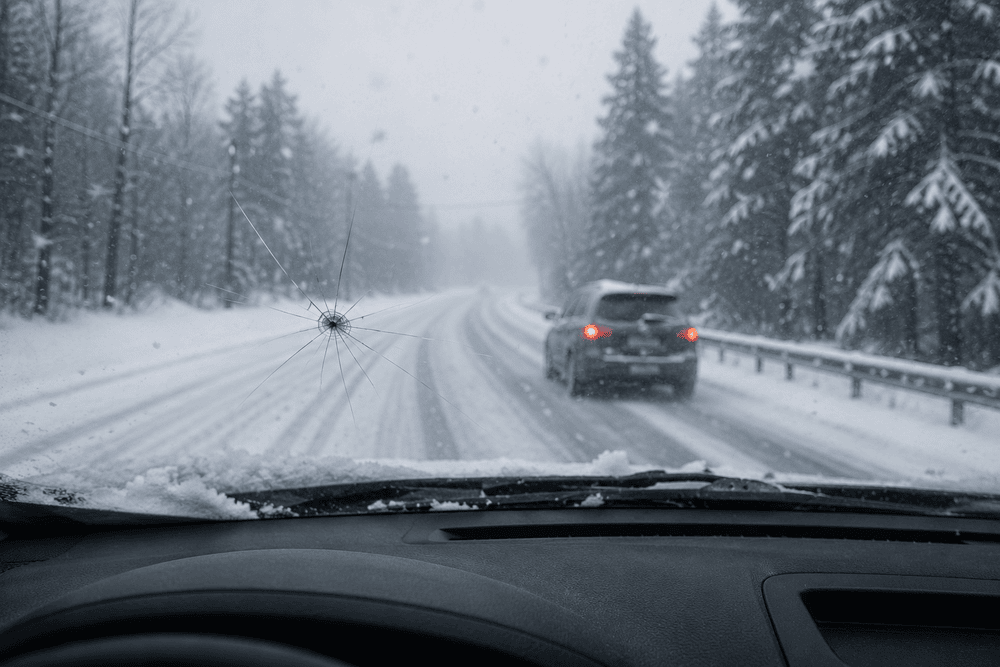
Winter Weather Can Delay Chip Fix Cracked Windshield
It’s simple to overlook a tiny chip in your windshield until winter arrives. Snow, ice, and cold weather do more than merely increase the risk of driving. If you wait too long, they may also transform a little fracture into a whole windshield replacement. Before the next cold snap strikes, here are a few things every motorist should know. Repairing windshield chips is one of those jobs that is simple to put off. The repair business is a few miles away, the break is little, and vision seems to be good. However, that little chip becomes a structural problem when the temperature falls below freezing. Sometimes overnight, water seeps in, freezes, swells, and pushes the break more across the glass.
Get An Auto Glass Replacement Quote Now 866.278.7417

Windshield Replacement & Repair
Our competitors push you into going to their shop to get your glass fixed-making it cheaper for them. We make it easier for YOU to get back on the road by offering free mobile repairs at your home or work. With our free mobile services servicing the entire Orange County & Los Angeles area, we can often handle your windscreen replacement the same day! So the next time you need a windshield replacement, give us a call.
Talk to a Windshield Replacement Specialist Now 866.278.7417

Calibration
Calibration is the process of returning a vehicle’s ADAS to OEM specifications. Calibration is necessary after a new glass installation, particularly a windshield with a camera mounted to it, to ensure that the ADAS features continue to function properly despite having been moved during installation. If a car’s ADAS is not properly calibrated, the system may not function safely. A misaligned camera could jeopardize the functionality of the system and lead to dangerous driving or accidents, so it is crucial that the cameras are aligned perfectly, which is what windshield calibration ensures.
Talk to a Calibration Specialist Now 866.278.7417

Fleet Auto Glass Repair
We provide expert auto glass repair and windshield replacement services for commercial fleets of all sizes. We are experienced with all manufacturers and machine types of domestic or foreign cars, trucks, vans, or commercial vehicles, including heavy equipment. Our same day mobile auto glass and windshield repair service will enable you to get back on the road faster and start saving you time and money instantly. Give us a call today! We are here to help!
Talk to a Fleet Auto Glass Specialist Now 866.278.7417
What Takes Place in Cold Weather When a Windshield Cracks
In cold weather, glass contracts. The contraction of a windshield that already has a chip or crack adds to the stress surrounding the damaged area. Simultaneously, any moisture that has penetrated the crack expands and freezes, causing the fracture to enlarge from the inside out.
The outcome? One severe frost may cause a quarter-sized chip to spider over the whole windshield. The only solution at that time is complete replacement; repair is no longer an option.
The reason moisture is the true adversary is because even a little breach allows water to escape. Rain, sleet, and snow force moisture into the chip, and when that water freezes, it puts a lot of pressure on the glass around it. Potholes on wintertime roadways are caused by the same principle: water expands by around 9% when it freezes, and glass has very little elasticity to absorb that stress.
How temperature fluctuations hasten damage: The fast cycling between cold and warm is what creates issues, not simply the cold itself.
The glass is subjected to severe thermal stress when a vehicle with a broken windshield is driven from a cold parking lot into a heated garage or when the defroster is blasted on a chilly morning. The fracture becomes somewhat deeper with each expansion-contraction cycle.
Why Winter Makes Chip Repair More Difficult
Repairing it in the winter has its own set of challenges, even if the damage is discovered early. The resin used in windshield chip repairs is impacted by cold temperatures.
A transparent resin is injected into the damaged region and ultraviolet (UV) radiation is used to cure it. Both the glass and the resin must be within a certain temperature range for this procedure to be successful, usually over 50°F (10°C).
The resin flows improperly into the fracture, cures unevenly, and may not properly adhere to the glass when temperatures fall below that threshold. It is worse to have a badly done repair than to have none at all. It may leave the fracture clearly visible, weak structurally, or vulnerable to re-cracking at the same location.
Winter days are shorter and frequently cloudy, making UV curing less effective. For UV-cured resin to properly harden, sunlight or a UV lamp is required.
A lot of mobile repair businesses rely on natural light, which is much less dependable throughout the winter. This problem still restricts the window of ideal conditions for outdoor or mobile repairs, even though shop-based repairs using UV lamps are less impacted.
Before resin is injected, the glass must be totally dry. Any moisture inside or around the chip must be eliminated. This procedure takes longer in the winter. Before starting, technicians often use a heat source to dry up the crack, but if done carelessly, this adds time and increases the danger of thermal stress.
Do you have a Question?
Get An Auto Glass Replacement Quote Now 866.278.7417
How to Treat a Chipped Windshield in the Winter
Although there are obstacles, they are doable. Chip repair is still achievable in cold weather; you simply need to be extra careful about how and when you do it.
The most crucial aspect of winter windshield repair is to have the work done inside. Nearly all of the issues associated with cold weather are eliminated in an indoor repair facility with a regulated temperature setting.
The resin maintains the proper viscosity, the glass may be warmed gradually, and UV lamps provide steady curing light independent of cloud cover. If the technician cannot provide a regulated atmosphere, stay away from mobile repairs in cold or almost freezing temperatures.
Avoid using your defroster on a cracked windshield: It may be difficult to resist on a chilly morning, but one of the quickest ways to transform a chip into a whole crack is to send hot air at a cold, cracked windshield.
Use a low heat setting and direct the vents away from the glass as the vehicle heats gradually if your windshield is already damaged and covered with ice. Even better, before you drive, let the car warm up gradually.
Before the repair appointment, cover the chip: If it takes longer to find the chip and have it mended, cover the damaged area with a little piece of transparent tape. While it won’t fix anything, it will prevent moisture and debris from entering the crack, giving you a little more time before things get worse.
Plan repairs on warmer days whenever possible: If your schedule permits, try to do the repair on a day when temperatures are expected to be higher than 50°F. There are milder days even in the winter. Repairing a warmer window at the right time may result in a cleaner and more efficient task.
When Is It Too Late to Repair the Damage
Winter weather often speeds up the timeframe, and not every chip can be salvaged. Generally speaking, chips or cracks that are:
Generally, resin injection repair cannot handle lengths longer than six inches. Even little ones that are in the driver’s direct line of sight may need to be replaced since slight optical distortions might result from repairs.
Because fractures along the windshield’s edge often damage the structure across a wider region, they are more difficult to seal. It must be replaced completely if it is deep enough to pierce both layers of laminated glass.
Don’t put off replacing it if exposure to winter has caused the fracture to widen. Driving with a significantly cracked windshield is illegal in many areas, and a structurally weakened glass is more likely to collapse in an accident.
Does Winter Windshield Repair Get Covered by Auto Insurance? Windshield chip repair is often covered by comprehensive vehicle insurance coverage, sometimes with no deductible. Depending on the conditions of your coverage, replacement may still be covered if cold weather has caused your crack to extend beyond the repairable range.
Before making an out-of-pocket payment, it’s advisable to contact your insurance company. Certain insurers may greatly expedite the process by working directly with repair firms.
Do Not Allow Winter to Replace a Chip
In the winter, a cracked windshield is an urgent issue. For a quick, inexpensive fix, the more you wait, the more the cold works against you, freezing moisture, widening the gap, and limiting your window.
Take prompt action, have the repair completed indoors, and resist the urge to blast your defroster. A $400–$1,000 windshield replacement next month is outweighed by a $100 chip fix now.
Common Questions: Is it possible to repair a damaged windshield while it’s freezing outside? Yes, but it has to be done inside at a regulated temperature, preferably higher than 50°F (10°C). The repair resin cannot flow and properly cure in cold conditions. It is not advised to do mobile or outdoor repairs in frigid weather.
In winter, how fast does a break in the windshield spread? In freezing circumstances, a chip may spread considerably in a matter of hours, particularly if moisture is present or the glass is exposed to abrupt temperature fluctuations, such as a defroster blast. In winter, it is highly recommended to have the repair completed within one to two days after discovering the damage.
Does a cracked windshield get worse when you use the defroster? Indeed. When hot air is directed at cold, broken glass, thermal stress is created, which may quickly widen the break. If there is already damage to the windshield, use the defroster on low and let the vehicle warm up gradually.
If a windshield crack widens throughout the winter, would insurance cover it? Both chip repair and complete windshield replacement are often covered by comprehensive vehicle insurance. Before making an appointment for a repair or replacement, clarify your terms with your insurance since coverage varies by policy.
What distinguishes a chip that requires a complete replacement from one that can be fixed? In general, resin injection may be used to fix chips smaller than a quarter and cracks shorter than six inches. Complete windshield replacement is usually necessary for longer cracks, damage in the driver’s line of sight, edge cracks, or fractures that have pierced both glass layers.
Cracked Windshield Becomes An Emergency in Cold Weather
A little chip in your windshield may seem to be a minor irritation that is simple to overlook or put off. However, that small crack can become a major issue almost instantly when the temperature drops.
In addition to making driving unpleasant, cold weather actively speeds up windshield deterioration, which may jeopardize your safety and result in much higher future costs. This article explains why windshield repair is so critical in cold weather, what happens to frozen glass, and what you should do before winter takes hold of your vehicle.
In cold weather, what happens to a cracked windshield? Basic physics states that glass expands and shrinks in response to temperature variations. When a crack already exists, the movement stresses the crack itself, which is its weakest point.
The crack’s edges are forced to gently pull apart and then press back together with each freeze-thaw cycle. The fracture becomes deeper, broader, and longer over time as a result of this ongoing tension.
This is exacerbated by water. During the day, morning frost, sleet, or rain seeps into the crevice. That water expands when it solidifies into ice at night when temperatures fall below freezing, widening the split even more. Within a few days of below-freezing weather, even a coin-sized chip may cover the whole windshield.
Why does the defroster exacerbate the situation? Contrary to popular belief, one of the quickest ways to transform a little fracture into a complete windshield replacement is to blast your defroster on a chilly morning. Defrosters quickly heat the glass’s internal surface while keeping its outside cold.
Cracks spread along the route of least resistance as a result of the abrupt temperature change that causes thermal stress throughout the glass. Pouring boiling water over a frozen windshield is similar. A cracked windshield can split almost immediately due to the sudden temperature change.
Do you have a Question?
Get An Auto Glass Replacement Quote Now 866.278.7417
Repairs Are More Difficult in Cold Weather
The annoying thing is that you have less alternatives the longer you wait. In order for windshield repair glue, which is used to fill in chips and small cracks, to fully cure, temperatures must be quite warm.
The ideal temperature range for most repair resins is between 50°F and 100°F. Because the adhesive doesn’t adhere as well below that range, the repair may not hold and could even trap air bubbles that make it less visible.
Because of this, vehicle glass experts sometimes need to warm up the glass before trying to fix it in the winter, or they could advise postponing the repair until the right time. Unfortunately, cold-weather deterioration picks in speed throughout that waiting time.
Most repair shops won’t try a patch repair once a crack is about 6 inches long or reaches the windshield’s edge. The only choice at that point is a complete windshield replacement, which usually costs many times more than a simple chip repair.
How cold weather impacts not only your pocketbook but also your safety: A cracked windshield is more than a cosmetic problem. One structural element of your car is its windshield. It gives the driver a clean line of sight, supports the roof, and aids in the proper deployment of the airbags in an accident. All of these tasks are performed less successfully by a damaged windshield.
Frost, fog, and fewer daylight hours already make it harder to see in cold weather. Another risk is a crack that crosses your field of view, particularly if the low winter sun’s glare strikes the damage and distributes light straight into your eyes.
Additionally, several jurisdictions have rules mandating that drivers have an unobstructed vision through the windshield. Even if the damage wasn’t the result of carelessness, driving with a large crack could result in a traffic citation.
In Cold Weather Protect Your Windshield
Here’s what you can do immediately if you already have a chip or crack: Have it examined. Before the temperature drops further, get it evaluated by a specialist, even if the damage seems to be minimal. Free examinations are available at many car glass stores, and some mobile repair firms will come to your place.
Use transparent tape as a stopgap. While you set up a repair, you may keep moisture out of a chip by covering it with transparent packing tape. While short-term harm may be slowed, this is not a long-term cure.
When at all possible, park inside. Keeping your car in a garage, or even a carport, shields the glass from frost accumulation that would otherwise need to be scraped and lessens exposure to freeze-thaw cycles.
Take caution while using your defroster. Instead of blasting heat right away, start with a lower temperature and gradually raise it. To lessen thermal shock, let the glass warm up gradually.
Refrain from scraping over the fracture. Ice scrapers have the ability to snag on a crack’s edge and greatly widen it. Instead of physically pushing ice off, use a de-icing spray and a soft brush to remove snow first.
Don’t put off fixing your windshield until spring because, more quickly than most drivers realize, cold weather may transform a simple repair into a costly replacement. If cold temperatures, moisture, and thermal stress are allowed to do its job, a chip that would cost less than $100 to repair today would need a $300–$500 windshield replacement by January.
The answer is as genuine as the urgency. As soon as you see damage, get in touch with a reliable car glass repair company, find out whether windshield repair is covered by your vehicle insurance (many comprehensive plans do, often with no deductible), and take action before the next freeze occurs. Every time you drive, your windshield keeps you safe. Treat it with the same care as you would a flat tire.
Common Questions
Is it possible for a cracked windshield to break in cold weather? While complete breaking is uncommon, a crack may expand quickly across the windshield in cold weather. Although laminated safety glass is made to withstand breakage, a big crack seriously compromises its structural integrity and can seriously impair visibility.
In frigid conditions, how fast can a crack spread? Under the correct circumstances, a fracture may spread in a matter of hours, especially if it contains moisture and the temperature drops below freezing overnight. A little chip may grow into a full-length break across the windshield after many days of repeated freeze-thaw cycles.
Does winter windshield repair get covered by auto insurance? Windshield repair is often covered by comprehensive vehicle insurance coverage, and there is frequently no deductible for chip repairs. Before making a repair appointment, review the specifics of your insurance or give your provider a call since coverage varies by insurer and state.
In cold weather, is it safe to drive with a cracked windshield? The location and size of the crack determine this. A little chip that is out of the driver’s line of sight could be safe for a short while, but a crack that has expanded to the edge of the glass or blocks view is dangerous. Additionally, driving with an impeded windshield vision is prohibited in several states.
Can I fix a break in my windshield on my own in the winter? There are do-it-yourself repair kits, but they work less well in colder climates because the resin doesn’t properly cure below about 50°F. Hire a qualified vehicle glass expert to do the repair for optimal outcomes and to prevent aggravating the issue.
Mobile Safe Auto Glass
14241 E Firestone blvd suite 400,
La Mirada, CA 90638
Phone: (562) 608-1154
Toll Free: 1 866 278 7417
Mail: sales@mobilesafeautoglass.com
Get a FREE QUOTE today! You can get a free quote and schedule 24/7 using this free quote wizard.
Mon – Fri 8am – 5pm
Saturday 8am – 1pm
Sunday Closed