Common Warning Signs for Car Fix Cracked Windshield
A little crack in your windshield may seem to be nothing more than a cosmetic inconvenience, which is simple to ignore and put off. However, a little chip may soon develop into a structural issue that endangers you and everyone else in your car. The Auto Glass Safety Council estimates that the US replaces around 30 million windshields annually. However, a lot of those replacements only occur because drivers disregard early warning indicators that may have resulted in a less complicated and expensive repair. This article outlines the most crucial indicators that your broken windshield needs expert repair and explains why taking prompt action may save you money, time, and perhaps even your life.
Get An Auto Glass Replacement Quote Now 866.278.7417

Windshield Replacement & Repair
Our competitors push you into going to their shop to get your glass fixed-making it cheaper for them. We make it easier for YOU to get back on the road by offering free mobile repairs at your home or work. With our free mobile services servicing the entire Orange County & Los Angeles area, we can often handle your windscreen replacement the same day! So the next time you need a windshield replacement, give us a call.
Talk to a Windshield Replacement Specialist Now 866.278.7417

Calibration
Calibration is the process of returning a vehicle’s ADAS to OEM specifications. Calibration is necessary after a new glass installation, particularly a windshield with a camera mounted to it, to ensure that the ADAS features continue to function properly despite having been moved during installation. If a car’s ADAS is not properly calibrated, the system may not function safely. A misaligned camera could jeopardize the functionality of the system and lead to dangerous driving or accidents, so it is crucial that the cameras are aligned perfectly, which is what windshield calibration ensures.
Talk to a Calibration Specialist Now 866.278.7417

Fleet Auto Glass Repair
We provide expert auto glass repair and windshield replacement services for commercial fleets of all sizes. We are experienced with all manufacturers and machine types of domestic or foreign cars, trucks, vans, or commercial vehicles, including heavy equipment. Our same day mobile auto glass and windshield repair service will enable you to get back on the road faster and start saving you time and money instantly. Give us a call today! We are here to help!
Talk to a Fleet Auto Glass Specialist Now 866.278.7417
Danger of a Cracked Windshield Is Greater Than It Appears
Beyond just keeping out wind and rain, your windshield accomplishes more. The National Highway Traffic Safety Administration (NHTSA) states that it may make up as much as 30% of the structural stiffness of your car. A damaged windshield is far more likely to collapse after a rollover collision, decreasing the roof’s capacity to cover people.
Additionally, windshields facilitate the correct deployment of airbags. The windshield serves as a backstop when a passenger-side airbag deploys, guiding the bag in the direction of the occupant.
Insufficient resistance from a broken windshield might lead to an improper airbag deployment. To put it simply, a windshield that is damaged is a safety system failure waiting to happen.
Warning Signs That Your Windshield Needs to Be Repaired: 1. The Crack Is Longer Than a Dollar Bill: When it comes to windshield damage, size is important. The majority of vehicle glass repair specialists follow a straightforward guideline: if a break is larger than a dollar bill, or around 6 inches, it usually cannot be fixed with resin and will need replacing the whole windshield.
Short cracks and tiny chips may often be promptly and reasonably repaired. The structural integrity of the glass is compromised by larger fractures, which cannot be completely restored by a resin injection.
Two. The Damage Is in the Driver’s Line of Sight: Size and location are equally crucial. Even a little fissure right in front of the motorist is cause for urgent worry.
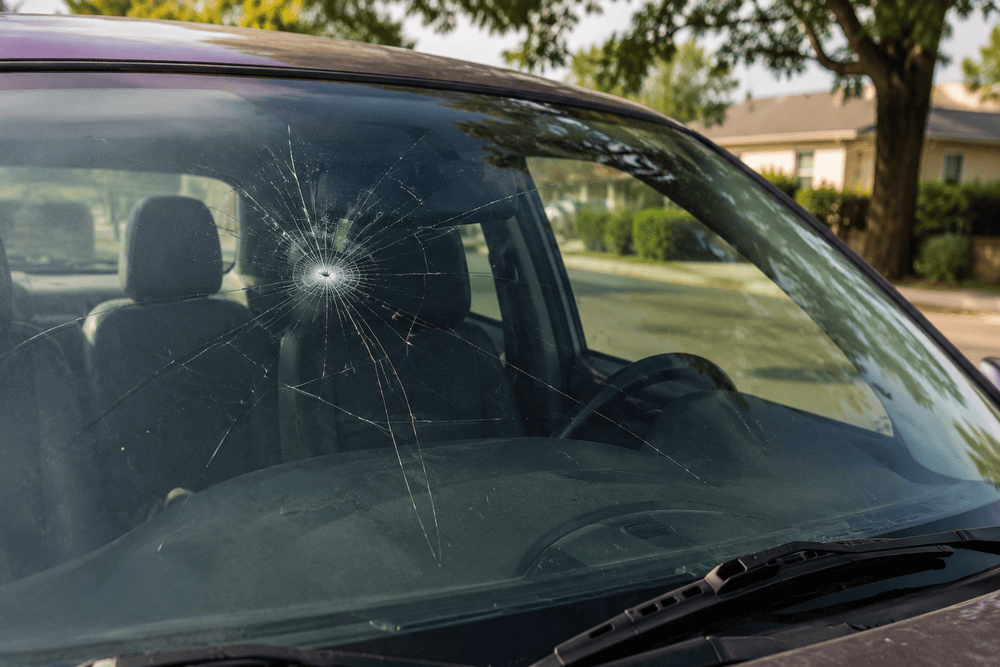
Third, The Crack Has Several Branches: The behavior of a single, straight crack differs from that of a crack that has expanded in several directions. Sometimes referred to as “spider cracks” or “star breaks,” branching fractures show that the glass has been under a lot of stress across a large region.
These patterns are more likely to spread and are more difficult to consolidate with resin, especially when temperatures drastically change. Make an appointment for an examination right away if you see your crack beginning to spread.
Four. The Crack’s Edges Reach the Windshield’s Border: Structural issues arise when cracks reach your windshield’s edge. A specific urethane glue is used to attach the edges of auto glass to the frame of your car. A fracture that crosses this line may damage the seal and affect how the glass fits within the frame.
A poorly sealed windshield lowers the glass’s ability to remain in place after a collision, produces wind noise, and leaks during rains. Almost always, edge fractures need a complete replacement rather than a patch.
Fifth. Auto glass is not static, which is why the crack is becoming bigger. A cracked windshield is stressed by variations in air pressure, temperature, and road vibrations. It’s obvious that the damage is active and becoming worse if you’ve seen a chip gradually spreading into a crack or a crack that seemed to widen overnight after a chilly evening.
The degradation is accelerated if repairs are postponed at this point. A $75 repair today could need a $400+ complete replacement in a matter of weeks.
Sixth. If your windshield feels rough or pitted, softly run your fingertips across it. Smoothness is a sign of a healthy windshield. Rough, pitted glass, which is often the result of years of sand, gravel, and road debris, scatters light in ways that generate glare and impair sight, especially at dawn and sunset or during wet weather.
Cleaning is insufficient to stop pitting. It’s worthwhile to speak with an auto glass professional about whether a replacement is necessary if your windshield seems visibly rough, particularly across the main viewing area.
Seven. You Can Hear Wind Noise from the Windshield Area: When a windshield is placed correctly, it creates an airtight seal with the frame of your car. The windshield’s seal may have been weakened if you’ve noticed fresh whistling or wind noise coming from the front of your car at highway speeds. This might be due to damage from a prior repair or a crack that has reached the edge of the glass.
Stop a Crack from Spreading Until It Can Be Repaired
A few actions will assist prevent more damage if you are unable to have your windshield fixed right away:
Steer clear of abrupt temperature changes: Don’t park in bright sunshine for long periods of time or blow hot air on a chilly windshield. Glass is stressed by thermal expansion and contraction.
Cover the break with transparent packing tape to keep moisture and debris out, which may make a resin repair more difficult or impossible. Steer clear of vehicle washes since mechanical brushes and high-pressure water may exacerbate pre-existing fractures.
Drive cautiously since vibrations from potholes and uneven roads immediately affect the glass. These are simply short-term solutions. They don’t address the underlying harm.
Don’t Wait Until It’s Too Late: One of those issues that nearly always gets worse is a cracked windshield.
The good news is that, if detected early, most chips and minor cracks are affordable to fix. For as low as $50 to $100, most vehicle glass shops can restore structural integrity and clarity with a 20-minute resin injection.
Don’t put it off if you’ve seen any of the warning indicators discussed in this article. Make an appointment with a licensed auto glass professional for an evaluation, find out whether your insurance covers the repair, and take care of it before that little fracture turns into a dangerous or costly problem.
Do you have a Question?
Get An Auto Glass Replacement Quote Now 866.278.7417
Frequently Asked Questions
How do I determine if my damaged windshield has to be replaced or repaired? Resin may often be used to fix a fracture that is less than 6 inches, doesn’t fall in the driver’s line of sight, and hasn’t reached the edge of the windshield. Larger fractures, edge cracks, and branching patterns often need a full replacement.
Is driving a car with a cracked windshield safe? Yes, depending on the damage. In the near term, small chips that are out of the driver’s field of sight usually pose little harm. Large cracks, edge cracks, or damage that reduces sight, however, make driving dangerous and may be prohibited in certain areas.
Will a broken windshield repair be covered by auto insurance? Windshield repair is often covered by comprehensive auto insurance policies, sometimes with no deductible. Each insurance has different coverage for complete replacement. Before making an out-of-pocket payment, confirm your coverage with your insurer.
How fast can a crack in the windshield spread? Under the correct circumstances, a fracture may spread in a matter of hours, especially if it is subjected to abrupt temperature fluctuations, vibrations from rough roads, or stress from driving on a highway.
Repairs for tiny cracks or chips typically take 20 to 30 minutes. It usually takes one to two hours to replace the whole windshield, and there is a further drying time before the car can be driven.
Do windshield cracks become worse in cold weather? Indeed. Glass contracts in cold weather, which may exacerbate pre-existing fractures. One of the most frequent reasons for a little chip growing into a large fracture is turning on the defroster too soon on a chilly morning, which quickly heats already constricted glass.
Cracked Windshield Is More Than Just Aesthetic
It is simple to overlook a little chip on your windshield. The automobile still runs well, it doesn’t obstruct your vision (yet), and repairs seem like something you can handle later. However, most drivers don’t realize how quickly that little fracture may grow into a much larger—and more costly—issue.
This article explains why a cracked windshield is a safety concern rather than only a cosmetic one, what happens if you ignore it for too long, and how to determine if a patch will suffice vs a complete replacement.
The Significance of a Cracked Windshield: There are far more uses for your windshield than merely protecting the cabin from wind and rain. It is a structural component of your vehicle. In a front-end collision, the windshield provides up to 45% of the cabin’s structural integrity. After a rollover, that number rises to 60%, according to the Auto Glass Safety Council.
Additionally, it directly affects the deployment of airbags. When an accident occurs, the passenger-side airbag is intended to bounce off the windshield and send the cushion in the direction of the person. Under such pressure, a weakened windshield may bend or separate, resulting in an improper or nonexistent airbag deployment.
These functionalities may be compromised by a break that does not cover the whole glass. The whole structure is weakened by even a little fracture, and the longer it is ignored, the worse it becomes.
How a Tiny Chip Turns Into a Big Crack
The primary accelerant is temperature. When temperatures drop overnight, a chip that is stable on a warm day may spider outward. Rapid expansion may be caused by operating the air conditioner at full power, parking in direct sunshine, or firing the defroster on a chilly morning.
The remainder is done by road vibration. The glass is stressed by every pothole, speed bump, and uneven section of the road. Cracks eventually spread further across the windshield as a result of this continuous micro-movement.
Another element that is often disregarded is moisture. When water penetrates into a chip, it swells and widens the internal crack when it freezes. A complete replacement is often required after a fracture reaches the outside edge of the windshield, making repairs impossible.
When Does a Crack Need to Be Replaced and When Can It Be Repaired? Most drivers desire an answer to this topic, and the fundamental rules are rather simple.
When in doubt, get an expert to evaluate it. A repair, which usually costs between $50 and $150, is far less expensive than a complete replacement, which may cost anywhere from $200 to over $1,000 depending on the make, model, and if the windshield has integrated sensors or heating components. The majority of car glass companies also provide free inspections.
Legal and Insurance Perspective
You may also face legal repercussions if you drive with a damaged windshield. States have different laws, but most of them prohibit driving a car with damage that blocks the driver’s vision.
During regular traffic stops, a broken windshield may result in a ticket in some jurisdictions. More significantly, culpability may be impacted if an investigator finds that windshield damage played a role in the collision.
In terms of insurance, a lot of comprehensive vehicle insurance plans include windshield repair at no cost to the driver, so if you submit a claim, the chip may be replaced for free. Insurance companies must completely waive the deductible for glass repairs in some areas, such as Florida, Kentucky, and South Carolina. Prior to making an out-of-pocket payment, review your coverage.
How to Stop Small Chips from Getting Worse While You Wait: There are things you may do to lessen the damage if you are unable to see a repair shop right away.
Steer clear of drastic temperature swings. Avoid using hot water on a frozen windshield and don’t turn on the defroster to its highest setting shortly after the vehicle has been in the cold.
Make sure the crack is dry and clean. Damage is accelerated by moisture. As a temporary barrier, some drivers cover the chip with a tiny piece of transparent tape. This won’t solve the problem, but it may keep water and debris out.
Take caution while driving. Try to avoid driving on highways as much as possible, and be cautious around speed bumps and uneven terrain.
Park in a garage or in the shade. Reducing exposure to heat restricts growth. These are short-term solutions. None of them restore the glass’s structural integrity or substitute a competent repair.
Do you have a Question?
Get An Auto Glass Replacement Quote Now 866.278.7417
What to Anticipate From a Windshield Repair
The majority of chip or small crack repairs are completed in less than 30 minutes. A transparent resin is injected into the injured region by a professional, and ultraviolet radiation is used to cure it. Although the outcome isn’t entirely noticeable, it keeps the damage from spreading and restores the glass’s structural integrity.
The resin requires time to completely cure after the repair. The majority of professionals advise keeping the area dry and avoiding vehicle washes for at least 24 hours. The glass will be safe to drive on even though the repair won’t seem as if the chip never occurred—you’ll probably still notice a small mark.
The process usually takes one to three hours to complete. Advanced driving assistance systems (ADAS), lane departure alerts, and rain detection sensors are often included in modern windshields; these sensors need to be recalibrated after replacement. Ignoring calibration may lead to these safety systems malfunctioning, but it also increases the cost and time.
A cracked windshield seldom heals on its own, so don’t wait till the crack decides for you. If left unchecked, a chip that can be fixed for $75 now might develop into a crack that has to be replaced for $600 next month. More importantly, in the case of an accident, driving on shattered glass puts you, your passengers, and other drivers at a structural disadvantage.
As soon as possible, get it evaluated. You may not have to pay anything at all, so check your insurance coverage. Additionally, the repair is quick, inexpensive, and long-lasting provided the damage is discovered early enough. You’ll regret disregarding the fracture that seems insignificant at the moment.
Common Questions
A little chip that is out of the driver’s line of sight is less dangerous right immediately, but any break compromises the windshield’s structural integrity and has to be fixed right away. Before operating a vehicle, any cracks in or close to the driver’s seeing area should be fixed.
Repairs for chips and minor cracks typically cost between $50 and $150. Depending on the car, kind of glass, and if sensor recalibration is necessary, complete windshield replacements may cost anywhere from $200 to more than $1,000.
Will windshield repair be covered by my auto insurance? Windshield repair is often covered by comprehensive auto insurance policies, sometimes with no deductible. Insurance companies must legally waive the deductible for glass repairs in Florida, Kentucky, and South Carolina. Prior to making an out-of-pocket payment, review your particular coverage.
How long should I wait to get a damaged windshield fixed? The sooner, the better. A little chip may grow into a big fracture in a matter of days due to temperature fluctuations and road vibration. Repair is no longer a possibility after a crack reaches the edge of the windshield or is larger than around 6 inches; a complete replacement is necessary.
In order to restore structural integrity, repair entails injecting resin into a tiny chip or fracture. It is far less costly and takes less than half an hour. It takes one to three hours to replace a windshield, and it may be necessary to recalibrate the ADAS sensor.
Can an airbag fail due to a damaged windshield? Indeed. When an accident occurs, the passenger-side airbag is intended to detach from the windshield. During a collision, a windshield that is structurally weakened may bend or separate, which would hinder the airbag’s proper deployment and decrease its efficacy.
Mobile Safe Auto Glass
14241 E Firestone blvd suite 400,
La Mirada, CA 90638
Phone: (562) 608-1154
Toll Free: 1 866 278 7417
Mail: sales@mobilesafeautoglass.com
Get a FREE QUOTE today! You can get a free quote and schedule 24/7 using this free quote wizard.
Mon – Fri 8am – 5pm
Saturday 8am – 1pm
Sunday Closed