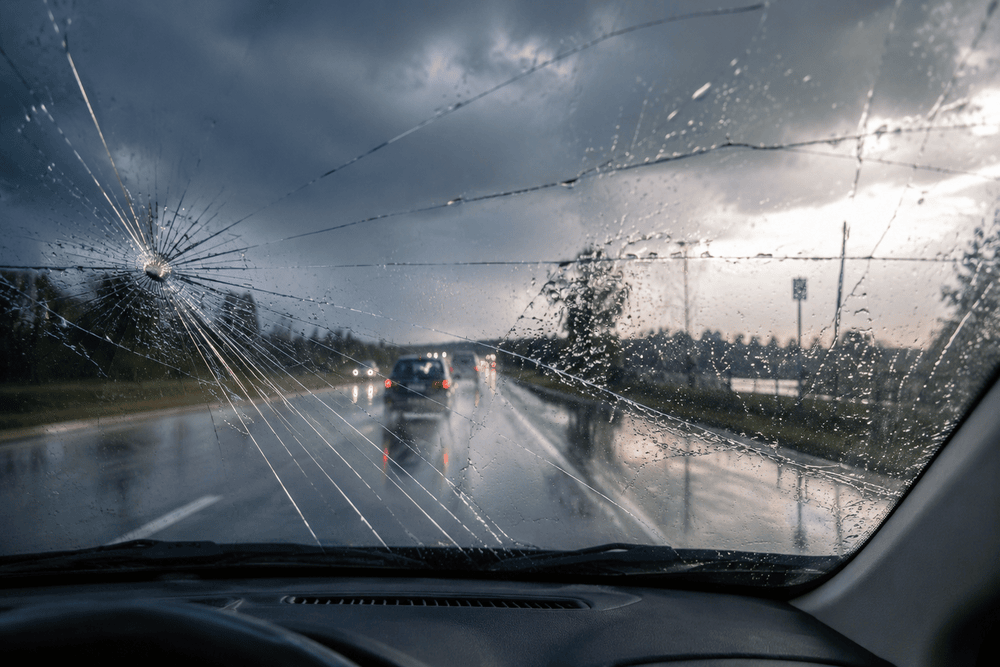
Weather Conditions That Affect Car Fix Cracked Windshield
A windshield crack? Whether your repair succeeds or fails completely might depend on the weather. On the surface, repairing a windshield crack is surprisingly easy: a specialist injects resin into the fracture, uses UV light to cure it, and then sends you on your way. However, the environment has a significant impact on that process. At crucial points in the repair process, factors like temperature, humidity, rain, and even direct sunshine may alter how well the resin joins and how long the patch lasts. This book explains which weather conditions are optimal, which ones cause issues, and what to do when Mother Nature isn’t cooperating.
Get An Auto Glass Replacement Quote Now 866.278.7417

Windshield Replacement & Repair
Our competitors push you into going to their shop to get your glass fixed-making it cheaper for them. We make it easier for YOU to get back on the road by offering free mobile repairs at your home or work. With our free mobile services servicing the entire Orange County & Los Angeles area, we can often handle your windscreen replacement the same day! So the next time you need a windshield replacement, give us a call.
Talk to a Windshield Replacement Specialist Now 866.278.7417

Calibration
Calibration is the process of returning a vehicle’s ADAS to OEM specifications. Calibration is necessary after a new glass installation, particularly a windshield with a camera mounted to it, to ensure that the ADAS features continue to function properly despite having been moved during installation. If a car’s ADAS is not properly calibrated, the system may not function safely. A misaligned camera could jeopardize the functionality of the system and lead to dangerous driving or accidents, so it is crucial that the cameras are aligned perfectly, which is what windshield calibration ensures.
Talk to a Calibration Specialist Now 866.278.7417

Fleet Auto Glass Repair
We provide expert auto glass repair and windshield replacement services for commercial fleets of all sizes. We are experienced with all manufacturers and machine types of domestic or foreign cars, trucks, vans, or commercial vehicles, including heavy equipment. Our same day mobile auto glass and windshield repair service will enable you to get back on the road faster and start saving you time and money instantly. Give us a call today! We are here to help!
Talk to a Fleet Auto Glass Specialist Now 866.278.7417
Significance of Weather in Windshield Crack Repair
In order to restore structural integrity, the repair procedure uses a liquid resin that enters the crack, fills in any air pockets, and solidifies under UV light. The environment has an impact on every stage of that process, from the viscosity of the resin to the curing period.
If the circumstances are incorrect, the resin could not enter the fracture completely. It could heal too quickly, too slowly, or not at all. The outcome? A crack that spreads after you’ve already paid for the repair, or worse, a repair that seems OK but breaks under duress.
Cold Weather: The Most Common Culprit: For good reason, the most common weather-related barrier to windshield repair is cold temperatures.
What Effects Does Low Temperature Have on Windshield Resin? In cold weather, resin thickens. The resin gets so viscous below around 40°F (4°C) that it finds it difficult to pass through the tiny cracks.
This implies that there may be weak spots in the repair if air pockets stay trapped within. These air pockets form the beginning of new cracks when that repaired part is subjected to stress, such as from a pothole, a vibrating road, or a sudden change in temperature.
Regardless of the resin, cold glass is another issue. Low temperatures cause glass to compress. It is more difficult to make a smooth, seamless fill in contracted glass because the fracture acts differently than it does at ambient temperature.
Is It Possible to Fix a Windshield in the Winter? Yes, but with care. Before beginning, the majority of qualified technicians will either park the car in a heated garage or carefully use a heat gun on the surrounding area to warm the glass. For optimal results, the desired glass temperature is usually between 60°F and 80°F (15°C and 27°C). Outdoor cold is tolerable as long as the glass is heated to the proper temperature.
One crucial caution: if you want to quickly reheat a cracked windshield, never blast the heater straight at it. Before the repair even starts, the fracture may expand considerably due to rapid, uneven heating.
An Excessive Amount of a Positive Thing
On the other hand, too much heat causes problems of its own. What Takes Place in Extreme Heat with Windshield Repair Resin? Resin may start to cure too soon at very high temperatures, over around 95°F (35°C).
The substance may begin to set before it has completely entered the crack because the heat functions similarly to the purposeful UV light used to cure the resin. Clarity and strength are decreased as a consequence of a partial fill with an uneven surface cure.
This issue is exacerbated by direct sunshine. Internal temperatures in parked automobiles may rise well beyond the outside air temperature, and a sun-baked windshield may already be much hotter than it seems from the outside.
Additionally, hot weather makes it more likely that the fracture may expand on its own. Heat causes glass to expand, and existing fractures are particularly susceptible to this expansion. Before you schedule the appointment, a chip that has been left out in the summer heat for a few days may have already developed.
Best Practice for Summer Repairs: Before starting any repairs, park the car in the shade for at least half an hour. During the procedure, many professionals will additionally protect the workspace from direct sunlight. The glass is too hot to fix without preparation if it is too hot to hold your hand against.
Rain and Moisture: The Worst Enemy of Resin: Water and resin simply do not mix. A barrier that hinders the repair from reaching complete adhesion is created when moisture inside a break prevents the resin from adhering to the glass.
Does Rain Affect the Repair of a Windshield Crack? The resin won’t adhere correctly if the fracture is moist when the repair process starts.
The outcome may be harmed by even minute quantities of moisture, such as rain, morning dew, or a vehicle wash. For this reason, before injecting resin, skilled professionals always completely dry the crack, often using a vacuum tool to remove any trapped moisture or debris.
Rain during the actual repair is equally difficult. The repair is almost damaged and could need to be redone if water enters the injection site before healing is finished.
Do you have a Question?
Get An Auto Glass Replacement Quote Now 866.278.7417
How Long Should You Wait
Before a repair, a car should typically be kept dry for at least an hour or two. However, it is better to wait longer or use a low-heat source to dry the region if the fracture is deep or the automobile has been in a lot of rain. Before moving on, experts will carefully check the crack for dampness.
Humidity: The Invisible Variable: Excessive humidity may lead to issues even on dry days. Moisture found in humid air has the same ability to seep into cracks as rain.
Adhesion failure is more likely to occur after repairs carried out at humidity levels exceeding 80%. Moisture at the glass contact weakens the connection over time, even though the resin may seem to cure correctly. It is wise to schedule repairs in an indoor, temperature-controlled space or early in the morning, before humidity peaks, if you reside in a humid region.
A Small yet Important Factor
Although wind brings dust, debris, and pollen into the work area, it has no direct effect on the resin chemistry. A noticeable flaw or weak area in the repair might result from any foreign particle that gets into the fracture before it cures.
When working outside on a windy day, technicians usually cover the repair site. To reduce this danger, try doing a do-it-yourself repair in a garage or other protected area.
Indoor Repairs: The Weather-Proof Solution Moving indoors is a straightforward solution when the weather isn’t favorable. Expert car glass companies exactly remove weather as a variable by doing repairs in climate-controlled conditions.
Because temperature, humidity, and light exposure are all regulated, the findings are more reliable independent of external conditions. Your chances of a clean, long-lasting repair are significantly increased if you use a DIY windshield repair kit in your garage as opposed to on a hot afternoon on the driveway.
Getting the car into a professional setting as soon as feasible is the preferable course of action. By working inside or properly prepping the glass, a competent technician can account for unfavorable external circumstances. It is seldom worth the risk to put off the repair in order to wait for a “perfect” weather window.
Summary of Weather and Windshield Repair
Weather factors that impact windshield crack repair include sunshine, rain, humidity, and fluctuations in temperature. The resin thickens in the cold. It is prematurely cured by heat. Adhesion is destroyed by moisture. These elements work together to explain why, even when the procedure is good, a repair performed under subpar circumstances may not succeed.
The lesson is straightforward: don’t try to fix your windshield on your own in less than ideal circumstances, and don’t put off having it inspected by an expert. Before beginning any work, a trustworthy auto glass specialist will always evaluate the situation. If your car can be transported inside, the weather becomes completely irrelevant.
Today, a little fracture is easily fixed. If a fracture appears in the driver’s range of view tomorrow, it will be dangerous and costly. Your repair will last if you move fast and choose the appropriate setting.
Common Questions: Is it possible to fix a broken windshield in the winter? Indeed. Cold outside weather won’t stop a successful repair as long as the glass is warmed to between 60°F and 80°F (15°C and 27°C) before the repair starts, usually by working inside or using controlled heat. If you try to fix glass while it’s still cold, the resin will flow poorly and the bond will be weaker.
How quickly can my windshield be fixed when it rains? To make sure the crack is completely dry after rain, the majority of experts advise waiting at least one to two hours. Before the repair can start, a longer drying time or active drying with a low-heat tool may be required for deep cracks or extended exposure to rain.
Does heat exacerbate cracks in windshields? Indeed. Glass expands due to high heat, putting stress on already-existing cracks and perhaps causing them to widen. If a chip or small crack is not corrected during a hot summer, it is more likely to become larger before it can be repaired.
What temperature is too high to mend cracks in the windshield? Without pretreatment, glass over around 95°F (35°C) is usually too hot to apply resin because the heat might start curing the resin too soon. The traditional approach is to park in a shaded area and let the glass cool before beginning.
Temperature Variations Exacerbate Windshield Cracks
Right now, the little chip on your windshield may appear innocuous. However, after a few hot afternoons and chilly mornings, what began as a little annoyance may develop into a full-length crack that spans the breadth of your glass—as well as a repair cost that is far more expensive than necessary.
One of the most frequent causes of minor windshield cracks spreading quickly is temperature variations. You may save time, money, and a possibly hazardous drive by knowing why this occurs and what to do about it.
Why Do Cracked Windshields Change with Temperature? Glass shrinks as it cools and expands when it warms up. Your windshield normally manages this temperature movement without any problems.
However, the glass around a fracture or chip becomes structurally weak. With each cycle of expansion and contraction, tension is created along the crack’s borders, pushing it further with each temperature variation.
This is not a steady, leisurely procedure. A crack may be extended by many inches overnight by a single chilly morning after a warm afternoon.
How Does Thermal Stress Affect Glass? Tension is created throughout the glass by this temperature difference, and it focuses most strongly at any weak spot that already exists, such a chip or fracture.
In winter, the opposite occurs. The outside layer of a frozen windshield expands more rapidly than the inner layer when hot air from the defroster is blasted upon it. That abrupt tension often causes an already-cracked windshield to widen immediately and visibly.
Which Temperatures Cause the Most Damage
Changes in temperature are not always dangerous. Certain situations cause cracks to expand more quickly than others.
Hot Weather and Direct sunshine: One of the quickest ways to exacerbate a cracked windshield is to park your automobile in direct sunshine.
According to research from the National Highway Traffic Safety Administration, temperatures inside a parked automobile may rise to 130–170°F on a bright day. Due to its direct exposure, the windshield absorbs a disproportionate quantity of the heat, particularly in cars with deeper colors.
Cracked glass is under tremendous strain from the combination of UV exposure and high thermal stress, especially if the fracture is close to the borders where the windshield meets the frame.
Cold Weather and Freezing Temperatures: Although cold temperatures by themselves may propagate cracks, abrupt changes are the true danger. Driving from a frigid garage into direct sunshine, using your defroster at full blast on a frozen windshield, or even just putting hot water on ice may all cause abrupt thermal expansion that exacerbates pre-existing damage.
Here, water is also important. When moisture penetrates into a fissure and freezes overnight, the growing ice physically causes the crack to widen, sometimes significantly.
Rapid Temperature Swings: Combining the two extremes is the most harmful situation. Repeated stress cycles, such as a hot summer day followed by a chilly night or a frigid morning followed by direct afternoon sun, may swiftly accrue damage. A little chip may develop into a complete fracture in a matter of days in areas with substantial day-to-night temperature change, such as desert regions or transitional seasons.
Do you have a Question?
Get An Auto Glass Replacement Quote Now 866.278.7417
Does the Cracks Location Matter
Indeed, quite a bit. Under heat stress, different fractures exhibit different behaviors. The most dangerous are edge cracks. Since they are already in a high-stress area, cracks that begin at or close to the windshield’s edge often propagate more quickly than those in the middle of the glass.
Although they are often more resilient than linear cracks, bull’s-eye chips—circular damage from a direct impact—can nonetheless propagate if heat stress is given continuously.
From a safety perspective, long horizontal cracks that cross the driver’s line of sight are especially hazardous since they are more likely to develop along the whole width of the glass under repeated heat stress.
When Is a Crack Too Deep to Fix? Resin injection, which seals the damage and stops it from spreading, is often used to fix small chips and minor cracks, usually less than six inches. However, a complete replacement is usually necessary if a crack covers a significant section of the windshield, approaches the borders, or obstructs the driver’s line of sight.
You virtually always switch from the less expensive option to the more costly one when you put off repairs. The average cost of a chip repair is between $50 and $150. Depending on the car, a complete windshield repair might cost anywhere from $200 to $500 or more.
Prevent Crack Spreading Until Repairs Are Available
There are some doable actions you may take to lessen the chance of more damage if you are unable to have your windshield fixed right away. To limit heat exposure and lessen direct UV effect on the glass, park in a covered garage or in the shade.
Don’t use your defroster on a chilly windshield at full blast. To prevent heat shock, start at a low setting and raise the temperature gradually.
Avoid de-icing your windshield with hot water. One of the fastest ways to transform a chip into a crack is via a sudden shift in temperature. To temporarily prevent moisture and debris from entering the affected area, cover the crack with transparent tape.
Steer clear of vehicle washes that employ hot drying systems or high-pressure water since they might exacerbate pre-existing damage. These actions don’t solve the issue; they just buy time. The only dependable option is still a professional repair.
Do Not Wait for the Weather to Make Your Decision
Changes in temperature don’t give you much notice before they cause harm. If circumstances change by Friday, a fracture that was stable on Monday may become irreparable. A chip or crack grows more susceptible to the next heat wave, cold snap, or seasonal change the longer it remains untreated.
A damaged windshield poses a structural danger in terms of safety. The windshield in contemporary cars assists airbag deployment and adds to the cabin’s stiffness. An undamaged windshield offers much more protection than a cracked one that breaks or collapses in an accident.
In summary, if you have a chip or crack, treat it as urgent—not because it looks horrible, but because there is always a chance that it may become worse.
Frequently Asked Questions: Is it possible for a little chip to grow into a large fracture overnight? Indeed. Moisture in the chip may freeze and expand if the temperature drops sufficiently overnight, particularly below freezing, causing the damage to spread rapidly by morning.
Is it safe to operate a vehicle with a cracked windshield? The location and size are key factors. In the near term, a little chip that is out of the driver’s line of sight is usually tolerable. A crack that covers a significant portion of the windshield or blocks view poses a safety issue and may be prohibited in certain areas.
Will windshield repair be covered by my insurance? Windshield replacement or repair is often covered by comprehensive vehicle insurance coverage with little or no deductible. Some providers provide glass coverage as an add-on, so be sure to check with them.
How much time does it take to fix a windshield? Chip repairs often take thirty to forty-five minutes. Before the car is ready to drive, a complete windshield repair usually takes one to two hours, plus an extra drying time.
Does a shattered windshield sustain greater harm in hot or cold weather? The greatest harm is caused by sudden fluctuations in temperature, either way. The abrupt change concentrates stress at the break spot by forcing the glass to expand or shrink more quickly than it can withstand.
Mobile Safe Auto Glass
14241 E Firestone blvd suite 400,
La Mirada, CA 90638
Phone: (562) 608-1154
Toll Free: 1 866 278 7417
Mail: sales@mobilesafeautoglass.com
Get a FREE QUOTE today! You can get a free quote and schedule 24/7 using this free quote wizard.
Mon – Fri 8am – 5pm
Saturday 8am – 1pm
Sunday Closed