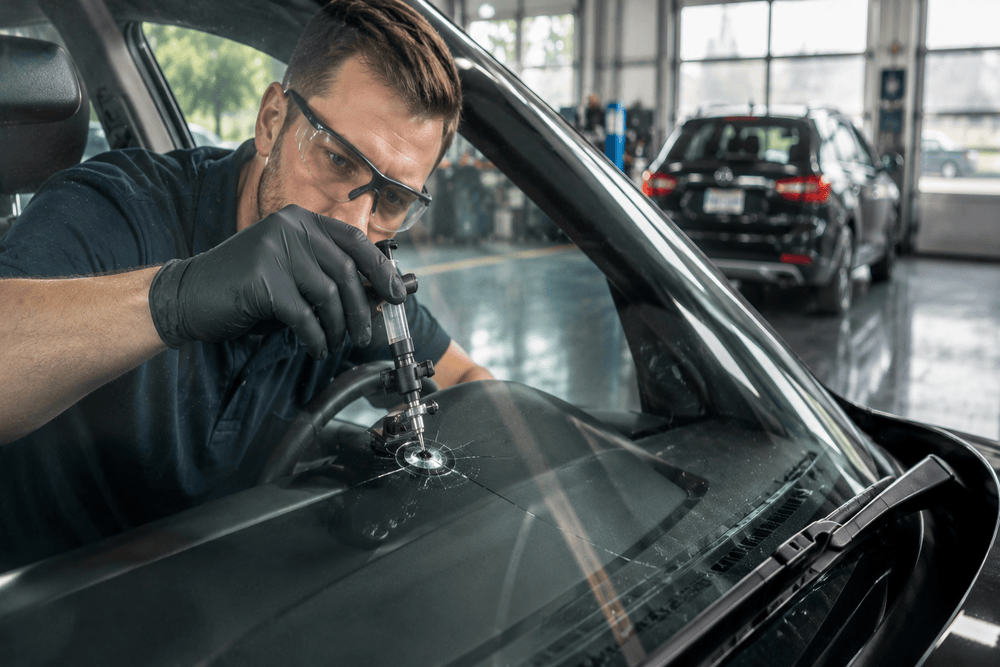
How Car Fix Cracked Windshield Prevents Bigger Repairs
There is more to a cracked windshield than meets the eye. If tiny chips and cracks are left ignored, they may develop, jeopardizing the structural integrity of your automobile, necessitating expensive complete repairs, and endangering your safety and legal standing. Early windshield crack repair usually costs between $50 and $150, whereas a complete replacement often costs between $200 and $500+. That little chip on your windshield? Ignoring it is simple. The automobile is still driving smoothly, it’s not obstructing your view, and a dozen other things are vying for your time and money. The majority of drivers are unaware that a windshield crack seldom keeps the same size.
Get An Auto Glass Replacement Quote Now 866.278.7417

Windshield Replacement & Repair
Our competitors push you into going to their shop to get your glass fixed-making it cheaper for them. We make it easier for YOU to get back on the road by offering free mobile repairs at your home or work. With our free mobile services servicing the entire Orange County & Los Angeles area, we can often handle your windscreen replacement the same day! So the next time you need a windshield replacement, give us a call.
Talk to a Windshield Replacement Specialist Now 866.278.7417

Calibration
Calibration is the process of returning a vehicle’s ADAS to OEM specifications. Calibration is necessary after a new glass installation, particularly a windshield with a camera mounted to it, to ensure that the ADAS features continue to function properly despite having been moved during installation. If a car’s ADAS is not properly calibrated, the system may not function safely. A misaligned camera could jeopardize the functionality of the system and lead to dangerous driving or accidents, so it is crucial that the cameras are aligned perfectly, which is what windshield calibration ensures.
Talk to a Calibration Specialist Now 866.278.7417

Fleet Auto Glass Repair
We provide expert auto glass repair and windshield replacement services for commercial fleets of all sizes. We are experienced with all manufacturers and machine types of domestic or foreign cars, trucks, vans, or commercial vehicles, including heavy equipment. Our same day mobile auto glass and windshield repair service will enable you to get back on the road faster and start saving you time and money instantly. Give us a call today! We are here to help!
Talk to a Fleet Auto Glass Specialist Now 866.278.7417
Small Crack Is a Bigger Problem Than It Looks
Even if a chip or fracture seems little on the surface, it weakens the glass structurally. Laminated safety glass, which consists of two layers of tempered glass joined by a plastic interlayer, is used to make standard vehicle glass.
This link is broken by a break, which lessens the windshield’s capacity to absorb and disperse impact force. As a consequence, when it counts most, glass is more prone to break, bend, or collapse inward.
Aside from safety, visual clarity is also diminished by a broken windshield. When driving at dawn and sunset, glare may conceal bikes, pedestrians, and other cars due to the varying ways that light refracts through broken glass.
How Windshield Damage Worsens Over Time: Glass expands in heat and contracts in cold, and temperature variations hasten the propagation of cracks. That crack stretches every time your automobile moves from an air-conditioned parking space to a scorching summer road, or from a frigid nighttime temperature to a warm midday.
The fracture eventually spreads outward from the initial impact location as a result of this heat cycling. In only a few weeks, a quarter-sized chip may grow into a six-inch fracture.
Driving Conditions Continually Increase Stress
Highway speeds, potholes, and road vibrations all put mechanical strain on your windshield. There is a little bend in the glass even while traveling on a smooth interstate. When a windshield is compromised—that is, if it already has a fracture—the stress is distributed unevenly, causing the crack to widen with each drive.
Long-term damage is caused by water intrusion: Over time, moisture seeps into the fracture and moves between the layers of glass. That water expands as it freezes in cold temperatures, physically widening the breach. Moisture weakens the resin bond inside the laminate in warmer climates, causing clouding, delamination, and decreased structural integrity that is beyond the scope of a typical repair.
How Much Does It Actually Cost to Fix a Cracked Windshield? The longer you wait, the larger the cost difference between early repair and delayed replacement.
Repairing a chip or minor crack (less than 6 inches) usually costs between $50 and $150. A mobile specialist can do most repairs at your location in 30 to 45 minutes.
For ordinary cars, a complete windshield repair usually costs between $200 and $500. Recalibration after replacement may cost an additional $150 to $300 for more recent vehicles with advanced driver assistance systems (ADAS), which include cameras, lane departure sensors, and rain sensors integrated into or next to the windshield.
Windshield repair is often covered by comprehensive auto insurance policies with no deductible. However, a full replacement can require you to pay your deductible first, so a repair that would have cost you nothing ends up costing you hundreds of dollars.
Is Your Legal Status Affected by a Cracked Windshield? Yes—and this is often disregarded. Driving with a cracked windshield that blocks the driver’s view is illegal in the majority of U.S. states. You may get a fine, a fix-it ticket, or both, depending on the state.
More importantly, an insurance claim may be impacted by a shattered windshield. Your insurance may contest responsibility or contend that the pre-existing damage had a role in the accident if it is shown that your windshield was previously damaged.
Do you have a Question?
Get An Auto Glass Replacement Quote Now 866.278.7417
Expect When Getting Your Windshield Repaired
Repairing a windshield is simple. A transparent resin is injected into the fracture by a technician; the resin adheres to the glass and cures when exposed to UV light. The outcome is a structurally solid fix that stops the fracture from becoming worse.
The integrity of the glass has been restored, albeit there may still be a few small visible imperfections. A new OEM or OEM-equivalent windshield is glued in place after the old one has been removed and the frame cleaned.
Recalibration is a necessary step if your car contains ADAS features; failing to do so may result in problems with your lane-keeping, collision detection, or automated braking systems. Seek for an auto glass technician who has earned certification from the AGSC, which establishes industry-wide installation and safety standards.
Don’t Wait Until a Chip Turns Into a Crisis: There is a predictable trend to a cracked windshield: a little issue that is neglected grows into a major, costly one.
The mending window is real, but it closes quickly. If you act within the first few days after spotting a chip or fracture, you have the best chance of finding a rapid, low-cost remedy that restores all safety and performance.
The majority of vehicle glass stores provide free evaluations if you’re not sure whether your windshield damage qualifies for repair. It might save you several hundred bucks and only takes five minutes.
Common Questions
How fast does a crack in the windshield spread? Depending on temperature variations, the state of the road, and the extent of the initial damage, a fracture may expand in a matter of days. Rapid temperature changes between hot and cold, or thermal cycling, are one of the things that accelerate the spread of cracks the quickest.
A broken windshield is structurally damaged, although short travels on well-known highways could be tolerable. It may impact airbag activation in a front-end accident and lessen the glass’s capacity to hold the roof in a rollover. It is not advised to drive when cracked.
Windshield chip and crack repairs are often covered by comprehensive vehicle insurance coverage with no deductible. Depending on your insurance, you may need to pay your deductible in order to get full replacement coverage. Before making an out-of-pocket payment, check with your insurance provider.
What is the largest fracture that can be fixed? As long as the damage is not in the driver’s line of sight or at the edge of the windshield, the majority of car glass specialists can fix fractures up to 6 inches long. When damage surpasses these limits, a complete replacement is usually necessary.
Does changing the windshield affect my car’s ADAS systems? Yes. ADAS-equipped vehicles often feature sensors and cameras mounted near the windshield.
These features include forward collision detection, automatic emergency braking, and lane departure alarms. For these systems to operate properly after replacement, they must be recalibrated. System faults or malfunctions may occur if recalibration is skipped.
When to Wait and When to Fix It
A broken windshield should be fixed as soon as it shows, preferably within 24 to 48 hours. Chips less than 12 mm are often repairable. A complete replacement is usually necessary for cracks that are longer than six inches or that are visible to the driver. If you put off fixing the crack, there’s a greater chance that it may expand and cancel your insurance.
It is simple to overlook a little chip on your windshield. It’s not obstructing your view. It’s not producing sound. Until a chilly morning, a pothole, or a shift in pressure causes the chip to become a crack that runs halfway across your windshield, it is just sitting there, going about its business.
Timing is typically the key factor that separates a $50 repair from a $400 replacement. You may save a lot of time, money, and worry if you know when to take action. Everything you need to know about whether to repair a broken windshield, what influences your choice, and how to prevent making a bad problem worse is covered in this article.
Why It’s Important to Act Fast on a Cracked Windshield: Two layers of tempered glass joined by a polyvinyl butyral (PVB) interlayer make up windshield glass, not a single pane. The laminated construction prevents the glass from breaking upon impact.
However, the windshield’s structural integrity starts to deteriorate as soon as a break penetrates that outer layer. If left untreated, a crack may expand due to a number of factors, including:
Road vibration: The glass around the fracture is stressed by each bump, pothole, and uneven surface.
Moisture: Water seeps into fissures and expands as it freezes, widening the fissure.
Pressure changes: Driving at high speeds on highways causes air pressure differentials, which strain glass that is already weakened. A little, fixable chip is more likely to develop into a big break that necessitates replacing the whole windshield the longer you wait.
When Should a Cracked Windshield Be Repaired
Auto glass specialists often advise doing so within 24 to 48 hours after discovering the issue. Before impurities like moisture and grime enter the break, this window offers you the greatest chance of a clean repair.
Nevertheless, the extent and kind of the damage determine the urgency. Certain cracks cannot wait at all when they need to be fixed right away. You should stop driving and schedule a repair or replacement right away if you see any of the following:
In addition to being risky, driving while seriously inebriated is prohibited in the majority of US states. Windshields that block a driver’s vision may result in penalties from law enforcement.
A little chip or bullseye crack (generally less than 12 mm in diameter) that is out of the driver’s field of sight may often wait a day or two if you:
When possible, steer clear of abrupt temperature swings (don’t blow hot air at a cold windshield). Maintain the affected area dry and clean.
Steer clear of high-pressure jet vehicle washes. To keep moisture out of the chip, cover it with a thin piece of transparent tape. Try to have a repair done within the week, even with these safety measures.
Do you have a Question?
Get An Auto Glass Replacement Quote Now 866.278.7417
Should Your Windshield Be Repaired or Replaced
The majority of automobile owners get perplexed at this point. The extent, location, and depth of the injury ultimately determine the outcome.
What can normally be fixed: Chips and cracks that satisfy each of the following requirements may often be fixed by auto glass specialists:
Size: Cracks shorter than six inches or chips smaller than a quarter (around 25 mm).
Location: The region just behind the steering wheel is not in the driver’s direct line of sight.
Depth: The interior lamination is undamaged; just the exterior layer of glass is.
Position: Not within an inch of the frame, nor at the windshield’s edge. Repairs usually cost between $50 and $150, take 30 minutes to complete, and are often completely covered by comprehensive motor insurance, sometimes with no deductible.
Depending on the make and model of the car, replacements typically cost between $200 and $500. Because the camera or sensor positioned on the windshield often has to be recalibrated after replacement, luxury automobiles and cars with advanced driver-assistance systems (ADAS)—like lane-keep assist or automated emergency braking—can cost substantially more.
Are Windshield Repairs Covered by Auto Insurance? Yes, most of the time, but only if you have full coverage. Glass damage brought on by uncontrollable circumstances, such as weather, vandalism, and road debris, is covered by comprehensive vehicle insurance.
Since a timely repair is also less expensive for them, several insurers completely waive the deductible for windshield repairs (as opposed to replacements). Before making an out-of-pocket payment, review your insurance or give your provider a call.
The Worst Time to Repair a Windshield Crack
Timing is more important than merely moving quickly. The quality of a windshield repair may be jeopardized by the following circumstances:
Freezing temperatures: Warmth is necessary for the efficient curing of resin used in chip repairs. The majority of specialists advise doing repairs at temperatures higher than 40°F (4°C). Although heated equipment may be used by mobile repair firms, repairs made in cold weather are often less dependable.
Wet conditions: The proper bonding of resin is hindered by moisture inside the fracture. A trustworthy expert would completely dry the surface before moving forward if it has been raining, but a lot of rain on the day of the repair might make things more difficult.
Right after a lengthy drive: The resin’s ability to set may be impacted by hot glass. Before starting a repair, let the automobile cool down for at least 20 to 30 minutes. Waiting a few hours is preferable than rushing an unreliable repair if any of these circumstances are present.
Little Crack Should Not Cost You More than It Should
The sequence of windshield deterioration is predictable: little chip, neglected crack, costly repair. The good news is that, with timely intervention, this trend is almost always avoidable.
Protect the area as soon as you see a chip or crack, verify your insurance coverage, and arrange for a repair within 24 to 48 hours. The damage may be promptly assessed by a repair professional, and the task often takes less time than a trip to the grocery store.
Right now is always the finest time to repair a damaged windshield. Tomorrow morning is the second-best time, before road conditions or temperature changes make it worse.
Common Questions: Is it possible to operate a vehicle with a damaged windshield? If the fracture is tiny and out of the driver’s line of sight, short distances could be okay. However, it is dangerous and unlawful in most U.S. states to drive with any kind of crack that reduces vision. Get a specialist to evaluate it as soon as you can.
Chip repairs typically take 20 to 40 minutes. After a complete windshield replacement, which usually takes 60 to 90 minutes, there is a one to two hour drying time before driving.
Will the appearance of a fixed windshield crack remain the same? A competent repair greatly lessens the visibility of the fracture, albeit perhaps not flawlessly. Instead of a noticeable crack, the mended region often turns into a little imperfection.
Does a crack’s rate of spread depend on the temperature? Indeed. Glass contracts in cold weather, which may rapidly widen a break. Glass expands due to heat, increasing pressure around the injured region. One of the most frequent reasons a chip develops into a whole fracture is abrupt or drastic temperature fluctuations.
Is mobile windshield repair trustworthy? In general, yes. The same materials and equipment that shop-based experts use are carried by reputable mobile repair providers. The weather is the primary factor; steer clear of mobile repairs in the rain, cold, or bright sun.
Mobile Safe Auto Glass
14241 E Firestone blvd suite 400,
La Mirada, CA 90638
Phone: (562) 608-1154
Toll Free: 1 866 278 7417
Mail: sales@mobilesafeautoglass.com
Get a FREE QUOTE today! You can get a free quote and schedule 24/7 using this free quote wizard.
Mon – Fri 8am – 5pm
Saturday 8am – 1pm
Sunday Closed