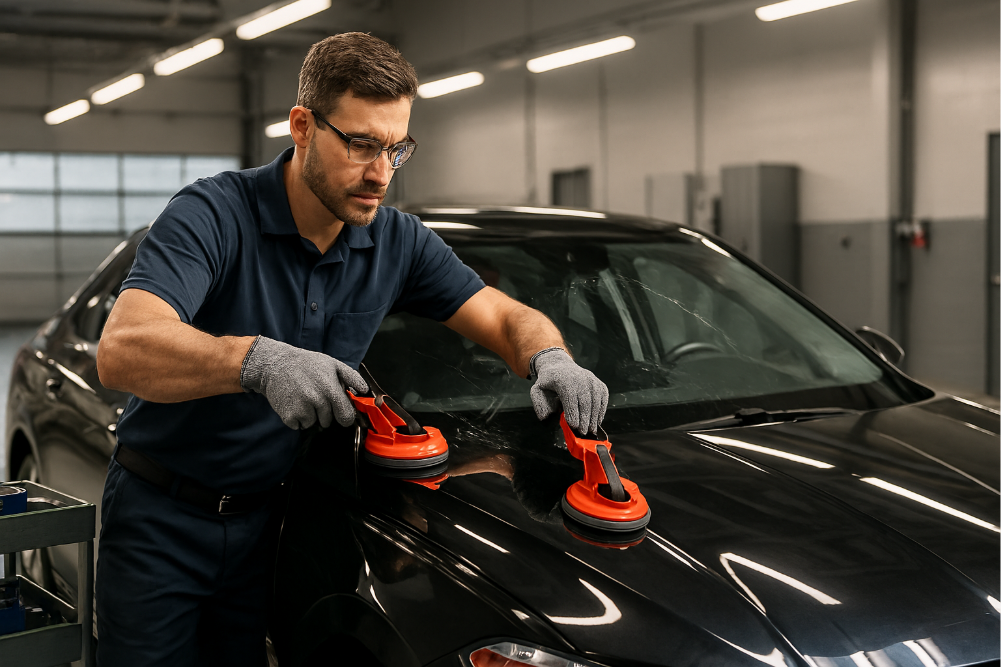
Auto Glass Mobile Service Impact Prevention Guide
From tiny chips brought on by flying debris to fissures that cover your entire windshield, auto glass damage is surprisingly frequent. The good news? Numerous types of vehicle glass damage may be prevented with the right knowledge and procedures. Knowing how to preserve your windshield can save you time, money, and the trouble of emergency repairs, regardless of whether you’re dealing with severe weather, highway traffic, or normal wear and tear. This tutorial explains doable ways to maintain the best possible condition for your car’s glass, preventing expensive replacements and ensuring your safety while driving.
Get An Auto Glass Replacement Quote Now 866.278.7417

Windshield Replacement & Repair
Our competitors push you into going to their shop to get your glass fixed-making it cheaper for them. We make it easier for YOU to get back on the road by offering free mobile repairs at your home or work. With our free mobile services servicing the entire Orange County & Los Angeles area, we can often handle your windscreen replacement the same day! So the next time you need a windshield replacement, give us a call.
Talk to a Windshield Replacement Specialist Now 866.278.7417

Calibration
Calibration is the process of returning a vehicle’s ADAS to OEM specifications. Calibration is necessary after a new glass installation, particularly a windshield with a camera mounted to it, to ensure that the ADAS features continue to function properly despite having been moved during installation. If a car’s ADAS is not properly calibrated, the system may not function safely. A misaligned camera could jeopardize the functionality of the system and lead to dangerous driving or accidents, so it is crucial that the cameras are aligned perfectly, which is what windshield calibration ensures.
Talk to a Calibration Specialist Now 866.278.7417

Fleet Auto Glass Repair
We provide expert auto glass repair and windshield replacement services for commercial fleets of all sizes. We are experienced with all manufacturers and machine types of domestic or foreign cars, trucks, vans, or commercial vehicles, including heavy equipment. Our same day mobile auto glass and windshield repair service will enable you to get back on the road faster and start saving you time and money instantly. Give us a call today! We are here to help!
Talk to a Fleet Auto Glass Specialist Now 866.278.7417
Recognizing Typical Reasons for Auto Glass Damage
Knowing what you’re up against is helpful before you try to prevent damage. Automobile glass presents a number of risks, and the first step in protecting yourself from them is to be aware of those risks.
Road material and Flying Objects: One of the most frequent causes of windshield chips and fractures is gravel, rocks, and other material that cars kick up. This risk is increased when driving on highways, particularly when you’re following big trucks or construction equipment that can shoot debris at rapid speeds.
Temperature Fluctuations: Your windshield is stressed by abrupt fluctuations in temperature. Rapid changes, such as applying hot air to a frozen windshield or parking in the sun after using air conditioning, can cause the glass to expand and contract unevenly, which can result in cracks.
Severe weather and hail: Hailstorms can cause damage to car glass by generating numerous impact sites that weaken the windshield. Damage from even smaller hail can get worse over time.
Inadequate Installation or Manufacturing Flaws: In certain cases, harm isn’t even brought on by outside influences. Weak spots that break under typical driving circumstances can be caused by poorly placed windshields or manufacturing flaws.
Collisions and Accidents: Your windshield or side windows may sustain damage from even little fender benders. The force from a collision can pass through the frame of your car and shatter the glass, so it doesn’t have to be a direct hit.
Intelligent Driving Practices to Preserve Your Windshield
The lifespan of your windshield is directly impacted by the way you drive. Making minor changes to your driving style can greatly lower the chance of harm.
Keep a Safe Following Distance: Give the car in front of you at least three to four seconds’ distance. This buffer zone lessens the chance of debris striking your windshield at high speeds and provides you more time to respond.
It is important to avoid following large vehicles because you put yourself in a more dangerous situation when you follow trucks, construction vehicles, or any other vehicle that is delivering loose debris. Change lanes or extend your following distance whenever you can. If you have to follow them, be careful and ready to reduce your speed if you see any debris.
On gravel roads, slow down since there are many loose stones that could chip your windshield. To lessen the force of any impact, slow down, and if the weather is especially bad, think about going a different way.
Exercise Caution in Construction Zones: Debris is a common occurrence in construction regions. Pay close attention to posted speed restrictions, keep an eye out for fallen objects, and maintain a safe distance from construction machinery.
Temperature Control and Environmental Protection: It takes considerable planning, especially in severe weather, to screen your windshield from temperature-related stress.
Gradual Temperature Changes: Avoid slapping hot air into a cold windshield or the other way around. Rather, start at a moderate temperature and work your way up. Be cautious when using the defrost setting and let the glass warm gradually.
Do you have a Question?
Get An Auto Glass Replacement Quote Now 866.278.7417
Park in Covered or Shaded Areas
Park in a garage or beneath a carport whenever you can to protect your car from falling objects, hail, and extremely hot or cold weather. If there isn’t covered parking, choose a location under a tree for shade, but watch out for falling branches.
Use a Windshield Sunshade: A reflective sunshade lowers heat stress on the windshield and keeps the interior of your car cooler during the summer. This easy-to-use equipment can preserve your dashboard and prolong the life of your car’s glass.
Winter Precautions: Never apply hot water to a frozen windshield in freezing areas. Give your defroster time to work gradually and use a suitable ice scraper or de-icing spray. To avoid ice accumulation, think about covering your windshield for the night.
Frequent Inspection and Maintenance: Minor issues can be avoided before they become serious hassles. Your car’s maintenance regimen should include routine inspections.
Visual Checks Every Month: Check your windshield for pitting, chips, and cracks once a month. To spot damage you might otherwise overlook, examine the glass from several perspectives, both inside and outside the car.
Address Minor Chips Immediately
Despite their apparent insignificance, tiny chips have the ability to swiftly expand into larger fissures. A specialist can rapidly and reasonably repair most chips less than a quarter, frequently in less than an hour.
Examine Your Wiper Blades: Your windshield may get scratches from worn wiper blades that have exposed metal. Every six to twelve months, or sooner if you observe streaking or skipping, replace them.
Examine the Windshield Seals: The rubber seal that surrounds your windshield gives structural stability and stops leaks. Examine for deterioration, cracks, or gaps, and replace any broken seals right away.
Appropriate Windshield Cleaning and Maintenance: Your windshield’s durability and attractiveness are influenced by how you clean and maintain it.
Use the Correct Cleaning Supplies: Steer clear of harsh chemicals and cleaners with an ammonia basis as they can harm protective coatings or tinting. Use just car glass cleaners or a basic solution of white vinegar and water.
Use Microfiber Clothes to Clean: Over time, rough cloths and paper towels can harm your windshield. Without damaging your glass, microfiber towels are a soft yet efficient way to remove streaks.
Eliminate Contaminants Quickly: Acids found in bug spatter, tree sap, and bird droppings can etch glass if they are left on it for an extended period of time. As soon as you see these, clean them off.
Use a Glass Treatment: To assist water roll off and bead, think about using a hydrophobic glass treatment. This facilitates cleaning and increases visibility in the rain.
Professional Installation and Quality Materials Matter
The caliber of the materials and workmanship have a big impact when replacement or repair is required.
Select Original Equipment Manufacturer (OEM) or OEM-Equivalent Glass: OEM glass is made especially for your car and complies with safety regulations. Even if aftermarket alternatives could be less expensive, they don’t always provide the same fit or quality.
Choose a Reputable Service Provider: Look into local auto glass businesses. Check for labor and material warranties, certificates, and good ratings. Your windshield will function as it should in a collision if it is installed correctly.
Recognize Your Insurance Coverage: A lot of insurance plans provide low or no deductibles for windshield replacement or repair. It’s risky and even against the law to drive with damaged glass, so be sure you have coverage and use it when necessary.
What to Do If Damage Occurs: Damage can still occur even with the finest preventative measures. A little chip doesn’t have to be replaced entirely if you know how to react fast.
Evaluate the Damage: Determine the extent of the damage, where it is located, and how severe it is. Cracks that are less than three inches in width and chips that are less than a quarter in size are often able to be repaired. When there is damage along the edge of the windshield or in the line of sight of the driver, it is often necessary to repair damaged areas.
Do not wash your automobile or expose the injured area to high temperatures in order to prevent making it worse. To keep moisture and dirt out until you can get it evaluated by a specialist, cover small chips with transparent tape.
Get It Fixed Fast: A chip is more likely to develop into a crack the longer you wait. Repairs are quick and easy because the majority of mobile auto glass providers can come to you.
A Clever Approach to Risk Reduction
Broken car windows and cracked windshields are more than just annoyances; they are safety risks that can result in collisions, penalties, and expensive repairs. However, a lot of car owners put off repairs because of scheduling difficulties, transportation issues, or just the inconvenience of going to a repair shop.
By delivering expert repairs right to your site, mobile auto glass services remove these obstacles. The glass in your car can be restored by qualified professionals while you go about your day, whether you’re at home, at work, or wherever in between. This simplicity of use results in reduced operational hazards, increased safety, and speedier repairs for fleet management as well as individual drivers.
This tutorial examines the practical benefits, financial savings, and safety benefits that make mobile vehicle glass services a popular option, as well as how they might be an effective risk reduction strategy.
Recognizing the Dangers of Delaying Auto Glass Repairs: Delaying windshield or window repairs results in a number of risk categories that eventually get worse.
In addition to posing a threat to your safety, a cracked windshield puts the structural integrity of your vehicle in jeopardy. In the case of an accident or rollover, the windshield may offer up to sixty percent of the structural strength of the cabin. Even minor chips can spread into larger cracks that obstruct visibility and weaken this critical safety component.
Passengers are exposed to the outdoors, road debris, and possible theft when side or rear windows are broken. Additionally, the vehicle’s airbag deployment system, which depends on an undamaged windshield to operate properly, is jeopardized by these openings.
Financial and Legal Repercussions
In the majority of states, it is illegal to drive with a cracked windshield. Depending on the jurisdiction, citations from law enforcement can carry fines of $100 to $500. If insurance companies find that overlooked glass damage was a contributing factor in an accident, they may also reject claims.
Citations are only one aspect of the financial impact. Minor chips that can be fixed for $50 to $150 can develop into cracks that need a complete windshield replacement, which can cost $200 to $500 or more. This degradation is accelerated by changes in temperature, vibrations in the road, and stress from regular driving.
Operational Disruption: Each damaged car implies lost productivity for companies that oversee fleets of vehicles. Drivers have to plan their schedules, make transit arrangements to repair facilities, and wait for services to be completed—time that could be used for activities that generate income.
How Mobile Auto Glass Service Lowers Risk: Regardless of where your car is located, mobile repair services offer professional experience, speed, and accessibility to handle each of these risk areas.
Quick Reaction to Stop Escalation: Mobile technicians frequently offer same-day or next-day service, which stops minor damage from getting worse. You can prevent the need for complete replacements and preserve your car’s original factory seal, which provides better water resistance and structural integrity than replaced windshields, by fixing chips before they spread.
For fleet managers who need to reduce the number of vehicles out of service, this quick response is especially helpful. Technicians can service several automobiles at a central location in a single visit rather than making appointments weeks in advance and moving cars through a shop.
Upheld Safety Standards: Qualified mobile technicians use the same equipment, supplies, and certifications as physical stores. They employ glass that satisfies Federal Motor Vehicle Safety Standards (FMVSS) and is either original equipment manufacturer (OEM) or OEM-equivalent.
The quality of the mobile service format is unaffected. Using the same adhesive curing durations and installation techniques as stationary shops, technicians complete repairs in climate-controlled mobile units or on-site when conditions allow. A lot of mobile services also provide warranties that are on par with those of conventional repair shops.
Decreased Liability Exposure: Mobile auto glass service assists company owners in fulfilling their duty of care to the public and their staff. Businesses may show responsible fleet maintenance and lower the risk of accidents brought on by poor vision or structural weakness by quickly fixing glass damage.
Do you have a Question?
Get An Auto Glass Replacement Quote Now 866.278.7417
Key Advantages of Mobile Auto Glass Services
In addition to directly lowering risk, mobile services provide financial and operational advantages that help achieve larger corporate goals.
Savings in Time and Productivity: Conventional repair procedures necessitate a large time commitment, including making appointments during business hours, traveling to the facility, waiting for the service to be finished, and then coming back to pick up the car. These steps are eliminated by mobile services.
This eliminates the need for individual drivers to change their personal schedules or skip work hours. For fleet managers, this means that drivers continue to travel their routes while repairs are made in depots or parking lots. The time savings from several repairs added together can amount to thousands of dollars in lost productivity.
Cost management: When indirect expenses are taken into account, mobile services frequently offer greater overall value, even though their base prices may be marginally more than those of some stationary stores. You get rid of lost productivity, mileage costs, and car rental rates.
In order to reduce out-of-pocket costs, several mobile providers now deal directly with insurance companies, managing claims paperwork and arranging coverage. For fleet operators, bulk service agreements usually feature volume savings that improve convenience and make per-vehicle pricing competitive with regular stores.
Insurance Compliance: The majority of full-coverage auto insurance plans include coverage for chipped and cracked glass with little or no deductible. By taking pictures of damage, electronically storing documents, and liaising with insurers directly, mobile services streamline the claims procedure.
Accessibility and Flexibility: Rather than working around your schedule, mobile techs accommodate it. They provide auto repair services in residences, workplaces, parking garages, or any other area with sufficient room and illumination. This adaptability is particularly useful for:
Fleet automobiles that follow strict timetables
Executives or sales teams are given company cars.
Delivery trucks and ridesharing services that require prompt turnaround
Private automobiles for people with restricted mobility or rigorous work schedules
Choosing a Trustworthy Mobile Auto Glass Supplier
Not every mobile service offers the same level of dependability or quality. Utilize these standards to assess possible suppliers:
Seek for technicians that have acquired credentials from organizations such as the National Glass Association (NGA) or the Auto Glass Safety Council (AGSC). credentials and training are also important. These qualifications attest to instruction in safe practices, adhesive application, and appropriate installation methods.
Insurance and Warranty Coverage: Reputable suppliers provide labor and material warranties in addition to liability insurance. Standard warranties usually cover faults, such as leaks and adhesive failures, for a period of one year or longer.
Implementing Mobile Glass Service in Fleet Management
Through strategic deployment, organizations that oversee several vehicles can optimize the benefits of risk reduction.
Create Service Agreements: Work out contracts that outline service level guarantees, pricing schedules, and response times. Incorporate clauses for situations that arise after hours and bulk scheduling for regular inspections.
Establish Reporting Protocols: Provide drivers with explicit instructions on how to report glass damage right away. Fast reporting keeps little problems from growing into bigger ones and allows for quicker remedies.
Track and Analyze Data: Keep an eye on your fleet’s damage trends, maintenance costs, and frequency. Decisions about vehicle replacement cycles are informed by this data, which also aids in identifying training opportunities (should specific drivers sustain damage more frequently).
Plan Preventive Inspections: A lot of mobile service providers give inspection services that find little chips before they cause issues. Quarterly or semi-annual inspections can identify problems early and minimize the need for emergency repairs.
Choosing to Use Mobile Auto Glass Repair
A useful risk management tool that preserves safety, lowers expenses, and simplifies operations is mobile vehicle glass repair. These services remove the obstacles that lead many people to put off important repairs by sending qualified professionals and high-quality materials to your location.
Think about how mobile glass servicing could be incorporated into your maintenance plan, regardless of how many cars you’re handling. Start by asking reputable local providers for bids, finding out about their insurance partnerships, and talking about your particular schedule requirements.
Mobile auto glass repair is a safety and efficiency investment that pays off in the form of less downtime, lower overall costs, and—most importantly—vehicles that consistently meet safety standards thanks to the convenience of on-site service and professional quality standards.
Mobile Safe Auto Glass
14241 E Firestone blvd suite 400,
La Mirada, CA 90638
Phone: (562) 608-1154
Toll Free: 1 866 278 7417
Mail: sales@mobilesafeautoglass.com
Get a FREE QUOTE today! You can get a free quote and schedule 24/7 using this free quote wizard.
Mon – Fri 8am – 5pm
Saturday 8am – 1pm
Sunday Closed