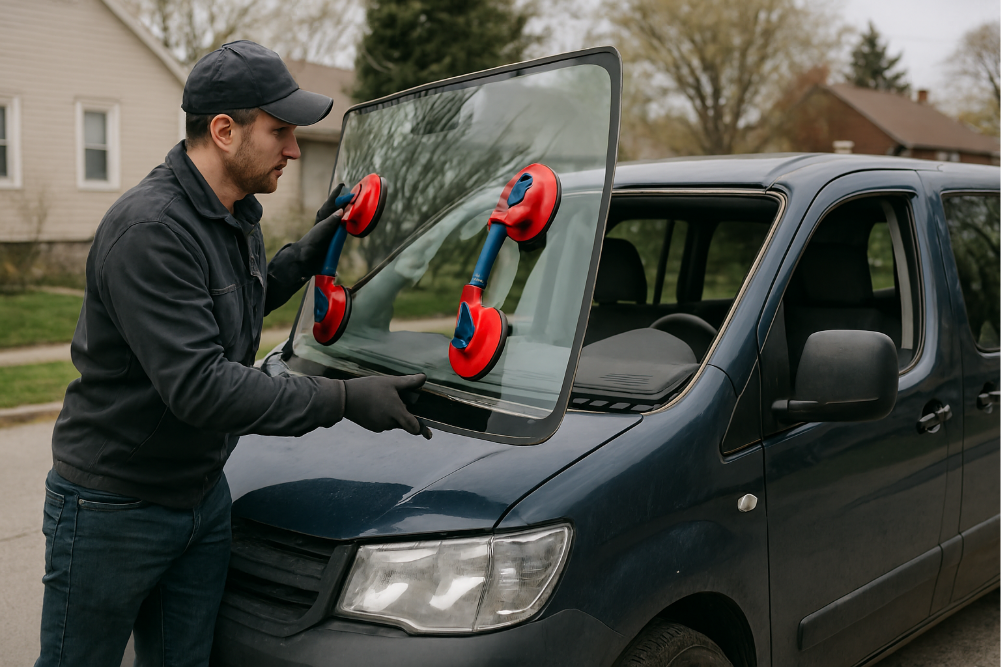
Auto Glass Mobile Service Long Term Durability Planning
You can see more than just the open road via your windshield. It’s an essential safety feature that shields you from flying objects, maintains the structural soundness of your car in collisions, and makes sure the airbags deploy correctly. Mobile vehicle glass services are convenient since they come to you when damage occurs. Convenience, however, is meaningless if the replacement or repair is short-lived. Planning for long-term durability with mobile auto glass service necessitates knowing what makes a temporary solution different from a long-term one. Whether your new windshield will last for years or need to be replaced sooner or later depends on a number of factors, including the quality of the materials, the skill of the technician, the installation environment, and the aftercare.
Get An Auto Glass Replacement Quote Now 866.278.7417

Windshield Replacement & Repair
Our competitors push you into going to their shop to get your glass fixed-making it cheaper for them. We make it easier for YOU to get back on the road by offering free mobile repairs at your home or work. With our free mobile services servicing the entire Orange County & Los Angeles area, we can often handle your windscreen replacement the same day! So the next time you need a windshield replacement, give us a call.
Talk to a Windshield Replacement Specialist Now 866.278.7417

Calibration
Calibration is the process of returning a vehicle’s ADAS to OEM specifications. Calibration is necessary after a new glass installation, particularly a windshield with a camera mounted to it, to ensure that the ADAS features continue to function properly despite having been moved during installation. If a car’s ADAS is not properly calibrated, the system may not function safely. A misaligned camera could jeopardize the functionality of the system and lead to dangerous driving or accidents, so it is crucial that the cameras are aligned perfectly, which is what windshield calibration ensures.
Talk to a Calibration Specialist Now 866.278.7417

Fleet Auto Glass Repair
We provide expert auto glass repair and windshield replacement services for commercial fleets of all sizes. We are experienced with all manufacturers and machine types of domestic or foreign cars, trucks, vans, or commercial vehicles, including heavy equipment. Our same day mobile auto glass and windshield repair service will enable you to get back on the road faster and start saving you time and money instantly. Give us a call today! We are here to help!
Talk to a Fleet Auto Glass Specialist Now 866.278.7417
Why Mobile Auto Glass Durability Matters
Under typical circumstances, a correctly installed windshield ought to last the duration of your car. Nevertheless, poor mobile installations might malfunction in a matter of months, resulting in safety issues, leaks, wind noise, and optical distortions.
Because your windshield can account for as much as 30% of your car’s structural strength in a rollover collision, the stakes are very high. Additionally, it acts as a backstop for airbags on the passenger side. In a collision, an incorrectly bonded windshield may separate, causing the roof to fall or the airbags to deploy inefficiently.
In addition to safety issues, early windshield failure is costly and bothersome. By considering durability early on, you can avoid additional expenses, repeated service calls, and the aggravation of dealing with persistent issues.
Selecting High-Quality Materials for Durable Results: Your mobile auto glass service’s materials have a direct effect on how long it lasts. Not all adhesives and replacement glass are made equally.
Original Equipment Manufacturer (OEM) vs. Aftermarket Glass: OEM glass is manufactured by the same business that made the original windshield for your car. It ensures optimal fit, optical clarity, and compliance with advanced driver assistance systems (ADAS) by perfectly matching factory standards.
Third-party producers provide aftermarket glass, which is usually less expensive. Some aftermarket alternatives skimp on thickness, tinting, or acoustic qualities, while others match or surpass OEM requirements. Durability, safety features, and even the resale value of your car may be impacted by these variations.
Prioritize OEM glass or high-quality aftermarket substitutes that satisfy industry standards such as DOT (Department of Transportation) certification for long-term durability.
Quality of Adhesive and Cure Time
Just as crucial as the glass itself is the urethane glue that secures your windshield to the frame. Superior urethane produces a flexible, waterproof seal that is resilient to temperature fluctuations and road vibrations.
The amount of time needed for glue to attain its maximum strength, or cure time, varies depending on the product and the surrounding circumstances. While full curing may take 24 to 72 hours, some adhesives have “safe drive-away time” as low as one hour. Driving too soon and rushing this process can weaken the link and cause early failure.
Inquire about the particular glue being used, how long it takes to cure, and any driving restrictions with your mobile technician. Reputable services make use of goods designed especially for automotive applications from reputable producers like Sika or Dow Automotive.
Assessing Mobile Technician Expertise: Without expert installation, even high-quality materials won’t produce long-lasting effects. The difference is entirely according to the technician’s training, expertise, and meticulousness.
Certification and Training: Seek out technicians that have earned certification from trade associations such as the National Glass Association (NGA) or the Auto Glass Safety Council (AGSC). These credentials show that the technician has received official instruction in quality standards, safety procedures, and correct installation methods.
Compared to shop-based installations, mobile technicians encounter extra difficulties such as erratic weather patterns and constrained workspace. Skilled mobile experts are able to adjust to these limitations without sacrificing quality.
Do you have a Question?
Get An Auto Glass Replacement Quote Now 866.278.7417
Appropriate Surface Preparation
Careful surface preparation is the first step toward durability. The pinch weld—the metal frame enclosing the windshield opening—needs to be thoroughly cleaned of impurities, old adhesive, and primer. Taking shortcuts at this step almost always results in premature failure and prevents proper adhesion.
Even if it takes an extra 15 to 30 minutes, a good mobile service will take their time to properly clean and prime the surface. Services that complete installations in less than an hour should be avoided because it is hard to prepare thoroughly at such speed.
ADAS Calibration: For functions like adaptive cruise control, automated emergency braking, and lane departure alerts, modern cars are depending more and more on cameras and sensors installed on the windshield. After the windshield is replaced, these systems need to be precisely calibrated.
This procedure can be finished on-site by mobile services that have portable calibrating equipment. Some cell providers, however, do not have this feature and may completely omit Calibration, which is a dangerous practice that can also cause dashboard warning lights to illuminate.
If your car needs ADAS calibration, make sure it’s included before scheduling servicing. Because calibration can prolong the session by one or more hours, take this into consideration when making your plans.
Environmental Aspects and Timing of Installation: Long-term durability is greatly impacted by the location and time of your mobile service. Temperature, humidity, and cleanliness have a significant impact on adhesive performance.
Temperature Requirements: For optimal application, the majority of automotive urethane adhesives need ambient temperatures between 40°F and 100°F. Low temperatures can hinder the adhesive’s ability to reach its maximum strength and slow down the curing process. Adhesive may cure too quickly in extreme temperatures, sometimes resulting in weak places.
When weather conditions deviate from acceptable bounds, reputable mobile services will reschedule appointments. Consider it a warning sign if a technician is willing to work in extremely hot or cold temperatures without the necessary environmental controls.
Control of Moisture and Dust
One of the main reasons why adhesives fail is moisture contamination. Bonding might be hampered by even little rain or high humidity during installation. Similar to this, airborne debris, dust, and pollen can weaken adhesion if they land on surfaces that have been pretreated.
Top-notch mobile technicians bring instruments to control dust and pop-up tents or tarps for weather protection in order to establish regulated work conditions. For humid circumstances, some people even utilize portable dehumidifiers.
If at all feasible, schedule your mobile service during dry weather. Make sure your technician has the right safety gear and adheres to instructions for an extended cure time if you must work in less than optimal circumstances.
Post-Installation Care for Maximum Longevity: Achieving long-term durability depends heavily on what you do in the hours and days after installation.
Respecting Cure Time: Comply with the precise guidelines provided by the technician on the safe drive-away and full cure times. Typical suggestions consist of:
Before you drive, wait at least an hour (usually longer in colder climates).
Do not wash your car for 24 to 48 hours.
For a full day, keep windows slightly cracked to avoid pressure buildup.
For the first 24 hours, refrain from slamming doors.
Wait for instructions before removing spacers or retention tape.
If these rules are broken, the windshield may shift before the glue has had time to dry completely, leaving gaps that let water in and jeopardize the structure.
Frequent Upkeep and Inspection
To extend its longevity, even a windshield that has been installed flawlessly needs to be maintained:
Every three months, check the perimeter seal for cracks, separation, or degradation.
Chips and minor cracks should be fixed right away to prevent them from spreading.
Change out worn-out wiper blades to avoid scratches.
Steer clear of ammonia-based cleaners since these might harm coatings and tinting.
If at all feasible, park in a shaded area to minimize UV rays and temperature fluctuations. Simple fixes can be made when possible problems are identified early on before they become serious enough to require replacement.
Service Guarantees and Warranty Coverage: A thorough warranty shows that a mobile service is confident in its materials and craftsmanship. In the event that durability problems occur, strong warranty conditions offer remedy.
Before making a purchase, carefully review the warranty information. The goal of selecting mobile service is negated by some carriers that either restrict specific damage kinds or demand that you return to their shop for warranty servicing.
Records and Documentation: Ask for written records of your service, which should include the type of glass installed, the glue used, the recommended cure time, and the terms of the guarantee. This documentation is useful for ADAS calibration records, insurance, and car sales.
Store these documents with your car’s maintenance records. If you sell the automobile, they can boost buyer trust by providing a professional service history.
Warning Signs of Low Durability
A mobile service might not provide the long-term durability you require, according to some warning signs:
Exceptionally low prices in comparison to rivals
Willingness to continue even in inclement weather
Not being able to produce insurance documents or technician certificates
Absence of choices for OEM glass
No ADAS calibration services are available for cars with them.
Limited or ambiguous warranty terms
Pressure to start driving right away after installation
Hurried installation or inadequate surface preparation. Have faith in your intuition. It’s worthwhile to reschedule with a more respectable service if something seems hurried or if shortcuts were taken.
Developing Your Long-Term Durability Plan: There are a few essential phases involved in developing a plan for long-lasting auto glass service:
Do extensive research on providers: Before making a purchase, compare warranty terms, confirm certifications, and look up internet reviews.
Ask specific questions about the materials, cure times, ADAS calibration, and the technician’s familiarity with the make and model of your car.
Plan ahead by selecting appointment times that coincide with good weather and enough time for the car to cure before you need to drive it.
Set up your area: If at all feasible, create a tidy, flat work area that is protected from the elements. Remove any possible pollutants from the area.
Observe post-installation instructions: Despite the inconvenience, fully adhere to cure timeframes and driving limitations.
Create inspection habits: Include windshield inspections in your routine auto maintenance.
Document everything: Save pictures of the finished installation, warranty details, and servicing records.
Making Mobile Service Last: There is no denying the convenience of mobile car glass service, but quality and longevity should never be sacrificed for convenience.
You can benefit from the convenience of mobile service as well as the assurance that comes with a professionally installed windshield that is made to last by giving priority to qualified experts, high-quality materials, ideal environmental conditions, and careful post-installation care.
Auto Glass Mobile Service Pros Build Reliable Maintenance Systems
Managing appointments, inventory, client calls, and driving from job to job—often in inclement weather—are all part of operating a mobile auto glass business. Things can easily fall between the cracks if there isn’t a strong maintenance strategy in place. Repairing a chipped windshield takes longer than expected. Tools disappear. Breakdowns in your car take up time.
Maintenance is not left to chance by the top mobile auto glass technicians. They create systems that guarantee every work satisfies strict requirements, minimize downtime, and keep their operations operating efficiently.
An organized approach to maintenance can mean the difference between a successful firm and ongoing firefighting, regardless of whether you’re running a small staff or operating alone. This manual explains how successful auto glass specialists design effective maintenance programs, including everything from quality control and tool management to vehicle maintenance.
Why Maintenance Systems Are Important for Mobile Technicians: Mobile service companies deal with particular difficulties. You don’t operate from a fixed shop with instant assistance and backup equipment.
You use your van as a workshop, so if something breaks, you can’t use it until it’s fixed. A well-thought-out maintenance program benefits you:
Reduce downtime: Routine inspections identify issues before they become serious ones.
Preserve your investment: With the right maintenance, tools, equipment, and cars endure longer.
Preserve service quality: Regular procedures guarantee that each installation or repair satisfies industry requirements.
Gain the trust of your clients: dependable service encourages referrals and repeat business. The secret is to establish routines that are easy enough to adhere to on a regular basis, even during hectic times.
Maintaining Your Mobile Store
Your company’s foundation is your service vehicle. Maintaining it should be a key priority that cannot be compromised. Make a plan for preventive maintenance before warning lights come on. Create a routine maintenance schedule that consists of:
Every 3,000–5,000 miles, the oil is changed.
Checking the pressure and rotating the tires
Inspections of the brakes
Checks of the coolant, gearbox, and brake fluid levels
testing of batteries. To keep track of when services are required, use a basic spreadsheet or maintenance app. To prevent interfering with your workflow, schedule these during slower business times.
Be prepared for emergencies by keeping basic tools, jumper cables, a spare tire, and contact details for roadside assistance in your car. Having these things allows you to deal with small problems without missing an entire workday.
Tool and Equipment Management: You can only produce expert results with the help of your tools. Over time, it pays to treat them as precious assets rather than disposables.
Calibrate specialist equipment: To maintain accuracy, tools such as urethane guns and moisture meters require routine calibration. Observe the manufacturer’s instructions and note the last time calibration was done.
Do you have a Question?
Get An Auto Glass Replacement Quote Now 866.278.7417
Never Run Out of What You Need
Your entire plan could be derailed if you run out of glue or the proper size windshield gasket. Effective inventory control keeps you ready.
Monitor usage trends: Take note of the things you use most often. Reduce inventory of materials that are infrequently utilized and maintain higher stock levels of these items.
Establish minimal stock levels that cause reorders by setting reorder points. For instance, place an order right away if your supply of urethane runs out to two cartridges.
Sort by task type: Put materials in groups based on common service types, such as side window work, chip repairs, and windshield replacements. This facilitates swiftly grabbing what you need.
Because adhesives and sealants have shelf life, rotate your supply to avoid expiration. To prevent using tainted materials, use older products first and properly label expiration dates.
Quality Control Systems: Professional and amateur work are distinguished by consistency. Every customer will receive the same excellent level of service thanks to the implementation of quality checkpoints.
Keep a record of your labor by photographing each project both before and after. This offers proof of high-quality workmanship and safeguards you in the event that questions subsequently come up. Keep pictures and job information in a straightforward file system.
Observe the manufacturer’s instructions: Installation requirements may vary depending on the vehicle and glass product. Keep your car’s technical manuals close at hand and consult them frequently.
Communication with Customers and Scheduling
Physical equipment is only one aspect of maintenance; another is how you handle appointments and client relations.
Make use of digital scheduling technologies to send appointment reminders, optimize routes, and lower no-show rates. For more efficient operations, many platforms interface with payment processing and invoicing.
Establish reasonable deadlines: Allow extra time in your calendar to account for unforeseen delays caused by traffic or more involved repairs than you had anticipated. Your reputation is harmed when you make too many promises and fall short of them.
Follow up after service: A day or two after finishing a project, send a brief email or note. Inquire about the customer’s satisfaction and any worries they may have. This small act fosters loyalty and highlights problems early.
Maintenance of Safety and Compliance: Maintaining safety and compliance is essential for the protection of your company, clients, and yourself.
Maintain appropriate insurance coverage: Every year, review your workers’ compensation, liability, and business auto insurance plans. As your company expands, be sure the coverage limitations are sufficient.
Keep Certifications Current
For auto glass work, several states and insurance companies demand particular certificates. Schedule renewals well in advance and keep track of expiration dates.
Properly store dangerous materials: Safety requirements must be followed when storing adhesives, solvents, and cleaning agents. Make sure there is enough ventilation, use the right containers, and keep safety data sheets handy.
Put on protective gear: Every work should come with gloves, safety glasses, and a dust mask. Replace any damaged PPE right away.
Establishing Yourself for Long-Term Success: Establishing a maintenance system requires work up front, but the benefits are substantial. You’ll provide more reliable service, cut down on expensive repairs, and spend less time handling crises. Your bottom line will show the change, and your consumers will notice it as well.
Determine the main areas of discomfort in your present procedure first. Are they car breakdowns? Tools in disarray? Are you out of supplies? Concentrate on resolving one issue at a time, then progressively broaden your system as new practices turn into habits.
The most successful mobile car glass specialists aren’t always the quickest or least expensive; rather, they’re the ones who arrive on schedule, provide high-quality work, and hardly ever offer an explanation for why something went wrong. This dependability results from having mechanisms in place that continue to function even in hectic or uncertain situations.
Mobile Safe Auto Glass
14241 E Firestone blvd suite 400,
La Mirada, CA 90638
Phone: (562) 608-1154
Toll Free: 1 866 278 7417
Mail: sales@mobilesafeautoglass.com
Get a FREE QUOTE today! You can get a free quote and schedule 24/7 using this free quote wizard.
Mon – Fri 8am – 5pm
Saturday 8am – 1pm
Sunday Closed