Auto Glass Replacement Timing and Weather Exposure Risks
This windshield of yours has a crack. Aside from the fact that it is annoying and inconvenient, you are aware that it is something that has to be fixed as soon as possible. Then, however, you take a look at the weather forecast, and it shows that the following week will be filled with nothing but rain or snow. Is it possible that you will be forced to continue driving with a potentially hazardous windshield until the sun comes out? This is a problem that is shared by many people who own vehicles, particularly throughout the months of autumn and winter.
Get An Auto Glass Replacement Quote Now 866.278.7417

Windshield Replacement & Repair
Our competitors push you into going to their shop to get your glass fixed-making it cheaper for them. We make it easier for YOU to get back on the road by offering free mobile repairs at your home or work. With our free mobile services servicing the entire Orange County & Los Angeles area, we can often handle your windscreen replacement the same day! So the next time you need a windshield replacement, give us a call.
Talk to a Windshield Replacement Specialist Now 866.278.7417

Calibration
Calibration is the process of returning a vehicle’s ADAS to OEM specifications. Calibration is necessary after a new glass installation, particularly a windshield with a camera mounted to it, to ensure that the ADAS features continue to function properly despite having been moved during installation. If a car’s ADAS is not properly calibrated, the system may not function safely. A misaligned camera could jeopardize the functionality of the system and lead to dangerous driving or accidents, so it is crucial that the cameras are aligned perfectly, which is what windshield calibration ensures.
Talk to a Calibration Specialist Now 866.278.7417

Fleet Auto Glass Repair
We provide expert auto glass repair and windshield replacement services for commercial fleets of all sizes. We are experienced with all manufacturers and machine types of domestic or foreign cars, trucks, vans, or commercial vehicles, including heavy equipment. Our same day mobile auto glass and windshield repair service will enable you to get back on the road faster and start saving you time and money instantly. Give us a call today! We are here to help!
Talk to a Fleet Auto Glass Specialist Now 866.278.7417
How the Weather Affects the Replacement of Automobile Glass
When replacing a windshield, professionals will utilize urethane adhesives that are specifically designed for the purpose of bonding the new glass to the frame of the car. Because this glue is a chemical product, its performance is highly dependent on the surrounding environment, just like the performance of many other chemicals. Moisture plays a significant role in the process of installing a new windshield since water is the strongest adversary.
Before the urethane is sprayed, the bond may be compromised if precipitation of any kind, including rain, snow, or even dense fog, makes its way onto the pinch weld, which is the metal frame on which the glass is positioned. In the event that the metal frame is damp, the adhesive will not adhere as intended. It is possible that this will, over time, result in leaks and the formation of rust on the frame, and in extreme circumstances, the windshield will get detached after a collision. Fluctuations in Temperature: The rate at which the adhesive cures is significantly influenced by temperature fluctuations. If the temperature is below freezing, it takes a much longer amount of time for ordinary urethane to cure.
It is possible that the glass will shift if you drive the car too quickly. There is a possibility that the adhesive will cure too rapidly or become too fluid during the application process if the weather is extremely hot. This will make it more difficult to achieve a flawless seal. Although professional technicians utilize adhesives that are rated for different temperatures, they still require a regulated atmosphere in order to guarantee that the adhesives act in the manner that was meant for them to.
Comparison between Mobile Service and Replacement in-Shop
It is the location of the service that is the most important consideration in determining whether or not you will be able to get your glass fixed during inclement weather. Despite the fact that mobile windshield repair is quite handy, there are certain challenges associated with it. They will come to your house or place of business, saving you the trouble of making a journey. Mobile technicians, on the other hand, are completely dependent on the weather. In the event that it is raining or snowing, a mobile technician will not be able to replace your windshield unless you have enough protection installed.
The term “complete protection from precipitation” is typically used to refer to a garage or a carport that offers complete protection. It is not sufficient to park behind a tree or an overhang of a high-rise office building since the wind might blow rain over the exposed frame. A mobile technician with a good reputation would reschedule the appointment for you if you do not have travel insurance. In spite of the fact that this may be bothersome, it is an indication of a quality service provider that places a higher priority on safety than on making a quick buck.
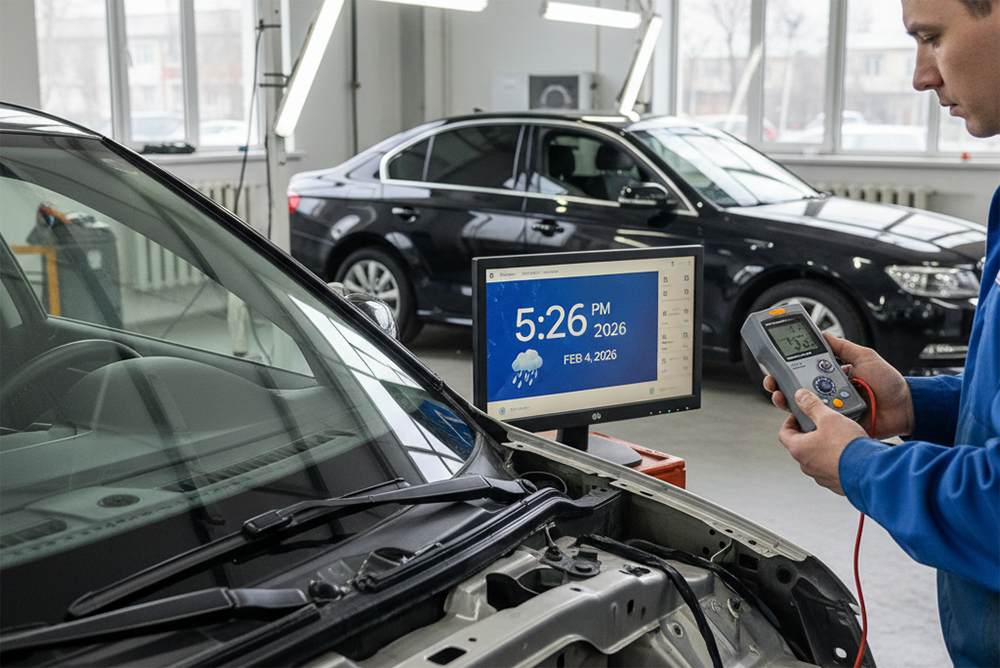
The advantage of in-shop service is that it is the safest choice to bring your car into a shop as opposed to taking it out when the weather is unpredictable. There is a climate-controlled atmosphere available in shops. Both the temperature and the humidity levels may be controlled by the professionals working within the shop. Because of this, the pinch weld will be completely dry, and the adhesive will cure at the most efficient pace possible. It is possible to prevent the possibility of cancellation and ensure a safe installation by scheduling an appointment in the store, even if the weather prediction is not favorable.
The Dangers Involved in Replacing Glass in Conditions That Are Wet
The procedure must be kept dry. For what reason is it so important? In the end, it all boils down to the chemical reaction that is necessary for a secure relationship. In the event of a front-end collision, your windshield can supply up to forty-five percent of the structural integrity of the car cabin, and in the event of a rollover, it can provide up to sixty percent of the structural integrity.
In the event that the adhesive fails due to the fact that it was applied to a damp surface, the windshield may become detached in the event of an accident. The possibility of the roof falling or of passengers being ejected is increased as a result of this. Water Leaks and Mold: A deficient seal that is brought on by moisture during the installation process will almost surely result in water leaks. It is possible that you will not notice it right away, but over the course of time, water will leak into the cabin.
Because of this, your floor mats will become damp, your windows will become foggy, and eventually, mold and mildew will begin to accumulate within your dashboard and upholstery. In the event that water becomes trapped between the glass and the metal frame, it has the potential to cause the pinch weld to rust. Due to the fact that rust eats away at the metal, it will be difficult to install replacement windshields in the future and will require expensive bodywork to correct.
Do you have a Question?
Get An Auto Glass Replacement Quote Now 866.278.7417
After-Installation Care in the Event of Harsh Weather
You are not already out of the woods once the new windshield has been placed on your vehicle. It is necessary to allow the glue to cure, or dry and firm, before it may achieve its maximum strength. The term “Safe Drive-Away Time” (SDAT) refers to this particular time frame. After the installation, it rained: It is interesting to note that rain after the installation is typically not a problem, given that the glue has been allowed sufficient time to first cure. In point of fact, moisture speeds up the curing process for certain kinds of urethane. However, you should wait at least twenty-four to forty-eight hours before using a high-pressure car wash.
It is possible for the high pressure to exert a tiny force on the glass, resulting in holes in the seal before it has completely hardened. Temperatures Below Freezing: The slowing down of the curing process is a significant consequence of temperatures below freezing. In light of the current weather conditions, your technician needs to provide you with information on the particular Safe Drive-Away Time. When the temperature is low, it is possible that you may need to wait an additional hour or two before driving the car.
Questions That Are Frequently Asked
Even though it is winter, is it possible to get my windshield changed outside? Indeed, but only in the event that it does not precipitate. You are going to need a garage if it is snowing or pouring outside. Additionally, in order to guarantee that the adhesive attaches effectively, the technicians might need to warm up both the car and the glass separately.
When it rains, how long does it take for the adhesive that bonds the windshield to dry? It is true that rain assists moisture-cured urethane in drying out (curing). Rain during the application process is the risk, not rain after the installation has been completed. Rainfall of a moderate intensity is typically not a problem once the windshield has been installed and the top molding has been positioned.
A mobile mechanic might be able to work in a parking garage, right? Typically, the answer is yes. It is possible to find shelter from the rain and snow in a public parking garage. On the other hand, ascertain that there is sufficient illumination for the technician to do their duties and that the property management permits car maintenance to take place on the premises.
Safety Should Take Precedence Over Convenience
As a matter of fact, having a broken windshield is a risk to one’s safety, but racing to mend it in the pouring rain without the appropriate protection is an even greater risk. Even if the weather prediction predicts snow or rain, you should make every effort to find a covered space, such as a garage. It is preferable to take your vehicle to a specialized auto glass shop in the event that this is not feasible. This will guarantee that the service is completed in a safe and accurate manner.
Having your car professionally installed guarantees that it will continue to have a good structural foundation, will not leak, and will be safe for you and your passengers. There is no reason to let the weather put your safety at risk. Check the weather forecast, consult with your mechanic, and select the alternative that will ensure that your vehicle remains dry while it is being repaired.
This Is The Reason Why Delaying Service Might Result In Seal Failure And Corrosion
In order to handle strong pressure, harsh temperatures, and continuous operation, industrial machinery is intended to be built accordingly. In spite of this, even the most sturdy pieces of equipment have a weak spot, and that is the modest seal. This very little component, which is sometimes disregarded until it is too late, plays an essential part in ensuring that the integrity of the system is preserved. It is possible for seals and the metal surfaces that they cover to suffer disastrous effects in the event that maintenance schedules are not managed properly. In the near term, delaying normal maintenance may appear to be a cost-saving option, particularly in situations when there is a strong demand for production activities.
However, this delay frequently sets off a chain reaction of mechanical problems when it occurs. The cost of procrastination is usually higher than the cost of prevention, and this is true for a variety of reasons, including the gradual deterioration of elastomers and the rapid development of corrosion. In this piece, we will discuss the specifics of what occurs within your equipment when servicing is delayed, how the loss of a seal promotes corrosion, and the measures that you can take to prevent these issues from occurring in the first place.
How Seals Contribute to the Performance of Industrial Items
First, we need to have a better understanding of what a seal truly performs in order to comprehend why sometimes things fail. No matter if it is an O-ring, a gasket, or a hydraulic seal, its basic purpose is exactly the same: it prevents impurities from entering while also preventing fluids from entering.
Protection from the Environment: Seals serve as the principal barrier that protects against the outside environment. The dust, filth, moisture, and chemical pollutants that may potentially infiltrate critical regions of the equipment are prevented by these features. When a seal is operating properly, it will produce a tight contact between the surfaces that are mating with it. This will ensure that the internal lubricants continue to be functional and maintain their purity.
Seals, on the other hand, prevent internal fluids from seeping out. These fluids include hydraulic oil, coolants, and chemical reagents. Seals perform the function of fluid containment. It is essential to have this containment not only for the functioning of the machine but also for the protection of the environment and the management of costs. In a system that is leaking, pressure and efficiency are both lost, which means that the equipment must exert more effort in order to obtain the same outcomes.
This Is The Anatomy Of A Failed Seal
Seals do not possess immortality. These are consumable parts that have a limited lifespan, which is typically defined by the characteristics of the material and the conditions under which it is used. There are a number of elements that come together to hasten the death of the service when it is delayed. Thermal degradation occurs when seals are subjected to varying temperatures over a period of time, which causes them to gradually lose their flexibility. In a process called compression set, the material can become more rigid and crack as a result of exposure to high temperatures.
The formation of a leak channel occurs when a seal loses its capacity to rebound and fill the space between two surfaces within a system. Extreme cold, on the other hand, can cause seals to become brittle, which can result in breakage when subjected to dynamic stresses. Before a breach takes place, routine maintenance checks are intended to identify these early symptoms of hardening and prevent it from happening.
Incompatibility with chemicals and breakdown: Even if the appropriate seal material was selected at the beginning, fluids become incompatible with one another with time. When oil is old and oxidized, it turns acidic. The seal material may be damaged by this chemical shift, which may result in the substance swelling, shrinking, or dissolving. In the event that you delay changing your fluid, you will be allowing your seals to soak in a corrosive bath, which will eat away at their structural integrity.
Dynamic seals, which are designed to provide a seal against moving parts, are susceptible to continual friction, which can cause wear and tear. This is something that should be mitigated by lubrication; nonetheless, friction rises when oil deteriorates or seeps out owing to small seal damage. Therefore, abrasion occurs, which is the process by which the seal face is physically worn away. It is possible for this abrasive wear to continue until the seal totally breaks if the service schedule is ignored.
A Connection Between Corrosion and Failure Of A Seal
Failure of a seal is almost seldom an isolated occurrence; rather, it is frequently the condition that precedes corrosion, which is a far more costly problem. A failing seal and a component that has corroded are directly related to one another, and this link is detrimental. Intrusion of Moisture: The most immediate consequence of a sealing system that has been damaged is the introduction of moisture. When it comes to industrial metals, water is the enemy. The lubricant’s film strength is diminished as a result of emulsification, which occurs when water is combined with oil or grease.
However, the most crucial thing to note is that water on metal surfaces in the presence of oxygen causes oxidation, which is rust. It is possible for pitting corrosion to occur on cylinder rods in hydraulic systems when moisture is present. After the pitting process has begun, it operates like a cheese grater against the seal, causing any fresh seal that you would install to be destroyed. Because of this, a vicious cycle of seal degradation and corrosion that is becoming worse is created.
Galvanic corrosion occurs when a seal degrades, which makes it possible for electrolytes (such as seawater or acidic industrial fluids) to penetrate the space between metals that are not complementary to one another. Galvanic corrosion is triggered when an electrolyte is introduced into a piece of equipment that, for example, has a bronze housing and a steel shaft. In essence, one metal gives up its own existence in order to benefit the other, which results in a quick loss of material and a weakening of the structure.
Crevice corrosion occurs when gaskets fail, resulting in the formation of tiny spaces or “crevices” between the flanges. Crevice corrosion thrives in these stagnant regions, which are ideal breeding grounds for the phenomenon. There is a shift in the chemistry of the fluid that is contained within the fissure; it becomes more acidic and hostile than the bulk fluid that is located outside. This concentrated assault has the potential to consume metal flanges within a surprising amount of time, and it frequently goes undiscovered until a significant leak develops.
Do you have a Question?
Get An Auto Glass Replacement Quote Now 866.278.7417
Deferred Maintenance Comes With A Number Of Hidden Costs
It is common for managers to delay service in order to maintain high uptime figures; yet, the financial repercussions of this action are quite severe. Repairs in an Emergency: The cost of repairing a machine after it has had a catastrophic breakdown is substantially higher than the cost of a scheduled downtime. In addition to paying for expedited parts and extra labor, you may also be paying for specialist services that are externally contracted. During the downtime of production, a blown seal has the potential to stop an entire manufacturing line.
Supply chains are disrupted when unplanned downtime occurs, which can result in missed deadlines and harm to a company’s image. Replacement of Components: Instead of changing a seal that costs five dollars, you can wind up having to replace a shaft that costs five thousand dollars or a complete hydraulic assembly since corrosion has turned the non-functional hard parts.
A Proactive Approach To Breaking The Cycle Of Behavior
In order to prevent failure of seals and corrosion, it is necessary to switch from reactive maintenance to proactive maintenance. Observe the Schedules Provided by the Brand: Both engineering data and stress testing are used by manufacturers to calculate the service intervals for their products. The following are not recommendations; rather, they are prerequisites for a long life. By adhering to the timetable, you can make certain that the fluids are still fresh and that the seals are replaced before they reach their point of failure.
Using fluid analysis, you should not simply estimate when your oil needs to be changed; instead, you should test it. The presence of increasing amounts of acidity, water content, and particulate matter can be detected by routine fluid analysis. This information serves as an early warning system, drawing attention to the possibility that seals are in danger or that corrosion is starting to take place on the inside.
Every planned downtime should be used as a chance for inspection, so make sure to take advantage of this time. There should be “weeping” around the hydraulic cylinders, there should be dried fluid around the gaskets, and there should be air leaks in the pneumatic systems: listen for these. If a little leak is discovered today, it will prevent a large corrosion event from occurring tomorrow.
For The Sake Of Your Investment
It is impossible to deny the connection that exists between delayed service, seal failure, and corrosion. Seals are very affordable components that are quite modest in size; yet, they have the responsibility of ensuring the dependability of your equipment. When you make periodic maintenance a top priority and refuse to let service intervals slip, you are not only ensuring that your machinery is replaced with new parts, but you are also ensuring that its structural integrity is maintained.
It is not necessary to wait for a leak to indicate that it is time for service. Make sure that your equipment is secured against the quiet and expensive creep of corrosion by reviewing your maintenance schedules now, consulting with your service personnel, and ensuring that your equipment is protected.
Mobile Safe Auto Glass
14241 E Firestone blvd suite 400,
La Mirada, CA 90638
Phone: (562) 608-1154
Toll Free: 1 866 278 7417
Mail: sales@mobilesafeautoglass.com
Get a FREE QUOTE today! You can get a free quote and schedule 24/7 using this free quote wizard.
Mon – Fri 8am – 5pm
Saturday 8am – 1pm
Sunday Closed