
Warranty Coverage Every Vehicle Owner Should Understand
Purchasing a car requires a significant financial outlay. It is perhaps the most costly purchase you will ever make, second only to the house. The dealer gives you a large booklet full of warranty-related technical language when you sign the final paperwork. Until a warning light on the dashboard flashes, most people put this in the glove box and forget about it. It is a mistake to ignore that booklet. Unexpected repair costs of hundreds or even thousands of dollars can result from misinterpreting your warranty coverage. On the other hand, when mechanical breakdowns happen, understanding exactly what is covered might save you a lot of money. It’s a frequent misperception that a “warranty” is a universal safety net that provides free repairs for anything that breaks. The truth is much more complex.
Get An Auto Glass Replacement Quote Now 866.278.7417

Windshield Replacement & Repair
Our competitors push you into going to their shop to get your glass fixed-making it cheaper for them. We make it easier for YOU to get back on the road by offering free mobile repairs at your home or work. With our free mobile services servicing the entire Orange County & Los Angeles area, we can often handle your windscreen replacement the same day! So the next time you need a windshield replacement, give us a call.
Talk to a Windshield Replacement Specialist Now 866.278.7417

Calibration
Calibration is the process of returning a vehicle’s ADAS to OEM specifications. Calibration is necessary after a new glass installation, particularly a windshield with a camera mounted to it, to ensure that the ADAS features continue to function properly despite having been moved during installation. If a car’s ADAS is not properly calibrated, the system may not function safely. A misaligned camera could jeopardize the functionality of the system and lead to dangerous driving or accidents, so it is crucial that the cameras are aligned perfectly, which is what windshield calibration ensures.
Talk to a Calibration Specialist Now 866.278.7417
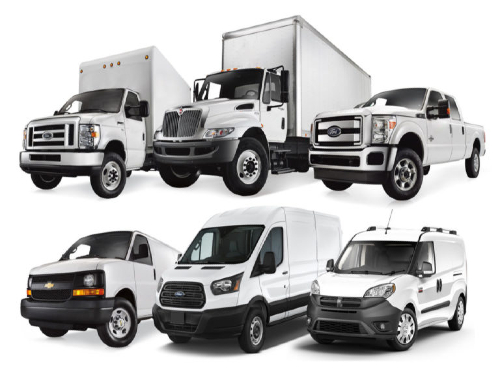
Fleet Auto Glass Repair
We provide expert auto glass repair and windshield replacement services for commercial fleets of all sizes. We are experienced with all manufacturers and machine types of domestic or foreign cars, trucks, vans, or commercial vehicles, including heavy equipment. Our same day mobile auto glass and windshield repair service will enable you to get back on the road faster and start saving you time and money instantly. Give us a call today! We are here to help!
Talk to a Fleet Auto Glass Specialist Now 866.278.7417
The Bumper-to-Bumper Guarantee
Often called a “comprehensive warranty” or a “new vehicle limited warranty,” this is the most comprehensive protection your car will ever have and is what most people think of when they hear the phrase “warranty.”
What it includes: As implied by the name, practically every part between the front and back bumpers is covered by this coverage. The manufacturer covers the cost of repairs if a part breaks because of a material or workmanship flaw. This comprises:
Electronics: intricate sensors, power windows, and navigation systems. Fans, condensers, and compressors are used in heating and air conditioning. Safety systems include seatbelts and airbags.
Suspension: Struts and shocks (unless wear has caused damage).
Time frame: The shortest warranty is often this one. Although some manufacturers provide 4 years/50,000 miles or even longer, the standard terms are 3 years or 36,000 miles. This extensive coverage expires when you reach the time or mileage threshold, whichever comes first.
The Warranty on the Powertrain: You are not entirely alone after the bumper-to-bumper coverage ends. The vehicle’s most costly and vital mechanical components are safeguarded by the powertrain warranty.
What it includes. Consider the powertrain as the mechanism that propels the vehicle. Typically, coverage consists of:
The engine’s internal parts include the oil pump, timing chains, and cylinder block. The torque converter, transfer case, and gears make up the transmission. Axles, driveshafts, and differentials make up the drivetrain.
What it doesn’t include: Importantly, “peripheral” elements are not covered by the powertrain warranty. The powertrain warranty won’t assist you if your air conditioner breaks down or your power window becomes stuck. It is only for the large machinery that powers the wheels.
Time frame: In order to show their faith in their engineering, manufacturers usually provide longer terms for powertrain coverage. Although some brands are renowned for providing up to 10 years or 100,000 miles, the normal duration is 5 years or 60,000 miles.
Types of Specialized Coverage
Different parts of your car are covered by a number of special warranties in addition to the two primary types. These are frequently required by the law or by competition in the market.
Warranty on Emissions: Manufacturers are required by the federal government to provide coverage for pollution control systems. This is frequently divided into two sections: If your vehicle fails an emissions test within the first two years or 24,000 miles, the performance warranty will cover the repairs.
Defect Warranty: Provides at least 8 years or 80,000 miles of coverage for critical parts, including the engine control module (ECM) and catalytic converter.
Verify this guarantee before making a purchase if your mechanic determines that you require a new catalytic converter and your vehicle is six years old. You might save more than $1,000 by doing it.
Warranty against corrosion and rust: This includes perforations in sheet metal that rust through. It usually lasts five years or unlimited miles, which is longer than the comprehensive warranty. Be mindful of the fine print, though, as “surface rust” brought on by stone chips or scratches is typically not covered. Usually, the metal must rust from the inside out in order to form a real hole.
Do you have a Question?
Get An Auto Glass Replacement Quote Now 866.278.7417
Warranty for EV and Hybrid Batteries
When driving a hybrid or electric car, the high-voltage battery is the most expensive part. Manufacturers are required by federal regulations to guarantee these batteries for a minimum of eight years or one hundred thousand miles. California is one state that mandates even more extensive coverage (10 years/150,000 miles).
What Doesn’t Get Covered?: Certain things will always be your financial obligation, regardless of how extensive your warranty is. Defects, not life, are covered by manufacturers.
Items that are worn and torn: Automobiles are consumable devices. Standard warranties do not cover parts that are intended to deteriorate over time. You’ll always need to pay for:
brake rotors and pads (unless faulty).
Tires.
blades for windshield wipers.
linings for clutches (in manual gears).
light bulbs.
Typical Upkeep: You are in charge of the vehicle’s condition. Out-of-pocket costs include fluid top-ups, tire rotations, filter replacements, and oil changes. For the first year or two, some manufacturers provide “complimentary maintenance” as a sales incentive; however, this is a different program and not a guarantee.
Neglect and Damage: It is an insurance claim rather than a warranty claim if a tree limb falls on your hood. Likewise, the manufacturer will reject the claim if you drive through a deep flood and water gets into the engine (hydrolock). Your motor insurance policy covers accidents, theft, vandalism, and environmental damage.
How Your Warranty Can Be Voided: You can’t treat the car as you like just because it’s covered by a warranty. If manufacturers discover evidence of misuse, they have the right—and will—to reject claims.
Insufficient upkeep: The most frequent justification for denial is this. The warranty is nullified if old oil sludge causes your engine to seize and you are unable to demonstrate that you changed the oil. Save all of your receipts. If you perform your own maintenance, record the mileage and date on the oil and filter receipts.
Inappropriate Use: You are operating a vehicle outside of its intended design whether you take a streetcar to a racetrack or drive a regular sedan off-roading. Dealership mechanics may reject a powertrain claim if they find evidence of racing (such as melted rubber in the wheel wells) or water damage from off-roading.
The Title of Salvage
The factory warranty is nearly always completely worthless if an automobile is totaled by an insurance company and subsequently rebuilt. When purchasing a used car, there is a significant danger; always look up the vehicle history record.
Aftermarket Adjustments: This is a contentious topic. In the US, a manufacturer cannot completely void your warranty because you modified the vehicle or utilized an aftermarket part, according to the Magnuson-Moss Warranty Act. They must demonstrate that the failure was brought on by your modification.
For instance, they will probably reject the claim if you install a large aftermarket turbocharger and the transmission blows apart.
For instance, if an aftermarket radio is installed and the water pump malfunctions, the water pump needs to be fixed even though the radio had nothing to do with it.
Service Contracts vs. Extended Warranties: You will probably be inundated with calls and mailings about “extending your vehicle’s warranty” once the factory coverage expires. It’s crucial to distinguish between the two primary varieties.
Extended Warranties from Manufacturers: The manufacturer sells these (Ford Protect, Toyota Extra Care, etc.). They typically use factory-certified experts and parts to prolong the original contracts. For flawless service, they are typically the safest options.
Contracts for Third-Party Services
In technical terms, these are insurance policies for repairs rather than warranties. Independent businesses sell them. Some are well-known for their stringent exclusions, large deductibles, and challenging claims procedures, while others are respected. If you choose this path, read the “Exclusions” portion of the contract first and look up the company’s reputation.
Common Questions: If I sell the automobile, can I get my warranty back? Yes, most of the time. The Vehicle Identification Number (VIN), not the individual, is the owner of factory warranties. The remaining year of coverage is transferred to the new owner if you sell your automobile after two years.
Resale value is increased as a result. However, for the second owner, some extended powertrain warranties (such as the 10-year/100k deals) may revert to a conventional 5-year/60k duration. Consult the handbook at all times.
Does maintaining my warranty require me to visit the dealership for maintenance? No. Any independent business will change your oil and rotate your tires, or you may do it yourself. Your warranty is still in effect as long as you adhere to the owner’s manual’s schedule and save the receipts that attest to the completion of the work.
A deductible, what is it? The deductible for standard factory warranties (powertrain and bumper-to-bumper) is usually zero dollars. You don’t pay anything. However, you frequently have to spend $50 or $100 every visit for extended warranties and servicing contracts.
Safeguard Your Investment: A car warranty is an effective instrument for financial stability, but it only benefits you if you are aware of its restrictions. When a repair isn’t covered by their warranty, many drivers are taken aback. Find out where your coverage starts and stops before a warning light appears or your automobile breaks down.
Spend a few minutes opening your glove box, taking out the owner’s manual or warranty booklet, and going over the information. Keep a close eye on what is covered by powertrain coverage, bumper-to-bumper protection, and wear-and-tear exclusions. To avoid any shocks later, make a note of mileage restrictions and expiration dates.
Being aware of these specifics enables you to take proactive rather than reactive action. Make an appointment for a diagnostic as soon as possible if you’re nearing the end of your coverage period and you hear an odd noise, vibration, or warning indication. Many individuals are unaware of how important timing is.
It might mean the difference between a free repair and a charge in the thousands if a rattle or warning light is evaluated at 35,900 miles rather than 36,100 miles. Having the problem documented before the warranty expires can safeguard you in the event that it worsens later, even if it turns out to be a minor issue.
In the end, your best insurance policy is knowledge. Spending a few minutes learning about your warranties can help you make better maintenance choices, save a lot of money, and lessen worry. Knowing your coverage allows you to optimize the value of the safeguards you’ve already paid for, keep your car operating smoothly, and confidently handle problems early.
Terms, Restrictions, and Practical Protection
It frequently feels like you’re trying to read a foreign language when you open an auto insurance policy document. The pages are jam-packed with acronyms, legalese, and a series of numbers that resemble mathematical formulas rather than financial safeguards. Many drivers make the error of looking at the monthly premium, signing on the dotted line, and crossing their fingers due to this intricacy.
However, it is not a plan to hope for the best. Whether you can swiftly get your automobile back on the road after an accident or risk financial ruin depends on that pile of documentation. Knowing your coverage is important for safeguarding your assets and future profits, not only for complying with the law.
The intricacy of auto insurance is simplified by this advice. We will define the key terminology, clarify the meaning of those perplexing boundaries, and describe how various coverages safeguard you in practical situations.
Interpreting the Data: You will probably notice a series of figures with slashes between them on your policy declarations page, such as 25/50/25 or 100/300/50. These are the boundaries of your liability. Liability insurance covers the harm you inflict on other people, but it does not cover auto repairs.
These figures indicate the highest sum in thousands of dollars that your insurance provider will pay. How to interpret a “split limit” regulation is as follows: Each person’s bodily injury (the first number)
The first figure shows how much your insurance will pay if you cause an accident that results in injury to one person. You are individually liable for the remaining $15,000 if you have a $25,000 limit and the other driver’s medical expenses total $40,000.
Accident-Related Body Injury
Regardless of the number of people involved, the second figure is the overall cap for all injuries in a single accident. Under a 25/50 coverage, the insurer will cover up to $25,000 for one wounded party and a maximum of $50,000 for all injured parties. A low limit here can have disastrous financial consequences if you cause an accident involving a minivan full of passengers.
Damage to Property (The Third Number): Damage to the other person’s car or property (such as a fence or light pole) is covered by the last figure. State minimums for property damage are frequently inadequate due to the growing cost of contemporary automobiles. If you hit a fancy SUV, you might have to pay the difference out of pocket because it might easily surpass the $25,000 limit.
Important Terms You Should Understand: Speaking the language is essential to successfully navigating your policy. The flow of your money during a claim is determined by these three key words.
High-end: Usually paid monthly or every six months, this is the cost of maintaining your coverage. Your age, driving history, region, and the kind of car you drive are among the risk factors that go into determining your premium.
Deductible: The sum of money you have to fork over before your insurance coverage begins is known as the deductible. This typically pertains to comprehensive and collision claims. Your premium and deductible have an inverse connection. Your monthly premium will often go down if you choose a higher deductible (such as $1,000 rather than $500), but you will need to have that money on hand in case of an accident.
Exclusion: A particular circumstance or condition that your policy does not cover is called an exclusion. Using your own car for business reasons (like delivering pizzas or driving for a ridesharing app) without a particular endorsement or purposeful damage caused by the policyholder are examples of common exclusions.
Do you have a Question?
Get An Auto Glass Replacement Quote Now 866.278.7417
Protection in the Real World
Liability insurance shields your pocketbook from litigation, but it doesn’t repair your vehicle. You need bodily damage coverage for that. Usually, this is divided into two primary groups.
Coverage for Collisions: In the event that your automobile rolls over or collides with another item or vehicle, collision coverage will cover the cost of repairs or replacement. It doesn’t matter who is at fault.
Real-world scenario: You run into a guardrail after sliding on a patch of ice. After deducting your deductible, your collision coverage covers the cost of fixing your headlight and bumper.
Extensive Coverage: “Bad luck” situations that don’t entail a collision with another car are handled under comprehensive coverage. This includes hitting an animal, stealing, vandalism, fire, and natural disasters like floods or hail.
Real-world examples include a deer running in front of you on a highway or a tree branch falling on your hood during a strong storm. The repairs are taken care of by comprehensive coverage.
The Value of Coverage for Uninsured Drivers: Millions of motorists are uninsured despite legislation mandating insurance. Their lack of coverage becomes your issue if you are struck by one of them.
The purpose of Uninsured/Underinsured Motorist (UM/UIM) coverage is to safeguard you in this particular situation. Your own policy takes over to pay for your medical expenses if you are struck by a vehicle that is either uninsured or has insufficient coverage. This coverage serves as a safety net, making sure that someone else’s carelessness won’t leave you with enormous medical bills.
Common Questions: What is meant by “full coverage”? Insurance companies do not use “full coverage” as a specific policy word. It is a colloquial expression that typically refers to a policy with comprehensive, collision, and liability coverage. It does not, however, imply that you are covered for everything (such as rental cars or towing), so always double-check the details.
Does my insurance cover the driver or the vehicle? Auto insurance typically follows the vehicle rather than the driver. Your insurance will usually be the main source of compensation for damages if a friend you loan your automobile to is involved in an accident.
How can my insurance rates be reduced? By combining your house and auto insurance, keeping a spotless driving record, increasing your deductible, or requesting discounts for safety features and low annual miles, you may frequently reduce your premiums.
Drive with Self-Assurance
More than just a legal necessity, insurance is an essential component of your long-term security and overall financial well-being. The appropriate coverage shields you from unforeseen medical expenditures, legal fees, and out-of-pocket losses that can mount up quickly in addition to repair costs following an accident.
You place yourself in a far stronger position to manage whatever the road throws at you if you know your coverage limits, understand the difference between collision and comprehensive insurance, and make sure you’re fully covered against uninsured or underinsured drivers. Instead of driving with uncertainty, you can drive with true peace of mind when you know your policy works for you.
This week, dedicate 10 minutes to going over your policy declarations page. Examine your deductibles, liability limits, and optional coverages carefully, and consider if state-minimum limits actually offer adequate protection for your circumstances.
Don’t disregard strange words, excessively high deductibles, or coverage numbers that don’t seem right; instead, give your insurance agent a call and ask questions. It is much preferable to modify your coverage now, when everything is under control, than to find a costly coverage gap after an accident has already happened.
Mobile Safe Auto Glass
14241 E Firestone blvd suite 400,
La Mirada, CA 90638
Phone: (562) 608-1154
Toll Free: 1 866 278 7417
Mail: sales@mobilesafeautoglass.com
Get a FREE QUOTE today! You can get a free quote and schedule 24/7 using this free quote wizard.
Mon – Fri 8am – 5pm
Saturday 8am – 1pm
Sunday Closed