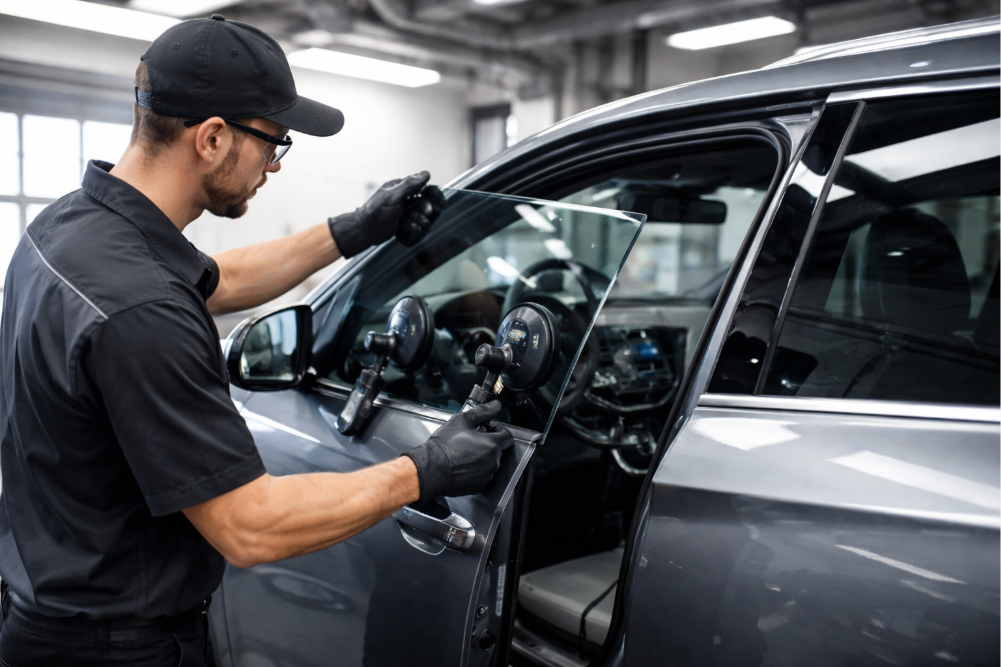
Side Window Repair for Modern Vehicles With Sensors
It used to be easy to mend a broken side window. Within an hour or two, you would go to your neighborhood auto glass business, have the old pane removed, have a new one installed, and be able to drive again. No more. Advanced driver-assistance systems (ADAS) in contemporary cars include cameras, radar units, and sensors mounted in or near your windows. When a side window has to be replaced, maintaining the operation of these advanced safety features is more important than just replacing the glass. Knowing how sensors make side window repairs more difficult might help you avoid future safety issues and save time and money if you need to fix your side window on a more recent model.
Get An Auto Glass Replacement Quote Now 866.278.7417

Windshield Replacement & Repair
Our competitors push you into going to their shop to get your glass fixed-making it cheaper for them. We make it easier for YOU to get back on the road by offering free mobile repairs at your home or work. With our free mobile services servicing the entire Orange County & Los Angeles area, we can often handle your windscreen replacement the same day! So the next time you need a windshield replacement, give us a call.
Talk to a Windshield Replacement Specialist Now 866.278.7417

Calibration
Calibration is the process of returning a vehicle’s ADAS to OEM specifications. Calibration is necessary after a new glass installation, particularly a windshield with a camera mounted to it, to ensure that the ADAS features continue to function properly despite having been moved during installation. If a car’s ADAS is not properly calibrated, the system may not function safely. A misaligned camera could jeopardize the functionality of the system and lead to dangerous driving or accidents, so it is crucial that the cameras are aligned perfectly, which is what windshield calibration ensures.
Talk to a Calibration Specialist Now 866.278.7417

Fleet Auto Glass Repair
We provide expert auto glass repair and windshield replacement services for commercial fleets of all sizes. We are experienced with all manufacturers and machine types of domestic or foreign cars, trucks, vans, or commercial vehicles, including heavy equipment. Our same day mobile auto glass and windshield repair service will enable you to get back on the road faster and start saving you time and money instantly. Give us a call today! We are here to help!
Talk to a Fleet Auto Glass Specialist Now 866.278.7417
Why Essential Technology Is Now Housed in Side Windows
To increase driver comfort and safety, automakers have been gradually adding sensors to side windows. What you may discover is as follows:
Rain sensors: Located on the side windows or windshield, these sensors sense wetness and change the wiper speed automatically.
Cameras: To provide 360-degree views, parking assistance, or blind-spot detection, some cars install cameras next to the side windows.
Antenna Components: Cellular, GPS, and radio antennas are often built right into the glass of modern automobiles.
Heating Components: Defrosting grids are no longer limited to back windows. High-end cars may have heating wires inserted in the side windows.
Replacement gets more complicated if any of these parts are incorporated into a side window. The sensors, which often need recalibration after installation, must fit inside the new glass.
What Sets Sensor-Equipped Window Repair Apart Using embedded technology to replace a side window calls for more than just mechanical expertise. In order to guarantee correct alignment during installation, technicians need to be aware of how each sensor interacts with the car’s computer system.
Calibration Requirements: ADAS sensors often need recalibration after the installation of a new side window. This procedure entails realigning the sensor’s field of vision with the vehicle’s specs using specialist diagnostic equipment. If you skip this step, you run the danger of receiving erroneous alerts or, worse, a system that doesn’t notify you when it should.
OEM vs. Aftermarket Glass: OEM glass is made to precisely match the requirements of your car, including any sensors or antennas that may be included.
Although they could be less expensive, aftermarket alternatives don’t necessarily support the same technologies. Using mismatched glass might affect antenna performance or deactivate features like heated windows.
Extended Labor Time: It may take an hour to replace a simple side window. It will take two to three hours or more if you include sensors. To perform calibration procedures, verify sensor operation, and detach and reconnect wire, technicians need additional time.
Typical Problems When Replacing Side Windows
Using windows with sensors might provide difficulties for even skilled specialists. Knowing these possible issues enables you to make informed inquiries when selecting a repair facility.
Sensor Damage During Removal: Delicate wire or camera housings may sustain damage during removal due to outdated glue or inappropriate equipment.
Misaligned Sensors: A camera or radar unit won’t work properly if it isn’t positioned precisely as the manufacturer intended. Inaccurate warnings or a total system failure may result from this.
Software Errors: In order for some cars to identify the new glass and correctly recalibrate sensors following window repair, software upgrades are necessary.
Moisture Intrusion: Over time, corrosion or short circuits may result from water getting to delicate electronics via poorly sealed windows.
How to Pick the Best Repair Facility: Not all car glass shops have the tools or know-how to work with side windows that have sensors. What to look for is as follows:
The National Institute for Automotive Service Excellence (ASE) certifies technicians who have shown their proficiency with contemporary automotive systems.
ADAS Calibration Tools: Find out whether the shop has the diagnostic tools required to adjust the sensors in your car. This stage is sometimes outsourced by stores, which may increase expenses and time.
Availability of OEM Glass: Verify whether the store can get OEM glass for your particular make and model. Find out whether they are compatible with the technology in your car if they just provide aftermarket choices.
Warranty Coverage: A trustworthy store should provide a warranty that covers any work connected to the sensor as well as the glass. Typical warranties last anywhere from a year to the duration of your car’s ownership.
What to Expect During the Repair Process: You may avoid surprises and make appropriate plans if you are aware of the repair timetable and stages.
Initial Assessment: A technician will examine the broken glass and look for any wiring or embedded sensors. Additionally, they will determine if post-installation calibration is necessary for your car.
Glass Removal: To prevent harming nearby components, the old window is gently removed. In the event that sensors are fixed to the glass, they are removed and placed away for future use.
Installing New Glass: Any sensors or antennae are reconnected, and the new window is installed. Technicians use glue that is intended to cure rapidly while maintaining a waterproof seal.
Sensor Calibration: The technician will utilize diagnostic equipment to recalibrate cameras or radar units if your car’s ADAS calls for it. By taking this step, safety measures are guaranteed to operate as intended.
Final Testing: The shop should test all impacted systems, including wipers, cameras, blind-spot monitors, and any other functions connected to the new glass, before you return your car.
Do you have a Question?
Get An Auto Glass Replacement Quote Now 866.278.7417
Cost Factors for Window Repairs with Sensors
The cost of fixing a side window with integrated technology is higher than that of replacing it. This is the reason:
OEM Glass: You should budget 20–50% more than you would for aftermarket options.
Calibration Fees: Depending on the intricacy of the system, ADAS calibration may increase your cost from $100 to $300.
Labor prices: Hourly prices are usually higher in shops with specialized equipment and qualified personnel. Depending on your coverage, your insurance may pay for the whole cost of repair, including calibration. Before choosing a store, consult your provider.
Why Do-It-Yourself Repairs Are Not Suggested It might be tempting to replace a side window on your own to save money, particularly if you’ve done it on older cars previously. However, do-it-yourself fixes seldom work when sensors are involved.
You cannot realign ADAS components if you do not have access to calibration equipment. Your safety systems may not function properly even if the glass fits flawlessly. Furthermore, it is sometimes more expensive to remedy a poorly done do-it-yourself project than to hire a professional from the beginning if anything goes wrong.
Taking Care of Your Side Windows and Sensors: After your side window has been fixed, regular upkeep may prolong its life and ensure that the sensors continue to work properly.
Clean Gently: To prevent scratching glass or harming sensor lenses, use a gentle cloth and cleanser without ammonia.
Regularly Examine Seals: Look for any holes or fractures in the adhesive seal that can let moisture in and damage electronics.
Respond fast to Chips: In cold conditions, little chips may spread fast. Costly replacements may be avoided by repairing them early.
What Takes Place If Sensor Problems Are Ignored
It is not only annoying but also unsafe to drive when your sensors aren’t working properly. You may not be alerted to an oncoming car in your blind area by a camera that is not calibrated properly. During a deluge, a malfunctioning rain sensor might make it difficult for you to see.
If they identify sensor issues, some cars completely turn off some functions. Until the problem is fixed, you may lose automated emergency braking, adaptive cruise control, and lane-keeping assistance.
The Future of Auto Glass and Sensor Integration: Side windows are probably going to hold even more electronics as cars become more self-sufficient. Future developments include augmented reality screens, Lidar sensors, and more cameras.
As a result of this tendency, side window repair will only become more difficult and crucial to car safety. When repairs are necessary, being aware of these changes enables you to make more educated choices.
Locating a Trustworthy Solution: Repairing the side windows of contemporary cars requires knowledge, tools, and focus. Taking short cuts to save money or time might end up costing more in the long term and compromising your safety.
Select a business that is knowledgeable with the technology used in your car when your side window has to be repaired. Inquire about warranty coverage, calibration capabilities, and certifications. Additionally, keep in mind that the objective is to fully restore your vehicle’s functioning, not merely replace the glass.
There’s more to your side windows than just keeping the rain out. They are a component of a system network that is intended to keep you safe while driving. Give them the attention they need.
Why Repairing Side Windows Is Harder Than Before
Lower the window of your vehicle. Easy enough, isn’t it? Modern side window repair is surprisingly complex due to the network of sensors, motors, and electronics that are hidden behind the glass.
Over the last ten years, there has been a significant transformation in vehicle technology. What was once a simple mechanical activity now calls for specific integrated systems understanding. Side windows now serve as more than simply wind and rain protection; they are linked to temperature management, safety features, and even anti-theft measures.
It is important for both auto glass experts and car owners to comprehend these complications. Although replacing a pane of glass is just one step in the repair process, a cracked side window may seem to be a small annoyance.
The development of car side windows: Replacing a side window was comparatively simple decades ago. The manual crank mechanism was adjusted, new glass was inserted, and the old glass was removed by technicians.
At most, the whole procedure took an hour or two. The story of modern cars is different. In the 1980s, power windows became commonplace, adding regulators and electric motors to the mix.
However, the combination of smart car technology and advanced driving assistance systems (ADAS) was the true game-changer. These days, heating components, antenna systems, and rain sensors are often located in the side windows.
Certain high-end automobiles include electrochromic glass, which automatically colors when exposed to sunshine. Others have acoustic laminated glass, a high-end feature that is becoming more and more prevalent in all car classes and is intended to minimize road noise.
Repairing Integrated Systems Is Difficult
The degree of integration between side windows and other car components is the main obstacle that technicians must overcome. You may have an impact on many components if you touch one.
The biggest challenges are caused by safety and security elements. To identify break-ins, many cars have sensors installed in or close to the side windows.
These sensors are connected to the central computer of the car and, in some situations, to the alarm system. Improper disconnections might cause fault codes or completely deactivate security measures.
The sophistication of power window motors and regulators has increased. Anti-pinch technology, which detects resistance and reverses window direction, is a feature of modern systems. Although it has to be precisely calibrated during repairs, this safety feature helps to avoid accidents, especially to minors. If the calibration is done incorrectly, the window may not react at all.
Window position data is becoming more and more important to climate control systems. Certain cars change the amount of air conditioning according on whether the windows are open or closed. High-end versions go one step further and automatically close the windows when the vehicle locks or detects rain.
The ADAS factor: The most significant change in side window repair difficulty may be represented by advanced driver assistance systems. Although the majority of ADAS sensors are mounted on windshields, side windows may still be useful.
Sensors placed next to side windows or built into side mirrors are often used in blind spot monitoring systems. The warning lights on the side windows itself cooperate with these sensors. Recalibration using specialist equipment is necessary for any repair work that interferes with these connections.
Accurate sensor alignment is also essential for lane departure warning systems. The whole system functions as a linked network, even though the primary cameras are usually positioned behind the windshield. The whole configuration may be jeopardized if one component is disrupted.
Technicians are unable to see the recalibration procedure. Diagnostic instruments that interact with the car’s computer are necessary to make sure all systems identify the repair and continue to operate as intended.
Do you have a Question?
Get An Auto Glass Replacement Quote Now 866.278.7417
Important Things to Think About
Electronic systems and glass composition have changed throughout time. Although manufacturers are increasingly using laminated glass, which was traditionally only used for windshields, standard tempered glass is still often used for side windows.
There are many benefits to laminated side windows. They provide superior UV protection, increased security (harder to break), and better sound insulation. Some even use heating components to melt snow and ice.
These advantages do, however, come with trade-offs for repairs. Tempered glass is less expensive than laminated glass. Because of its weight, window regulators that aren’t intended for the additional weight may be strained. Additionally, installation calls for particular caution to prevent destroying the inner layer while removing it.
Another level of complication is added by acoustic glass, a subtype of laminated glass. This unique material reduces road noise by using an inner layer that dampens sound. Although it makes the cabin quieter, technicians need to find specific replacements since generic ones won’t work as well acoustically.
Requirements for calibration: Technicians encounter the calibration problem after the installation of a new side window. Vehicle manufacture and model have a big impact on this procedure.
Certain cars automatically detect new glass and modify their systems appropriately. Others need to be manually calibrated using software tailored to the manufacturer. Independent repair businesses face a backlog as a result of luxury brands’ frequent demands for proprietary tools that are only available to authorized dealers.
Calibration that is hurried or skipped might result in safety risks, warning lights, or decreased system functioning. For example, an anti-pinch sensor that is not properly calibrated may not be able to keep people safe.
Demands for Equipment and Training
Repair facilities now face additional demands as a result of these technological advancements. To stay up with changing systems, technicians need continual training. The 2024 model of the identical car may not be compatible with what worked on a 2015 model.
These expenditures may sometimes be difficult for smaller, independent stores to justify, especially when working on premium items with lesser volume. Because dealerships often have factory-trained personnel and specialized equipment, this economic reality forces some side window repairs there.
Cost ramifications for car owners: All of this intricacy results in increased repair expenses. On current cars, a side window replacement that could have cost $200 ten years ago might easily cost $500 or more.
A portion of the increase may be attributed to the glass itself, particularly in laminated or acoustic varieties. However, labor prices have increased more significantly. What was once a simple replacement now requires system verification, calibration, sensor disconnection, and meticulous disassembly.
For many car owners, insurance coverage helps defray these expenses. Nevertheless, many insurance handle side window damage differently from windshield damage, and deductibles are still applicable.
Technology for Side Windows in the Future
The sophistication of side window systems will only increase if present trends continue. Numerous cutting-edge technologies are now being developed or produced in small quantities.
When needed, smart glasses may change from transparent to opaque, lowering heat accumulation or offering privacy. Some manufacturers are experimenting with displays that present blind spot alerts or navigation cues directly inside windows.
Another frontier is the incorporation of augmented reality. Side windows might become interactive displays by projecting information on neighboring structures, eateries, or other sites of interest.
The idea of self-healing glass is becoming a reality. When this material is subjected to heat or UV light, its unique coatings naturally fix small scratches.
The mending challenge gains a new depth with each invention. In addition to mechanical and electrical systems, technicians will also need to comprehend materials science, software, and optics.
Before agreeing to a repair, don’t be afraid to ask questions. A trustworthy shop will be happy to show you the replacement glass, go over the calibration needs for your particular car, and explain their procedure.
Modern side windows protect, educate, and link automobiles to their surroundings in ways that were unthinkable only twenty years ago—a case of complexity meeting need. However, this advancement has a cost: fixes that used to take an hour now need for specific skills, tools, and close attention to detail.
Understanding these issues enables car owners who are coping with side window damage to establish reasonable expectations about the prices and timeframes of repairs. It emphasizes how crucial it is for aspiring car glass specialists to keep learning and adapting.
Simple side window repairs are a thing of the past. The future requires technological know-how, the right equipment, and a dedication to keeping up with the ever changing automotive technology.
Mobile Safe Auto Glass
14241 E Firestone blvd suite 400,
La Mirada, CA 90638
Phone: (562) 608-1154
Toll Free: 1 866 278 7417
Mail: sales@mobilesafeautoglass.com
Get a FREE QUOTE today! You can get a free quote and schedule 24/7 using this free quote wizard.
Mon – Fri 8am – 5pm
Saturday 8am – 1pm
Sunday Closed