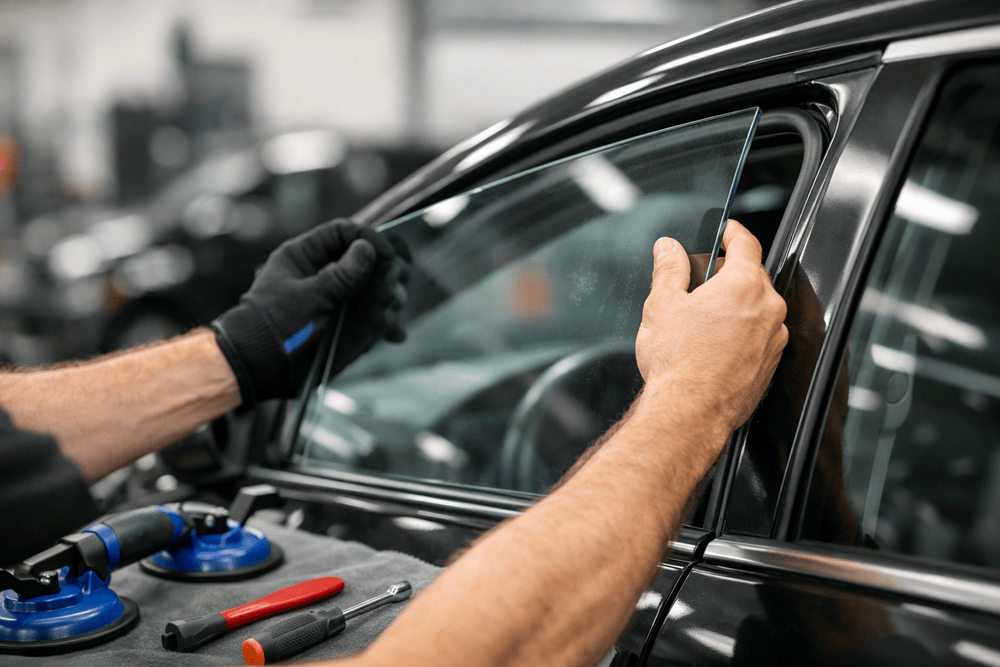
Safety Guide for Passenger Side Window Replacement
Approaching your car and seeing the gleam of broken glass on the street is an unforgettable experience. A cracked passenger-side window exposes your vehicle to weather, theft, and additional damage, regardless of the cause—a break-in, a wayward baseball, or an accident involving road debris. Your first impulse may be to quickly mend the hole yourself to save money or to conceal it with plastic. But compared to replacing a window in your house, replacing a window in your car is much more complicated. A car door is an intricate system of electrical wiring, moving parts, and vital safety elements. This tutorial examines the key safety precautions you need to take when handling a shattered passenger window..
Get An Auto Glass Replacement Quote Now 866.278.7417

Windshield Replacement & Repair
Our competitors push you into going to their shop to get your glass fixed-making it cheaper for them. We make it easier for YOU to get back on the road by offering free mobile repairs at your home or work. With our free mobile services servicing the entire Orange County & Los Angeles area, we can often handle your windscreen replacement the same day! So the next time you need a windshield replacement, give us a call.
Talk to a Windshield Replacement Specialist Now 866.278.7417

Calibration
Calibration is the process of returning a vehicle’s ADAS to OEM specifications. Calibration is necessary after a new glass installation, particularly a windshield with a camera mounted to it, to ensure that the ADAS features continue to function properly despite having been moved during installation. If a car’s ADAS is not properly calibrated, the system may not function safely. A misaligned camera could jeopardize the functionality of the system and lead to dangerous driving or accidents, so it is crucial that the cameras are aligned perfectly, which is what windshield calibration ensures.
Talk to a Calibration Specialist Now 866.278.7417

Fleet Auto Glass Repair
We provide expert auto glass repair and windshield replacement services for commercial fleets of all sizes. We are experienced with all manufacturers and machine types of domestic or foreign cars, trucks, vans, or commercial vehicles, including heavy equipment. Our same day mobile auto glass and windshield repair service will enable you to get back on the road faster and start saving you time and money instantly. Give us a call today! We are here to help!
Talk to a Fleet Auto Glass Specialist Now 866.278.7417
Understanding Laminated vs Tempered Glass
You must be aware of what you are touching before you reach for the vacuum. The laminated glass used in windshields is very different from the tempered glass used in the majority of passenger side windows.
Glass that has been heat-treated to make it extremely robust is called tempered glass. Instead of breaking into long, jagged shards, it is made to break into thousands of tiny, pebble-like cubes. The purpose of this safety element is to reduce deep cuts in the event of an accident. These “safety” cubes can still cut skin, though, and if they fly up during cleanup, they might seriously injure eyes.
Laminated Glass: To lessen noise and increase theft resistance, certain high-end and more recent cars have side windows made of laminated glass. Because of a plastic interlayer, this glass typically remains intact despite cracking like a spiderweb.
Your cleanup plan is determined by the type you have. The window must be handled as a single, hefty, unstable unit if it is still in the frame but broken (kept together by tint or lamination). You are dealing with a debris field if it has fallen onto the seat and into the door.
Immediate Safety and Cleanup: As soon as you see damage, safety starts. Before you touch anything, call the police if you suspect a break-in. Protecting the car’s interior and yourself should be your top responsibility as soon as you are allowed to drive.
Equipment for Personal Protection
Auto glass should never be cleaned with your bare hands. The tiny glass dust that frequently covers the tempered glass “pebbles” can irritate eyes and skin.
Heavy-duty gloves: It’s imperative to have leather or cut-resistant mechanic gloves. Gloves made of latex or nitrile are inadequate.
Safety glasses: When vacuuming or slamming doors, glass particles can easily fly into the air.
Wear closed-toe shoes: Avoid working in sandals near broken glass.
The Cleanup Procedure: Before trying any repairs, you must remove as much glass as you can. Glass shards frequently fall inside the door panel, where they can harm the speaker wire, block the window regulator, or cause constant rattling.
Start with the bigger pieces. Carefully pick them up and put them in a cardboard box (trash bags can rupture). Next, clean the center console, floor mats, and seats with a powerful shop vacuum.
Pay close attention to the channel where the glass rests and the window seal. To remove concealed pieces, you might need to insert a cloth-wrapped flathead screwdriver through the channel.
The Dangers of DIY Replacement: Although replacing a passenger window is theoretically feasible for a skilled do-it-yourself enthusiast, there are unstated risks involved that go beyond basic mechanics. Take into account the following risks before placing an online order for a new pane.
The Airbag System: There are many sensors in modern car doors. Side-impact airbag sensors are often located in the door hollow. When removing the door panel, you run the risk of two hazardous consequences if you interfere with these sensors or their wiring:
Accidental Deployment: You could die if an airbag deploys when your head is close to the door panel.
System Failure: If you unintentionally detach or damage the sensor, the airbag may not deploy in an emergency.
Do you have a Question?
Get An Auto Glass Replacement Quote Now 866.278.7417
The Regulator for Windows
The cable-driven or scissor-like mechanism that raises and lowers the glass is called a regulator. There is a lot of strain on these processes. The regulator may break if it is damaged or if it is disconnected incorrectly. A snapping regulator, similar to a guillotine, can easily sever a finger.
Electrical Shorts: The window, door lock, and mirror adjustment switches are probably located on the passenger door. Short circuits may result when working on these connectors without appropriately stopping power. In rare instances, a short may cause a fire within the door panel, burst fuses, or damage the body control module (BCM).
Step-by-Step Safety Procedures: Strict attention to safety procedures is unavoidable if you have evaluated the risks and chosen to carry out the replacement yourself.
The most important step is to disconnect the battery. Before starting any repair, disconnect your automobile battery’s negative terminal and give it at least fifteen minutes.
This greatly lowers the possibility of an unintentional release by enabling the airbag system’s capacitors to discharge. Additionally, it keeps you safe from electrical shorts when handling the wire harnesses for the door.
Carefully remove the door panel. Plastic clips and concealed screws hold door panels in place. Here, force is your enemy. Pulling too hard will cause the panel to crack or shatter the plastic clamps.
Gently peel the panel away using plastic trim tools rather than metal screwdrivers. This keeps the metal door frame from being gouged, which could eventually cause rust.
Clear the Door Cavity: You need to clean inside the door after removing the panel and peeling back the vapor barrier, which is the plastic sheet that seals the door. Suck out the broken glass at the bottom of the door using your vacuum attachment. If glass is left here, it may obstruct drain holes, allowing rainfall to fill the door and seep into the car’s carpet, which could result in corrosion and mold growth.
Taking Care of the New Glass
Until it is installed, new car glass is brittle. Avoid pushing it in the tracks. To get the pane into the channels, you usually have to slant it. Stop if you encounter opposition. The glass may break in your hands if you push it against the metal frame.
Post-Installation Safety Checks: The door panel is back on and the glass is in. You’re not done yet. Make sure the replacement is safe to drive.
Close the door and run a hose over the window to test the seal. Examine the cabin for any signs of water intrusion. Wind noise, water damage, and visibility-impairing fogging are all consequences of a weak seal.
Examine the Auto-Reverse Function: Many contemporary windows come equipped with a safety feature that prevents pinching. The window immediately lowers again if it senses an obstruction, such as a child’s hand.
This system frequently requires recalibration following a replacement. For instructions on how to reset it, refer to your owner’s handbook.
Door Latch Functionality: Verify that the door locks and unlocks properly. The linkage rods may occasionally come free while installing the glass.
For a very brief time, like when you’re driving to a repair shop, it’s acceptable. Plastic, however, provides no defense against damage or theft. At high speeds, it also produces a distracting noise and significantly reduces visibility. It should never be a long-term fix.
Indeed, it is an effective solution in numerous scenarios. Glass damage is typically covered if you have comprehensive coverage. For glass, some policies even offer a zero-deductible provision. Before making an out-of-pocket payment, check with your provider.
This condition typically signifies friction or misalignment. The regulator motor may be straining, or the glass may not be fully seated in the rubber run channel. Due to the possibility of burning out the window motor, the issue needs to be adjusted right away.
Indeed, it’s frequently a terrific idea to use OEM (Original Equipment Manufacturer) glass from a salvage yard. It matches the shade of your other windows and guarantees a flawless fit. Just make sure it is free of chips and scratches before installing it.
Maintaining a Clear View
Handling a shattered passenger window carelessly can turn it from an inconvenience into a dangerous situation. One structural element that adds to the vehicle’s stiffness and interior safety is the glass in your car.
You can handle the repair without getting hurt if you follow these safety procedures and have the necessary mechanical knowledge and equipment. There is no shame in contacting a specialist, though, if the idea of side-impact sensors and high-tension regulators makes you uncomfortable. Your car will be sealed, protected, and prepared for driving thanks to the expertise of auto glass professionals who can properly handle the trash, electronics, and installation.
We’ve all been there: Ignoring the Warning Signs: Why Postponing Auto Repair Endangers Lives. When a tiny amber light flickers on the dashboard, you are exhausted and ready to unwind after driving home from work.
This could indicate that either an oil change is due or that the check engine light has activated. Ignoring it is appealing. The car still functions properly, after all, doesn’t it? You promise yourself that when things settle down next week, you’ll give the mechanic a call.
However, next week becomes next month. The light remains on, blending into the surrounding landscape of your everyday travel.
Procrastination is a normal human tendency, but it can be risky when it comes to car maintenance. With thousands of moving parts that must all function under extreme heat and pressure, an automobile is a complicated machine.
It is rare for a single component to fail on its own. It puts more systems under strain, which can have a cascading effect and result in catastrophic mechanical collapse. There are other reasons to put off service besides the inevitable possibility of a costly repair bill later on.
It concerns the immediate danger to your safety as well as that of your passengers and other road users. The first step in keeping our roads safer is to understand exactly what occurs when you put off repair.
The Braking Systems Critical Failure
The brakes are perhaps the most important system in your car. Your automobile will stop if the engine fails, but you won’t be able to stop if the brakes fail.
Brake pads are made to deteriorate. Each time you step on the pedal, these sacrificial parts deteriorate. Delaying a brake service causes the pads to deteriorate until they reach the metal backing plate. As a result, metal grinds against metal rotors, creating tremendous, warping heat.
The Science of Brake Fade A frightening phenomenon where you push the brake pedal but the automobile doesn’t slow down efficiently is called “brake fade.” It occurs when brakes overheat because of damaged parts or old brake fluid that has absorbed moisture.
Imagine that traffic abruptly stops in front of you while you are traveling at freeway speeds. Impaired braking systems significantly increase your stopping distance.
Those extra twenty or thirty feet could mean the difference between a serious rear-end collision and a safe stop. Frequent inspections identify leaking fluid lines and damaged pads before they become a hazard.
Tires: Your Only Link to the Road For many drivers, tires are just rubber balls that occasionally require air. The only point of contact between your two-ton car and the asphalt is actually your tires. At any given time, the actual surface area that touches the road is about the size of four postcards.
Delaying tire replacement or rotation increases the following risks:
Hydroplaning: The grooves designed to direct water away from the tire vanish as the tread wears down. A layer of water accumulates between the tire and the road in the absence of these channels. This results in hydroplaning, which causes you to lose all control over your steering and braking.
Blowouts: Tires that are worn out are thinner and more prone to punctures. The car may violently swerve into oncoming traffic or a guardrail due to a high-speed blowout.
Poor Handling: Skipping wheel alignments frequently leads to uneven wear, severely damaging the car’s handling. Bald or uneven tires may cause the automobile to spin out instead of holding the road during an emergency maneuver, such as swerving to avoid a deer.
Do you have a Question?
Get An Auto Glass Replacement Quote Now 866.278.7417
The Risk of Unexpected Failures
It’s a common misperception that auto accidents only occur when cars are moving. Nonetheless, a large percentage of collisions happen as a result of a car breaking down in a hazardous area.
Stalling or overheating is more likely when regular engine and cooling system maintenance is put off. The car stops right away if your timing belt breaks or if your engine seizes from low oil.
You become a sitting duck if such an incident occurs on a busy crossroads, a blind corner, or a highway without a shoulder. Distracted or fast-moving drivers might not be able to respond quickly enough to avoid a stationary item. You lower the chance of becoming stranded in a precarious situation by maintaining the engine’s health through routine fluid changes and belt inspections.
Steering and Suspension: The Invisible Danger Because suspension problems typically show up as a squeak or a slightly rougher ride, they are easy to overlook. A common belief among drivers is that they ” can live with a little noise.”
But your suspension system does more than just cushion bumps. It guarantees that the automobile goes where you aim the steering wheel and keeps your tires firmly planted on the ground. Worn shocks or struts cause excessive bouncing. When you encounter a bump while turning, a bouncy suspension may cause the tires to lose contact with the road, potentially leading to a loss of control.
Additionally, loose steering components cause a delay between your hand movement and the wheel’s response. That delay makes it impossible to respond fast enough to prevent a hazard in a split-second emergency.
The Economic Factors Affecting Savings
To conserve money, many drivers postpone service. Budgets are tight, and inflation is rising. It hurts to pay several hundred bucks for a service. But the situation is a typical example of being “penny wise and pound foolish.” Reactive repair is nearly always pricier than preventative maintenance.
Engine vs. Oil: The cost of an oil change is under $100. It costs thousands to replace an engine that has been seized by sludge.
Pads vs. Rotors: Brake pad replacement is a routine maintenance expense. If you wait too long, the cost of replacing warped rotors and calipers doubles or triples.
The Insurance Factor: Your insurance company may reject your claim if you are in an accident and it is found that mechanical failure brought on by carelessness (such as bald tires) was the cause. Your personal responsibility may extend to losses and medical expenses.
How to put your car’s health first: You don’t have to be a mechanic to keep your automobile safe. All you have to do is take initiative.
Read the Manual: The engineers who developed the car made the timetable that is in your glove box. Adhere to it.
Feel and Listen: Take note of any changes. Is the brake pedal mushy to the touch? Does the steering wheel vibrate? Does it smell different? These are warning signs.
Locate a Reliable Partner: Look for a mechanic before an emergency arises. For routine oil changes, establish a rapport with a business so they are familiar with your car’s history.
Drive with Confidence: Malice is rarely the reason behind a decision to postpone auto repair. It typically results from being preoccupied, anxious, or concerned about money. However, neglect is not tolerated on the road.
A car that is kept up is reliable. It takes you where you want to go, stops when you ask, and stays on the road in the rain.
Prioritizing machine maintenance protects your life, your passengers, and your community. Avoid waiting for the warning light to go out. Schedule an appointment for that service right now.
Mobile Safe Auto Glass
14241 E Firestone blvd suite 400,
La Mirada, CA 90638
Phone: (562) 608-1154
Toll Free: 1 866 278 7417
Mail: sales@mobilesafeautoglass.com
Get a FREE QUOTE today! You can get a free quote and schedule 24/7 using this free quote wizard.
Mon – Fri 8am – 5pm
Saturday 8am – 1pm
Sunday Closed