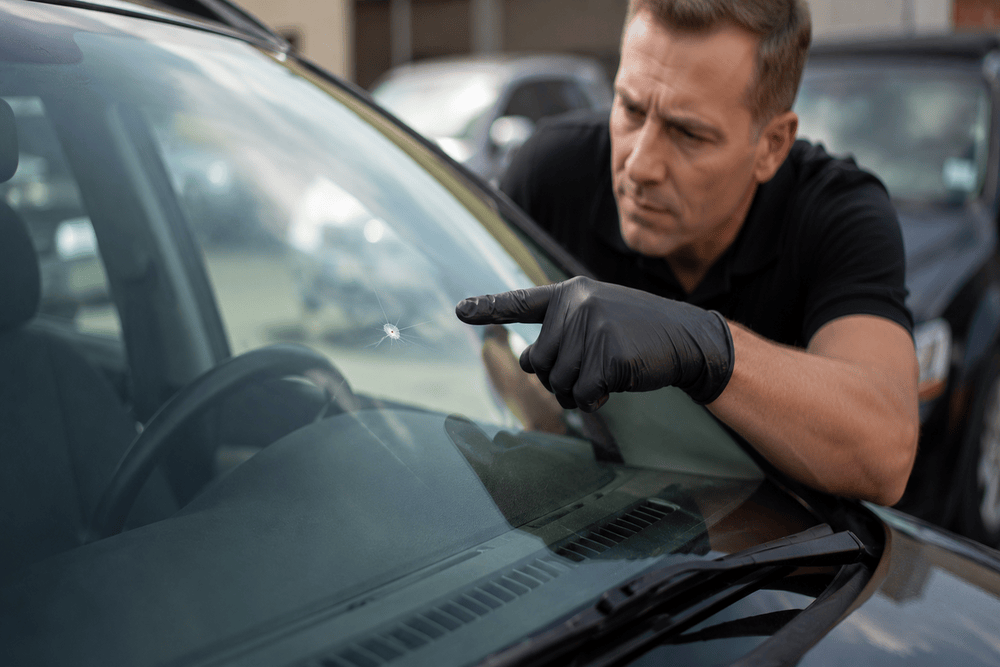
Can Small Chips Lead to Car Fix Cracked Windshield Repairs
Indeed, if untreated, a little chip in the windshield might result in a larger break. Over time, chips may develop into wider fissures due to moisture, temperature fluctuations, and road vibrations. Early chip repair, which is usually a simple and inexpensive remedy, may save the need for an expensive complete windshield replacement. It hasn’t changed in a week, and you hardly notice it throughout your daily commute. So why even try to solve it? The truth is that windshield chips are misleading. What seems to be a little aesthetic flaw is really a structural weakness in one of the most crucial safety features of your car. And before you even know it, that little chip might grow into a fracture that spans half of your windshield under the correct circumstances.
Get An Auto Glass Replacement Quote Now 866.278.7417

Windshield Replacement & Repair
Our competitors push you into going to their shop to get your glass fixed-making it cheaper for them. We make it easier for YOU to get back on the road by offering free mobile repairs at your home or work. With our free mobile services servicing the entire Orange County & Los Angeles area, we can often handle your windscreen replacement the same day! So the next time you need a windshield replacement, give us a call.
Talk to a Windshield Replacement Specialist Now 866.278.7417

Calibration
Calibration is the process of returning a vehicle’s ADAS to OEM specifications. Calibration is necessary after a new glass installation, particularly a windshield with a camera mounted to it, to ensure that the ADAS features continue to function properly despite having been moved during installation. If a car’s ADAS is not properly calibrated, the system may not function safely. A misaligned camera could jeopardize the functionality of the system and lead to dangerous driving or accidents, so it is crucial that the cameras are aligned perfectly, which is what windshield calibration ensures.
Talk to a Calibration Specialist Now 866.278.7417

Fleet Auto Glass Repair
We provide expert auto glass repair and windshield replacement services for commercial fleets of all sizes. We are experienced with all manufacturers and machine types of domestic or foreign cars, trucks, vans, or commercial vehicles, including heavy equipment. Our same day mobile auto glass and windshield repair service will enable you to get back on the road faster and start saving you time and money instantly. Give us a call today! We are here to help!
Talk to a Fleet Auto Glass Specialist Now 866.278.7417
Small Windshield Chip Spread Into a Crack
Laminated safety glass, which consists of two layers of tempered glass joined by a plastic interlayer known as polyvinyl butyral (PVB), is used to make modern windshields. The purpose of this structure is to absorb impact and keep the glass from breaking during a collision.
It also implies that every crack in the outer layer results in a weak spot that is susceptible to further stress. A tiny hole appears in the glass as a chip develops.
The uniform distribution of tension over the windshield is disturbed by that vacancy. The edges of that chip are where any extra pressure focuses, whether it comes from temperature changes, road vibrations, or even the flex of the car’s structure at highway speed.
The glass eventually fractures outward from the initial damage site as a result of that focused force. The outcome? A break.
Which kinds of windshield chips are most prone to breaking? Not every chip is made equally. Certain ones are more likely to spread than others:
Bullseye chips: Direct impact-related circular damage. usually stable, but if deep, it may spread. Star breaks are several fissures that radiate outward from a focal point. Numerous stress sites increase the chance of spreading.
Half-moon chips: An uneven-edged half bullseye. moderate danger. Chips that begin within two inches of the windshield’s edge are known as edge cracks. Because they spread quickly and are often irreversible, they are the most hazardous.
Combination breaks: intricate harm involving many kinds of chips. highest potential for spread.
Why a Windshield Chip Spreads
A steady chip may develop into a developing fracture due to a number of commonplace circumstances. By being aware of them, you may take action before the harm becomes worse.
Temperature variations: Glass expands and contracts in response to temperature variations. The glass stretches on a hot summer day and shrinks on a chilly morning. A chip’s edges are stressed by each cycle.
One of the quickest ways to transform a chip into a crack is to run your defroster on a chilly windshield, pushing hot air into cold glass. Even prolonged exposure to direct sunlight while parked might hasten the spread.
Road impacts and vibrations: Every speed bump, pothole, and uneven road surface causes vibrations that go through the frame of your car and into the windshield. This is not an issue for a windshield that is intact.
Every vibration increases the tension at the weak spot in a windshield that has a chip. A chip may break instantly with only one big impact.
Moisture and dirt: In cold climates, water that penetrates into a chip may freeze and expand, physically enlarging the internal break. Additionally, as time goes on, dirt and debris may build up in the gap, making expert repairs more difficult or even impossible.
Structural pressure: Automated car washes, particularly those with high pressure, have the ability to bend the windshield enough to disseminate chips. There is a momentary pressure surge within the cabin when you close your vehicle door with the windows open, pushing against the glass.
Do you have a Question?
Get An Auto Glass Replacement Quote Now 866.278.7417
When Is It Still Possible to Fix a Windshield Chip
Fortunately, most chips can be fixed without replacing the whole windshield if they are discovered early. In a professional repair, a transparent resin is injected under vacuum pressure into the chip, filling the void, and then UV light is used to cure it.
When done properly, the repair enhances visibility and restores structural integrity. What size chip is replaceable vs repairable? Generally speaking:
It is usually possible to fix chips that are less than a quarter, or around one inch in diameter. Depending on the location and depth, cracks less than three inches could also be fixable. Regardless of size, chips or cracks in the driver’s direct line of sight often need to be replaced since even mended chips may cause optical distortion.
Because the structural compromise is too great, chips on the windshield’s edge are often not repairable. Your chances of a successful repair increase with prompt action. Repairing a chip that happened yesterday is easier than one that has been exposed to dirt, dampness, or very high or low temperatures for weeks.
How Much Does Repairing a Windshield Chip Cost Compared to Replacing It? One of the best justifications for addressing chips soon is cost.
Depending on the quantity of chips and the repair facility, a professional chip repair usually costs between $50 and $150. Since insurers favor a low-cost repair over a costly replacement claim, many vehicle insurance plans cover chip repairs at no cost to you under comprehensive coverage.
On the other hand, a complete windshield replacement may cost anywhere from $200 to $500 or more for normal cars, and much more for cars with advanced driver-assistance systems (ADAS) that need to recalibrate cameras installed on the glass.
Replacement prices for some specialist or premium cars may surpass $1,500. A $0–$150 repair today vs a $200–$1,500+ replacement later is simple arithmetic.
Temporarily Prevent the Spread of a Chip
There are some actions you may do to reduce the spread if you are unable to see a repair shop right away:
Gently clean the chip by removing any loose dirt with a soft cloth; do not push into the chip. Cover the chip with clear tape to temporarily keep moisture and dirt out of the void.
Steer clear of excessive temperatures by parking in the shade, not running your defroster at full blast, and delaying the vehicle wash until the chip is fixed.
Drive cautiously: To reduce vibration stress on the chip, steer clear of bumpy roads whenever you can. These are simply short-term solutions. None of them permanently stop spreading or restore structural integrity. The only dependable option is still a professional repair.
Is Vehicle Safety Affected by a Cracked Windshield? Yes—in a big way. The passenger cabin’s structural integrity is enhanced by the windshield. A damaged windshield is less able to sustain the roof and keep it from collapsing in a rollover collision.
The passenger-side airbag inflates toward the windshield and utilizes it as a backstop to steer the bag toward the passenger, which is another way that the windshield contributes to successful airbag deployment. That force may not be properly supported by a shattered windshield.
A cracked windshield affects vision in addition to structural safety. Particularly at dawn, sunset, or with approaching headlights, cracks may mask road dangers, capture light, and produce glare. Driving with a cracked windshield is also illegal in several U.S. states, especially if the crack is in the driver’s main field of view.
Take Early Action on Windshield Chips
A little chip now might grow into a huge crack tomorrow. Everyday driving includes elements that contribute to the spread of chips, including temperature fluctuations, road vibrations, and moisture. There isn’t a window of safety to observe.
Get your windshield evaluated by a professional as soon as you discover a chip in it. Most of the time, the only thing preventing a far more costly replacement later on is a simple, inexpensive repair.
Verify if chip repairs are covered by your motor insurance policy; many are, and you may be able to submit a claim the same day. There is more to your windshield than just keeping the wind out. Consider it a safety system.
Frequently Asked Questions: Is it possible for a little chip in a windshield to develop overnight? Indeed. If a chip is subjected to abrupt temperature fluctuations, such as a cold night followed by a warm morning or using a defroster on a chilly windshield, it may spread quickly. Particularly vulnerable to overnight spreading are chips close to the windshield’s margins.
Is driving with a chipped windshield safe? It could be safe to drive with a little chip out of the driver’s line of sight for a short while until repairs can be done. Chips that are close to the edges, in the driver’s line of sight, or in conjunction with other damage might jeopardize the windshield’s structural integrity and need to be fixed right once.
How much time does it take to fix a windshield chip? 30 to 45 minutes. After being injected into the chip, the resin is polished and UV-cured. After the repair is finished, the majority of drivers may resume their regular driving activities right away.
Will a windshield chip that has been fixed be undetectable? Not all the time. A competent repair greatly enhances a chip’s look and reinstates structural integrity, although in certain lighting situations, a faint trace could still be seen. Chip repair’s main objective is structural, with aesthetic enhancement coming in second.
Is windshield chip repair covered by auto insurance? Since insurers favor a low-cost repair over a complete replacement claim, many comprehensive vehicle insurance plans in the United States include windshield chip repairs at no cost to the policyholder. Before making a repair appointment, be sure you are covered by your insurance.
What distinguishes a crack from a chip in the windshield? A chip is a tiny fragment of glass that has been removed from the windshield’s surface, usually as a result of direct collision from a rock or other debris. A line of damage that radiates from a chip or impact site is called a crack. Compared to chips, cracks are often longer, more structurally damaging, and more difficult to fix.
Professionals Advocate Immediately Fixing a Cracked Windshield
There is more to a cracked windshield than meets the eye. Because fractures affect structural integrity, hinder driver sight, and may develop quickly due to temperature changes or road vibration—turning a small correction into an expensive complete replacement—experts advise prompt repair.
a little chip in your windscreen. On a Monday morning, you see it and convince yourself it’s nothing, but by Friday, a six-inch crack is slowly moving in the direction of the driver’s side. Does it sound familiar?
One of the most often and expensive errors made by drivers is this one. In a matter of days, a little rock chip may grow into a major safety risk, particularly in areas with severe temperature fluctuations or uneven roads.
The difference in repair costs is also substantial: depending on the car, a complete windshield replacement might cost anywhere from $200 to over $1,000, but mending a little chip usually costs between $50 and $150.
Experts in auto safety consistently advise against waiting. Here’s why they say it, along with the consequences for drivers who disregard the advice.
How Can a Windshield Crack Spread So Fast? The majority of drivers believe that a little fracture will remain small. Seldom does it. Road vibrations, air pressure changes when doors slam, and—most importantly—temperature variations all put windshield glass under continual physical stress.
Glass shrinks in the cold and expands in the heat. The expansion and contraction of an existing crack causes movement along the fracture line, gradually extending and enlarging it. A chip may quadruple in size in a matter of hours if it is exposed to bright sunlight on a hot afternoon while air conditioning blasts through the vents.
Additionally, moisture and dirt seep into the fracture, making expert restoration more difficult or impossible. Only clean, dry damage may be repaired using resin-based chip fixes. Replacement is the only choice after infection takes hold.
Do you have a Question?
Get An Auto Glass Replacement Quote Now 866.278.7417
What Makes a Cracked Windshield Dangerous to Safety
Does structural integrity be impacted by a broken windshield? Yes—in a big way. According to the Auto Glass Safety Council (AGSC), the windshield accounts for around 30% of a car’s structural stiffness in a front-end accident.
A weakened windshield is one that is cracked. The glass’s capacity to uniformly transmit impact force is diminished by even a break that does not block your view. This might be the difference between the windshield staying in place or breaking inward in a collision.
How may a broken windshield affect a driver’s ability to see? Blind spots, glare, and visual distortion are caused by cracks that are in the driver’s direct line of sight. Because the crack spreads light over the driver’s field of vision, glare is especially problematic at night or while driving in the direction of the sun.
In addition to direct blockage, fractures impede the performance of Advanced Driver Assistance Systems (ADAS), which include adaptive cruise control, automated emergency braking, and lane departure alerts.
A lot of these systems make use of sensors and cameras that are installed just behind the windshield. Sensor calibration may be thrown off by even little misalignment brought on by a fracture or an incorrectly fitting replacement, making these safety measures unreliable.
Does driving with a damaged windshield have legal repercussions? Driving with a broken windshield that blocks the driver’s vision is punishable by a citation in several U.S. states.
State laws differ, but most prohibit fractures in certain areas of the glass, especially the driver’s side. After a roadside inspection, a car may get a fix-it ticket or, in some situations, be declared unsafe to drive until repairs are finished.
What Takes Place If Windshield Repair Is Postponed
There is a clear financial argument in favor of swift action. Resin injection, which takes approximately 30 minutes and costs a fraction of replacement, is often used to fix small chips and minor cracks, usually those that are less than six inches.
The majority of vehicle glass professionals would advise complete replacement if a fracture gets beyond that point or hits the glass’s edge, which is where tension is greatest. At that time, the total cost may increase by $150 to $300 or more due to the need to recalibrate any ADAS sensors.
The airbag factor is another. In order to adequately cushion an individual, front passenger airbags are made to deploy outward before redirecting force onto the windshield. A damaged windshield may blow out instead of staying in place, which would cause the airbag to reroute improperly and lessen its ability to protect.
How Should a Cracked Windshield Be Handled, According to Experts? When a crack emerges in your windshield, what should you do right away? When you see fresh damage, auto glass experts advise you to take the following actions:
Evaluate the position and size. Generally, cracks less than three inches and chips smaller than a quarter may be fixed. Regardless of length, cracks in the driver’s direct line of sight or close to the glass’s borders often need to be completely replaced.
Steer clear of extremes in temperature. Avoid blasting the windshield with hot or cold air. If at all possible, park in the shade and stay away from vehicle washes until the damage is fixed.
For the time being, cover the crack. Before your visit, you may keep moisture and dirt out by carefully covering a chip with clear tape, but this is just a temporary solution.
Make quick contact with a repair specialist. The difficulty of finding time to visit a shop is eliminated by the fact that many car glass firms provide mobile repair services that come to your house or place of business.
Is windshield repair covered by auto insurance? Windshield replacement and repair are usually covered by comprehensive motor insurance, sometimes with no deductible for repairs (as opposed to complete replacements).
Because coverage varies by insurer and state, drivers should review their particular policy. Because insurers handle tiny glass claims differently from accident claims, filing a claim for a little chip repair is usually not worth worrying about from a premium aspect.
The Actual Price of Waiting
It is a false economy to put off windshield repair. Avoiding a $75 chip repair today might result in a $900 replacement the following month. Reduced structural support, poor visibility, degraded airbag efficacy, and possible ADAS miscalibration are just a few of the safety consequences that go beyond the financial cost.
When auto glass specialists advise taking quick action, they are not being alarmist; they have seen the process too many times. A fracture is unstable. Road conditions will continue to drive this structural breakdown ahead.
Get your windshield evaluated as soon as possible by a qualified car glass specialist if it is cracked or chipped. The window for repairs is narrow, and once it shuts, both your choices and your pocketbook suffer.
Common Questions: Is it possible to operate a vehicle with a damaged windshield? In theory, the answer is yes, however it depends on the position and size of the fracture. In many areas, it is prohibited and instantly dangerous for a motorist to have a crack in their line of sight. Before continuing to drive, a specialist should evaluate any broken windshield.
How much time does it take to fix a windshield chip? Chip repairs often take thirty to forty-five minutes. In addition to an extra drying time before the car is safe to drive, complete windshield repairs usually take one to two hours.
Mobile Safe Auto Glass
14241 E Firestone blvd suite 400,
La Mirada, CA 90638
Phone: (562) 608-1154
Toll Free: 1 866 278 7417
Mail: sales@mobilesafeautoglass.com
Get a FREE QUOTE today! You can get a free quote and schedule 24/7 using this free quote wizard.
Mon – Fri 8am – 5pm
Saturday 8am – 1pm
Sunday Closed