Car Side Window Replacement Cost Versus Repair
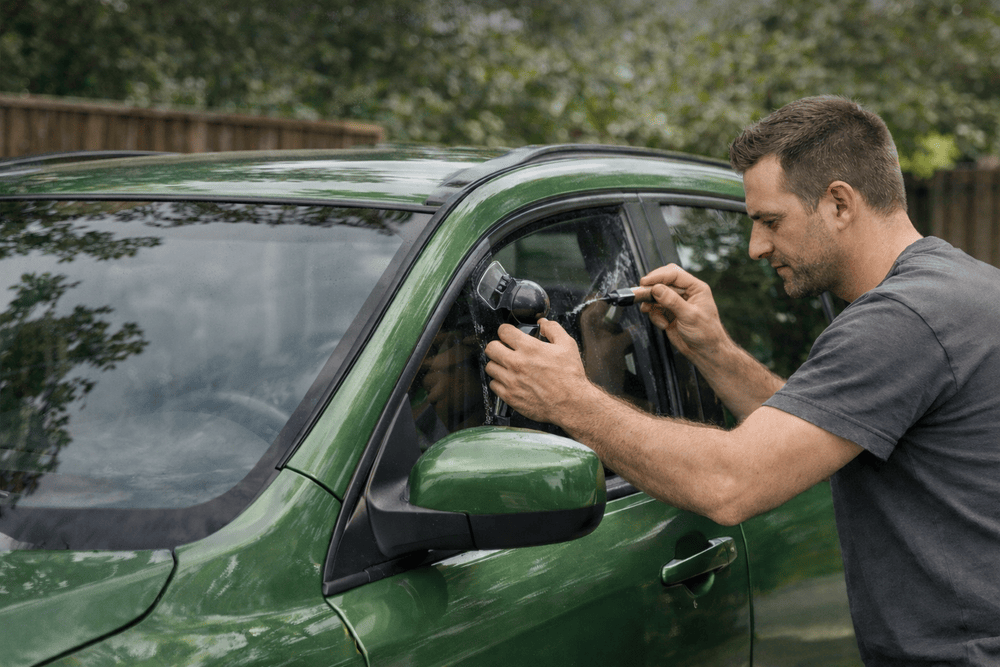
Walking up to your car and seeing a pile of glistening cubes where your window used to be is a sinking feeling. Whether it was a break-in, a stray baseball, or a rock kicked up on the highway, a broken side window leaves your vehicle vulnerable to weather and theft. Your first thought is likely about the damage to your wallet. Is this a quick resin fix like a windshield chip, or are you looking at a full replacement? While windshields are often repairable, side windows are a different story. The first step to solving the issue is to comprehend how your car’s glass works.
Get An Auto Glass Replacement Quote Now 866.278.7417

Windshield Replacement & Repair
Our competitors push you into going to their shop to get your glass fixed-making it cheaper for them. We make it easier for YOU to get back on the road by offering free mobile repairs at your home or work. With our free mobile services servicing the entire Orange County & Los Angeles area, we can often handle your windscreen replacement the same day! So the next time you need a windshield replacement, give us a call.
Talk to a Windshield Replacement Specialist Now 866.278.7417

Calibration
Calibration is the process of returning a vehicle’s ADAS to OEM specifications. Calibration is necessary after a new glass installation, particularly a windshield with a camera mounted to it, to ensure that the ADAS features continue to function properly despite having been moved during installation. If a car’s ADAS is not properly calibrated, the system may not function safely. A misaligned camera could jeopardize the functionality of the system and lead to dangerous driving or accidents, so it is crucial that the cameras are aligned perfectly, which is what windshield calibration ensures.
Talk to a Calibration Specialist Now 866.278.7417

Fleet Auto Glass Repair
We provide expert auto glass repair and windshield replacement services for commercial fleets of all sizes. We are experienced with all manufacturers and machine types of domestic or foreign cars, trucks, vans, or commercial vehicles, including heavy equipment. Our same day mobile auto glass and windshield repair service will enable you to get back on the road faster and start saving you time and money instantly. Give us a call today! We are here to help!
Talk to a Fleet Auto Glass Specialist Now 866.278.7417
The Crucial Distinction Between Tempered and Laminated Glass
To understand the repair options, you have to look at how the glass is made. Most vehicles use two distinct types of glass, and they react to impact in very different ways.
Laminated Glass Windshields: Your windshield is made to resist impact without breaking. It is composed of two glass layers with a layer of vinyl plastic between them. When a rock hits it, the glass might crack or chip, but the plastic layer holds it all together. This is why you can often repair a windshield chip; the structural integrity remains largely potential.
Side Windows: Tempered Glass: Tempered glass is commonly used for side and rear windows. During production, this glass is heated and quickly cooled, resulting in significant internal tension. It has a particular failure state, yet this procedure renders it extremely strong—much stronger than regular glass.
Tempered glass does not shatter into big pieces when it breaks. It bursts into hundreds of tiny pebbles with dull edges. This safety precaution was put in place to guard against severe cuts in the case of an accident. Repair is rarely a possibility, though, as the glass breaks apart upon impact.
Is It Possible to Fix a Side Window
The answer is no in 99% of situations. Because tempered glass shatters completely, there is usually nothing left to repair.
There is one exception: scratches. If your side window is intact but has deep scratches from a malfunctioning window regulator or vandalism, a professional might be able to buff them out. However, if the scratch is deep enough to catch your fingernail, the integrity of the tempered glass is compromised, and replacement is still the safest route.
Do you have a Question?
Get An Auto Glass Replacement Quote Now 866.278.7417
Cost Breakdown What to Expect
Since repair is off the table, you need to budget for replacement. The cost isn’t a flat rate; it fluctuates based on the complexity of your vehicle’s door assembly and the type of glass required.
The typical cost of replacing a side window is between $200 and $550. This is the breakdown of that cost.
The most important factor is the make and model. A standard side window for a Toyota Corolla is widely available and affordable. Replacement glass for a luxury vehicle, or a car with a complex frameless door design, will cost significantly more.
OEM vs. Aftermarket Glass: You have two choices for the glass itself:
OEM (Original Equipment Manufacturer): Your car’s manufacturer is also the source of this glass. It includes the automaker’s logo and is guaranteed to fit perfectly. It is the most expensive option.
Aftermarket (OEE): This glass is made by third-party companies to fit your specific car. It meets the same safety standards as OEM glass but is significantly cheaper. For a side window, aftermarket glass is usually a safe bet.
Power vs. Manual Windows: It takes more labor to replace glass in a door with power windows. The technician must disconnect the battery, navigate the wiring harness, and ensure the window regulator (the motor that moves the glass) isn’t damaged. If the regulator also needs replacing, add another $150 to $300 to your bill.
The DIY Dilemma Should You Try It Yourself
You might be tempted to order a piece of glass online and tackle the job in your driveway to save on labor costs. While possible, replacing a side window is deceptive in its difficulty.
The Hidden Challenges: Door Panels: Modern door panels are held on by hidden clips that snap easily. If you break them, your door panel will rattle forever.
The Glass Cleanup: This is the hardest part. The broken glass tumbles into the door frame. You have to remove the interior moisture barrier and vacuum every single shard out of the bottom of the door. If you miss pieces, they will rattle every time you close the door or block the drainage holes, leading to rust.
Regulator Calibration: On newer cars, the window needs to be calibrated so it knows when to stop rolling up. Improper installation can burn out the motor.
Unless you have experience with auto body work, paying a professional is usually worth the extra $100–$150 in labor to ensure the door is reassembled correctly.
When to Make Use of Insurance
For a broken side window, should you submit a claim? Your deductible will determine that.
Glass damage is typically covered if you have comprehensive coverage. But it doesn’t make sense to file a claim if your deductible is $500 and the replacement cost is $350. You run the chance of your rates going up, and you will still have to pay the entire amount out of pocket.
Check if your policy includes specific “full glass coverage.” Some policies allow for glass replacement with a $0 deductible. In that case, absolutely file the claim.
Immediate Steps to Take
You can’t always get to a shop immediately. You must reserve your car if you have to wait a day or two for an appointment.
Clear the Debris: Wear heavy gloves. Remove the large pieces of glass remaining in the frame. Vacuum the seat and footwell thoroughly—those small cubes are sharper than they look.
Cover the Opening: Do not use simple packing tape directly on the car paint; it can peel the clear coat when removed. Use a specialized crash wrap or a heavy-duty trash bag.
Secure It: Tape the plastic from the inside of the door frame if possible, or use masking tape (painter’s tape) on the exterior paint, as it leaves less residue.
Common Questions
What is the duration required to replace a side window?
A professional technician can usually complete the job in 60 to 90 minutes. This includes cleaning up the broken glass inside the door panel.
Can a mobile service replace my side window?
Yes, mobile auto glass services are very common. Since the urethane adhesive used for windshields isn’t required for side windows (which are bolted into a track), the car is safe to drive immediately after the service is done.
Will the new glass be the same color as my existing windows?
Most factory glass comes with a slight tint. The replacement glass will match the factory specification. However, if you had aftermarket dark tint applied to your windows, you will need to pay a tint shop to re-tint the new glass after it is installed.
Do not Leave Your Car Vulnerable
A broken side window is more than an eyesore; it’s an open invitation to thieves and moisture damage. While the nature of tempered glass means you are looking at a replacement rather than a repair, the process is straightforward. By understanding the costs and checking your insurance policy for glass coverage, you can get your vehicle sealed up and secure without overpaying.
Hidden Safety Risks and the Long Term Value of Quality
Glass is everywhere. It fronts our skyscrapers, protects us in our vehicles, and showcases our retail products. Because it is so ubiquitous, we often look right through it—literally and figuratively—without considering the engineering marvel that keeps it intact.
However, not all glass is created equal. When glass integrity is compromised, either through poor manufacturing, improper installation, or lack of maintenance, the results can be catastrophic. The shattering of a single pane can lead to injury, significant property damage, and a loss of business continuity. Conversely, investing in high-integrity glass systems offers safety benefits that far outweigh the initial costs.
Understanding the science behind glass strength and the risks associated with its failure is crucial for building owners, architects, and facility managers. This guide breaks down why glass integrity matters, the hidden dangers of neglect, and how prioritizing quality delivers long-term value.
Do you have a Question?
Get An Auto Glass Replacement Quote Now 866.278.7417
The Mechanics of Glass Failure
To understand the risks, we first need to understand why glass fails. Glass is a brittle material, meaning it doesn’t deform significantly before breaking. Its strength relies heavily on its surface condition and internal tension.
Spontaneous Breakage and Nickel Sulfide: One of the most perplexing issues in the industry is spontaneous glass breakage. This occurs when tempered glass shatters without any apparent external force. The culprit is often microscopic nickel sulfide (NiS) inclusions.
During the manufacturing process, nickel and sulfur contaminants can form tiny stones. Over time, these inclusions expand. If they are located in the tension zone of the glass, that expansion can cause the entire pane to explode. While heat soaking—a process where glass is heated to accelerate this expansion before installation—reduces the risk, it does not eliminate it entirely.
Glass expands when heated and compresses when cooled due to thermal stress.When different parts of a single pane experience drastic temperature differences, thermal stress occurs.
For example, if sunlight hits the center of a window while the edges remain in the cool shade of the frame, the center expands while the edges do not. If this tensile stress exceeds the glass’s strength, a crack will form, usually starting at the edge and propagating inward.
Impact and Load Failure: This is the most obvious cause of failure but also the most variable. Glass must be engineered to withstand specific wind loads, snow loads, and impact requirements. Using a glass thickness or type that isn’t rated for the specific environmental pressures of a building’s location invites disaster during extreme weather events.
Safety Risks of Compromised Glass
When glass integrity fails, the immediate danger is physical injury. However, the ripple effects of a failure extend much further than scattered shards.
Occupant Safety and Liability: Standard annealed glass breaks into large, jagged shards that can cause fatal injuries. This is why safety glass (tempered or laminated) is required in high-traffic areas. However, even tempered glass, which breaks into small, dull cubes, poses a risk if it falls from a height.
For building owners, a glass failure that results in injury creates a massive liability. The legal costs, insurance premiums, and potential settlements often dwarf the cost of having installed higher-quality materials or conducting regular inspections.
Security Vulnerabilities: Compromised glass is a welcome mat for intruders. A window with a stress crack is significantly easier to breach than a pristine pane. Furthermore, if a spontaneous breakage occurs after hours, a building may be left completely open to the elements and theft until emergency glaziers can arrive.
Environmental Exposure: Glass serves as part of the building envelope. That seal is shattered when it doesn’t work. This makes it possible for contaminants, wind, and moisture to enter the interior. In high-rise buildings, a broken window can alter the internal air pressure, causing issues with HVAC systems and potentially damaging interior finishes or sensitive electronic equipment.
The Economic Argument: Long-Term Value of Quality
It is tempting to choose the lowest bidder when procuring glass for a major project. However, “value engineering” often leads to “value reduction” when it comes to glazing. Investing in high-integrity glass systems provides tangible economic returns over the lifespan of a building.
Reduced Maintenance and Replacement Costs: High-quality glass, properly installed, requires less intervention. Cheaper alternatives often suffer from seal failures in insulating units, leading to fogging and condensation between panes. Replacing a fogged unit on the 40th floor of a skyscraper is an incredibly expensive logistical operation involving cranes, street closures, and specialized labor.
By specifying high-performance glass with robust warranties and superior manufacturing standards, owners avoid these mid-cycle capital expenditures.
Energy Efficiency and Sustainability: Glass integrity is closely tied to energy performance. A compromised seal in a double or triple-glazed unit means the insulating gas (like argon) escapes, and the side window loses its thermal efficiency.
High-integrity glass maintains its insulating properties for decades. This lessens the strain on the building’s heating and cooling systems and maintains consistent utility expenditures. As energy codes become stricter and carbon taxes become more prevalent, the ability of a building envelope to perform efficiently will directly impact the asset’s value.
Brand Reputation and Aesthetics: A building’s exterior serves as its public face. A facade plagued by plywood boards covering broken windows or foggy glass units signals neglect. For commercial tenants, this reflects poorly on their brand.
Premium glass maintains its clarity and structural soundness, preserving the architectural intent. Buildings that look well-maintained command higher rents and attract higher-quality tenants, securing the asset’s revenue stream.
Best Practices for Managers and Owners
Ensuring glass integrity is not a “set it and forget it” task. It requires a proactive approach throughout the lifecycle of the building.
Specification and Quality Control: The work begins at the design phase. Architects and owners should specify glass that exceeds minimum code requirements for safety and structural integrity. The chance of spontaneous fracture is greatly decreased when heat-soaked tempered glass is requested.
Professional Installation: Even the best glass will fail if installed poorly. Glass needs “breathing room” within the frame to expand and contract. If it is installed too tightly against the metal or without proper setting blocks, stress failure is inevitable. Hiring certified, experienced glaziers is non-negotiable.
Routine Inspections: Glass should be inspected annually. Facilities teams should look for:
Scratches or chips: These surface defects significantly weaken the glass and act as starting points for cracks.
Seal failure: Fogging or moisture between panes.
Gasket degradation: If the rubber gaskets holding the glass deteriorate, the glass can shift or rattle, leading to breakage.
Applied Safety Films: For existing buildings where the glass type is unknown or older, applying safety and security window films is a cost-effective retrofit. These films hold the glass together if it shatters, protecting occupants from flying debris and maintaining the building envelope until the glass can be replaced.
Common Questions
What distinguishes laminated glass from tempered glass?
Heat treatment makes tempered glass roughly four times stronger than ordinary glass. It dissolves into tiny, granular pieces if it breaks. Two glass layers are glued together around an interlayer, which is typically made of plastic, to create laminated glass. If it breaks, the glass stays stuck to the interlayer, keeping the pane intact.
How often should building facades be inspected?
While standards vary by location, a general rule of thumb is a visual inspection every year and a detailed, close-up inspection every 3 to 5 years, or immediately following severe weather events.
Can a scratch really cause a window to break?
Yes. Glass relies on surface tension for its strength. A deep scratch interrupts this tension, creating a “stress riser.” When the glass expands due to heat or wind load, the stress concentrates at the scratch, which can cause the glass to run or shatter.
Is heat-soaking worth the extra cost?
For tempered glass installed in critical areas (like overhead glazing or high-rise facades), yes. The cost of heat soaking is a fraction of the cost of replacing a shattered pane and dealing with the potential liability of falling glass.
Protecting Your Assets and People
Glass is a beautiful, functional, and essential material in modern architecture. But its transparency should not lead to complacency. Your dedication to quality and safety is directly reflected in the integrity of the glass in your building.
By understanding the risks of failure and investing in high-quality materials and maintenance, you insulate yourself from liability and expense. The true value of glass isn’t just in the view it provides, but in the security it guarantees.
Mobile Safe Auto Glass
14241 E Firestone blvd suite 400,
La Mirada, CA 90638
Phone: (562) 608-1154
Toll Free: 1 866 278 7417
Mail: sales@mobilesafeautoglass.com
Get a FREE QUOTE today! You can get a free quote and schedule 24/7 using this free quote wizard.
Mon – Fri 8am – 5pm
Saturday 8am – 1pm
Sunday Closed