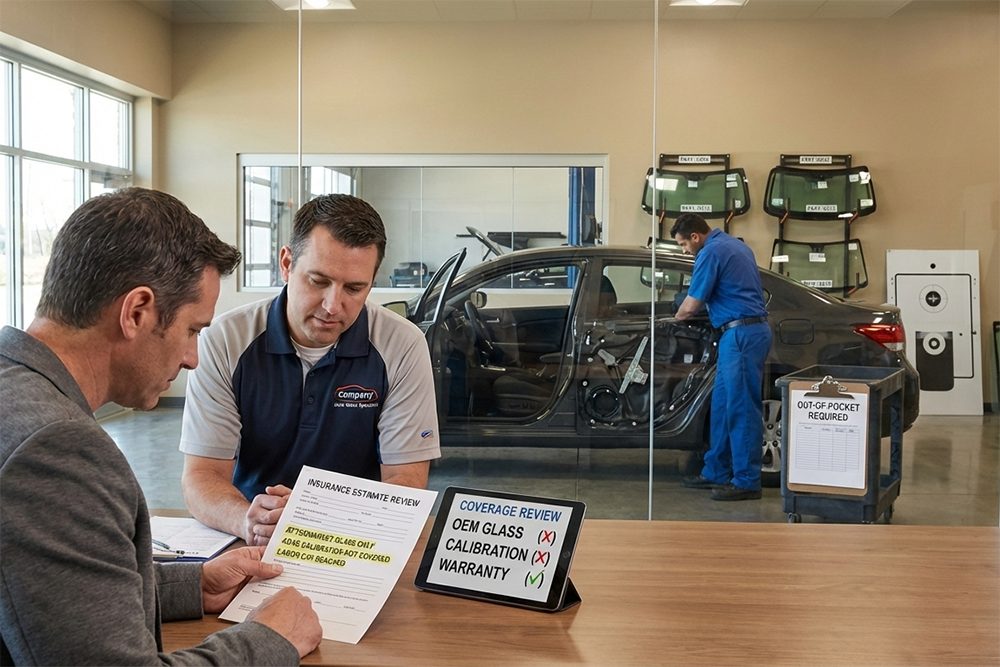
Automobile Window Replacement and Insurance Coverage Gaps
A loud crack can be heard on the roadway as the event begins. The rock that was stirred up by the truck in front of you hits your windshield and ricochets into the air. Initially, it appears to be a chip that is not harmful. However, after a night of cold weather or a journey that is rough, that chip can eventually spiderweb into a crack that will cover your whole field of vision. The vast majority of motorists automatically believe that their auto insurance will take care of the repair. That is, after all, the reason why we have to pay premiums on a monthly basis. It is unfortunate that the reality of vehicle glass coverage is rarely clear.
Get An Auto Glass Replacement Quote Now 866.278.7417

Windshield Replacement & Repair
Our competitors push you into going to their shop to get your glass fixed-making it cheaper for them. We make it easier for YOU to get back on the road by offering free mobile repairs at your home or work. With our free mobile services servicing the entire Orange County & Los Angeles area, we can often handle your windscreen replacement the same day! So the next time you need a windshield replacement, give us a call.
Talk to a Windshield Replacement Specialist Now 866.278.7417

Calibration
Calibration is the process of returning a vehicle’s ADAS to OEM specifications. Calibration is necessary after a new glass installation, particularly a windshield with a camera mounted to it, to ensure that the ADAS features continue to function properly despite having been moved during installation. If a car’s ADAS is not properly calibrated, the system may not function safely. A misaligned camera could jeopardize the functionality of the system and lead to dangerous driving or accidents, so it is crucial that the cameras are aligned perfectly, which is what windshield calibration ensures.
Talk to a Calibration Specialist Now 866.278.7417
Fleet Auto Glass Repair
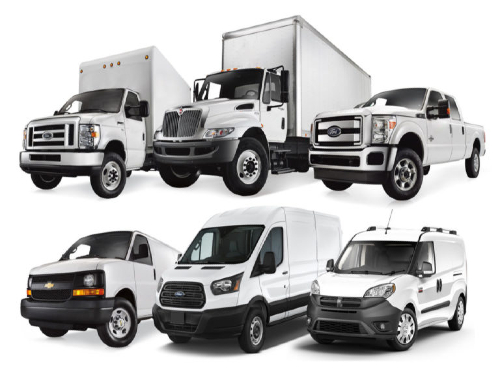
We provide expert auto glass repair and windshield replacement services for commercial fleets of all sizes. We are experienced with all manufacturers and machine types of domestic or foreign cars, trucks, vans, or commercial vehicles, including heavy equipment. Our same day mobile auto glass and windshield repair service will enable you to get back on the road faster and start saving you time and money instantly. Give us a call today! We are here to help!
Talk to a Fleet Auto Glass Specialist Now 866.278.7417
Dispelling the Myth of “Full Coverage”
When it comes to the automobile industry, one of the most widespread fallacies is the idea of “full coverage.” This word is frequently used by agents and dealerships to represent a package that includes comprehensive, accident, and liability insurance. On the other hand, “full coverage” is not a precise policy word, and it does not in any way imply that “everything is free.”
You are only responsible for covering harm that you do to other people and their property if you have liability insurance, which is required by law in the majority of states. You will not receive any protection for your own car from this. In the event that a rock breaks your windshield, your liability coverage will not be affected.
Comprehensive coverage is often required in order to have any chance of having your glass covered by your insurance policy. This protects against incidents that do not involve a collision, such as theft, vandalism, and falling items (such as tree branches), and, most importantly, flying road debris is protected against. The mere fact that you have extensive coverage does not, however, ensure that your wallet will remain secure.
The Deductible Blank Space
A lack of insurance is not the most common coverage gap for vehicle glass; rather, the deductible is the most significant coverage gap. Prior to the beginning of your insurance coverage, the amount that you have agreed to pay out of pocket is known as your deductible. When you take your vehicle to the mechanic, you could be in for a pleasant surprise if your comprehensive insurance policy specifies a deductible of either $500 or $1,000 as the normal amount.
When it comes to an older vehicle, the cost of replacing a basic windshield might range anywhere from $300 to $400. In the event that your deductible is valued at $500, the insurance company will not pay anything. Due to the fact that the cost of the repair does not surpass the threshold for your deductible, all responsibility for the bill falls on your shoulders. It would be futile to file a claim in this particular case.
ADAS Calibration: The Hidden Cost of the Process
In the past, replacing a windshield consisted of removing a piece of glass and then pasting in a new one. This process is now more complicated. All of the equation has been completely rewritten by modern cars. Advanced Driver Assistance Systems (ADAS) are standard in the majority of newly manufactured automobiles. Lane departure alerts, automatic emergency braking, rain-sensing wipers, and adaptive cruise control are some of the safety features that are included in this category.
It is common practice to put the cameras and sensors that function as the power source for these systems just behind the windshield. In order to guarantee that these delicate instruments continue to operate appropriately once the glass has been replaced, it is necessary to accurately recalibrate them. A little misalignment of a few millimeters might result in the failure of safety systems or the activation of such systems at the incorrect time.
Do you have a Question?
Get An Auto Glass Replacement Quote Now 866.278.7417
The Consequences Financially
Due to the fact that calibration necessitates the use of specialist equipment and subsequent training, the cost of replacement is greatly increased. Previously, the cost of a windshield job was $350; however, on a modern car, the price might quickly increase to $1,000 or even higher.
Despite the fact that calibration is often included in the repair process, many older or more affordable policies may contain limitations on the amount of money that may be spent on labor or may exclude certain things. Furthermore, if you pick a repair business that is not qualified for calibration, your insurance company may refuse to cover that portion of the price, leaving you with a piece of glass that is safe but software that is not safe.
OEM vs. Aftermarket Glass
One such area of contention that frequently arises between insurance companies and car owners is the kind of glass that is utilized for the repair. This glass is manufactured by the same manufacturer who supplied the glass for your vehicle when it was rolled off the assembly line. The term “Original Equipment Manufacturer” (OEM) applies to this type of glass. There is no difference between it and the original windshield, and it frequently has the insignia of the manufacturer.
This type of glass is manufactured by third-party firms and is referred to as OEE (Original Equipment Equivalent) or aftermarket. This product is not branded by the manufacturer of the automobile, but it is intended to suit the vehicle and to comply with safety regulations. Insurance firms are businesses that are primarily concerned with controlling costs. As a result of the fact that aftermarket glass is typically less expensive, many insurance plans provide that they will pay for its purchase.
It is possible that you might prefer or require original equipment manufacturer (OEM) glass for clarity and usefulness if you drive a premium vehicle or a car with a heads-up display (HUD) that is complicated. It is quite possible that you will be responsible for paying the difference in price between OEM glass and aftermarket glass if your insurance policy only covers aftermarket pricing. This price for “betterment” might amount to hundreds of dollars in certain businesses.
The solutions to the coverage gap are as follows:
When it comes to these prospective charges, you are not completely powerless. Your insurance coverage can be structured in a number of precise ways to guarantee that glass damage does not completely deplete your financial resources. With zero-deductible glass coverage, several insurance companies provide a special add-on (often referred to as a “rider”) for comprehensive glass coverage.
This coverage eliminates the need for you to pay a deductible for glass repair or replacement after paying a nominal increase in your monthly premium, which is often only a few dollars. In the event that you own this rider, you will be able to repair your windshield without having to pay any money up front, regardless of the regular comprehensive deductible that exists.
Buy-Back Options for Glass: In certain jurisdictions, insurance companies provide you the opportunity to “buy back” a lower deductible that is exclusively for glass. For instance, in order to save money on premiums, you may choose to maintain your collision deductible at $1,000, but you might choose to set your comprehensive glass deductible at either $50 or $0.
According to the laws that are specific to your state, the law may be on your side, depending on where you live. There are rules in existence in states like Florida, Kentucky, and South Carolina that essentially have “zero deductible” legislation for windshield repair provided you have comprehensive coverage. There are certain regions in which insurance companies are legally compelled to waive the deductible for safety concerns. This is done to encourage drivers to quickly repair shattered glass.
Questions That Are Frequently Asked
If I file a claim for glass, would my insurance premiums go up? Because a single glass claim is deemed a “not-at-fault” claim, it is quite unlikely that it would result in a considerable increase in your premiums. The frequency, however, is important. If you submit three claims for glass within a span of two years, your insurers may consider you to be a high-risk customer, which may result in an increase in your premiums or the policy not being renewed.
Is it possible for me to simply patch the chip rather than having to replace the entire windshield? Insurers favor this, as well as the answer. Resin may frequently be used to repair damage that is less than the size of a dollar note and is not immediately in the line of sight of the driver who is operating the vehicle. For repairs, the majority of insurance providers will completely waive the deductible, which means that you won’t have to pay for the service.
Does having a broken windshield make it unlawful to operate a vehicle? Yes, in a big number of jurisdictions. You run the risk of being pulled over and given a citation if a crack in the glass makes it difficult for the driver to see or if it undermines the structural integrity of the glass. In many cases, the price of the ticket is far greater than the price of a straightforward resin repair.
Am I free to utilize any repair business that I choose? In most cases, you have the authority to select the repair facility that you will use. There is a possibility that your insurance provider has a “preferred network” of retailers. It is possible that they will only pay the amount that they would have paid their chosen partner if you go outside of this network. If the retailer you choose charges a higher price, you will be responsible for paying the difference.
Refrain From Waiting For The Crack To Spread
To provide up to forty-five percent of a vehicle’s structural integrity in the event of a front-end collision and up to sixty percent in the event of a rollover, a windshield is an essential safety component. You are taking a risk with both your financial situation and your safety when you leave coverage up to chance.
Today is the day to review your policy papers. You should pay particular attention to your comprehensive deductible and check to see whether there are any exclusions concerning glass or calibration. Get in touch with your agent as soon as possible if you discover a gap. If you want to have peace of mind the next time a pebble hits the pavement, adding complete glass coverage to your vehicle policy is often one of the cheapest additions you can make to your policy.
There are seven hidden tricks to auto insurance claims that you need to be aware of. A motorist does not want to be subjected to the sound of metal crashing into another object. In the moments immediately following an automobile collision, adrenaline takes control of the situation. You are examining the victims for injuries, sharing information with one another, and perhaps interacting with police enforcement. On the other hand, once the dust has settled, a new hurdle will begin: the procedure of filing an insurance claim.
The process of submitting a claim might feel like traversing a maze while blindfolded for many people who own vehicles. With the assumption that they would cover every loss and handle the logistics in a flawless manner, you put your faith in your insurance provider to lead you through the process. Disappointingly, the reality is frequently a great deal more complicated. Most drivers do not read their insurance policies in their entirety until they are in a position where they need to utilize them. Insurance plans are legal contracts that contain particular terminology, restrictions, and exclusions.
A lack of understanding like this may be quite expensive. Drivers regularly leave money on the table or find themselves paying out of pocket for expenditures that they believed were covered. This can occur for a variety of reasons, including accepting the first assessment available for a damaged vehicle or failing to recognize the importance of coverage for rental vehicles. The most effective method of protecting oneself from unforeseen financial loss is to obtain an understanding of the things that are often overlooked during the claims and approval process.
A Difference in the “Total Loss” Valuation
When a vehicle is deemed a total loss, it is one of the biggest areas in which the owner of the vehicle suffers the most severe loss. The occurrence of this occurs when the amount of money required to repair the car is close to or surpasses its actual cash value (ACV). When an adjuster contacts you with a settlement offer for your damaged automobile, it is tempting to imagine that the amount is impossible to negotiate or that it is correct according to scientific standards.
On the other hand, the initial offer is frequently calculated based on the average of comparable automobiles in your area, which could not take into consideration the particular condition or characteristics of your vehicle. They frequently fail to take advantage of the chance to negotiate this value. Rather than doing their own investigation, they choose to accept the first number.
You should seek for comparable vehicles that are currently for sale in your region. These vehicles should be of the same make, model, year, and mileage. This will guarantee that you are obtaining a fair price. You will be required to submit the adjuster with receipts in the event that your vehicle has recently had extensive repairs, premium factory modifications, or new tires. The ACV will grow as a result of these particulars; nevertheless, the insurance company will be unaware of them until you make a statement.
A Surprise Regarding Aftermarket Components
The question of how your car will be mended becomes more important if it is possible to repair it. Owners frequently fail to take into account the sort of parts that are permitted for the repair, which is a typical source of disagreement. Rather than requiring the use of Original Equipment Manufacturer (OEM) components, insurance plans frequently permit the utilization of “aftermarket” or “like kind and quality” (LKQ) components.
Original equipment manufacturer (OEM) parts are those that are obtained directly from the manufacturer of the vehicle and are similar to the parts that were installed on the vehicle when it was first released from the factory. Parts that are sold aftermarket are manufactured by independent businesses. Despite the fact that many are completely functional, the fit and finish might occasionally be different. Owners of vehicles frequently believe that their shop will automatically employ original equipment manufacturer (OEM) components.
There is a possibility that customers will discover holes in the body panels or tiny differences in the paint texture when they return the vehicle. Check the text of your policy in relation to the parts. You may be able to insist on original equipment manufacturer (OEM) components in some circumstances; however, you may be required to pay the additional cost. When you pick up your repaired vehicle, having this information beforehand can prevent you from feeling disappointed.
An Argument Regarding “Diminished Value”
It is possible that the lowered worth of a vehicle insurance claim is the single most neglected portion of the filing process. Even if we use original equipment manufacturer (OEM) parts to fix your vehicle, it will still have a history of accidents. When you ultimately decide to sell or trade in that vehicle, a report will most certainly appear on services such as Carfax. Due to this, the market value of the vehicle will immediately decrease in comparison to the market value of an identical vehicle with a transparent past.
Despite the fact that this disparity in resale value represents a genuine financial loss, insurance companies almost never offer to pay for it on their own. In most cases, you will need to make a particular request for it. When it comes to decreased value, there are three primary categories: immediate diminished value, which refers to the difference in resale value that occurs immediately after an accident and before any repairs are completed.
A car’s value is said to be “inherently diminished” when it has a history of damage, even after it has been repaired to the highest possible standard. Loss of value as a result of repairs of poor quality (for example, paint that does not match) is referred to as repair-related diminished value. Inherent reduced value is the allegation that is made the most frequently. If the collision was not your fault, you have a far better case for requesting recompense for this loss from the insurance company of the motorist who was to blame for the accident.
Settlements for Medical Care in a Hurry
As a means of expediting the process of closing a case, adjusters may provide a speedy settlement for medical difficulties, which may sometimes amount to a few thousand dollars in addition to covering the costs that are already being paid. The temptation to do this might be strong, particularly if you are feeling “mostly fine” or if you simply have a painful neck.
On the other hand, soft tissue injuries such as whiplash or internal trauma sometimes do not demonstrate their full manifestation until many days or even weeks following the impact. After you have signed a release of liability in return for a settlement check, it is extremely unlikely that you will be able to request further funds in the event that issues occur in the future.
Before agreeing to any damage settlement, vehicle owners frequently fail to see the significance of waiting until they have attained “maximum medical improvement” (MMI), which is the conclusion made by a physician that your health has stabilized. When it comes to ensuring that your future medical expenditures do not become a strain on your own finances, patience is very necessary.
Do you have a Question?
Get An Auto Glass Replacement Quote Now 866.278.7417
Maximum Allowable Rental Reimbursement
Rental reimbursement coverage is an optional add-on that many drivers have in their policies; yet, until they are standing at the rental counter, very few drivers realize the limits of this coverage. A typical coverage may pay for a rental automobile at a rate of thirty dollars per day. If you had done that many years ago, you could have hired an excellent mid-sized automobile.
When taxes and fees are taken into account, thirty dollars might not even be enough to cover a tiny automobile in today’s market, assuming it covers anything at all. If the rental is $50 per day and your car is in the shop for three weeks, which is a normal schedule given the current delays in the supply chain for parts, then you will be spending $20 out of pocket for each and every day that your vehicle is in the shop.
That is more than $400 that you did not anticipate budgeting for. During the process of renewing their annual coverage, drivers frequently fail to check in on these restrictions. In the course of a claim, it is essential to inquire of the adjuster in particular what the daily limit is and whether or not they have negotiated prices with particular rental companies in order to make that daily allowance go farther.
The Right to Select a Repair Shop for Your Needs
Repair shops that are considered “preferred” by insurance carriers are often part of a network. They will aggressively encourage you to use one of these facilities when you make a claim with them. Some people may claim that it expedites the approval procedure or that it guarantees the repair for as long as the vehicle is in your possession.
On the other hand, owners frequently overlook the fact that they legally have the right to select their own repair facility, despite the fact that utilizing a favored shop might be handy. You are not required to make use of the recommendation made by the insurer. In the event that you have a reliable mechanic or a body shop that specializes in your particular brand of vehicle (particularly for luxury or European automobiles), you have the option of insisting on going to that particular establishment.
It is still the responsibility of the insurance company to pay for the repairs, subject to the condition that the expenses be fair and typical for the region. Do not let the fact that the adjuster advised choosing a business that you are not comfortable with lead you to feel coerced into using that shop.
Notwithstanding The Waiver Of The Deductible
Last but not least, there is the issue of the pre-tax deduction. It is possible that you will believe that you will not be required to pay your deductible if you are involved in an accident that is definitely not your fault. There is a possibility that you will be required to pay the deductible in advance if you want to make the claim via your own insurance (collision coverage) in order to expedite the process of getting repairs begun.
The insurer will next make an attempt to subrogate, which means that they will pursue the insurance policy of the motorist who was at fault in order to recoup the expenses. The deductible will be refunded to you if they are successful. What owners frequently overlook is the “deductible waiver.” Certain plans include a waiver that applies in the event that you are struck by an uninsured motorist or if the other driver is recognized and plainly at fault for the accident.
If you do not inquire about this waiver or determine if it is applicable to your circumstances, you may find yourself paying an unnecessary amount of $500 or $1,000 and then waiting for a refund that you should not have had to pay in the first place without having to pay it. Be well-informed in order to safeguard your wallet. Immediately following an automobile collision, there is a moment of chaos, but there is also a financial transaction that takes place.
Insurance companies are businesses that manage their expenses, and although the majority of adjusters are professionals, the system is structured to complete claims as quickly as possible, rather than necessarily to maximize the amount of money you get.
You will be able to argue for yourself more successfully if you take your time and pay attention to the subtleties that are, in most cases, overlooked. These factors include things like rental limitations and lost worth. It is important to review your policy before an accident occurs, and you should not be hesitant to ask difficult questions throughout the process of filing a claim. Your attentiveness is the only thing that can guarantee that you will be returned to the condition you were in before the accident.
Mobile Safe Auto Glass
14241 E Firestone blvd suite 400,
La Mirada, CA 90638
Phone: (562) 608-1154
Toll Free: 1 866 278 7417
Mail: sales@mobilesafeautoglass.com
Get a FREE QUOTE today! You can get a free quote and schedule 24/7 using this free quote wizard.
Mon – Fri 8am – 5pm
Saturday 8am – 1pm
Sunday Closed