Warning Signs It Is Time to Fix Cracked Windshield Today
It’s simple to ignore a little scratch on your windshield. After all, it doesn’t block your vision, and the vehicle continues to function normally. However, a little fracture may covertly grow, turning a $50 fix into a $400+ replacement or, worse, jeopardizing your driving safety. They serve as a structural element of your car, supporting the roof, facilitating the deployment of airbags, and shielding occupants from harm in an accident. Everything else is jeopardized when that integrity is lost. The main indicators that your broken windshield needs to be fixed today, not next week, are explained in this article.
Get An Auto Glass Replacement Quote Now 866.278.7417

Windshield Replacement & Repair
Our competitors push you into going to their shop to get your glass fixed-making it cheaper for them. We make it easier for YOU to get back on the road by offering free mobile repairs at your home or work. With our free mobile services servicing the entire Orange County & Los Angeles area, we can often handle your windscreen replacement the same day! So the next time you need a windshield replacement, give us a call.
Talk to a Windshield Replacement Specialist Now 866.278.7417

Calibration
Calibration is the process of returning a vehicle’s ADAS to OEM specifications. Calibration is necessary after a new glass installation, particularly a windshield with a camera mounted to it, to ensure that the ADAS features continue to function properly despite having been moved during installation. If a car’s ADAS is not properly calibrated, the system may not function safely. A misaligned camera could jeopardize the functionality of the system and lead to dangerous driving or accidents, so it is crucial that the cameras are aligned perfectly, which is what windshield calibration ensures.
Talk to a Calibration Specialist Now 866.278.7417

Fleet Auto Glass Repair
We provide expert auto glass repair and windshield replacement services for commercial fleets of all sizes. We are experienced with all manufacturers and machine types of domestic or foreign cars, trucks, vans, or commercial vehicles, including heavy equipment. Our same day mobile auto glass and windshield repair service will enable you to get back on the road faster and start saving you time and money instantly. Give us a call today! We are here to help!
Talk to a Fleet Auto Glass Specialist Now 866.278.7417
Why a Cracked Windshield Is Dangerous Despite Its Appearance
Laminated safety glass, which consists of two layers of tempered glass joined by a plastic interlayer, is used to make modern windshields. Instead of shattering, its design is designed to absorb impact. That structure is disturbed by a fracture, which weakens the panel as a whole.
A well placed windshield may contribute up to 45% of the structural integrity of a car’s cabin in a rollover accident, according to the Auto Glass Safety Council. That contribution may be greatly diminished by even a little break.
Sometimes the threat is invisible. This is why windshield damage is so misleading and why it’s crucial to take care of it as soon as possible.
Seven Indications That Your Windshield Needs to Be Repaired: 1. The Crack Is Longer Than a Dollar Bill When it comes to windshield damage, size is important.
Cracks less than three inches and chips smaller than a quarter may often be fixed fast and reasonably. Replacement is usually the only choice when a crack is longer than that, around the length of a dollar note.
Additionally, cracks might expand. A little fracture may widen overnight due to temperature fluctuations, traffic vibrations, or even slamming a vehicle door. Don’t delay if yours is expanding.
Two. The Damage Is in the Driver’s Line of Sight: Size and location are equally crucial. A crack that is immediately in the driver’s field of vision poses a serious risk to safety since it may induce glare at night, distort your perspective, and collect sunlight.
Many vehicle glass specialists advise complete replacement when the damage occurs in the crucial viewing region, even if the break is theoretically tiny enough to be repaired. There shouldn’t be any concessions made to your visibility when driving.
Third. The Windshield’s Edge Crack: These cracks are very troublesome. The seal between the windshield and the car frame is weakened when a fracture extends to the glass’s outer borders. Because of this, the glass is far more likely to break during an accident—right when you need it most.
Because the frame puts force on that part of the glass, edge damage also has a tendency to propagate more quickly than center fractures. Get it evaluated right away if you find a crack within two inches of the edge of the windshield.
Four. The Glass Is Cloudy or Pitted: Sand, gravel, and road debris cause windshields to develop tiny pits over time. These pits are just aesthetic. However, light is scattered by a highly pitted or cloudy windshield, resulting in noticeable glare from the sun or approaching headlights.
The surface of your windshield may be too damaged to be repaired if you see increasing haze or blinding glare that wasn’t there before. This is particularly prevalent in older cars with high mileage.
Fifth. You Can Feel the Crack from Inside the Car: Gently run a clean finger along the crack’s location inside your windshield. The inner layer of the laminated glass has been breached if you sense a ridge or split from within the cabin.
This is a serious red flag. The windshield’s structural integrity is severely jeopardized if both layers are destroyed, making restoration unfeasible. Replacement becomes critical.
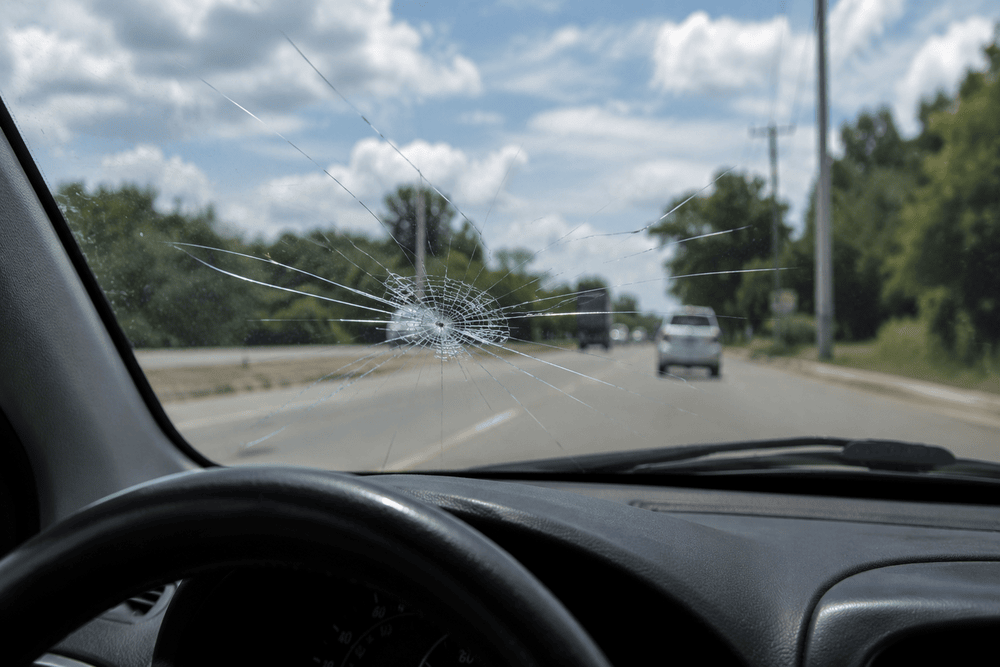
Sixth. A single chip may be handled if there are many cracks or a spiderweb pattern. A collection of fissures, or a pattern like a spiderweb spreading outward from a core impact site, is another matter. This kind of damage almost often necessitates a complete replacement since it weakens a significantly wider surface area of the glass.
Spiderweb cracks are a direct safety risk since they often obstruct view over a large region. Before you can drive the vehicle again, your windshield has to be replaced if it looks like this.
Seven. Water Is Leaking Through the Windshield: Water, wind, and outside air are all kept out of the cabin by a properly sealed windshield. When driving at highway speed, the windshield seal has probably been damaged if you see wetness on the inner glass, leaking near the dashboard, or a whistling sound.
This may occur when a fracture extends to the glass’s edge or when an earlier repair was made incorrectly. Water entry indicates that the glass is no longer adequately attached to the frame, speeds up corrosion, and destroys electronics.
How to Reduce the Spread Prior to Your Schedule
There are things you can do to stop a crack from spreading if you’ve seen one and have a few days until your repair appointment:
Steer clear of temperature extremes: Avoid blasting hot or cold air straight at the windshield. One of the quickest ways for a fracture to develop is via thermal stress.
Avoid the vehicle wash because high-pressure water and cleaning supplies might exacerbate the fracture by forcing dirt into it.
Use transparent tape: You can temporarily keep dirt and moisture out of the crack by covering it with clean automotive tape. It’s just a temporary solution, not a permanent solution.
Drive cautiously since broken glass is stressed by road vibration caused by potholes and uneven terrain. Although they might buy you time, none of these solutions can take the place of expert repair.
Do you have a Question?
Get An Auto Glass Replacement Quote Now 866.278.7417
Do Not Let a Little Crack Turn Into a Serious Issue
Windshield damage almost often becomes worse rather than getting better. A crack that can be fixed today could need to be completely replaced by the following week. More significantly, a damaged windshield endangers you, your passengers, and other motorists.
The aforementioned warning indicators are not intended to be alarming. They are designed to assist you in making a prompt, well-informed choice. Get in touch with a qualified car glass expert right once if any of these apply to your circumstances.
A clean windshield is important for your car’s structural safety as well as sight. Avoid waiting until a little repair turns into a significant investment.
Frequently Asked Questions: Is driving with a broken windshield safe? The location and size of the fracture determine this. Cracks in the viewing area, at the edge of the glass, or longer than three inches should be fixed before driving, however small chips out of the driver’s line of sight could be safe for a short while.
What is the price of windshield repair? Repairs for chips and minor cracks usually range from $50 to $100. Depending on the car’s make, model, and kind of glass, complete repairs might cost anywhere from $200 to $500 or more. Repair expenses are often covered by insurance plans with no deductible.
How long does it take to fix a windshield? It takes around half an hour to fix a simple chip. Before the car can be driven safely, a complete windshield replacement takes one to two hours, plus a further hour for curing.
Is it possible for a cracked windshield to pass an inspection? Indeed. A broken windshield, especially one that blocks the driver’s vision, may lead to a failed vehicle inspection in several U.S. jurisdictions. If you have an upcoming inspection, find out what your state requires.
Do windshield cracks become worse in cold weather? Indeed. Glass contracts in cold weather, adding stress on already-existing fractures and perhaps accelerating their development. Avoid using a defroster on a very cold day or subjecting a cracked windshield to abrupt temperature swings.
First Things to Look for
It may appear innocuous to have a little scratch in your windshield. It’s hardly perceptible one morning, but a week later, it’s a crack that crosses half of your range of view. You may save hundreds of dollars and make better judgments about whether you need a patch or a complete replacement if you know what to look for before calling a repair business.
This tutorial explains the most obvious indicators that the damage to your windshield is growing worse, what various kinds of cracks truly imply, and how to take action before a little repair becomes a significant investment.
Glass doesn’t mend, which is why windshield cracks seldom remain small. Once a crack develops, it becomes a structural weak spot that responds to everything in its immediate environment, including changes in temperature, vibrations on the road, and even the force of shutting a vehicle door.
When moisture freezes within a chip and expands, it may spread several inches overnight if it is left untreated during a severe winter. What’s frustrating? Most individuals wait too long.
They consider a little crack to be a cosmetic problem. Your windshield is really a load-bearing safety element. It helps airbags deploy at the proper angle and supports up to 60% of your car’s roof crush strength in a rollover. These functions are also compromised by damage to the glass.
What Kind of Crack Are You Facing
Your choices for repair will be greatly impacted by the kind of crack you have, since not all windshield damage is created equal.
Half-moon and bull’s-eye chips are round or semicircular chips that result from a direct point of contact, often a rock. If it’s less than a quarter, one of the simplest fixes a technician may do is a clean bull’s-eye with no branching fractures.
Star breaks: From a core impact point, star breaks spread outward in various directions. They may be more difficult to properly fix and have a more intricate structure than a bull’s-eye. Repair is often still feasible if the star’s core remains intact and its legs are short.
Stress cracks: These are fractures that lack a distinct point of impact. They develop as a result of pressure exerted to the frame, manufacturing flaws, or severe temperatures. Stress cracks often begin at the windshield’s border and move inside. They almost always need to be completely replaced.
Floater cracks: These fractures develop in the center of the windshield, away from the edges. They may obstruct your line of sight and grow swiftly. Repair could still be feasible depending on the length and location, but time is an issue.
Warning Indications of Worsening Windshield Damage
The crack is longer than six inches: Chips and cracks up to around six inches in length may be handled by the majority of repair services. Beyond that, the glass’s structural integrity is too weak to support a resin repair consistently. Your crack will probably need to be replaced if it has become bigger than this.
Even a mended chip may cause a little distortion since the damage is right in the driver’s line of sight. Most insurance companies and state inspection regulations mandate replacement rather than repair when damage is immediately in the driver’s line of sight, or approximately the area covered by the wipers. The danger of vision impairment is too great.
You may feel the crack by gently running your finger down it with your fingernail. If it snags your nail, the breach is deep and open enough to allow debris, water, and dirt to enter. Contamination speeds up the spread of the damage and makes clean repairs more difficult.
The inner polyvinyl butyral (PVB) layer, which is the plastic laminate sandwiched between two glass layers, has detached or been damaged, as shown by the white haze that surrounds the break. The windshield’s structural qualities are compromised after the PVB is damaged, making repairs less successful.
A fracture that was originally a single line but has now forked, branched, or altered course has expanded under stress. Branching cracks are more likely to expand and are more difficult to fully seal. This is a clear indication that the harm is more serious than what can be fixed.
The damage occurs near the windshield’s edge: Among the most structurally damaging cracks are those that occur within two inches of the windshield’s border.
When the vehicle is operating, the edges experience the highest stress. The seal between the glass and the frame may be compromised by a fracture here, which might result in leaks and decreased stiffness. Replacement is almost always necessary when there is edge damage.
Do you have a Question?
Get An Auto Glass Replacement Quote Now 866.278.7417
How Weather and Temperature Exacerbate Cracks
Your windshield is always under thermal stress if you reside in an area with large seasonal temperature variations. Glass shrinks in the cold and expands in the heat.
A frigid night or a hot summer afternoon might cause a crack that is stable in moderate temperatures to grow significantly. Avoid dousing an ice windshield with warm water.
A little chip may become a large fracture in a matter of seconds due to the quick temperature change. Similarly, prolonged exposure to direct sunlight hastens the spread of pre-existing damage.
Thermal stress is created on the glass when you use your defroster on high while the vehicle is very cold. Set the temperature to low and let it to climb gradually.
Repair vs. Replacement: How to Determine Which You Need Generally speaking, cracks shorter than six inches and chips smaller than a dollar coin may be fixed. Damage in crucial zones or anything over those limits usually necessitates a complete replacement.
When in doubt, seek expert advice before deciding on a course of action. Free examinations are available at many car glass stores, and a qualified specialist can promptly determine if repair is a feasible option.
Does Windshield Damage Get Covered by Auto Insurance
Yes, in a lot of situations. Windshield replacement and repair are usually covered by comprehensive motor insurance, often with no deductible for repairs in particular. Certain states, including Florida, Kentucky, and South Carolina, have legislation mandating that insurance companies pay for windshield replacement at no expense to the motorist.
Prior to making an out-of-pocket payment, review your coverage. Glass damage claims often don’t have the same impact on your rates as at-fault accident claims if you have comprehensive coverage.
Spend Less, Act Sooner: Most drivers are surprised by how quickly the window between “repairable chip” and “full replacement” may narrow. A $300–$500 replacement next month may be avoided with a $50–$150 fix today.
Once the first break forms, everyday driving, temperature fluctuations, and road vibration all work against you. Using the above-mentioned indicators, carefully examine the damage.
Don’t wait if you see any of the warning signs, such as branching, edge closeness, white haze, or a crack longer than six inches. Obtain a professional assessment and take prompt action. Keeping your windshield structurally solid is one of the easiest things you can do for your road safety, and it accomplishes much more than just keep the wind out.
Common Questions
Can I operate a vehicle with a cracked windshield? Yes, in the short term, however it depends on the crack’s size and placement. You should refrain from driving until the fracture is fixed if it is obstructing your eyesight or is expanding. Additionally, driving with a windshield that obstructs the driver’s vision is illegal in several places and may result in fines.
How much time does it take to fix a windshield? Repairs for chips and cracks typically take 30 to 60 minutes. Before the car is ready to drive, a complete windshield repair usually takes one to two hours, plus an extra hour for curing.
Will a windshield that has been fixed fracture in the same location again? The chance of additional spreading is greatly decreased by a correctly filled repair. However, the place may be more susceptible to subsequent impacts since the repaired area is never quite as robust as shattered glass.
How can a broken windshield be fixed for the least amount of money? A do-it-yourself resin kit for tiny chips may be effective repairing extremely slight damage and costs between $10 and $30. Professional repair is a better investment for anything bigger. You may not have to pay for the repair out of pocket, so always verify your comprehensive insurance coverage first.
If a chip is out of my line of sight, does its size matter? Indeed. No matter where you are, size counts. Under thermal or structural stress, even a chip outside of your field of vision may spread over the whole windshield. No matter where they occur, small chips should be fixed right away.
Mobile Safe Auto Glass
14241 E Firestone blvd suite 400,
La Mirada, CA 90638
Phone: (562) 608-1154
Toll Free: 1 866 278 7417
Mail: sales@mobilesafeautoglass.com
Get a FREE QUOTE today! You can get a free quote and schedule 24/7 using this free quote wizard.
Mon – Fri 8am – 5pm
Saturday 8am – 1pm
Sunday Closed