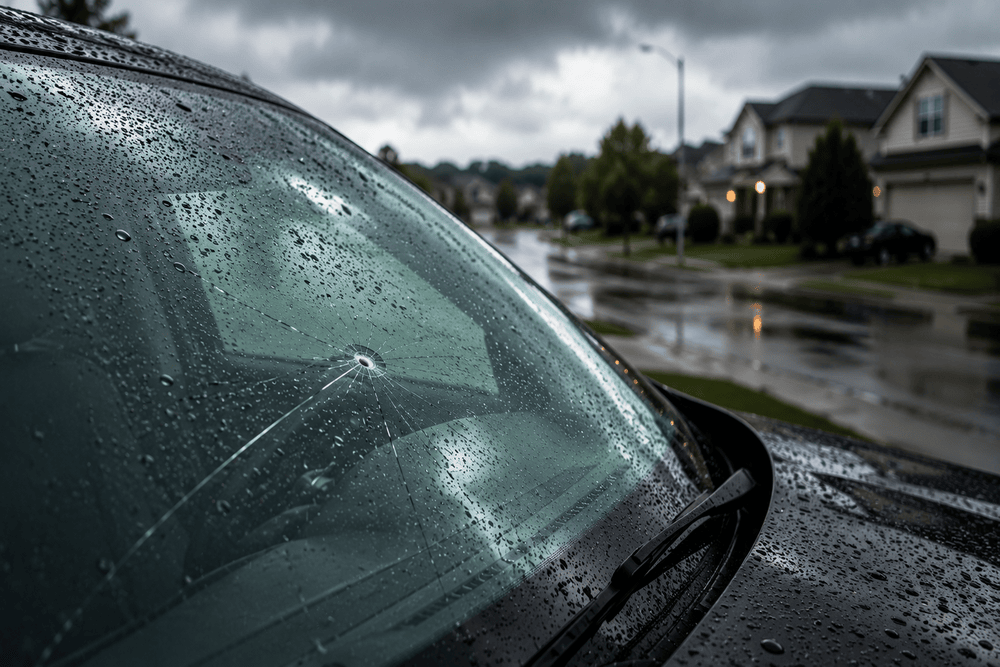
How Weather Impacts Chip Fix Cracked Windshield Repairs
The weather has a big impact on how well windshield chip repairs work. The degree to which resin adheres to cracked glass is influenced by temperature, humidity, and precipitation. For optimal results, the majority of vehicle glass specialists advise fixing chips in dry circumstances between 50°F and 90°F. Overnight, a small rock strike may develop into a complete fracture, particularly when temperatures fluctuate significantly. What is the catch? The same weather conditions that hasten windshield deterioration might also complicate repairs. You’re not the only one who has been delaying a chip repair due to summer heat, winter weather, or rain.
Get An Auto Glass Replacement Quote Now 866.278.7417

Windshield Replacement & Repair
Our competitors push you into going to their shop to get your glass fixed-making it cheaper for them. We make it easier for YOU to get back on the road by offering free mobile repairs at your home or work. With our free mobile services servicing the entire Orange County & Los Angeles area, we can often handle your windscreen replacement the same day! So the next time you need a windshield replacement, give us a call.
Talk to a Windshield Replacement Specialist Now 866.278.7417

Calibration
Calibration is the process of returning a vehicle’s ADAS to OEM specifications. Calibration is necessary after a new glass installation, particularly a windshield with a camera mounted to it, to ensure that the ADAS features continue to function properly despite having been moved during installation. If a car’s ADAS is not properly calibrated, the system may not function safely. A misaligned camera could jeopardize the functionality of the system and lead to dangerous driving or accidents, so it is crucial that the cameras are aligned perfectly, which is what windshield calibration ensures.
Talk to a Calibration Specialist Now 866.278.7417

Fleet Auto Glass Repair
We provide expert auto glass repair and windshield replacement services for commercial fleets of all sizes. We are experienced with all manufacturers and machine types of domestic or foreign cars, trucks, vans, or commercial vehicles, including heavy equipment. Our same day mobile auto glass and windshield repair service will enable you to get back on the road faster and start saving you time and money instantly. Give us a call today! We are here to help!
Talk to a Fleet Auto Glass Specialist Now 866.278.7417
Why a Successful Chip Repair Requires Resin Bonding
A transparent, UV-cured glue is injected into the affected region to fix windshield chips. This resin stops the crack from spreading and gives the glass its structural integrity once it has cured.
Although the procedure seems straightforward, resin is surprisingly sensitive to its surroundings. The glass surface needs to be dry, clean, and at a constant temperature in order for resin to bond correctly.
The resin’s ability to flow into the fracture and stick to the surrounding glass may be hampered by any moisture, intense heat, or very cold temperatures. For this reason, before making an appointment for exterior repairs, your local vehicle glass expert will often check the weather.
How Cold Weather Affects Windshield Chip Repairs: One of the most frequent causes of chip repairs failing or taking longer than expected is cold weather. This is the reason.
Why Glass Contracts in the Cold and Why It Matters: When the temperature drops, glass contracts. This contraction may cause the damage to move slightly in the presence of a chip or fracture, making it more difficult for resin to fill the break neatly.
Before a repair is even attempted, any moisture trapped within the fracture may freeze to ice in cold temperatures, causing the chip to enlarge even more. When temperatures drop below 50°F (10°C), technicians usually refrain from doing chip repairs.
The resin gets more viscous below this point, which means it flows more slowly and may not fully enter tiny fractures. Air pockets created by incomplete penetration weaken the bond and may eventually lead to the repair failing.
Is It Possible to Fix a Windshield in the Winter? Yes, but with certain restrictions. The difficulties of cold weather can be mitigated by indoor repair spaces, such as heated garages or auto glass shops.
It is also beneficial to slightly warm the glass prior to injection (without using direct heat, which might further fracture the windshield). Inquire about the technician’s ability to regulate the working temperature if you’re thinking about using a mobile repair service in the winter.
The Impact of Heat and Direct Sunlight on Chip Repairs
In some respects, the difficulties caused by heat are the reverse of those caused by cold weather. The issue with fixing glass in direct sunlight is that windshield repair glue is cured by UV light, which is helpful for completing a repair but troublesome during the injection process.
The resin may start to cure before it has completely penetrated the chip if the glass is exposed to direct sunlight while being repaired. This weakens the connection and traps air bubbles.
Additionally, the resin is thinned by high ambient temperatures, which may cause it to flow excessively rapidly or run out of the crack before curing. Although this may vary depending on the product, most manufacturers advise applying resin at temperatures no greater than 90°F (32°C).
Which Temperature Range Is Best for Chip Repairs? In shady or cloudy settings, the ideal temperature range for windshield chip repairs is between 50°F and 90°F (10°C and 32°C). Because diffused light reduces the chance of premature UV curing, many professional technicians prefer cloudy days.
Rain and humidity make windshield repairs more difficult since glue and water don’t mix. The resin’s ability to adhere to the glass might be hampered by even minute levels of moisture inside a chip.
Why Moisture in a Chip Is Such an Issue: Water that remains in a crack, even for a brief period of time, forms a barrier between the resin and the glass. This results in poor adhesion, hazy restorations, and a greater chance that the break may widen after the repair is finished.
Not only does visual rain important, but humidity also does. Before a technician even starts, moisture may seep into the chip and surrounding glass surface in high-humidity settings. To address this, professional repair kits frequently include a drying step that uses instruments to remove moisture from the crack prior to resin injection.
Do you have a Question?
Get An Auto Glass Replacement Quote Now 866.278.7417
After Rain Should a Windshield Be Repaired
Waiting is the best option. Before attempting to repair a windshield that has recently been exposed to rain, the chip should be completely dried. A high-quality auto glass technician will check the moisture content before moving forward, so it’s concerning if a mobile service shows up immediately following a downpour and goes straight to injection.
Seasonal Timing: What Time of Year Is Ideal for Fixing a Chip? You may get better results and prolong the life of your repair by scheduling it around seasonal weather trends.
The best weather for repairs is usually found in the spring and fall, when there are fewer extreme weather events, moderate humidity levels, and mild temperatures. In general, these are the ideal times of year to arrange for a chip repair.
Summer repairs are feasible, but they need shade and, ideally, cooler times of day (early morning appointments are often ideal). Heat cycling, or the repeated expansion and contraction brought on by hot days and colder nights, speeds up the spread of cracks, so avoid leaving a cracked windshield unrepaired throughout the summer.
In regulated circumstances, winter repairs are the most difficult, but not impossible. The greater danger is failing to fix a chip during freeze-thaw cycles, which may transform a little chip into a major break that necessitates replacing the windshield.
What Takes Place When You Ignore a Chip in Inclement Weather
It seems sensible to put off a repair, but the likelihood of a chip spreading grows with each passing day. Road vibrations, temperature changes, and wiper blade pressure all put stress on the broken glass. Repairing a chip that costs between $50 and $100 may result in a complete windshield replacement that can cost several hundred dollars or more, depending on your car.
Generally speaking, fix chips as soon as the weather permits. If the weather isn’t perfect, keep your car covered or in a garage to reduce exposure until the repair can be done correctly.
Protect Your Repair: The First 24 Hours Matter: The weather has an impact not only on the repair procedure but also on the longevity of a finished repair.
For at least 24 hours after a chip repair, stay away from vehicle washes, exposure to rain, and drastic temperature fluctuations. This allows the resin to completely cure and adhere to the glass. If unexpected rain falls soon after, covering the repair area with tape can provide temporary protection.
Maximize the Benefits of Windshield Chip Repair
Fixing a chip is simple, but it’s crucial to do it under the proper circumstances. Aim for shade, dry weather, and moderate temperatures. When scheduling a mobile repair, let the technician know if you have any concerns about the weather.
You may choose a window that will make the repair successful with the assistance of a trustworthy firm. Avoid waiting for a chip to develop into a fracture. Make an appointment for your repair on the following day that is clear and pleasant, and use the weather to work in your favor rather than against you.
Frequently Asked Questions: Is it possible to fix windshield chips during cold weather? Although chip repairs may be done in cold weather, they become more challenging at temperatures below 50°F (10°C).
Resin thickens in the cold, which makes it less effective at penetrating cracks. Regardless of the weather outside, professionals may carry out repairs all year long in heated indoor spaces.
Does rain make it impossible to fix a windshield chip? Indeed. Weak or hazy repairs result from the resin’s inability to properly adhere to the glass due to moisture within the chip. Before starting any repairs, technicians should make sure the chip is completely dry, particularly in high humidity or after rain.
How long does it take for a chip repair to heal? Under UV light, the majority of windshield chip fixes heal in 30 to 60 minutes. It usually takes a day to reach full bonding strength. During this time, stay away from vehicle washes, intense rain, and abrupt temperature changes.
What happens if you fix a chip in the sun? The resin may start to cure in direct sunlight before it has completely penetrated the chip. This impairs the repair by trapping air bubbles. Chip fixes work best in cloudy or shaded areas.
Should you wait for better weather or fix a chip? The length of the delay will determine this. It is appropriate to wait a little while for better circumstances. However, if a chip is left unrepaired due to freeze-thaw cycles or extended exposure to heat, there is a much higher chance that the crack will spread and necessitate a complete replacement of the windshield.
Changes in Temperature Make a Cracked Windshield Critical
Small cracks don’t last forever, especially when the weather has other plans. When temperatures fluctuate significantly, a tiny chip that appeared innocuous in mild weather can spread across your entire windshield. Here are some reasons why you should stop delaying a windshield repair if you’ve been putting it off.
This article explains how temperature variations impact shattered glass, what happens to your windshield if you neglect the problem, and when a repair turns into a complete replacement. You’ll have a clear understanding of the risks and how to mitigate them by the end.
What Effects Do Temperature Variations Have on a Cracked Windshield? Glass shrinks as it cools and expands when it warms up. Your windshield can easily manage this heat flow under typical circumstances.
However, everything is altered when a chip or fracture is added to the mix. A structural weak spot is created by a fracture. Stress accumulates at the borders of the damage as the glass expands and shrinks around that location.
The crack spreads as a result of that stress over time, sometimes even overnight. A single chilly night or a sweltering summer afternoon may turn a little road chip into a foot-long fracture.
In areas with significant seasonal changes or large day-to-night temperature variations, the issue is most noticeable. When summer heat or winter frost approach, a windshield that withstands a moderate spring could not keep up.
What Occurs When a Cracked Windshield Is Hit by Cold Weather
Glass contracts in cold weather. The borders of the damaged region strain against one another as your windshield compresses around an existing fracture.
This stress is often sufficient to cause the split to widen considerably, sometimes in a matter of hours. Here are some typical winter conditions that hasten windshield damage:
Using hot water to defrost a broken or ice windshield might result in a severe thermal shock. Glass may break completely due to the abrupt temperature shift.
Blasting the heater: The uneven heating caused by directing warm air onto a cold, broken windshield puts further strain on the already damaged glass.
Overnight frost: Freezing conditions may cause a fissure to spread several inches by morning, even in the absence of outside assistance.
Why Summer Heat Is Just as Dangerous: Although heat may not appear as dangerous as cold, it may lead to major issues with broken windshields.
Windshield temperatures may rise significantly beyond the surrounding air temperature when an automobile is parked in direct sunshine. The glass expands unevenly as a result of this extreme heat, especially near the edges of cracks where the structural integrity is already compromised.
The fracture continues to widen as a consequence. Additionally, drivers tend to misjudge how rapidly the damage is advancing until it’s too late for a straightforward repair since summer cracks often expand more slowly.
Heat exposure may be decreased by using a parasol and parking in shaded places, but these are just short-term solutions. They don’t address the root of the issue.
Do you have a Question?
Get An Auto Glass Replacement Quote Now 866.278.7417
When Is It Possible to Fix a Crack
The likelihood that a repair will be successful decreases with time, particularly during periods of severe temperature. The structural connection between the glass and the frame is weakened by cracks that extend to the windshield’s margins, necessitating a complete replacement nearly always.
Early action is almost always less expensive. Many motor insurance plans cover chip repairs at no expense to the policyholder, and they usually only cost a small portion of a complete windshield replacement.
Indications That Your Cracked Windshield Has Turned Into a Safety Hazard: A cracked windshield is more than simply an aesthetic problem. The windshield is essential for airbag deployment and helps maintain the structural integrity of your car. A damaged windshield could:
Decrease the efficiency of front airbags, which use the windshield as a backup when they are deployed. Because the windshield bears up to 60% of the roof’s structural load, there is a greater chance of roof collapse in a rollover.
increase the danger of an accident by blocking the driver’s field of view. In the event of an accident, fail to keep passengers inside the car. The car should be deemed hazardous to drive until the windshield is replaced if a crack has extended to the edge of the glass or into the driver’s field of vision.
How to Reduce the Spread of Cracks While You Await Repair
A few actions can lessen the damage if you are unable to have your windshield fixed right away: To stop moisture and debris from getting inside and interfering with the repair glue later, cover the break with transparent tape. To reduce the stress caused by the warmth, park in a garage or other covered place.
Do not bang doors, since this can cause the glass to vibrate. Avoid using your defroster on a cold windshield at full heat.
These are temporary fixes, not long-term fixes. Until the crack is professionally fixed or the windshield is replaced, it will remain susceptible to temperature-related spreading.
A little crack is simple to ignore, so don’t let one season turn a chip into a crisis. However, when temperatures fluctuate, that crack always seems to call for attention at the most inconvenient time—usually just before a lengthy journey or during a very cold spell. Most drivers are unaware of how quickly the repair window closes.
It’s simple to prevent damage: as soon as possible, get any chip or crack evaluated by an expert. You don’t even need to bring a damaged car to a shop since many auto glass companies provide mobile repair services.
Verify if windshield coverage is included in your vehicle insurance policy; many do, and there is no deductible needed. One of the few auto issues that really gets worse the longer you ignore it is a cracked windshield. You have more possibilities the earlier you take action.
Common Questions
Can temperature fluctuations cause a broken windshield to shatter? Yes, although it occurs more often when there are chips or cracks together with an abrupt, severe heat shock, such as when hot water is poured over ice glass. The fracture is more likely to widen than to break entirely with modest temperature fluctuations.
How quickly can a windshield crack spread in cold weather? In cold conditions, a fissure may occasionally grow several inches throughout the course of the night. The age of the glass, the amount and location of any existing damage, and the intensity of the temperature drop all affect the speed.
Does windshield repair resulting from temperature-related damage get covered by vehicle insurance? Windshield repair is often covered by comprehensive vehicle insurance coverage, sometimes with no deductible. The insurer and the initial source of the damage determine whether temperature-related crack spreading is covered. To find out what is covered by your policy, get in touch with your insurance company.
In the winter, is it safe to drive with a cracked windshield? In the short term, a little chip that is out of the driver’s field of sight would not be dangerous, but wintertime greatly speeds up the formation of cracks. The car should not be driven until the windshield is fixed or replaced if the crack is in the driver’s field of vision or close to the glass’s edge.
What distinguishes replacement windshields from repairs? To restore structural integrity and visibility, a transparent resin is injected into a chip or small fracture.
A new windshield must be bonded to the car chassis once the old one has been completely removed. When the damage is suitable, repairs are quicker, less expensive, and preferable; nevertheless, cracks that expand as a result of temperature fluctuations often surpass the repair threshold.
Mobile Safe Auto Glass
14241 E Firestone blvd suite 400,
La Mirada, CA 90638
Phone: (562) 608-1154
Toll Free: 1 866 278 7417
Mail: sales@mobilesafeautoglass.com
Get a FREE QUOTE today! You can get a free quote and schedule 24/7 using this free quote wizard.
Mon – Fri 8am – 5pm
Saturday 8am – 1pm
Sunday Closed